September 20, 2026
A self-storage facility needs more than a boundary around the property. The fence must control access, support gates, protect visibility, handle storm exposure, and satisfy local screening rules. The right self-storage fencing plan separates security areas from sections that require visual concealment.
Southwest Florida adds several design pressures. Intense sun, heavy rain, humidity, tropical storms, windborne debris, and coastal salt can damage weak finishes and hardware. A durable result starts with the site, the material, the gate system, and the rules that apply in Cape Coral, Fort Myers, Estero, or Bonita Springs. Commercial fencing in Southwest Florida should be planned as a complete system, not chosen by panel style alone.
Key Takeaways for Facility Owners
- Open chain link often works well for long security perimeters because it preserves visibility and keeps material use manageable.
- Required screening is a separate issue from perimeter security. A city may allow chain link for access control but reject it for hiding storage units from a road or neighboring property.
- Aluminum offers an attractive, corrosion-resistant appearance, but it provides little privacy and needs compatible hardware in coastal areas.
- Vinyl or PVC privacy fencing can conceal units, equipment, and service areas, although solid panels receive more wind pressure.
- Gates, hinge posts, latches, fasteners, and footings deserve as much attention as the fence fabric or panels.
- Local zoning and building officials must confirm height, opacity, setbacks, easements, wind design, and permit requirements before installation.
The strongest facilities often use a mixed layout. An open security fence can surround most of the property, while opaque panels, masonry, or another approved screen handles public-facing edges.
What Self-Storage Fencing Must Do in Southwest Florida
A storage facility fence has several jobs at once. It should discourage unauthorized entry, direct customers toward controlled gates, support cameras, and keep stored items from becoming an eyesore. It also needs to survive frequent gate cycles and seasonal weather.
Separate security from visual screening
Open fencing improves sightlines for cameras, patrols, and staff. It also lets wind pass through more easily. That makes chain link or open aluminum useful around large portions of a property where visibility matters.
Screening has a different purpose. It hides storage units, vehicles, dumpsters, loading areas, and other operational features. A solid or opaque system may provide the needed appearance, but it can also increase wind load and reduce visibility.
Cape Coral's code provisions for self-service storage require screening from adjacent properties and rights-of-way. The listed examples include a 6-foot-high concrete wall, a 6-foot-high opaque fence, or two staggered rows of shrubs at least 3 feet tall when planted. The fence must be tall enough to conceal stored items.
Plan for exposure, drainage, and access
A property near the Gulf or a saltwater canal needs a more careful corrosion plan than an inland site. Salt residue reaches hinges, screws, brackets, gate frames, and cut ends. Humidity keeps that residue active, while storms add wind-driven rain and debris.
Use posts and footings suited to the soil and the fence design. Keep drainage in mind around gate tracks and low areas. Also check utility easements before digging. In Cape Coral, a fence may need removal at the owner's expense if utility access is required.
The Florida Building Code and local amendments affect structural and permitting decisions. A contractor should explain how the proposed system addresses wind exposure, gate loads, and site conditions.
Chain-Link Fencing for Large Storage Perimeters
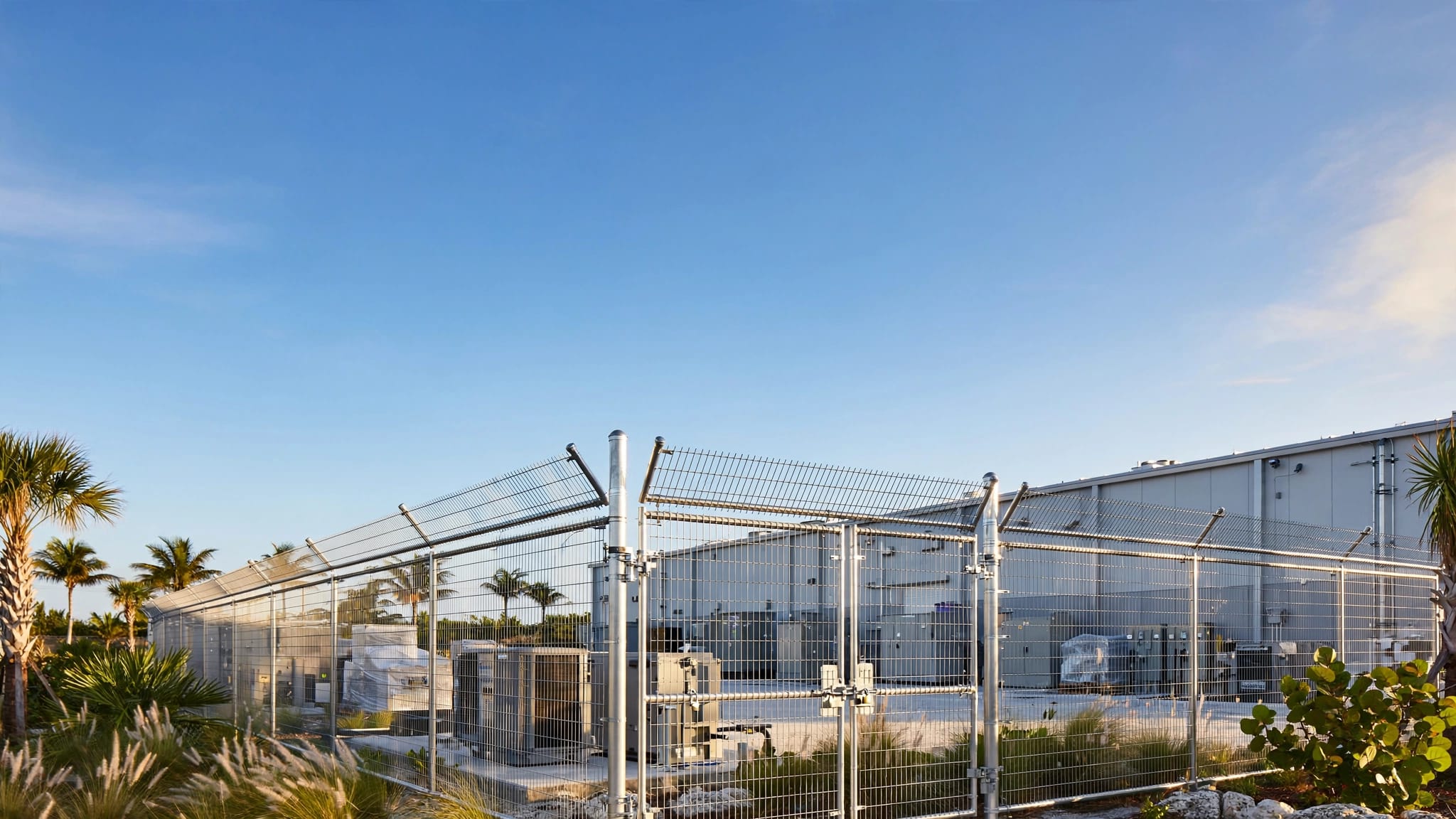
Chain link remains a practical choice for long commercial runs. It provides a clear boundary, allows natural surveillance, and is easier to repair than many solid systems. Commercial chain link fence installation can include galvanized or vinyl-coated fabric, different framework sizes, and security-focused gate construction.
Where chain link works best
Open chain link suits the outer perimeter, employee access areas, utility zones, and service entrances. It also works well where owners want cameras and staff to see through the fence.
Galvanized steel has a zinc coating that helps protect the underlying metal. Vinyl-coated chain link adds another protective layer and can create a more finished appearance. In coastal locations, ask how the installer will protect cut ends, posts, clamps, tension bands, and gate hardware.
The fabric is only one part of the security system. A fence can still perform poorly if the posts are undersized, the gate frame flexes, or the hinges corrode. For higher theft risks, discuss mesh size, framework, anti-climb details, and the relationship between the fence and the access-control system. Anti-climb security fencing may be appropriate in selected areas, subject to local approval.
Why chain link may not satisfy screening
Cape Coral expressly prohibits chain-link fencing, with or without slats, when it is used for required self-storage screening. That rule does not mean chain link is prohibited for every security purpose. It means a facility may need a separate approved material along public-facing or neighboring-property edges.
Privacy slats can reduce views and provide some screening, but they don't automatically meet an opaque screening requirement. They also change the wind behavior of the fence. Review commercial chain link fence slats as a design option, not as a substitute for local code confirmation.
Aluminum Fencing for Visibility and Coastal Appearance
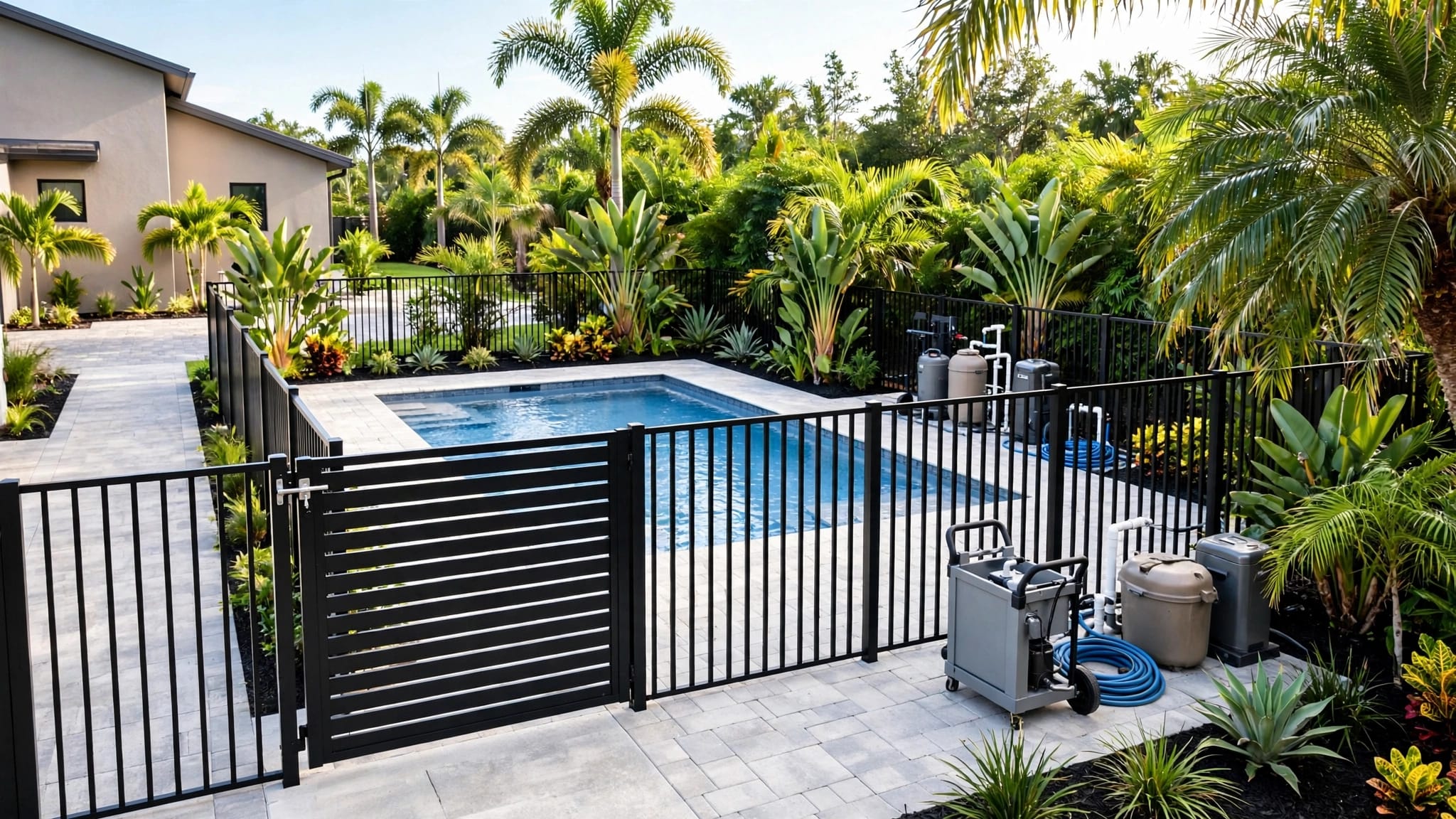
Aluminum fencing gives a facility a cleaner appearance than basic chain link. Open pickets and rails preserve views, allow airflow, and can work well along an office entrance, main frontage, or customer-facing section.
Advantages and limitations
Aluminum does not develop red rust like uncoated steel. A quality powder-coat finish can also reduce maintenance in a wet climate. However, aluminum can still corrode when salt deposits collect around scratches, fasteners, joints, and trapped moisture.
Open aluminum provides little privacy. Customers and passersby may still see storage buildings, vehicles, and service activity. For that reason, it usually works best as a visible frontage or controlled access feature rather than the sole screening solution.
The material also costs more than basic chain link in many projects. That added cost may make sense where appearance, low maintenance, and corrosion resistance matter more than full concealment.
Pay attention to hardware
Fence panels often remain attractive while gates begin to sag or drag. Hinge posts carry repeated loads, and coastal exposure can attack hinge pins, latches, screws, and brackets before the aluminum shows obvious damage.
Ask about the powder-coat performance class, compatible fasteners, and the manufacturer's recommendations for coastal exposure. AAMA 2603, 2604, and 2605 describe different exterior coating performance levels, but the appropriate specification depends on the product, exposure, and warranty.
316 stainless steel may suit highly exposed coastal hardware. However, dissimilar metals can create corrosion problems when they touch and hold moisture. Nylon washers, nonconductive bushings, approved coatings, or other isolation methods may be needed. A written hardware plan is more useful than a general promise that the fence is "coastal-ready."
Vinyl and PVC Privacy Fencing
Vinyl or PVC privacy fencing is useful when the facility must block views. It can screen storage units from a road, conceal equipment and loading areas, and create a cleaner edge beside neighboring properties.
Strong privacy with less routine upkeep
Quality vinyl doesn't rust, rot, or require routine painting. Its smooth surface is also easier to wash after pollen, algae, or storm residue builds up. That makes it attractive for owners who want consistent appearance without regular sealing.
Vinyl is not automatically the right choice for every perimeter. Solid panels reduce visibility and can make camera coverage more difficult. They may also require a stronger post, rail, footing, and gate design than an open fence.
Review vinyl versus aluminum fencing when comparing privacy against airflow and coastal maintenance. The comparison should be treated as general product guidance, not confirmation that either material meets a particular city's screening rule.
Account for wind and gate movement
A solid panel presents more surface area to tropical-storm winds than open mesh or pickets. That doesn't make vinyl unsuitable, but it does make installation details important. Post depth, footing size, reinforcement, panel spacing, corner construction, and gate hardware should match the site's exposure.
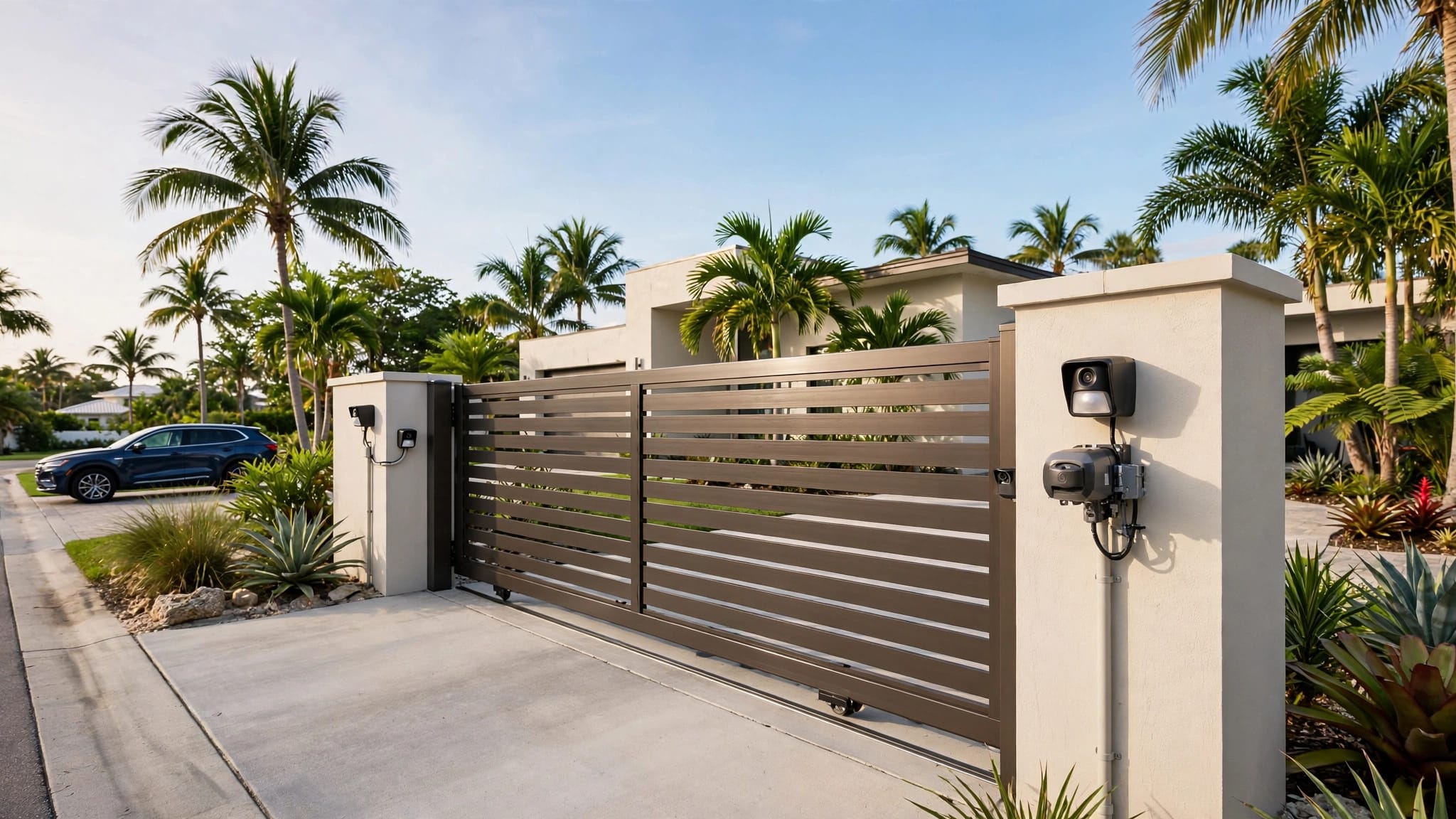
Large vehicle gates deserve special attention. The hinge post and gate frame must support repeated operation without settling or twisting. Keep drainage clear around the opening, and confirm that emergency access remains usable after heavy rain or a storm.
For exposed corners, a mixed layout may work better than a continuous solid wall. The design could use approved opaque screening where concealment is required, then open fencing in less exposed areas where visibility and airflow are more valuable.
Walls, Gates, and Hybrid Fence Designs
Some facilities benefit from more than one fence type. A masonry or concrete wall may provide durable opaque screening along a major road, while chain link protects the less visible sides. Aluminum can define the entrance and improve the customer-facing appearance.
Fort Myers materials show why the exact location and use matter. One standard calls for outdoor storage or merchandise to be hidden by a fence, wall, or vegetative hedge at least 6 feet high, except at necessary openings and gates. Another storage-related standard identifies a 100% opaque, 8-foot-high visual barrier. A separate general provision lists a maximum fence height of 10 feet in commercial and industrial districts.
Those figures address different contexts. They should not be treated as one universal rule for every self-storage property. Commercial fencing for warehouses offers a useful comparison of open security fencing and screened service areas, but your facility still needs a site-specific review.
Gates deserve their own design discussion. Confirm the opening width, daily traffic, operator duty, emergency release, hinge capacity, latch type, and clear access route. Keep landscaping, signs, mulch, and stored materials away from the gate swing or track.
City-by-City Planning and Code Verification
Fence planning should begin with the property's jurisdiction, zoning district, frontage, easements, and proposed use. The same material can receive different treatment depending on whether it provides security, screening, landscaping support, or access control.
Cape Coral requirements
Cape Coral provisions address self-service storage location and screening. The code text identifies designated roadway frontage requirements, including a definition of primary frontage tied to at least 75% of the property's public-right-of-way frontage.
For screening, the code lists a minimum height of 6 feet and requires enough height to conceal stored items. It also prohibits chain link, with or without slats, for that screening purpose.
Before finalizing plans, verify the current commercial fence guideline, permit documents, opacity standards, utility-easement conflicts, and any required landscape treatment with Cape Coral's permitting and zoning departments.
Fort Myers requirements
Fort Myers may apply different standards to outdoor storage, merchandise, visual barriers, and commercial or industrial fences. A 6-foot screen, an 8-foot opaque barrier, or a general 10-foot commercial maximum may apply in different situations.
That difference makes a property-specific interpretation essential. Confirm the zoning district, the storage use, street frontage, gate openings, corner visibility, and whether the fence is being reviewed as screening or general security fencing.
Estero and Bonita Springs
Requirements for Estero and Bonita Springs should be verified with the relevant city, county, zoning, and building authorities before material orders or site work. Review setbacks, height, opacity, landscape buffers, flood or drainage concerns, utility easements, and wind-related structural requirements.
A contractor can help identify practical conflicts, but only the appropriate local authority can confirm approval requirements.
Questions to Ask Before Installation
Use these questions when comparing proposals for a storage facility:
- Which sections need security fencing, and which sections need opaque screening?
- Does the proposed material meet the current zoning and permitting requirements for this parcel?
- How will the design handle wind exposure, storm debris, heavy rain, and drainage?
- What coating, fasteners, hinges, latches, and brackets are included?
- Are the gate posts and footings designed for the gate's size, weight, and daily cycles?
- How will the layout protect utility access and avoid easements?
- Can cameras, patrol staff, and emergency responders maintain useful visibility?
- What parts of the fence will need rinsing, cleaning, inspection, or post-storm repairs?
- Are privacy slats, barbed wire, automated gates, or other security additions subject to separate review?
- Which items are included in the permit plans and written installation scope?
A clear proposal should describe the full system, including posts, rails, fabric or panels, gates, hardware, coatings, footings, and cleanup.
FAQ About Self-Storage Fencing
Is chain link a good choice for a Southwest Florida storage facility?
It can be a strong choice for long perimeters, service areas, and locations where visibility matters. Galvanized or vinyl-coated fabric may provide better protection than unprotected steel. However, chain link may not meet required visual screening rules in certain jurisdictions, including Cape Coral's self-storage screening provisions.
Can privacy slats replace an opaque fence in Cape Coral?
Don't assume they can. Cape Coral's code specifically prohibits chain-link fencing, with or without slats, for required self-storage screening. Confirm whether the planned section needs an opaque fence, wall, or another listed screening method.
Is aluminum better than vinyl near the coast?
Each material solves a different problem. Aluminum offers airflow, visibility, and strong resistance to red rust, while vinyl provides more privacy and simple cleaning. Aluminum still needs suitable coating and hardware, and vinyl requires careful design because solid panels receive more wind pressure.
What usually fails first on a commercial fence?
Connections often fail before the main panels. Hinges, latches, screws, brackets, gate posts, and poorly drained footings receive repeated stress from weather and daily use. Coastal facilities should inspect these points after storms and keep salt deposits from building up.
Conclusion
The right fence for a Southwest Florida storage facility depends on the job each section must perform. Chain link can support visibility and perimeter security, while aluminum improves appearance and vinyl or masonry can provide approved opaque screening.
Start with local requirements, then match the material, hardware, gates, footings, and maintenance plan to the property's exposure. Good self-storage fencing is not a single product. It is a coordinated system that remains secure, serviceable, and appropriate for the site after the next heavy storm.