September 19, 2026
A fence can protect your pool and still make routine service frustrating if the gate is too narrow, poorly placed, or blocked by landscaping. Good pool service access starts with the route crews will use to reach the equipment, not with the fence style alone.
Homeowners in Cape Coral, Fort Myers, Estero, and Bonita Springs should plan access before ordering materials. Pool professionals need a dependable path for carts, hoses, cleaning equipment, replacement parts, and occasional repairs. The right layout also keeps the barrier secure after every visit.
Start with the service route
Walk the route with the pool technician before finalizing the fence line. Mark where equipment enters the property, where it travels, and where it needs to stop.
Map equipment movement from the driveway or side yard
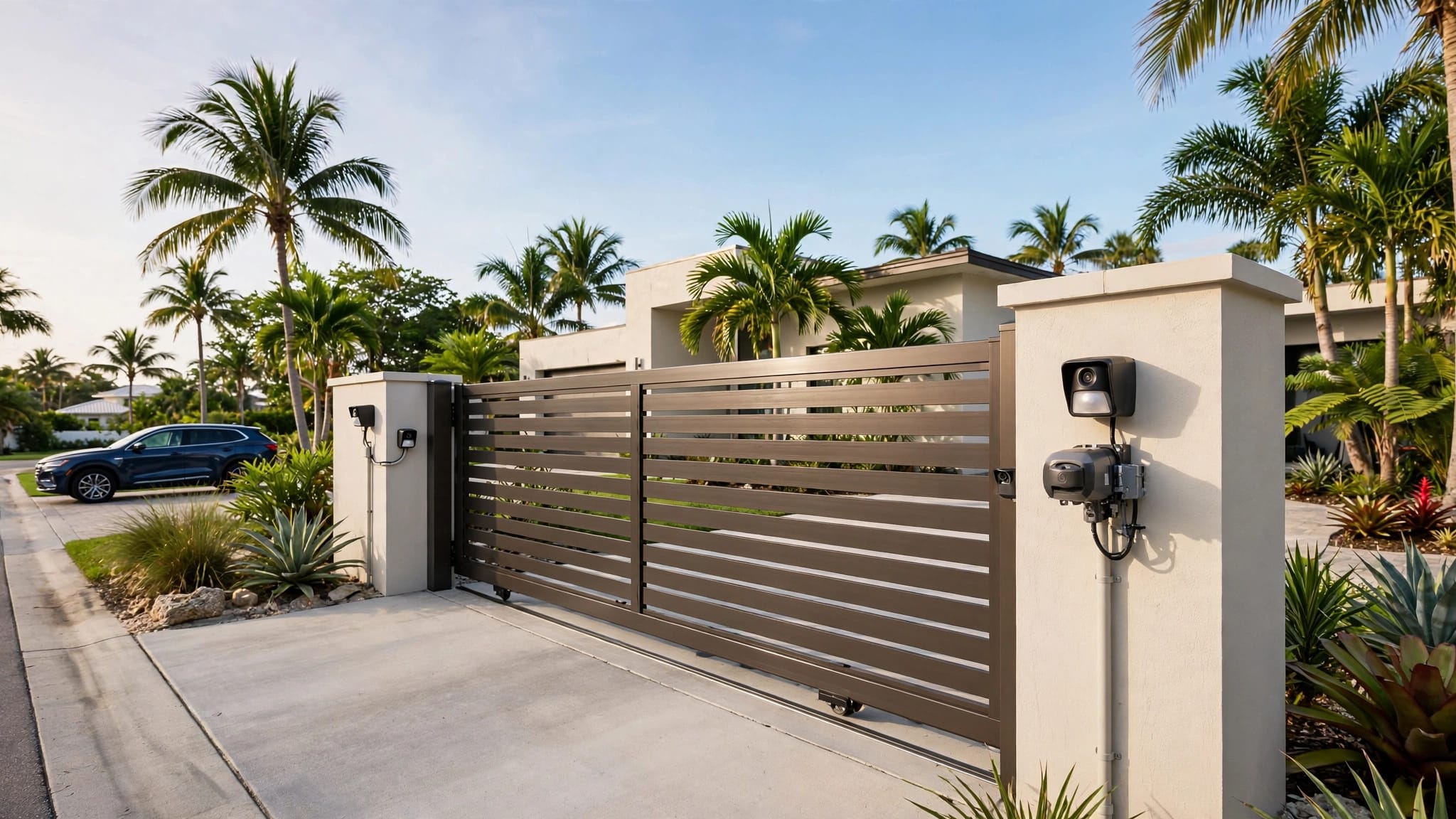
Measure the widest item that may pass through the gate. That could include a service cart, lawn mower, trash bin, mobility device, replacement filter, or other equipment used on the property. A standard pedestrian gate may look attractive but fail when a crew needs to move bulky items.
Note changes in grade, pavers, steps, drainage swales, irrigation lines, and soft ground. A route that works during a dry week may become difficult after heavy rain. Gate posts also need stable ground so the opening stays aligned through seasonal moisture and soil movement.
Give the contractor a sketch or photo showing the route. A clear plan helps connect gate placement with the fence, pool deck, screen enclosure, and equipment pad.
Avoid conflicts with pool cages and landscaping
Pool cage doors, fence gates, storage areas, planters, and outdoor furniture can compete for the same small space. A gate should not open into a narrow path or block the pool cage entrance.
A useful layout aligns the gate with an existing paver path or side-yard walkway. It also leaves room for a technician to stand beside the opening while carrying equipment. These pool cage access gate placement tips show why the service route should be considered alongside the pool enclosure.
Design pool service access around the real route
Pool service access often involves two different boundaries. The property fence may control entry from the side yard, while a separate pool barrier controls entry into the pool area. Treat both gates as part of one operating plan.
Record the gate width and swing direction
Your fence proposal should show each gate location, approximate width, and swing direction. Do not rely on a verbal promise that the opening will be "large enough." The required size depends on the equipment, the approach angle, and the space available on both sides.
A swing gate needs a clear arc. Keep that arc away from driveways, sidewalks, drainage low points, public areas, and the pool cage door. If a swing gate cannot work safely, ask whether another gate arrangement suits the property. The contractor should evaluate the site rather than quote from a photo alone.
Keep daily access practical
A gate that sticks, drags, or requires two hands will eventually be propped open. That creates problems for pool safety, pets, security, and weather exposure.
Set the route up so crews can enter without moving planters or patio furniture. Keep storage benches, coolers, decorative boulders, and other objects away from the barrier. These items can obstruct the gate or create a step that makes a fence easier to climb.
The most useful service gate is the one a crew can use without bypassing the pool barrier or leaving it open.
Match the fence material to the access needs
Material affects gate weight, hardware performance, visibility, maintenance, and the way the route feels in daily use. The fence should support service work without making the backyard look like a utility corridor.
Consider visibility around the pool
Aluminum fencing is common around pools because it keeps sight lines open and holds its shape in a moist environment. Vertical pickets also make spacing easier to review. The Cape Coral aluminum pool fence requirements provide local context for barrier design, gate hardware, and permit planning.
Vinyl can provide more privacy, but solid panels may limit visibility around the pool and service route. Chain link can offer practical access and pet containment, although appearance standards or community rules may affect its use. Wood and privacy fencing can work in the right location, but gate alignment and long-term maintenance deserve close attention.
Plan for Southwest Florida conditions
Salt air, humidity, heavy rain, strong sun, and shifting soil can affect posts, hinges, latches, and gate alignment. Ask how the installer will address drainage, post setting, corrosion resistance, and repeated gate use.
A gate that works on installation day may drag after paver settlement or a period of wet weather. Select hardware suited to the material and ask how the gate will be adjusted if the latch or hinges move over time.
Coordinate access with pool barrier requirements
A pool barrier has a different purpose from an ordinary perimeter fence. It must limit entry to the water and continue working when people, pets, service crews, and weather put pressure on the gate.
Use the correct gate hardware
Pool gates are commonly required to be self-closing and self-latching. Guidance for Cape Coral also commonly references an outward swing away from the pool and a latch release positioned at least 45 inches above the ground.
Test the gate from several positions. Open it slightly, halfway, and fully, then release it. It should close and latch without someone pushing it. Check for sag, hinge tension, a loose strike, or a latch that misses after the gate shifts.
If the pool barrier connects directly to the house, additional safety measures may apply. Ask the local building department or qualified contractor which requirements fit the property.
Check height, openings, and climb resistance
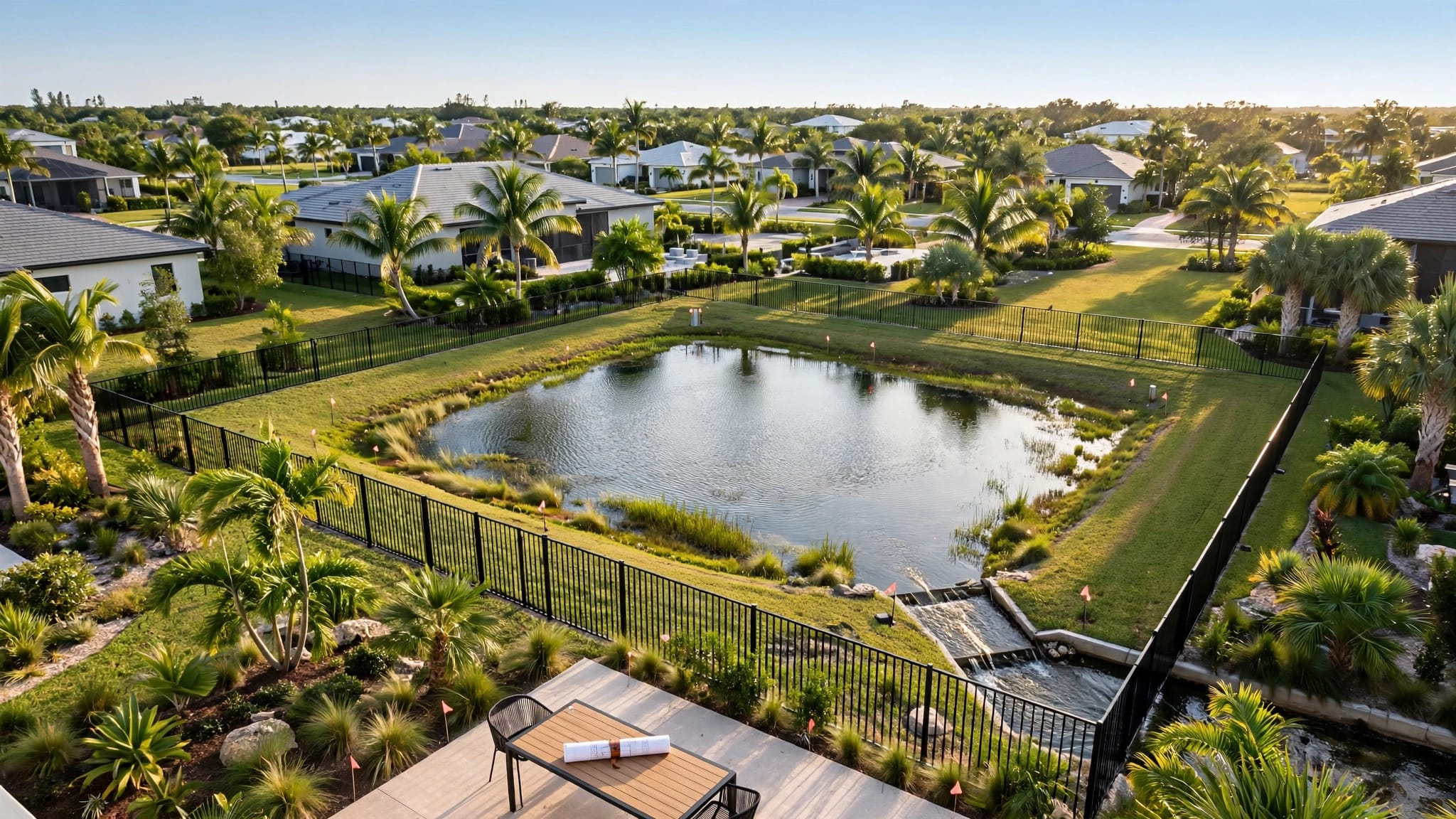
One Cape Coral guidance source lists a 48-inch minimum barrier height, no more than 2 inches of clearance beneath the fence, and openings no larger than 4 inches. Those figures should be checked against the current requirements for the property and jurisdiction.
Horizontal rails, decorative features, nearby benches, and stacked equipment can create footholds. Pool ladders may also need to be removed, locked, or blocked when the pool is not supervised. Review Cape Coral pool fence rules for 2026 before selecting a panel style or gate system.
Service access does not override barrier safety. If a crew needs to enter the pool area, the access plan still has to preserve the required gate operation and barrier protection.
Put access details in the permit plan
A fence plan can show a property boundary without showing how people and equipment will move through the yard. For pool projects, include access information early so the fence and pool work do not conflict.
Show the features that affect the route
A useful plan may include:
- Gate locations, approximate widths, and swing directions
- The house, garage, pool, screen enclosure, equipment pad, and sheds
- Property lines, easements, and rights-of-way
- Canal or waterway lines on waterfront lots
- Paver paths, drainage areas, irrigation, and other features near posts
- The service route from the driveway or side yard to the pool equipment
The Cape Coral fence drawings and survey requirements explain the types of details that may help prevent avoidable plan corrections.
Confirm the governing jurisdiction
Cape Coral rules do not automatically apply to every nearby property. Homes in unincorporated Lee County, including parts of North Fort Myers and Matlacha, may follow county requirements instead of city rules. Fort Myers, Estero, and Bonita Springs may also have their own review procedures.
The Lee County pool barrier and gate requirements offer a starting point for properties outside Cape Coral. Confirm the applicable city or county rules, then check HOA or architectural review requirements before materials are ordered.
Permit review can also affect the schedule. A Cape Coral fence permit timeline can help homeowners plan around drawings, corrections, and inspections.
Test the finished route with the crew
The final inspection should include more than checking whether the fence looks straight. Have the pool professional or service representative use the route with the equipment they normally carry.
Test the gate in real conditions
Open the gate from the approach side and confirm that the crew can enter without stepping into landscaping or awkwardly turning equipment. Test the latch, hinges, ground clearance, and swing path.
Check the gate after rain, after landscaping is installed, and after nearby pavers settle. A small change at the post can affect the latch. For pool barriers, repeat the no-hands closing test and confirm that the gate latches from different opening positions.
Set a maintenance routine
Keep the service route clear of hoses, furniture, toys, planters, and storage items. Rinse salt and dust from exposed surfaces with fresh water, then inspect hinges, screws, posts, caps, and latch alignment.
After a major storm, check for leaning posts, shifted panels, damaged caps, and gate sag. If the gate repeatedly falls out of alignment, the problem may involve the post or surrounding soil rather than a simple hinge adjustment.
Key takeaways for homeowners and pool crews
Pool service access works best when the route is planned before the fence is installed. Measure the widest equipment, document the gate location, and check the full approach instead of focusing only on the opening itself.
Keep pool barrier rules separate from ordinary yard-fence decisions. A service gate may need to accommodate equipment, but a pool gate still has to close, latch, swing correctly, and maintain the required barrier.
For Southwest Florida properties, drainage, salt air, humidity, and soil movement deserve attention. A durable material helps, but reliable access also depends on proper posts, sound hardware, and a clear route.
Final access-planning checklist
Before approving the fence layout, confirm that:
- The service route starts at the actual driveway, side gate, or property entrance.
- The widest pool-service equipment has been measured.
- The gate location matches the pool equipment and finished walking path.
- The gate swing avoids the pool cage door, driveway, sidewalk, furniture, and public areas.
- Drainage, irrigation, pavers, easements, and property lines are marked.
- The proposal shows gate locations, widths, and swing directions.
- Pool barrier height, openings, clearance, latch height, and gate operation have been reviewed.
- Nearby ladders, benches, planters, and storage items cannot create access or climbing problems.
- The correct city or county has been identified.
- HOA requirements have been checked before ordering materials.
- The completed gate has been tested by the pool service crew.
- A maintenance plan covers hinges, latches, posts, fasteners, and storm damage.
FAQ
Does every pool need a separate service gate?
No. Some properties can use one carefully planned gate, while others need separate access for the yard and pool enclosure. The decision depends on the fence layout, equipment route, pool barrier design, and applicable rules. A separate gate may improve service access, but it still needs a safe location and appropriate hardware.
How wide should a pool service gate be?
There is no single width that works for every property or crew. Measure the widest item that must pass through, then consider the approach angle, turning space, gate hardware, and nearby structures. Ask the contractor to show the proposed clear opening on the plan instead of relying on a general gate size.
Can a service gate be part of the pool barrier?
It can be, but it must meet the requirements that apply to pool barriers. Service convenience does not replace self-closing, self-latching, latch-height, swing-direction, opening, or climb-resistance requirements. Confirm the details with the authority having jurisdiction before installation.
Conclusion
Good pool service access protects the fence, the pool barrier, and the homeowner's daily routine. Start with the equipment route, then coordinate the gate, pool cage, materials, drainage, permits, and maintenance plan.
A fence should not force crews to remove panels or prop open a safety gate. When the access route works in real conditions, the barrier is more likely to stay secure long after inspection day.