November 3, 2026
Sinking driveway pavers often point to a loss of support beneath or beside the edge. A loose restraint, poorly compacted base, moving soil, erosion, or repeated vehicle loads can all contribute.
In Southwest Florida, heavy rain and flat yards can make a small weak spot worse. The visible dip is a clue, but the cause beneath it determines what kind of repair will last.
Start by looking at how the driveway edge holds the pavers in place.
Weak Edge Support and Base Preparation
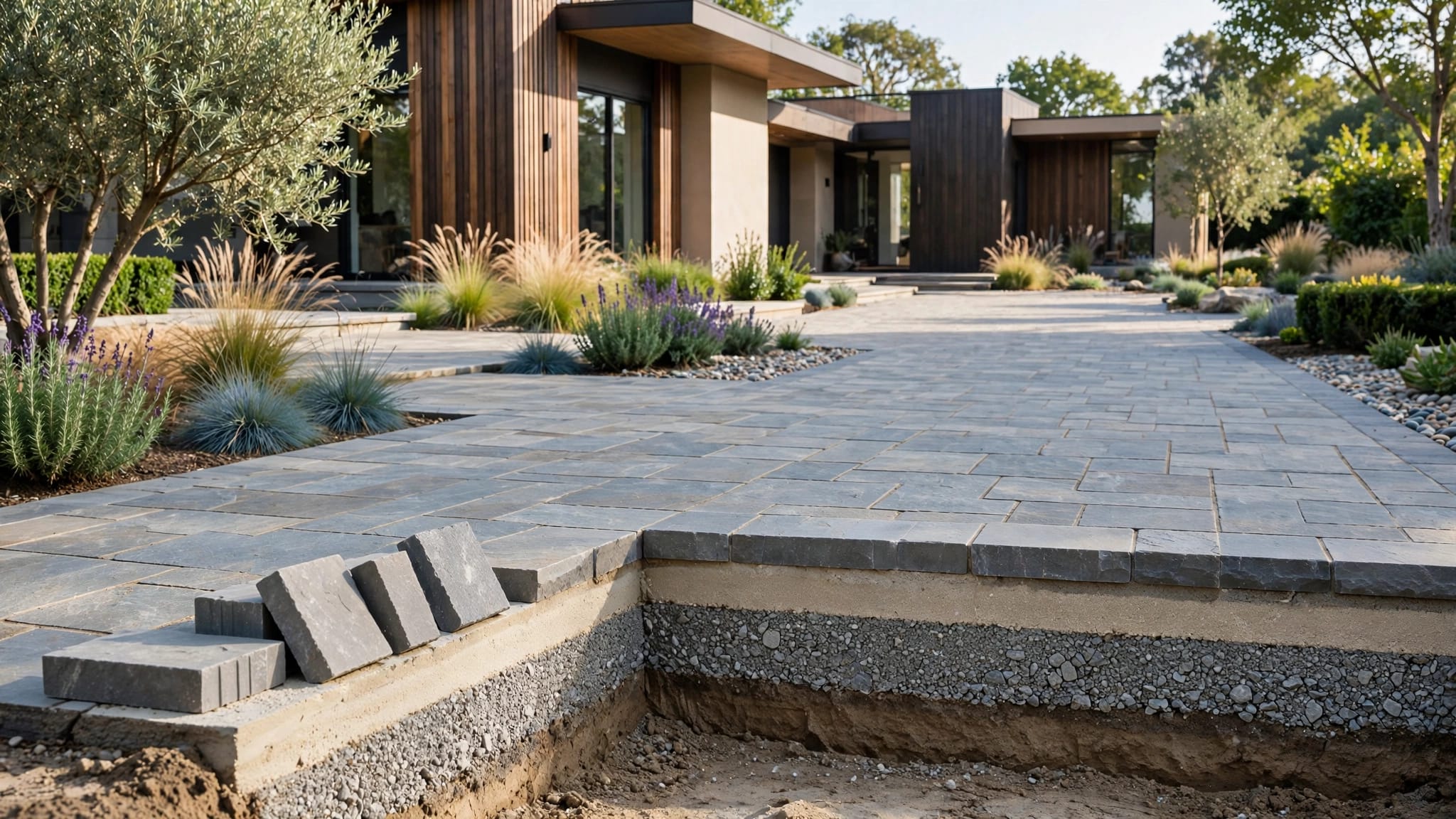
A paver driveway relies on more than the blocks you see. The compacted layers below carry vehicle loads, while the perimeter helps keep the pavers from spreading.
Loose or Missing Edge Restraint
Edge restraint holds the outside row in position. Depending on the installation, it may be a manufactured edging system, a concrete border, or another suitable restraint.
When that support loosens or moves outward, pavers can separate at the joints. The outside row may tilt toward the lawn, and the movement can leave the bedding and base exposed to water. A narrow gap between the driveway and the yard is one sign to look for.
An edge restraint also needs firm support beneath it. Reattaching a loose piece of edging to unstable material may leave the same weakness in place.
An Inadequate Base
The base spreads the weight of a vehicle over the ground below. If installers leave soft soil in place, compact the base poorly, or fail to support the full width of the edge, pavers can settle under repeated traffic.
The problem isn't always visible at first. A driveway may look even when new, then develop a low strip as the underlying material shifts. Adding a thick layer of loose bedding sand won't replace a stable base.
Soil Movement Beneath the Driveway
Soil conditions vary across Southwest Florida properties. One part of a lot may contain sandy fill, while another has denser material or soil disturbed during earlier construction.
Loose or unevenly compacted fill can settle under the driveway. A low section near a former trench, for example, may indicate that the material beneath it has compressed. The pavers follow that movement, even if they remain intact.
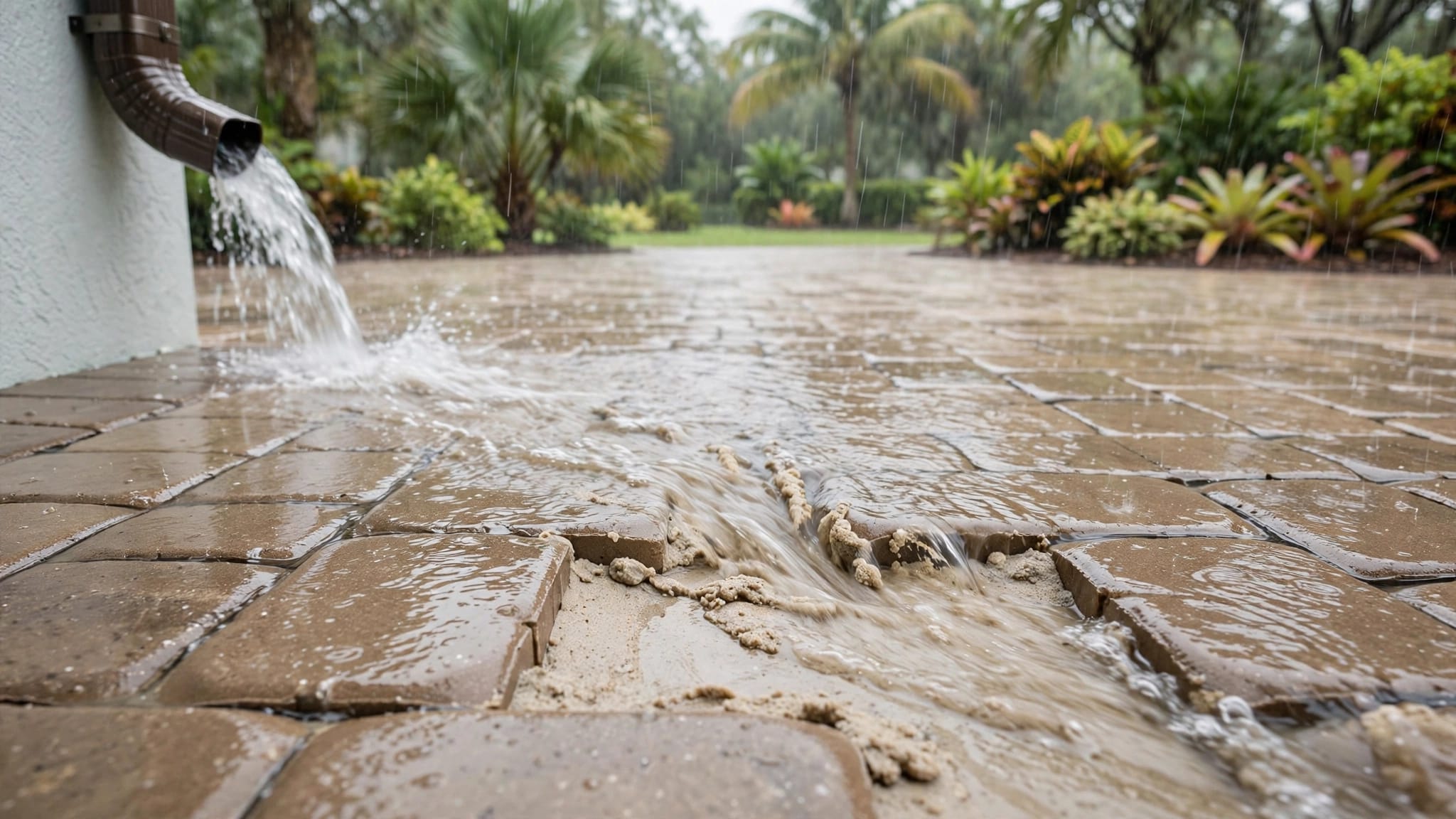
Sandy soil presents a different concern. Water moving through an exposed edge can carry fine material away and leave voids. Meanwhile, other soils may remain wet longer, reducing support where drainage is poor.
A dip that extends well beyond the outer row may involve more than a failed restraint. It can point to movement in the underlying soil or base. The surface pattern alone can't establish which layer has moved, so the affected area may need to be lifted before the cause becomes clear.
Rain, Drainage, and Erosion Along the Edge
Water doesn't automatically cause pavers to sink. Problems develop when runoff concentrates at a vulnerable edge, removes supporting material, or stays where the ground can't drain.
Concentrated Runoff
A downspout that empties beside the driveway can send a large amount of roof water into one small area. Runoff from a lawn, planting bed, or adjoining paved surface can also collect along the perimeter.
Look for channels in exposed soil, displaced mulch, or a small hollow beside the pavers. Those signs can indicate that moving water is removing material. If the pavers slope toward the hollow, settlement may already have reached the base.
Rebuilding the edge without addressing that flow leaves the repaired area exposed to the same runoff.
Standing Water and Limited Drainage
Cape Coral and nearby communities include flat lots, drainage swales, canal-front properties, and areas with high groundwater. During heavy rain, water may have limited room to move or soak into already saturated soil.
A puddle over a low paver doesn't prove water caused the dip. The settlement itself may have created the puddle. Still, persistent water beside the driveway deserves attention because it can reveal a blocked route or an area with weak drainage.
The same site conditions matter for paver patio drainage near fence lines, where grading must protect nearby posts and keep runoff on an appropriate path.
Vehicle Loads Near the Driveway Boundary
A driveway edge can see more stress than its appearance suggests. Tires that repeatedly travel over the outer row concentrate weight near the area with the least lateral support.
Turning adds another demand. When a driver steers while moving slowly into a tight parking space, the tires can push sideways against pavers as well as downward. Over time, a weak edge may spread, dip, or develop uneven joints.
The approach to a gate or garage can make the pattern easy to spot. If one side sits lower along a regular tire path while the other remains level, repeated loading is a useful clue. However, traffic may be exposing an existing base problem rather than causing it alone.
Heavy delivery vehicles can also place greater demands on a driveway than a passenger car. Where those vehicles regularly use the property, the pavement and its edge need support suited to that use.
How to Identify the Likely Cause
Start with the shape of the damaged area. A straightedge or a long level placed across the driveway can make a gradual dip easier to see. Compare the affected edge with a stable section nearby, and note whether individual pavers rock underfoot.
The following signs can help narrow down the problem:
- Widening joints or an outward-leaning row suggest that the edge restraint has moved or lost support.
- A hollow beside the driveway or exposed base material points toward possible washout.
- A depression along a repeated tire path suggests that vehicle loads are contributing to settlement.
- A broader dip across several rows may indicate movement in the base or soil below.
- Ponding after rain shows where water collects, though it doesn't establish which problem came first.
Look at the surrounding yard as well. A downspout, low planting bed, or obstructed swale may explain why water reaches the damaged section. During daylight and from a safe location, observe where rainwater flows instead of relying only on the final puddle.
Several causes can occur together. For example, a loose edge can open a gap, after which runoff removes material and passing tires deepen the dip. Lifting pavers may be necessary to distinguish a shallow bedding issue from damage farther below.
How Sinking Driveway Pavers Are Repaired
A lasting repair addresses the layer that has moved and the reason it moved. The size of the visible dip doesn't always show how much work is needed underneath.
Lift the Pavers and Rebuild Support
For a localized repair, the affected pavers are removed along with enough surrounding material to reach a stable area. The exposed layers can then be examined for voids, soft soil, and loose base material.
If the base has settled, the weak material needs to be corrected and compacted before the pavers go back. Where the underlying soil is unstable, the repair may need to extend deeper or cover a wider area. The finished surface should meet the adjoining driveway without a raised lip or a new low spot.
The principle is similar to correcting uneven pavers at a turf walkway: lift the low section and fix its support. A driveway repair must also account for vehicle loads.
Restore the Edge and Joint Material
Once the support is sound, the perimeter restraint can be reset or replaced as needed. The outside row should stay in position without pushing into loose soil beside it.
After the pavers are reset, the joints need the material appropriate to the paving system. Joint sand helps maintain the joints, but sweeping more sand over a sunken surface won't rebuild a failed base.
For a large depression, recurring movement, or damage close to structures, a paving professional can assess the full affected area. Keep vehicles off a visibly unstable section until it has been repaired.
Plan Drainage and Fence Work Together
A driveway repair beside a fence needs room for both stable paving and water movement. Raising the border to eliminate a puddle can create another problem if it sends runoff toward fence posts, a building, or a neighboring property.
Keep existing swales and drainage routes open. Depending on the site, a repair may involve adjusting the grade or adding a collection system with an appropriate outlet. A drain alone won't solve the problem if it has nowhere suitable to discharge.
High groundwater matters too. Permeable pavers use a purpose-designed base and joints, but they can't force water into saturated soil. Standard driveway pavers shouldn't be treated as a permeable drainage system simply because they have joints.
Excavation near a fence can disturb post footings or buried lines. Call 811 before digging, and account for private lines as well. Our guide to protecting fence posts during driveway replacement covers access, gate clearance, and the driveway-to-fence transition.
How to Help Prevent Settlement from Returning
A well-supported edge starts below the finished surface. The base should extend beneath the perimeter, and the restraint should sit on firm material suited to the driveway's expected use. Both sides of the transition need support, including the adjacent lawn or landscape bed.
Keep concentrated water away from exposed soil beside the pavers. Downspout discharge should follow the property's drainage plan, and swales should remain clear of mulch, soil, and other obstructions. Avoid filling a low area in a way that blocks its intended drainage route.
After heavy rain, look for fresh erosion, loose border pavers, and joints that are beginning to open. Also watch for changes in gate clearance or a new lip where the driveway meets a walkway. Addressing movement early can limit the area that needs to be lifted.
If a landscape bed borders the driveway, choose a layout that leaves the edge visible and accessible. Our landscape design and installation services can help with the surrounding yard, while keeping the driveway's drainage path in view.
Give the Edge Support That Lasts
A sunken driveway edge is a surface symptom of a problem with support, water movement, or loading. Identifying the pattern helps you focus the repair on the affected layers.
A stable base and secure perimeter give the pavers a better chance of staying level. Keeping runoff on a workable path helps protect that repair through Florida's heavy rains.