February 15, 2026
A fence looks simple until the permit reviewer asks for one missing page, or a clearer survey, and your timeline slips a week. In Cape Coral, the fastest permit is usually the one that reads like a tidy story: clear property lines, clear fence layout, clear materials, and the right signatures.
This guide walks homeowners and contractors through a practical Cape Coral fence permit checklist for 2026. You'll see what must show on surveys and drawings, which forms commonly get missed, and how to package PDFs so reviewers can approve instead of asking questions.
Because requirements can change (and some rules depend on zoning, waterfront conditions, and HOA rules), confirm details with the City before you submit.
Before you apply: zoning, HOA, and who pulls the permit
Start with the City's official pages so you're working from current forms and instructions. Two good starting points are the Cape Coral Building and common permits page and the Cape Coral Permit Document Center. Pull your forms from there, not from an old email thread.
Next, check the rules that affect where and how tall your fence can be. The cleanest way is to look up your zoning and the fence sections in the Cape Coral Land Development Code. Height limits and visibility rules often change by yard location (front vs side vs rear), corner lots, and canal frontage.
HOA approval is a separate gate. If your neighborhood has an Architectural Review process, get that approval first. City reviewers may still approve a permit without HOA paperwork, but homeowners typically want HOA sign-off to avoid paying twice.
Finally, decide who applies:
- Licensed contractor : Typically the fastest option because the contractor can submit, revise, and schedule inspections without owner-builder restrictions.
- Owner-builder : If you act as your own contractor, expect extra disclosures and, in many cases, notarized forms. Owner-builder rules can also limit who can perform the work, and they can restrict selling or leasing for a period of time. Confirm the City's current requirements before choosing this route.
If you're still vetting installers, this short list of questions to ask before hiring a fence contractor in Cape Coral helps you confirm licensing, insurance, and who handles permitting.
What your survey and site plan must show (and what reviewers reject)
Think of the survey and site plan like a map for someone who has never seen your yard. If the map is fuzzy, incomplete, or missing easements, the reviewer can't safely approve it.
Survey requirements (what to include):
- Most recent signed and sealed survey you have, especially if it's the latest survey from closing.
- If you don't have a recent sealed survey, a boundary survey may help, as long as it clearly shows property lines and key easements. When in doubt, ask the City what they'll accept for your address.
- All easements and rights-of-way shown on the survey (utility, drainage, access, seawall, ingress and egress).
- Any encroachments or recorded constraints that touch the fence line.
Site plan requirements (what to draw on top of the survey, or as a clean site sketch):
- Fence line with dimensions (lengths for each run).
- Fence height by run (front, side, rear can differ).
- Gates : locations, widths, and swing direction if it matters for clearance.
- Distance from fence to property lines and to any easements you are avoiding.
- For canal lots, show the waterway or seawall line and label it clearly.
A common resubmittal trigger is a fence drawn "near the line" with no measurements. If the reviewer can't confirm it's outside easements, they can't approve it.
Use this copy/paste checklist table when you build your packet:
| Packet item | Must show (minimum) | Common resubmittal trigger |
|---|---|---|
| Survey | Latest signed and sealed survey (or boundary survey accepted by City), property lines, easements, right-of-way | Blurry scan, missing easements, outdated survey with unreadable seal |
| Site plan | Fence route, lengths, heights, gate widths/locations, distances to lines and easements, label canal/seawall if applicable | No dimensions, fence drawn off-lot, missing gate info |
| Plan drawings | Plan view plus elevations, post spacing, corner/end/gate post callouts, footing notes | "Typical fence" note with no spacing or post details |
| Specs | Material, style, color, height, picket spacing, manufacturer cut sheets | No product identification, height not stated |
| Forms | Application, contractor authorization or owner-builder forms, easement disclosure if required, signatures | Missing signatures, wrong applicant, notarization missing when required |
| Conditional docs | Notice of Commencement (if cost threshold applies), environmental affidavits if required | NOC missing, affidavit missing for site conditions |
One more must-do before any digging: call 811 to get utilities marked. Even a perfect permit packet won't protect you from a hit line.
Fence drawings and product info: plan view, elevations, gates, and wind details
A fence permit submittal is not just a sketch of a rectangle. Reviewers want enough detail to confirm it meets code and won't create a hazard.
At minimum, include two drawing views :
- Plan view : a top-down layout that matches the site plan, with fence runs, gates, and transitions.
- Elevations : what the fence looks like from the side, including height, picket spacing, and any solid privacy sections.
Then add the construction details that stop resubmittals:
- Post spacing : list typical spacing (for example, "posts at X ft on center"), and call out any tighter spacing near corners or gates.
- Footings : note hole diameter and depth, and whether you're using concrete. Sandy soils and wind exposure make footing notes important in Southwest Florida.
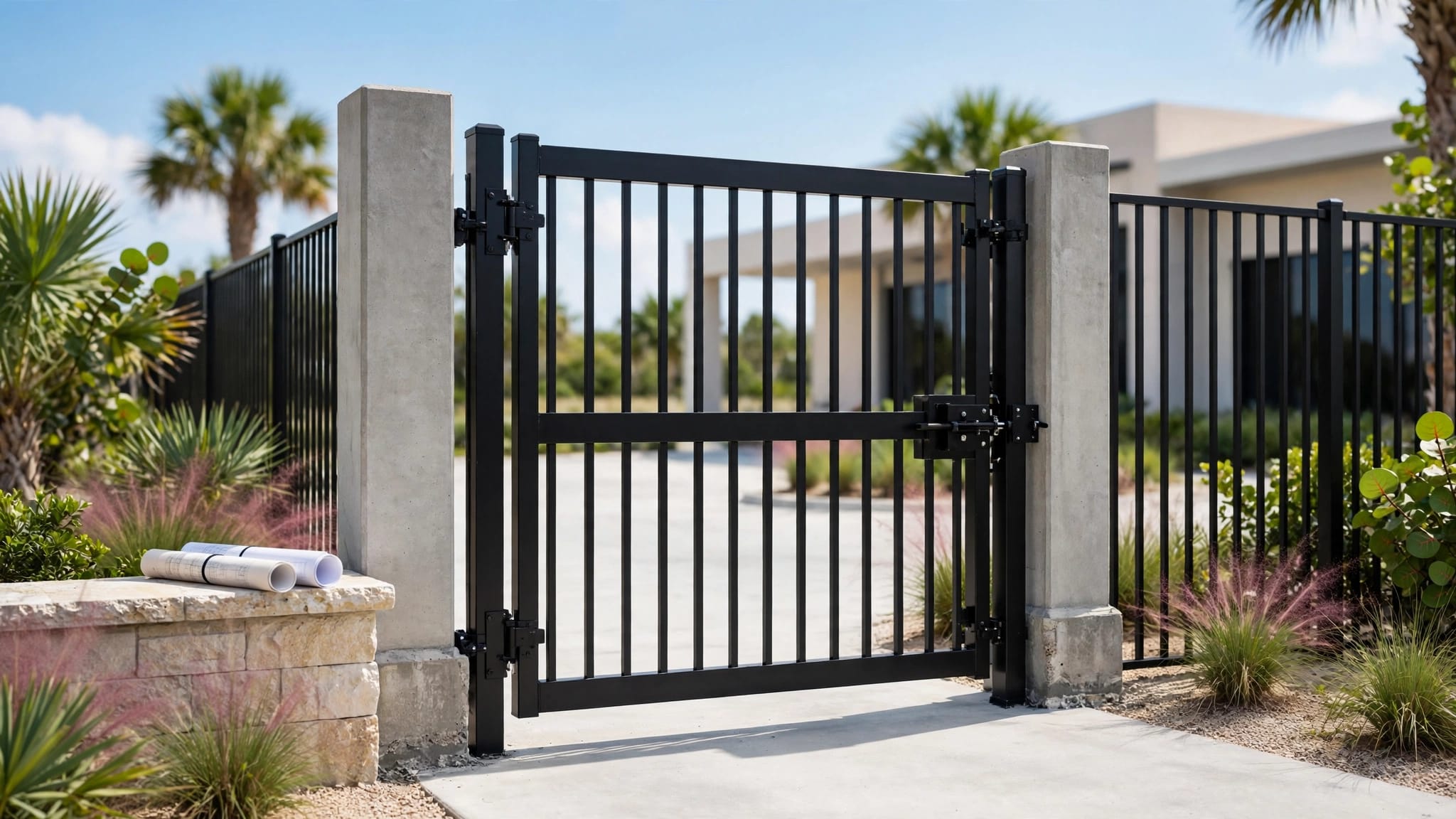
- Gate hardware : specify hinges, latches, and locking method. If the fence is a pool barrier, note self-closing and self-latching requirements on the gate hardware.
- Wind exposure notes : taller privacy fences can act like sails. If your fence system has engineered details, include them. When a product has Florida Product Approval or Miami-Dade NOA documentation, attach it if applicable to your fence type and height.
Waterfront lots need extra care. Canal properties often have visibility and open-style expectations near water and at corners. Also, salt air changes hardware choices fast, so stainless or corrosion-resistant hardware is worth listing on the specs.
For a quick budget gut-check before you lock the design, see this guide on fence installation costs in Cape Coral, FL. Pricing affects height, gates, demo, and access, which can also affect what you show on plans.
Fastest path to approval: submission order, PDF naming, and resubmittal-proof habits
If you want speed, build the packet in the same order the reviewer thinks. Use the City's process instructions for electronic submittals, including file handling and uploads, in the Cape Coral ePlan instructions (PDF).
Here's a reviewer-friendly submission order that works well for most fence permits:
- Application + applicant authorization (contractor authorization, or owner-builder forms if used)
- Survey (clean, legible, full-page, not cropped)
- Site plan (on top of survey, or drawn to match it exactly)
- Fence drawings (plan view + elevations + construction notes)
- Specs and cut sheets (material, style, height, color, gates, hardware)
- Disclosures and conditional forms (easement disclosure if required, Notice of Commencement when the cost threshold applies, and any required affidavits for site conditions)
PDF naming matters more than most people think. Use a simple convention so the reviewer never has to guess what they're opening:
-
01_Application_Authorization.pdf -
02_Survey_Sealed.pdf -
03_SitePlan_OnSurvey.pdf -
04_FencePlans_PlanView_Elevations.pdf -
05_ProductSpecs_CutSheets.pdf -
06_NOC_and_Affidavits.pdf
Also, keep each PDF upright, readable, and under any posted size limits. If you revise a file, add a date: 03_SitePlan_OnSurvey_2026-02-14.pdf
. That one habit prevents a lot of "wrong version reviewed" delays.
Shared or neighbor fences deserve a quick pause. Don't place a fence on a property line unless both owners agree in writing. Even when it's "obvious" where the line is, the survey is the only thing the City can rely on.
Conclusion
Fence permits don't have to be a grind. When your survey is readable, easements are addressed, and your drawings show real build details, reviewers can approve without back-and-forth. Use this checklist, follow the City's current forms, and label your PDFs like you want a stranger to understand them in 30 seconds.
If you want help selecting the right style for your lot and getting the details right the first time, start with residential fencing options in Cape Coral and build your permit packet around a final, code-friendly design.