February 17, 2026
After a hurricane or tropical storm, your fence can look "mostly fine" and still be one hard gust away from failure. That's because the worst problems often hide at the posts, inside the rails, or in a gate that quietly twisted under pressure.
If you're weighing Cape Coral fence repair versus replacement in 2026, start with one goal: figure out what's cosmetic and what's structural. This guide shows you how to spot hidden post damage, panel fatigue, and gate frame twist, using a simple inspection workflow you can do before you call for quotes or file a claim.
What storms really do to fences in Cape Coral (and why damage stays hidden)
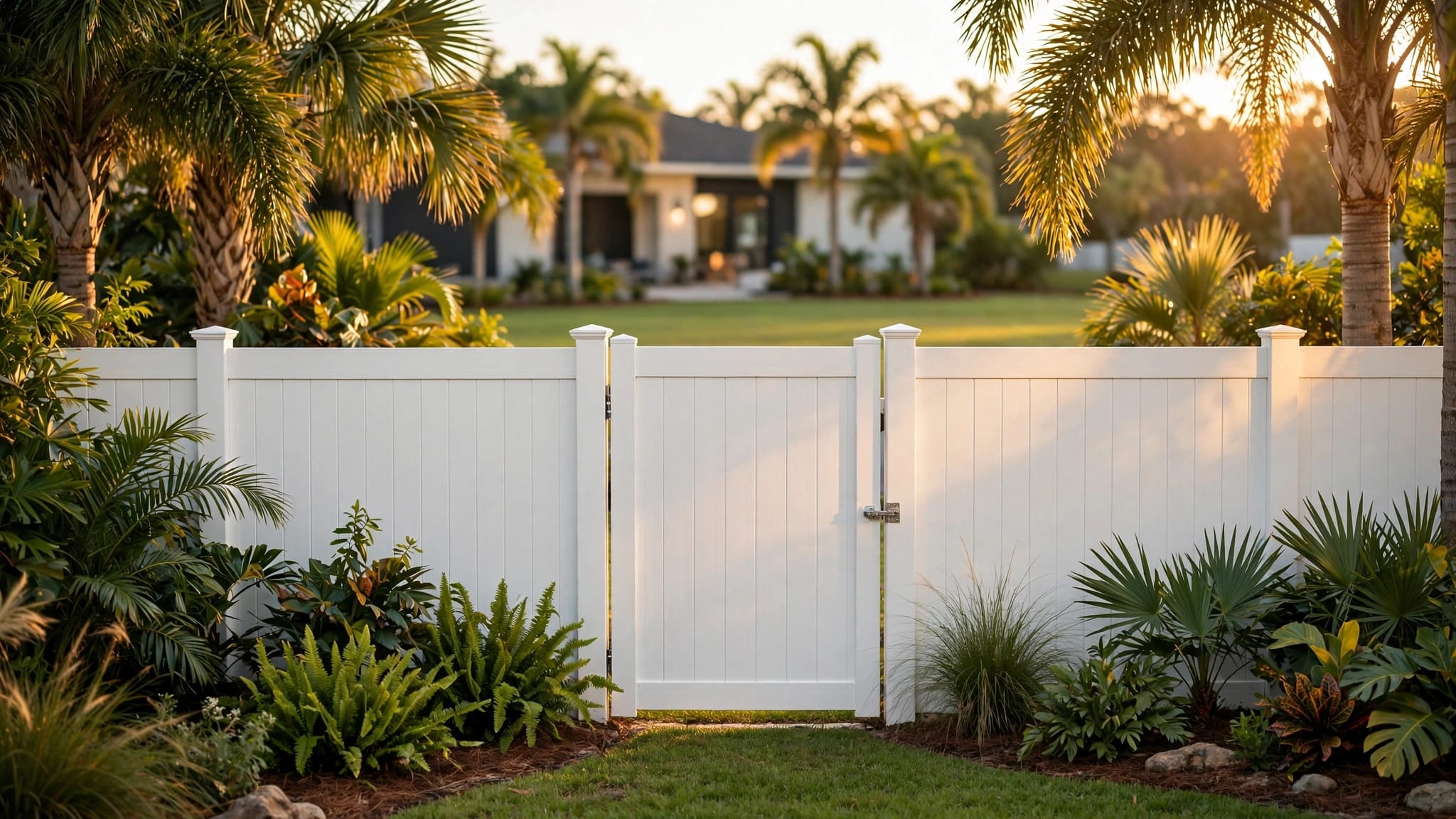
 Photo by Castorly Stock
Cape Coral fences fail for predictable reasons. Wind pushes, then releases, then pushes again. Think of your fence like a paperclip. Bend it once, it might survive. Bend it back and forth, it weakens where you can't see it.
Coastal Florida adds three extra stressors:
Salt air speeds up corrosion on hinges, screws, and steel inserts. Floodwater and wet soil keep post bases saturated for days. Sandy fill can wash out around footings, leaving concrete "floating" in a wider hole.
Hidden damage usually shows up in these spots:
- Below-grade post rot and voids : The post looks solid above ground, but it's punky at the soil line.
- Panel fatigue : Fastener holes stretch, rails loosen, and panels "oil can" (flex and stay wavy).
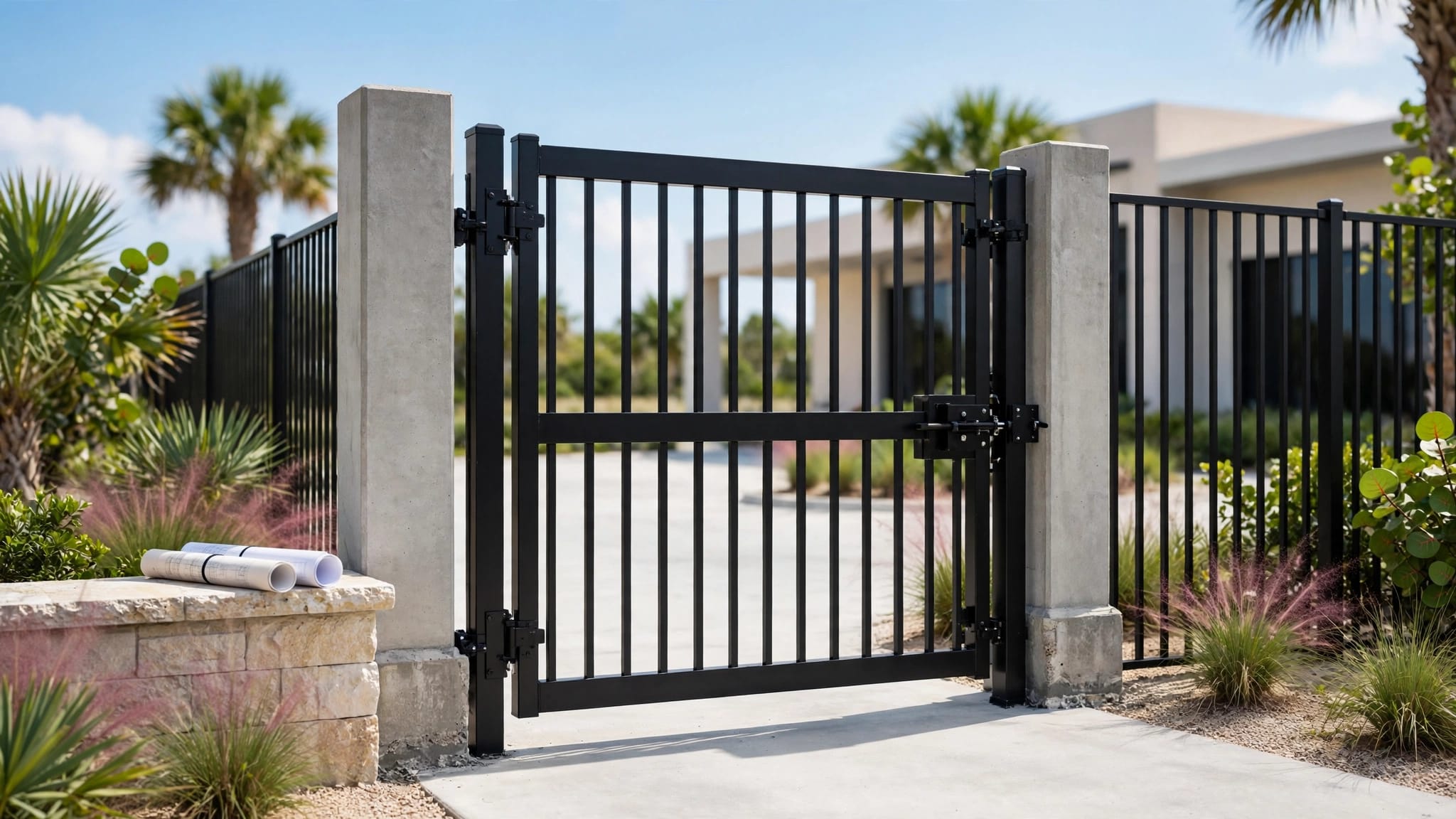
- Gate frame twist : The gate still swings, but it racks out of square, so the latch barely catches.
If a fence leans more after you nudge it with one hand, the problem is rarely the panel. It's almost always the post or the footing.
A step-by-step post-storm fence inspection workflow (tools, tests, and measurements)
Before you touch anything, watch for hazards. Downed wires, hanging branches, and unstable sections can hurt you fast. If a fence is supporting debris, don't pull it free until the area is safe.
Tools you'll want on hand
A short tool set makes your inspection faster and more objective:
- 4-foot level (or a post level), tape measure, and string line
- Flat screwdriver or awl (for probing wood)
- Flashlight, work gloves, and a phone for photos
- Adjustable wrench or socket set (for hinge and latch hardware)
- Straightedge (or any straight board) for checking bends
The workflow (in order)
- Walk the line and mark "zones." Use your phone notes. Mark corners, gate posts, and long straight runs. These take the highest loads.
- Check post plumb and movement.
Put the level on each post face. Then push the post at the top with steady pressure.
- If the bubble moves and the base shifts, suspect a loose footing or washed-out soil.
- If the post flexes but the base stays, suspect internal cracks, rot, or a split.
- Probe for rot at the soil line (wood posts).
Probe all sides 1 to 3 inches above grade and right at grade.
- Easy penetration, spongy fibers, or a hollow sound points to rot.
- Dark staining plus a soft ring is a common "looks fine until it snaps" sign.
- Look for panel fatigue clues.
Focus where rails meet posts and where screws or nails sit.
- Vinyl: stress whitening, hairline cracks near routed holes, or rails that pop loose after you press.
- Wood: elongated nail holes, rail end splits, and pickets that loosen in clusters.
- Chain link: loose fabric, bent tension bars, and top rail joints that slipped.
- Test gate sag and hinge-side failure.
Open the gate halfway and lift up on the latch side.
- If it lifts and drops with a clunk, hinges are loose or the hinge post moved.
- If the latch hits low, the gate likely racked or the post leaned.
- Check for metal deformation and twist.
Use a straightedge on aluminum and steel members.
- Look for kinks, flattened spots, cracked welds, or hinge plates that pulled.
- Measure gate diagonals corner to corner. If they differ, the frame twisted.
For deeper repair basics and what pros look for, see this Cape Coral fence repair homeowner guide.
Fence repair vs replacement after a storm: how to decide without wasting money
A clean repair is great when the structure is still sound. The trouble starts when you keep repairing parts that are attached to failing posts, fatigued panels, or a gate that never stays square.
Here's a quick way to sort it out. Use it after you finish the inspection above.
| What you found | Usually a repair | Usually a replacement |
|---|---|---|
| 1 to 2 damaged sections, posts plumb and firm | Replace panels, pickets, rails, or fabric | Not needed |
| One loose post, concrete intact, soil washed out | Re-pack and re-grade, sometimes reset | If multiple posts shifted |
| Soft wood at soil line, rot ring, or termites | Replace that post, rebuild section | If rot is widespread |
| Vinyl rails popping out, stress cracks at several bays | Possible, if posts are solid | If cracking repeats across runs |
| Gate won't latch, frame out of square, hinge post leaning | Hardware upgrade or rebuild gate | If posts moved and frame twisted |
| Repaired the same line twice in 2 years | Not a good sign | Often cheaper long term |
The "false economy" pattern is easy to recognize in Cape Coral. You reset one post, then the next storm racks the next one. A month later the gate sags again. At that point, you're paying for labor over and over, while the fence keeps getting weaker.
Replacement tends to win when more than a few posts are compromised, when long runs show fatigue, or when a gate opening can't hold alignment. Corners and gate posts matter most. If they're failing, the rest follows.
If you want a material-specific read for windy, salty conditions, this hurricane resistant fences Cape Coral guide and the vinyl vs aluminum fence comparison (2026) explain what holds up best and why.
For a broader repair-or-replace decision framework, this repair vs replace after Cape Coral storm damage breakdown is a helpful reference.
Insurance-claim prep and temporary mitigation (what to document and what not to throw away)
Insurance goes smoother when your photos tell a clear story. Start documenting before you move panels, even if you need to secure the area quickly.
What to photograph (and how)
Take wide shots first, then close-ups.
- Wide shots from each corner of the yard, showing the whole run
- Each damaged section straight on, plus a 45-degree angle
- Posts at grade (soil line), leaning posts with a level in frame
- Gate hinges, latch alignment, and any pulled fasteners
- Debris impact points (branches, dents, punctures)
- Standing water, washout, or soil erosion around footings
Also keep receipts for any emergency materials. That includes straps, temporary panels, and fasteners.
Temporary fixes that help without creating new problems
You can often reduce risk while you wait for an adjuster or contractor:
- Brace a leaning section with a 2x4 to a ground stake
- Remove a loose panel that could become airborne (save it for inspection)
- Zip-tie chain link fabric to stop flapping and further tearing
- Cover sharp edges and isolate unstable areas from kids and pets
Don't "clean up" the evidence too well. Save broken hardware and damaged panels until the claim is settled.
If you need a stamped report for structural questions, or the damage involves more than a fence (like walls or framing), a professional inspection can support documentation. In Lee County, options include services like Lee County storm damage inspections.
Conclusion
Post-storm fence decisions get easier when you measure, probe, and test instead of guessing. In Cape Coral, hidden post damage, panel fatigue, and gate frame twist often decide whether Cape Coral fence repair will hold, or whether replacement is the safer move. Start with the hinge posts and corners, document everything, then choose the fix that won't send you back to the same problem after the next storm.