February 19, 2026
A new fence feels simple until the permit office asks for one missing detail and your timeline slips. In 2026, a Fort Myers fence permit is still one of the easiest ways to avoid a stop-work notice, a neighbor dispute, or a fence that has to move after it's built.
The good news is this, most delays come from the plan, not the fence. If you handle the basics up front, approvals usually go smoother. Below is a homeowner-friendly guide to what matters most, what reviewers commonly flag, and when it makes sense to let a licensed contractor pull the permit.
First, confirm your jurisdiction (City of Fort Myers vs Lee County)
Before you buy panels or schedule an install, confirm who issues your permit. In Southwest Florida, that often comes down to one question, are you inside Fort Myers city limits , or are you in unincorporated Lee County?
Start with the City's official permitting hub because it's where many homeowners grab the right forms and applications: Fort Myers permits and applications. If you're outside city limits, Lee County's guide is the better starting point: Lee County Residential Fence Guide (PDF).
HOAs add another layer. Even when the City or County approves your fence, your HOA can still require a specific style, color, or height. If your neighborhood has an ARC, get that approval in writing early. It's like packing for a trip, you don't want to find out you forgot your passport at the airport.
One more common mix-up is assuming "replacement" means "no permit." Many jurisdictions still require permits when you replace a fence, especially if you change location, height, or material. When in doubt, call the building department and ask what triggers review for your address.
If you're not sure who your permitting authority is, don't guess. The right office depends on your property's location, not your mailing address.
What your Fort Myers fence permit submittal needs to show (so it passes plan review)
Plan review is mostly a clarity test. Reviewers want to confirm your fence won't create a safety issue, block access, or land in the wrong place. The City of Fort Myers publishes a helpful plan example and common rules in its standard details packet: Fence standard details and regulations (PDF).
Expect your site plan to do the heavy lifting. You don't need fancy drawings, but you do need a plan that matches reality.
Here's a quick reference of what typically belongs on a fence permit packet.
| Item reviewers look for | What "good" looks like |
|---|---|
| Property lines and a survey base | A recent survey, or a clearly dimensioned plan tied to known boundaries |
| Fence location and length | Fence runs labeled, with gate locations and total linear footage |
| Setbacks from streets and corners | Fence pulled back where required, especially near intersections |
| Easements and drainage areas | Easements shown, with the fence kept out of drainage easements per local rules |
| Materials and "see-through" style | Fence type noted (vinyl, wood, aluminum, chain link), plus any openness requirements |
| Utility locate note | A note that underground lines will be located before digging (the City references calling 1-800-SUNSHINE) |
| Pool barrier details (if applicable) | Gate swing, latch, and self-closing details shown when the fence is a pool barrier |
| Wind and structural notes | Extra details if the fence is taller, more solid, or structurally demanding |
After you lay out your plan, watch for the "approval killers" that pop up all the time in Fort Myers and Lee County reviews:
- Easements : Utility easements can allow fencing in some cases, but you may be responsible if utilities need access later. The City's standard details spell out that easement fencing can become the owner's problem during utility work.
- Drainage : Don't place fencing inside a drainage easement. That note is called out directly in the City document.
- Corner-lot sight lines : Corners often have visibility areas where tall or solid fencing creates a blind spot. Even if your fence is "on your property," it can still fail safety review at intersections. For a practical explanation of how sight lines trip up fence plans, this breakdown is useful: corner lot visibility triangle rules.
- Pool barrier rules : If the fence is part of a pool enclosure, gates and latches matter as much as height. Many denials happen because gate hardware is missing from the plan.
- Call before you dig : Utility locates are non-negotiable for safety. Striking a line can injure someone and stop the job.
A simple pre-submittal checklist helps prevent the back-and-forth:
- Confirm your property lines with a survey before setting posts.
- Mark all easements from the survey (utility, drainage, access).
- Sketch your fence so it avoids corners with limited visibility .
- Note the fence type, height, and gate widths on the plan.
- Add a note about utility locates before digging.
- If this is a pool barrier, include self-closing and latching gate details .
DIY vs hiring a licensed contractor (and who can pull the permit)
Some homeowners want to DIY, and that can work if your layout is straightforward and you're comfortable reading a survey. Still, permitting is where DIY projects often bog down. A contractor who installs fences every week already knows what the plan reviewer wants to see, and they'll usually catch issues before they become rework.
In most cases, either the homeowner or a licensed contractor can apply, but rules can vary by scope and jurisdiction. For Lee County, the best overview of the process and responsibilities is in its permitting resources: Lee County residential permit application requirements. If you're inside the City, start with its applications page and confirm who may sign and submit for your project: Fort Myers permits and applications.
Here's a practical way to decide:
- DIY can make sense if you have a clean survey, no easements in the fence path, no pool barrier needs, and no corner-lot complications.
- Hiring a licensed contractor often makes sense if you need demo and haul-off, you have a corner lot, you're near drainage features, or you want a privacy fence that must hold up in storms.
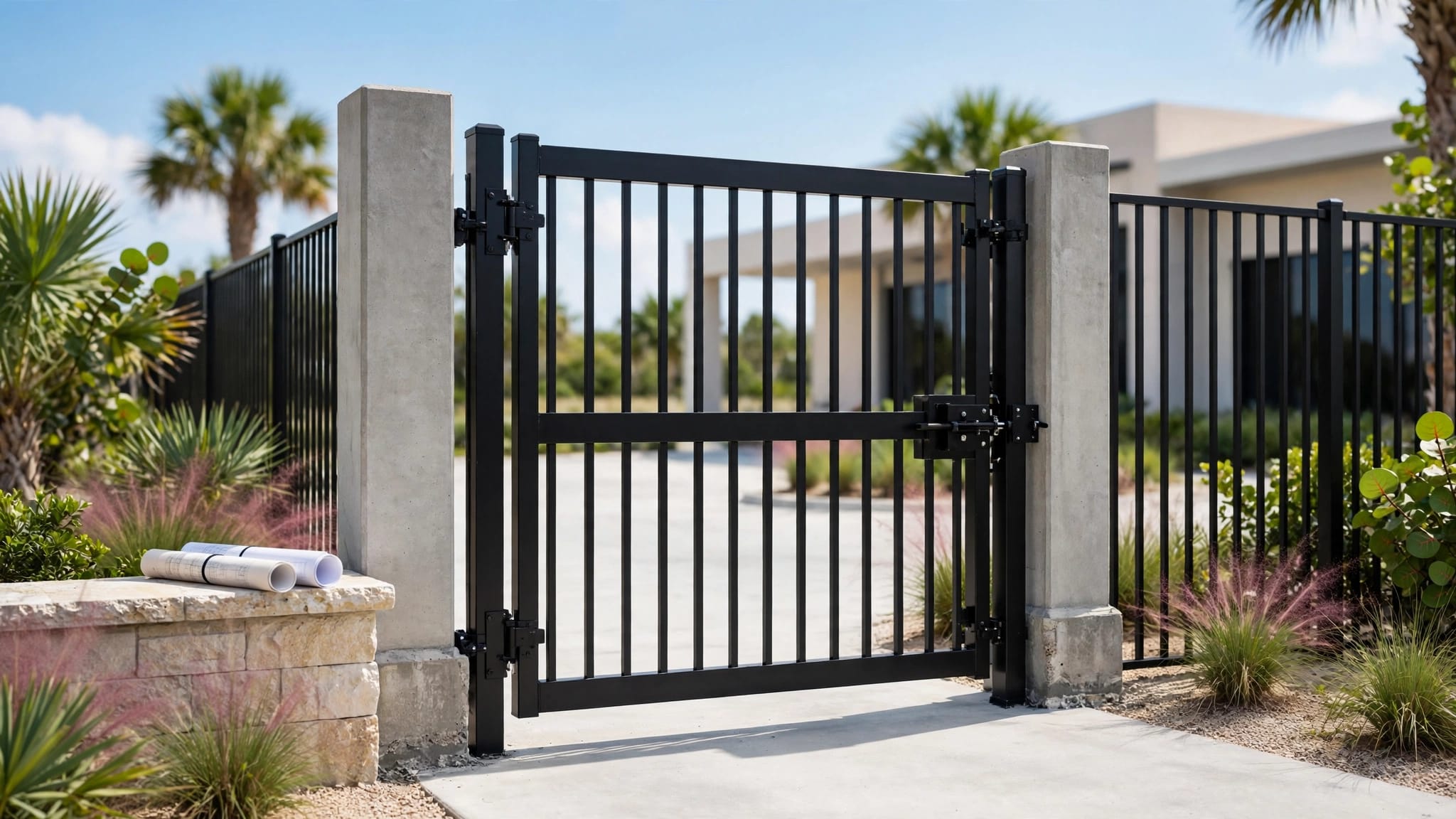
Wind matters in Fort Myers, especially for wide, solid panels that act like sails. Material choice helps, but post depth, gate framing, and hardware usually decide what survives the next big blow. If you're weighing materials with storm performance in mind, this comparison can help you think through tradeoffs: vinyl vs aluminum fences in hurricanes and sun. For homeowners leaning toward a "wind-through" style that also works well for pools, see aluminum fencing options.
Conclusion
A Fort Myers fence permit is mostly about showing your fence belongs where you drew it, and that it won't create safety or access problems. Start by confirming jurisdiction, then build a site plan that calls out easements, setbacks, utilities, and any pool or corner-lot concerns. If you want the least stress, hire a licensed contractor who pulls permits often, because fixing a denied plan is cheaper than moving a finished fence.