February 13, 2026
A front-yard fence seems simple until plan review kicks it back with a redline. In Cape Coral, the details that trip people up are almost always the same: Cape Coral fence height limits in the front yard, how corner lots get treated like they have two front yards, and the visibility triangle that keeps drivers and pedestrians safe.
If you’re a homeowner trying to add curb appeal, or a small fence contractor trying to keep projects moving, this guide breaks down what the City typically looks for, what to draw on your plan, and how to avoid the most common denials. Requirements can change and vary by zoning and HOA, so use this as practical guidance, then confirm your exact lot conditions with the City of Cape Coral Building Division before you build.
What Cape Coral considers a “front yard fence” (and why height gets capped)
Cape Coral’s most important concept is that the “front yard” is tied to the street frontage, not just where your front door is. In practice, that means a fence line that runs along the street side of your lot is treated as a front-yard fence, even if it feels like “the side” of the house.
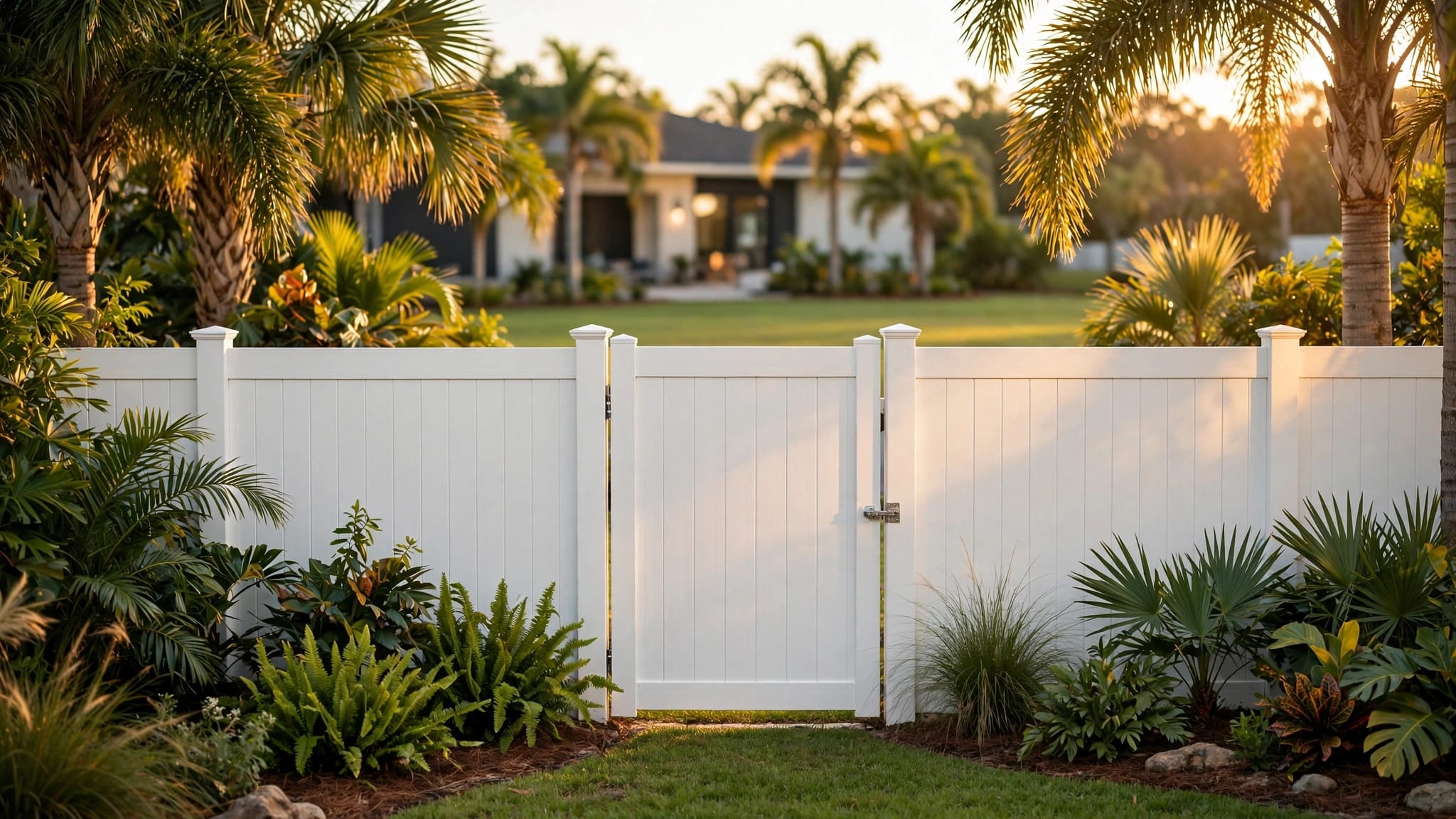
As of early 2026, Cape Coral’s residential guidance commonly enforces a 3-foot maximum height for fences in front yards, and it also requires the fence to stay behind the forward-most portion of the home (often the front wall or garage face). Corner lots follow the same idea along both street frontages, which is why corner-lot designs get flagged so often during review.
To confirm the exact language for your zoning district, start with the City’s Land Development Code and related development standards. The City publishes Article 5 (Development Standards), which includes the visibility triangle section used in fence reviews. See the City PDF for Article 5 Development Standards.
Two details matter for plan review more than the fence style:
- Height is measured from grade . If your lot is filled or slopes toward the sidewalk, a “3-foot fence” can accidentally become taller from the street view.
- Opacity counts , even when height is compliant. A short solid fence can still block a sight line where the City wants visibility.
If you’re still shopping options, it helps to pick a style that can be adjusted for corner-lot visibility, like aluminum, spaced pickets, or a stepped design that drops lower near the intersection. For material ideas, see residential fencing in Cape Coral.
Corner lots, visibility triangles, and sight lines (the “clear window” rule)
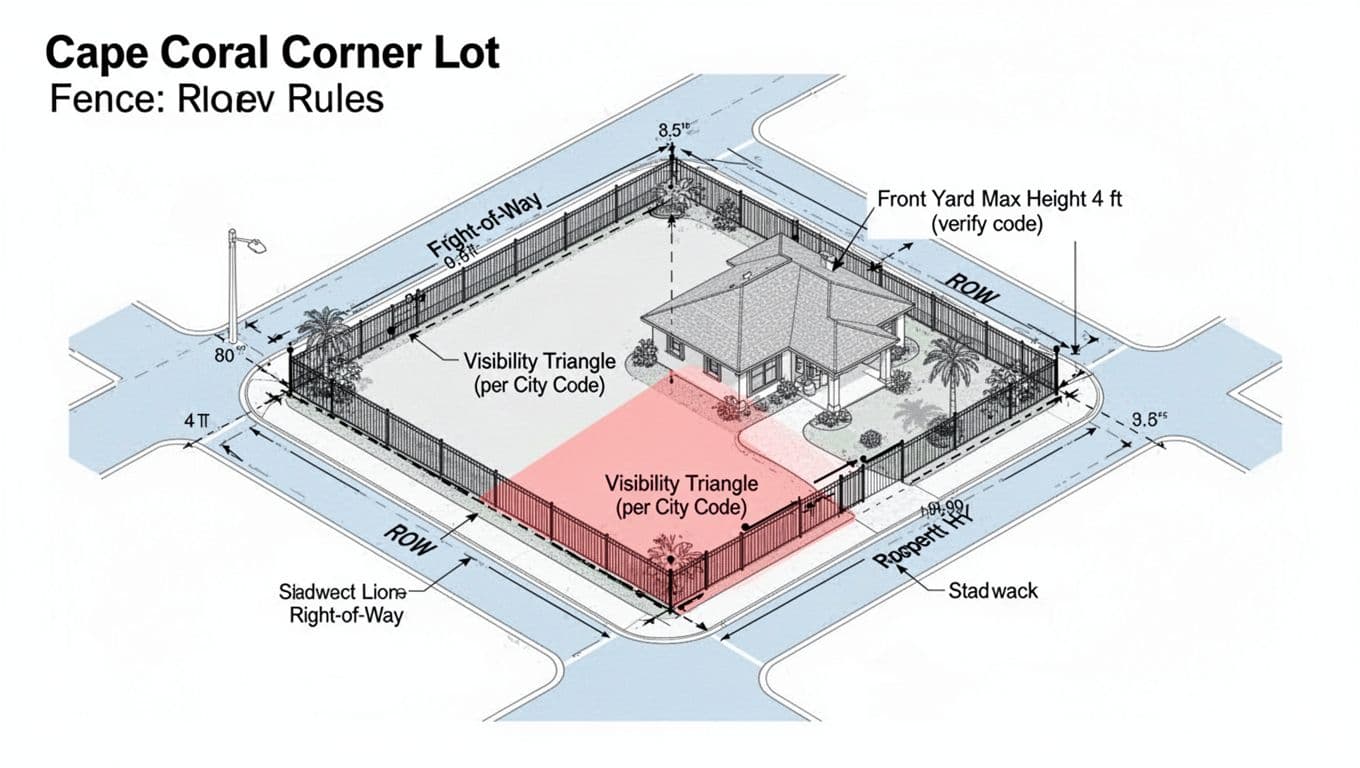 Permit-plan style diagram showing a corner lot, two street frontages, and a shaded visibility triangle at the intersection corner (created with AI).
A visibility triangle (also called a sight triangle) is the area near an intersection that must stay visually “open” so drivers can see cross traffic, cyclists, and pedestrians. Think of it like a clear window at the corner. If you place a solid fence in that window, the street becomes a blind corner.
Cape Coral addresses this in its development standards. Article 5 includes Section 5.1.7, Required visibility triangles , which is the section reviewers lean on when they mark up corner-lot fence plans. Use the official source to verify how the triangle is defined for your street type and intersection condition: Cape Coral Land Development Code on enCodePlus.
What does “visibility triangle” mean for a fence design?
- Both street sides behave like front yards on a corner lot , so the low-height rule typically applies along both street frontages.
- Inside the visibility triangle , tall and opaque features are the problem. Even when a fence meets the front-yard height limit, a solid panel can still be rejected if it blocks a sight line.
- Gates, columns, and landscaping count too . A chunky gate post or tall hedge at the corner can create the same visibility issue as a fence panel.
One key point: the exact triangle dimensions are not the same everywhere. They can depend on road classification, speeds, and whether there’s a sidewalk, curb return, or other geometry. If you’re unsure, draw the proposed fence line on a site plan, clearly mark the intersection corner, then ask the plan reviewer which visibility triangle standard applies to that address.
What passes plan review in Cape Coral (permits, submittals, and common redlines)
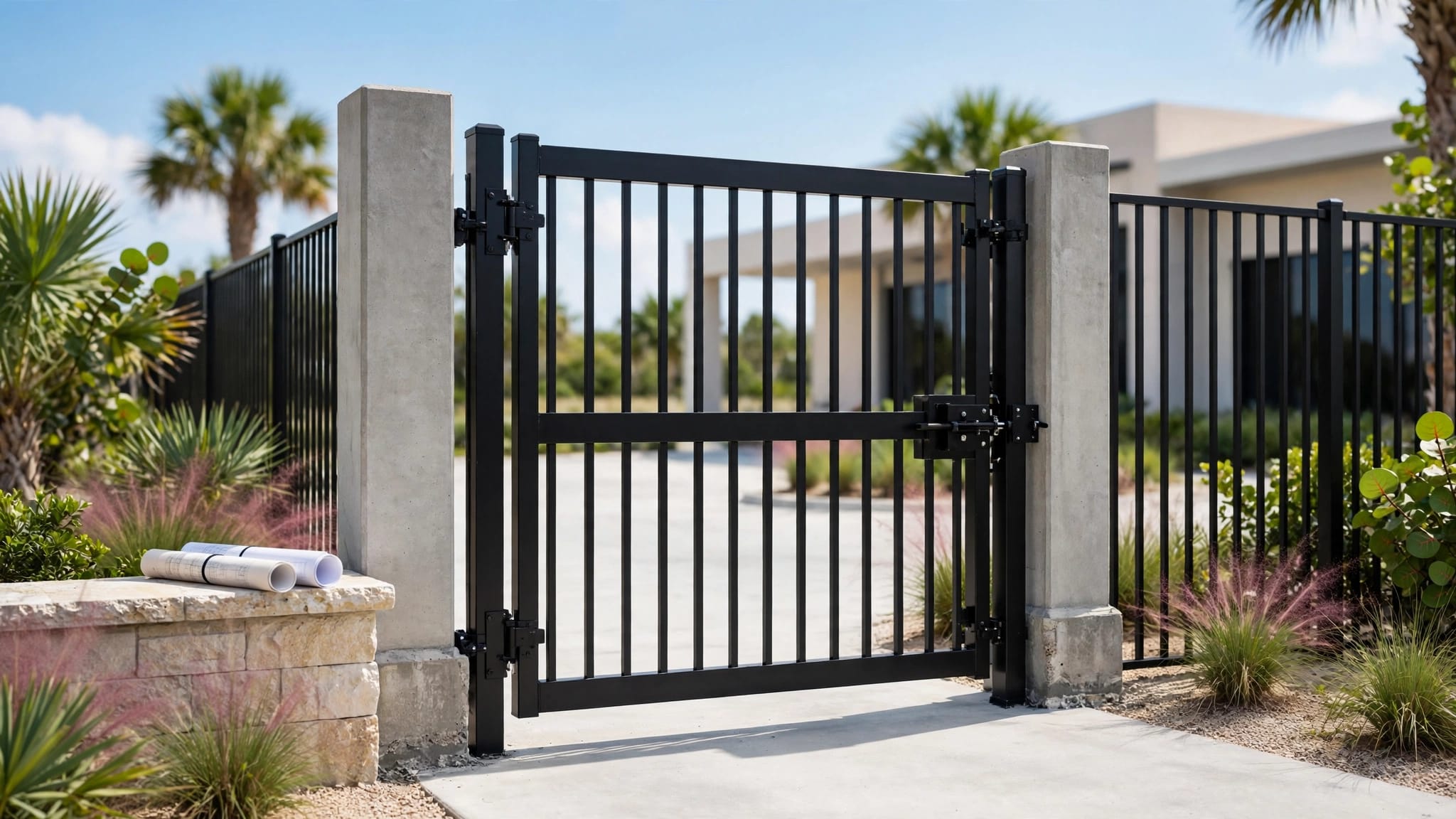
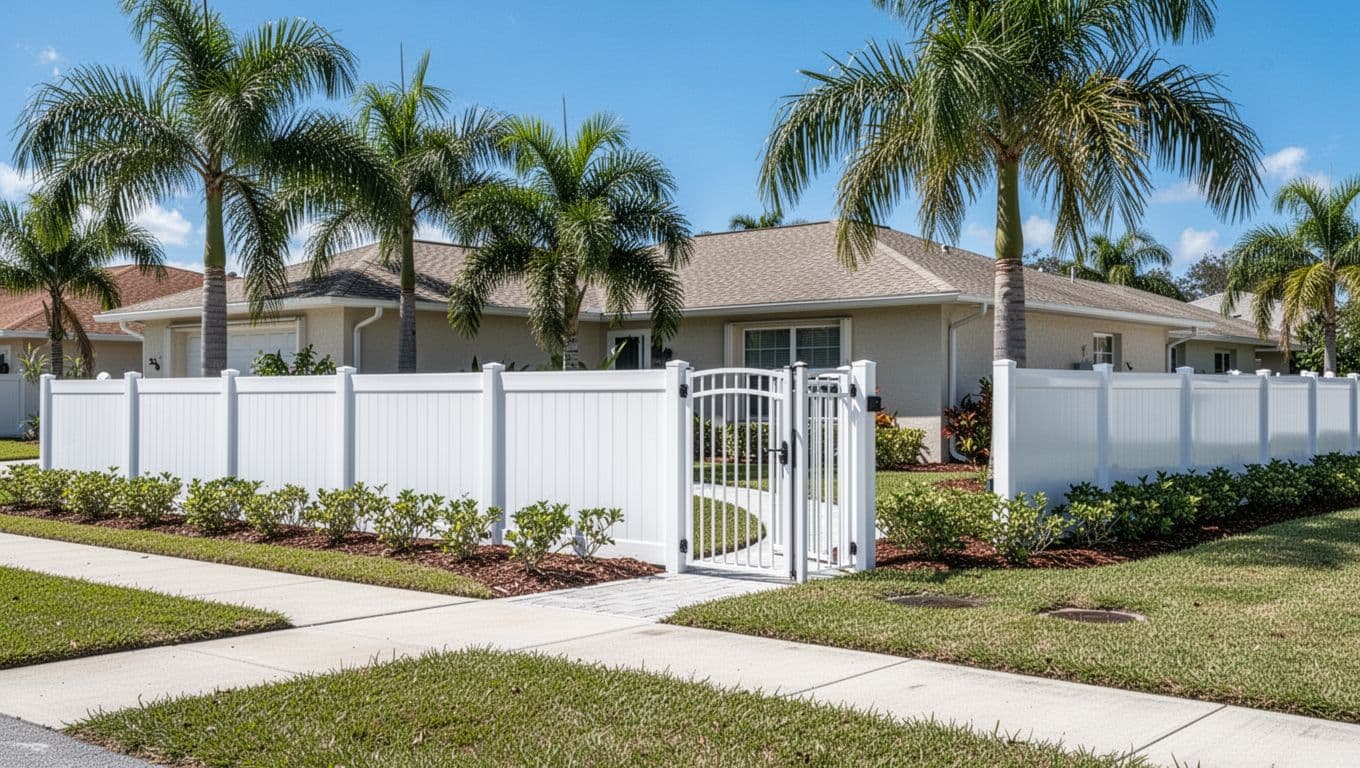 Example of a low front-yard fence look and feel with a clean setback from the sidewalk (created with AI).
Most fence delays are paperwork problems, not construction problems. Cape Coral has clear permit expectations, and the City’s own guideline calls it out plainly: “ All fences require permits ” (referenced in the City’s residential fence permit guidelines, tied to LDR Section 3.9.2). Review the document before you submit: Fence Residential Permit Guidelines (City PDF).
For a smooth review, the submittal usually needs to match what inspectors will see in the yard. That means your plan should be specific, scaled, and easy to check.
Typical items that help approval (and reduce redlines):
- A current survey or boundary sketch you can dimension from.
- A site plan showing the full fence run, linear footage per side, gate locations, and distance to property lines.
- The street side(s) labeled , especially on corner lots, so reviewers see you know both are treated as front yard areas.
- The driveway location , sidewalks, and any right-of-way edges that affect sight lines.
- Fence height, material, and style (vinyl, aluminum, wood, chain link). If it’s a structural wall, expect engineered details.
- A clearly drawn visibility triangle at the corner intersection, with the fence pulled back or stepped down as needed (verify the triangle standard with the City).
Common reasons Cape Coral plans get denied or redlined:
- Front-yard height over the allowed maximum (often 3 feet) or fence placed in front of the house’s forward-most face.
- Corner-lot fence drawn along both streets without any visibility triangle shown.
- Fence line shown in a right-of-way, easement, or drainage area .
- Site plan missing dimensions, gate locations, or street labels.
- HOA approval not addressed when the neighborhood requires it (HOAs can be stricter than the City).
If you’re budgeting the project, remember that corner-lot constraints can change the design and price. This local breakdown helps set expectations: fence installation costs Cape Coral. For help choosing a style that meets code and still looks good, see Cape Coral fence and landscape services.
Conclusion
Cape Coral fence height rules are strictest where the street meets your yard, and corner lots add another layer because visibility triangles protect sight lines. Keep front-yard sections low, keep opaque fencing out of the corner “clear window,” and submit a site plan that makes your layout easy to verify. When in doubt, get a quick read from the City plan reviewer before you set posts, because plan review is much cheaper than a tear-out.