September 21, 2026
A well-planned apartment community fencing system does more than mark the property line. It can protect resident privacy, guide visitors, improve curb appeal, and keep gates usable during daily traffic and emergencies.
The best apartment community fencing plan rarely uses one material everywhere. Open fencing may support visibility around entrances, while vinyl or another screened option can protect patios, dumpsters, service areas, and ground-floor amenities. Start with the property's access patterns, then match each section to its purpose.
Start With the Community's Access and Privacy Goals
A fence plan should begin with how residents, guests, staff, vendors, and emergency personnel move through the property. Draw the main entrances, pedestrian paths, parking areas, pool areas, trash enclosures, service drives, and restricted spaces before selecting materials.
This map often reveals that different parts of the community need different levels of privacy and visibility.
Separate resident, visitor, and service access
Residents may use a primary vehicle gate, pedestrian gates, and controlled access points near individual buildings. Visitors and delivery drivers may need a clearly visible entry without receiving access to every part of the property.
Service providers also need practical routes for landscaping, waste removal, repairs, and utility work. A fence layout that ignores these movements can lead to blocked gates, damaged landscaping, or frequent requests for temporary access.
Keep gates wide enough for their intended use, and allow room for vehicles to turn without striking posts or nearby walls. Place latches, intercoms, keypads, and other controls where residents can reach them without stepping into vehicle paths.
Decide where privacy matters most
Full privacy may be useful around ground-floor patios, pool equipment, dumpsters, maintenance yards, and areas beside busy roads. It may be unnecessary along every property edge.
A mixed layout often looks better and performs better. Open aluminum or chain link can define the perimeter while preserving sightlines. Screened sections can then address specific privacy concerns without making the entire community feel closed in.
Compare Materials for Apartment Community Fencing
Each material affects privacy, security, appearance, maintenance, wind exposure, and long-term repair needs. The right selection depends on the role of each fence section, not simply the lowest initial price.
| Fence option | Main advantage | Main tradeoff | Suitable apartment uses |
|---|---|---|---|
| Chain link | Efficient for long runs and easy visibility | Limited privacy and a more utilitarian appearance | Service areas, perimeter sections, utility spaces |
| Vinyl or PVC | Strong privacy with simple routine cleaning | Solid panels receive more wind pressure | Patios, dumpsters, screened amenity areas |
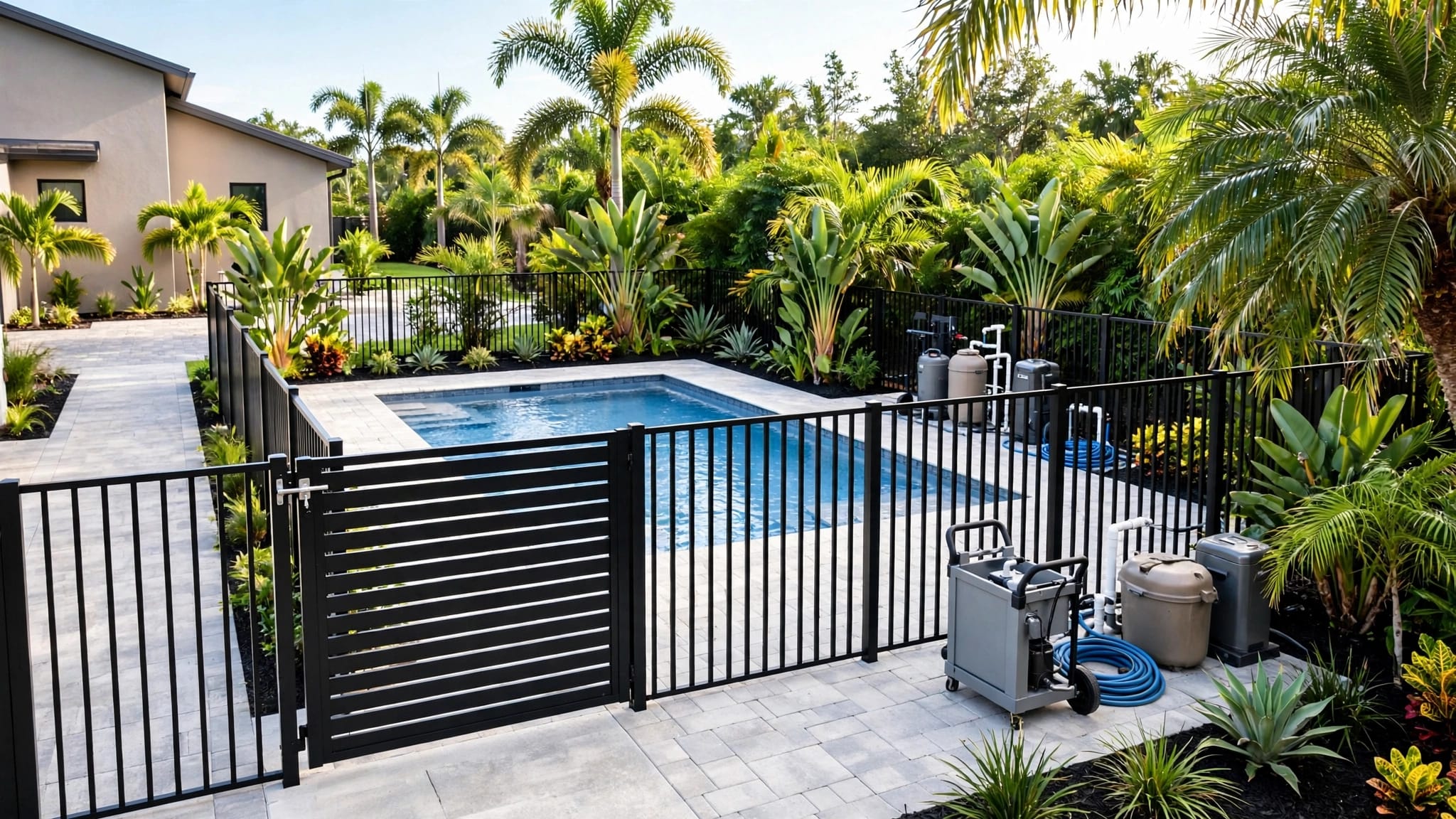
| Aluminum | Open appearance with low routine maintenance | Provides little privacy | Frontages, pool areas, pedestrian edges |
| Steel | Strength for demanding locations | Coatings, welds, and cut edges need inspection | Higher-demand gates and selected security areas |
| Wood | Warm, traditional appearance | More upkeep in humid, wet conditions | Focused screening or design-sensitive areas |
Use privacy fencing where it solves a real problem
Vinyl or PVC panels can hide equipment, storage areas, loading activity, and waste containers. They also create a cleaner visual edge beside neighboring properties or busy roads.
However, solid fencing catches more wind than open pickets or mesh. Posts, rails, footings, and gates must suit the approved design and the site's exposure. A contractor should also leave enough room to inspect and repair the fence without entering a resident's private area.
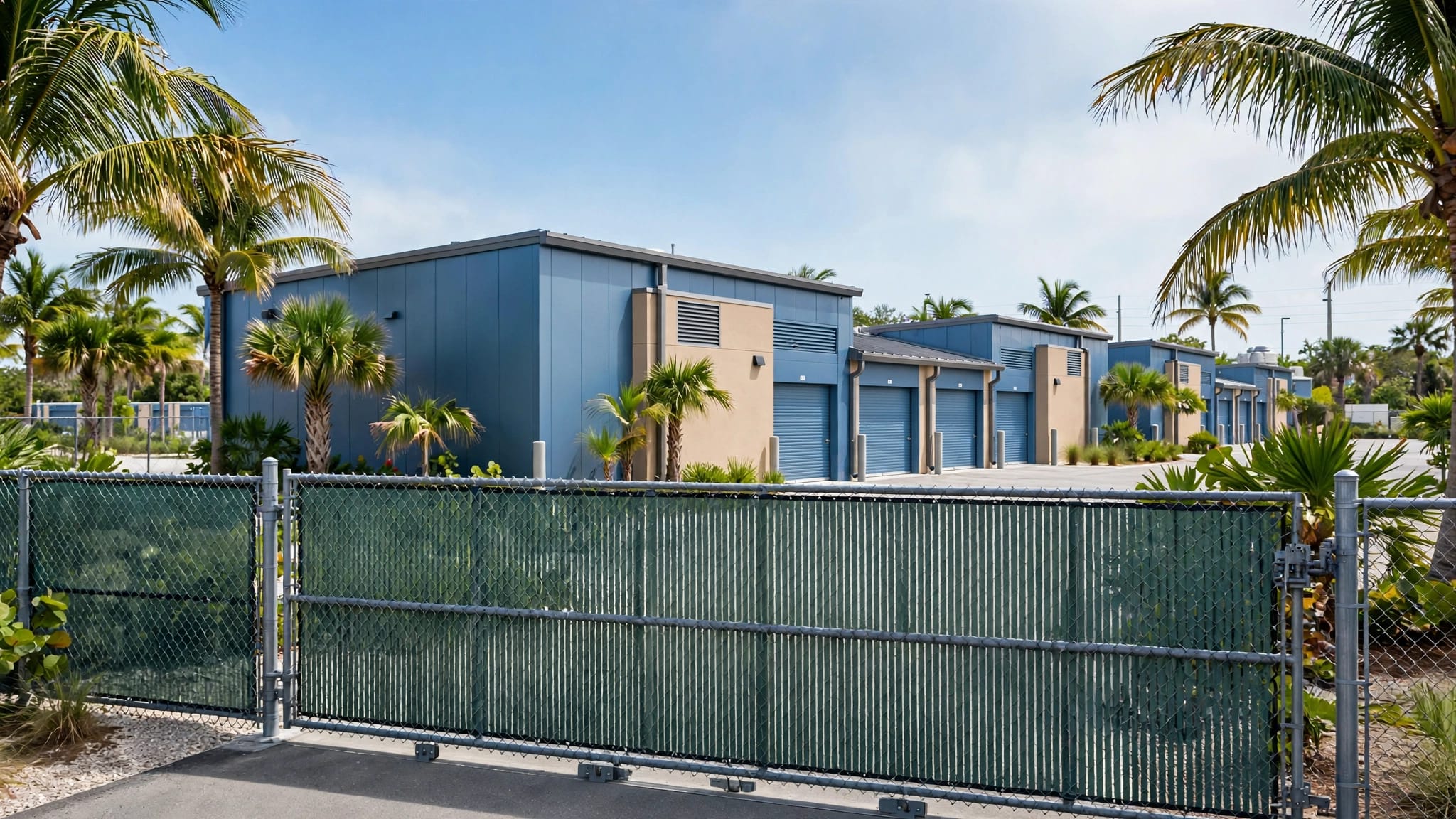
For more detail on screened commercial applications, review these self-storage facility fencing options.
Preserve visibility around active areas
Open fencing lets residents, staff, cameras, and nearby businesses see activity around the property. That can make a gate left open or a damaged section easier to notice.
Chain link remains practical for long runs because it is economical, repairable, and available with galvanized or vinyl-coated finishes. It may suit utility spaces, service drives, and areas where visibility matters more than appearance.
For locations with higher security concerns, ask about mesh, framework, posts, gate construction, and fastener compatibility. The fabric alone doesn't determine how secure the completed system will be. These anti-climb commercial fencing options provide useful points to discuss with a contractor.
Balance appearance with maintenance
Powder-coated aluminum offers an open, professional appearance and low routine maintenance. It doesn't provide the visual barrier of vinyl, but it can help a property feel open rather than enclosed.
Wood brings warmth and can complement landscaping, yet Southwest Florida humidity, rain, insects, and sun increase its maintenance needs. Boards may swell, split, stain, or deteriorate around posts and hinges.
Design Gates as Part of the Complete System
Apartment community fencing can fail at the gate even when the fence panels look excellent. Gates receive repeated movement, impact, weather exposure, and hardware wear. Plan the gate, posts, hinges, latch, operator, and access controls as one system.
Match access controls to daily use
A vehicle gate may need a keypad, telephone entry, card reader, remote opening, or another approved access method. Pedestrian gates may use keyed hardware, electronic locks, or controlled entry linked to the community's system.
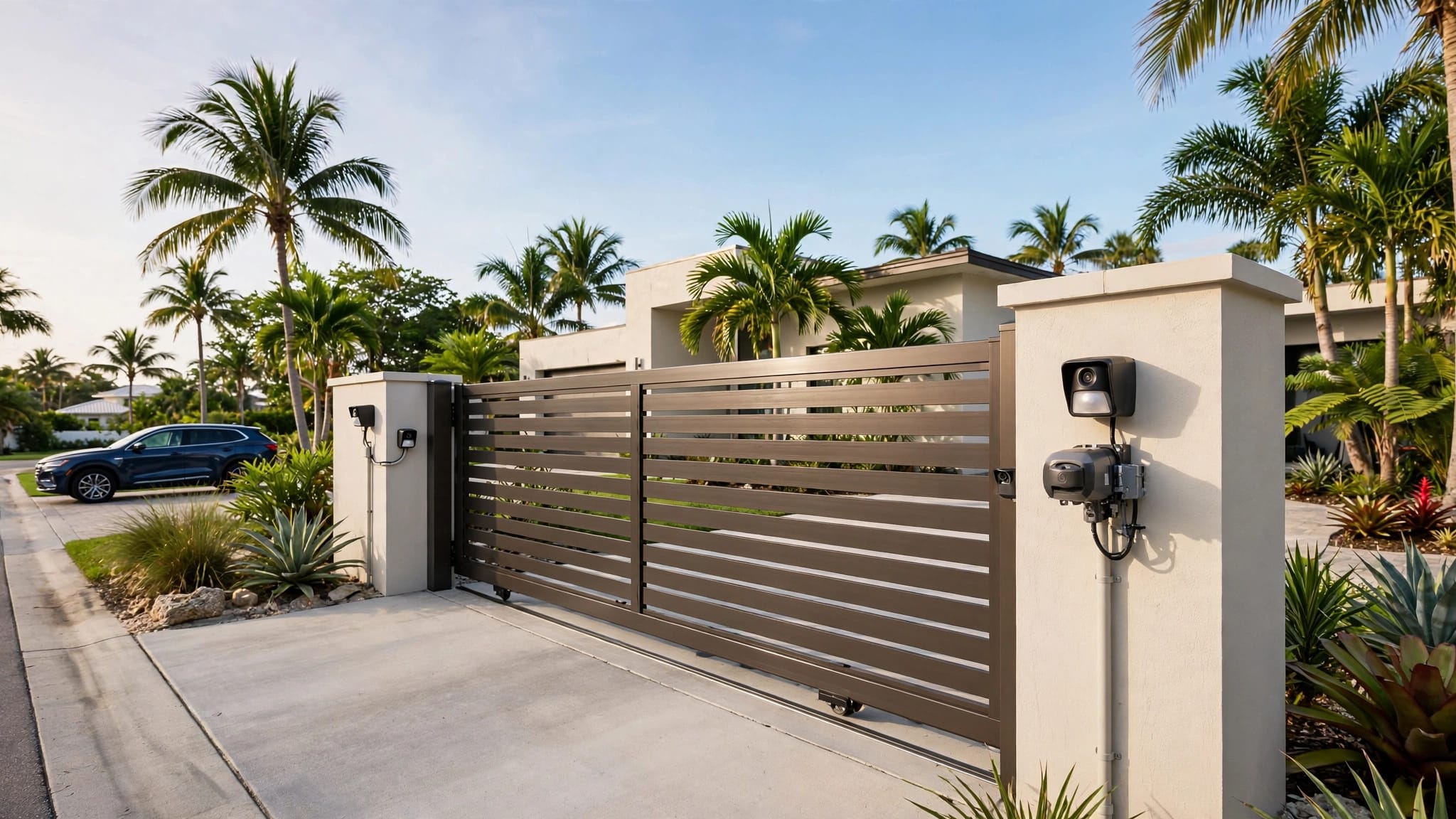
The fence contractor and access-control provider should coordinate early. Gate posts need enough support for the selected hardware, and operators require suitable clearance, drainage, and service access. Review commercial gate access control in Southwest Florida when comparing gate materials and entry arrangements.
The gate should also have a clear emergency release plan. Property managers need to know how authorized responders gain entry if power, communications, or the gate operator fails. Keep those instructions current after ownership changes, equipment replacements, or access-code updates.
Keep pedestrian access convenient and accessible
Residents may move through the property with strollers, mobility devices, groceries, bicycles, or pets. Avoid placing a pedestrian gate on a steep grade, beside a drainage drop-off, or where landscaping narrows the approach.
The route should remain clear, stable, and easy to identify. Controls should be reachable, gates should not swing into a walking path, and threshold changes should not create unnecessary trip hazards. Verify applicable accessibility requirements before installation, especially near leasing offices, common buildings, parking areas, and amenity spaces.
Match the Design to Southwest Florida Conditions
Cape Coral, Fort Myers, Estero, and Bonita Springs face humidity, heavy rain, intense sun, salt exposure, and tropical storm conditions. These factors affect materials, hardware, drainage, post support, and inspection needs.
Plan for wind and drainage
Solid privacy panels create more wind load than open fencing. That makes post construction, footing design, gate reinforcement, and panel attachment important parts of the proposal.
Drainage also matters around gate tracks, posts, and low sections. Water that collects near hardware can accelerate corrosion or affect operation. Sloped ground may require stepped panels, careful grading, or a layout that follows the property without creating large gaps at the bottom.
The warehouse fencing guidance for Fort Myers offers a useful comparison of open chain link and privacy panels. Apartment communities face different uses, but the same wind and maintenance tradeoffs apply.
Select finishes and hardware for the location
Galvanized and vinyl-coated chain link can support durability in wet conditions, but no coating removes the need for inspection. Check cut edges, fasteners, hinges, brackets, welds, and connections for wear or corrosion.
Aluminum also needs attention in salt-air areas. Its finish and fasteners should be checked periodically, particularly near the coast, irrigation spray, and pool chemicals. Steel can provide strength, but exposed coatings and cut edges require prompt maintenance.
A practical maintenance plan should identify who will rinse, inspect, lubricate, adjust, and repair the system. Keep vegetation away from gate openings, hinges, access controls, fire routes, and drainage areas.
Account for Emergency Access and Property Operations
Fire lanes, emergency gates, hydrants, and apparatus routes need separate attention from ordinary perimeter security. A fence may look attractive yet create a problem if a gate is hard to find, blocked by landscaping, or unreliable after a storm.
Confirm required clearances and access provisions with the appropriate local officials before construction. Building, fire, zoning, and accessibility requirements can affect fence placement, height, gate operation, materials, and openings.
The property manager should receive written instructions for emergency releases, gate controls, keys, and routine testing. If a gate operator changes, update those records immediately. Staff should also know how to keep the access route clear of mulch, planters, signs, parked vehicles, and storm debris.
A fence can improve security while still allowing approved emergency access. The design works best when both goals appear on the site plan from the start.
Build the Budget Around the Whole Installation
Material is only one part of an apartment fencing budget. Length, corners, gates, access controls, demolition, grading, drainage, post support, permits, and repairs to nearby surfaces can all affect the final proposal.
Ask each contractor to explain what the estimate includes. Confirm whether it covers:
- Concrete and post installation
- Walk gates and vehicle gates
- Hinges, latches, closers, and operators
- Access-control wiring or equipment coordination
- Removal of existing fencing
- Permit support and inspection requirements
- Surface repairs and final cleanup
- Warranty coverage for workmanship and gate alignment
Chain link may offer value on long runs, while vinyl may cost more because of its panels, posts, wind requirements, and privacy benefits. Aluminum often suits visible frontages and pool areas, but it won't solve a privacy problem by itself.
A mixed system can control costs by reserving solid screening for areas that need it. The equipment yard security fencing guidance describes this approach well: use open fencing where visibility matters, then screen offices, equipment, dumpsters, or other sensitive areas.
Questions to Ask a Southwest Florida Fence Contractor
Before approving a plan, ask for a site visit and a written proposal. A reliable contractor should discuss the property layout rather than recommend the same fence for every edge.
Ask:
- Which sections need privacy, and which should remain visible?
- How will residents, visitors, vendors, and emergency responders enter?
- What happens if power or the gate operator fails?
- How will solid panels handle local wind exposure?
- Which finishes and fasteners suit humidity and salt air?
- How will the design handle drainage, grade changes, and landscaping?
- What maintenance access will remain after installation?
- Which local building, fire, zoning, HOA, and accessibility requirements apply?
- What does the warranty cover, especially for gates and alignment?
- Which party will coordinate access-control equipment?
Royal Fence Company serves Cape Coral, Fort Myers, Estero, and Bonita Springs. Its commercial chain link fencing service is one example of the type of local installation experience property managers may want to compare when gathering proposals.
Apartment Community Fencing FAQ
Is privacy fencing the most secure choice for an apartment community?
Not in every location. Solid fencing blocks views, which helps protect patios, equipment, and service areas, but it can also hide activity and receive more wind pressure. Open fencing supports visibility and may be easier to inspect. A mixed design often provides a better balance.
Which fence material needs the least routine maintenance?
Aluminum and vinyl generally require less routine care than wood. Aluminum still needs inspection around finishes, fasteners, hinges, and connections. Vinyl is easy to clean, but its solid panels require suitable support and wind planning.
Should the fence and gate come from the same contractor?
The fence and gate don't have to come from the same company, but their designs need to coordinate. Posts, hinges, operators, access controls, emergency releases, and clearances must work together. Put the full fence and gate package in writing before installation.
What approvals should be checked before installation?
Verify local building, fire, zoning, and accessibility requirements. Also check property documents, easements, utility locations, and HOA or community design rules. Pool areas and emergency routes may have additional requirements. A contractor can identify common issues, but the property owner should confirm the rules with the proper authority.
Conclusion
A successful apartment community fencing plan assigns each section a clear job. Use open materials where visibility and inspection matter, screened fencing where residents need privacy, and coordinated gates where controlled access is essential.
Southwest Florida conditions make hardware, drainage, wind exposure, maintenance access, and emergency operation just as important as the visible fence material. When those details are planned together, the finished system can improve privacy, security, convenience, and appearance without making the property difficult to maintain.