November 6, 2026
Vinyl fence post cracks at ground level can result from impact, movement around the footing, or pressure on an unsupported post. In Southwest Florida, sandy soil, heavy rain, and strong winds can make those problems harder to spot until damage appears.
A crack doesn't always reveal its own cause. The condition of the post, footing, and surrounding soil matters when deciding whether to repair one component or replace the post. Start by looking at how the fence is supported.
What Vinyl Fence Post Cracks Can Tell You
A crack at the base deserves attention because that part of the post helps support the fence above it. The visible split may be small, but the damage could extend below the ground or affect a connected rail.
The shape and location offer clues, though they don't provide a complete diagnosis on their own.
Damage at the Ground Line
A post meets different conditions at ground level. Its upper section can move with the fence, while the section below is held by soil, a footing, or another support. If the fence is pushed or the footing shifts, the area near the base can experience stress.
A visible crack doesn't prove that the footing caused it. A mower strike, fallen branch, or vehicle contact can damage the same area. The repair should address both the split and any movement that remains around the post.
Cracks Elsewhere on the Fence
Look beyond the damaged post. A split near a gate hinge, a loose rail, or a panel that's come out of its connection can point to additional damage.
A post may also lean without having a visible crack. In that case, the footing or soil may need attention even if the vinyl surface looks intact.
How Footing Problems Affect Vinyl Posts
A concrete footing holds a post in position, but its performance depends on the fence design and the ground around it. A footing that's too shallow or poorly suited to the fence can leave the post vulnerable to lateral movement.
Shallow or Unstable Footings
Solid privacy panels catch more wind than open fence designs. When wind pushes against a panel, its posts and footings must resist that load. Gate posts also carry the weight and movement of a gate.
If a footing doesn't provide enough support, the post can lean or move under load. Repeated movement may stress the vinyl, particularly where the post meets its support. The fence height, panel style, soil, and exposure all matter when choosing a footing design.
Concrete That Moves With the Soil
Even a substantial concrete footing can shift if the soil around it washes away or settles. Adding concrete at the surface won't necessarily fix a footing that has lost support farther down.
Cracked or loose concrete can also be a sign that the base needs closer inspection. Our guide to replacing a buried concrete fence post covers the decisions involved when a damaged post is set in concrete.
Why Sandy Soil and Drainage Matter
Cape Coral, Fort Myers, Estero, and Bonita Springs have many properties with sandy soil. Heavy rain, runoff, and excavation can change the support around a footing, even when the post and concrete initially look solid.
Erosion Around the Base
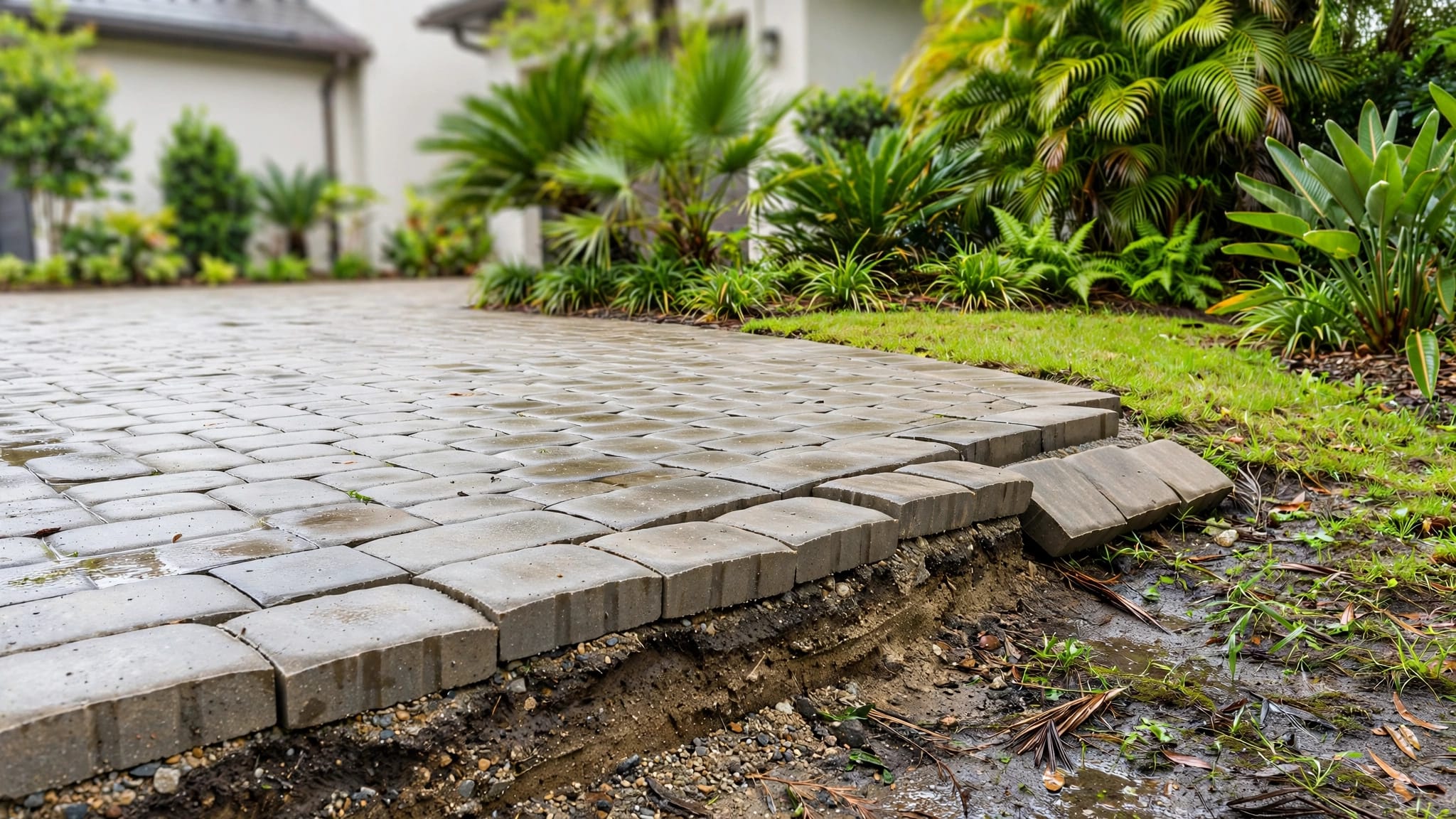
Watch where water flows after a storm. Runoff can carry soil away from a fence line, leaving a depression or gap beside the footing. A post that was once surrounded by firm ground may then have less support against wind and gate movement.
Pooling water doesn't mean the vinyl itself is rotting. Vinyl doesn't rot like wood. The concern is what water movement or saturated conditions may do to the ground around the post.
Disturbed Soil Near the Fence
Driveway work, landscaping, and other digging can expose or undercut a footing. Heavy equipment operating close to the post can also disturb the surrounding ground or strike the fence.
Keep machinery away from exposed footings. If a project requires excavation beside a fence, a contractor can determine whether the section needs temporary support. Don't pile extra soil or concrete against the post to hide an exposed base.
Impact and Wind Can Add Stress
Direct contact can crack a vinyl post at any height, including near the ground. Mower decks, string trimmers, vehicles, and falling debris are possible sources of damage. A scrape or dent beside the split can provide a clue, especially if the post sits along a driveway or mowing route.
Protecting the area around the post can reduce repeated contact. For practical yard-care ideas, see our advice on preventing lawn equipment damage to fences.
Wind puts a different kind of pressure on the fence. A solid panel transfers wind load through its rails and posts. End posts, corners, and gate posts deserve particular attention because their connections and loads differ from those along a straight run.
After a storm, wait until conditions are safe before approaching the fence. Our guide to preparing vinyl fencing for hurricane winds explains what to look for around panels and posts.
Signs to Look for During an Inspection
Walk both sides of the fence when you can do so safely. Clear loose leaves and grass by hand so you can see the base, but avoid digging around a post that may already be unstable.
Look for these signs:
- A split, chipped edge, or white stress mark near the ground or a post connection.
- A gap between the post, concrete, and surrounding soil.
- A post that leans or appears out of line with neighboring posts.
- A gate that drags, sags, or no longer meets its latch.
- A loose rail, cracked bracket, or panel that has shifted out of position.
- Exposed footing, washed-out soil, or a depression where runoff collects.
Compare the damaged post with nearby posts. Several leaning posts may point to a broader support or drainage issue, while damage confined to one base may help narrow the inspection.
Don't shake a cracked post aggressively. If a gate is hanging from it, limit use until the damage has been assessed. A failing gate post can allow the gate to shift or fall.
Photos of the crack, the full fence line, and the surrounding ground can help document the condition. Include a close view of the damaged area and a wider view that shows its position.
How to Prevent Cracks at the Post Base
Prevention starts with a fence system suited to the property. Good post support matters as much as the appearance of the vinyl panels.
Match the Installation to the Site
A tall, solid privacy fence on an exposed canal lot faces different conditions than an open fence in a sheltered yard. Post spacing, footing dimensions, and reinforcement should fit the fence design, soil, and expected wind exposure.
There isn't one footing depth that works for every Southwest Florida yard. Loose sand, shell fill, gates, and drainage features can all affect the installation plan. When concrete is used, the post should remain braced while the footing gains the strength required for loading.
Some systems use steel posts inside vinyl fencing for additional support. Reinforcement is an option, but it doesn't replace a suitable footing or protect the vinyl from every impact.
Keep the Ground and Fence Connections Clear
Maintain drainage paths so runoff doesn't concentrate at post bases or wash soil away. Avoid changing the grade around a fence without considering the footing and clearance beneath the panels.
Follow the fence system's installation instructions for rail connections and any required clearance. Overtightening or adding improvised fasteners can interfere with how the components fit. Also keep lawn equipment and stored objects away from the posts.
Repair or Replace a Cracked Vinyl Post?
The right repair depends on what is damaged and whether the post still supports the fence. A cosmetic mark and a split through a load-bearing post call for different responses.
Surface Damage and Replaceable Sleeves
A shallow scratch that hasn't split the post may be a cosmetic issue. Cleaning the area can make it easier to see whether the mark has opened into a crack. Avoid sanding, drilling, or applying filler until the damage is understood, since those steps can conceal the problem.
Some vinyl fences use a decorative sleeve over a separate structural post. If the sleeve alone is damaged, replacing it may be an option. The underlying support, connections, and footing still need to be sound.
An adhesive patch may cover a crack, but it shouldn't be assumed to restore the strength of a post that supports panels or a gate.
When the Post or Footing Needs Replacement
A split that extends through the post wall, a leaning post, or movement at the base calls for a closer assessment. Replacement may involve detaching neighboring rails or panels, supporting the adjoining fence, and removing the post from its footing.
Sometimes the existing footing can be part of the repair plan. In other cases, the footing and post need to come out together, particularly when the concrete or surrounding support is unstable. The work should correct the reason the post moved, not simply put a new post in the same loose ground.
Before any digging, request underground utility markings through Sunshine 811. Pool barriers and security fences also need to remain properly secured while a damaged section is being repaired.
When to Call a Fence Contractor
A contractor's inspection is useful when the crack reaches the ground, the post moves, or the damage extends below the visible surface. Gate posts deserve prompt attention because a failing support can affect the gate's alignment and safe operation.
At Royal Fence, we install vinyl fencing in Cape Coral, Fort Myers, Estero, and Bonita Springs. We can discuss replacement options for a damaged fence and the site conditions that affect the new installation.
When describing the problem, note where the post sits, when you noticed the crack, and whether the gate or nearby panels have shifted. Those details help identify what needs attention alongside the damaged vinyl.
A Sound Repair Starts Below the Surface
Vinyl fence post cracks can have several causes, and the visible split is only one part of the problem. Footing movement, washed-out soil, wind pressure, and impact each call for a different response.
Look at the whole support system before choosing a repair. A replacement post has a better chance of staying straight when its footing, surrounding ground, and fence connections are sound.