November 5, 2026
How well a paver driveway handles an RV depends on the paving system, the ground beneath it, and the weight pressing on each tire. In Cape Coral, drainage and soil conditions matter alongside the pavers you see.
A driveway that looks level under a car may respond differently when an RV parks in the same spot for weeks. Start by looking at the surface, the foundation, and how rainwater moves across your property.
Key Takeaways
- The RV's loaded weight and the way its tires distribute that weight affect driveway performance.
- Paver selection matters, but the supporting aggregate and soil also carry the load.
- Standing water, sunken tire tracks, loose borders, and rocking pavers are signs that a driveway needs attention.
- Cape Coral's flat lots, intense rain, and high groundwater can complicate drainage.
- A local installer can evaluate the driveway and recommend a repair or construction plan for your RV and property.
How RV Weight Affects Driveway Pavers
An RV places more demand on a driveway than many everyday vehicles. Its weight isn't spread evenly across the entire paved area. Instead, it reaches the surface through individual tires, with repeated pressure along the route you drive and the spots where you park.
Tire pressure and parking position
The area under each tire carries a concentrated load. If the supporting materials are loose or uneven, a tire can press pavers downward and leave a shallow depression. Turning the steering wheel while stationary can also put sideways force on the surface and joints.
The RV's usual parking position matters. A paved area beside a garage might look wide enough, but tires close to an unsupported border can put pressure on the edge restraint and adjacent soil.
Loaded weight and extended parking
Use the RV's expected loaded weight when planning a driveway, including the belongings, water, and equipment you normally carry. A driveway plan based on an empty vehicle may overlook how you use it.
Long-term parking concentrates pressure in the same locations. That makes the condition of the parking pad as important as the approach. Stabilizer jacks and leveling equipment can also create concentrated contact points, so discuss their locations with the installer.
Choosing RV Driveway Pavers
Pavers differ in material, shape, and intended use. For an RV parking area, choose a product intended for vehicle traffic rather than selecting a patio or garden paver based on appearance alone.
Interlocking concrete pavers
Interlocking concrete pavers fit together with joints that help the surface act as a connected system. The pattern, joint material, and edge restraints all affect how well the units stay in place under repeated traffic.
A paver with a familiar driveway appearance isn't automatically suitable for every RV. The product and the supporting layers need to work together for the vehicle and site.
Permeable pavers and water movement
Permeable pavers use open joints and a specially constructed aggregate system to move water below the surface. Standard interlocking pavers usually have narrower joints and aren't designed for the same level of infiltration.
A permeable design still needs to account for vehicle use. It also needs a plan for water that can't soak into the ground during a heavy storm. Our comparison of permeable pavers and concrete explains how those surfaces handle rain differently.
The Ground Beneath the Driveway Matters
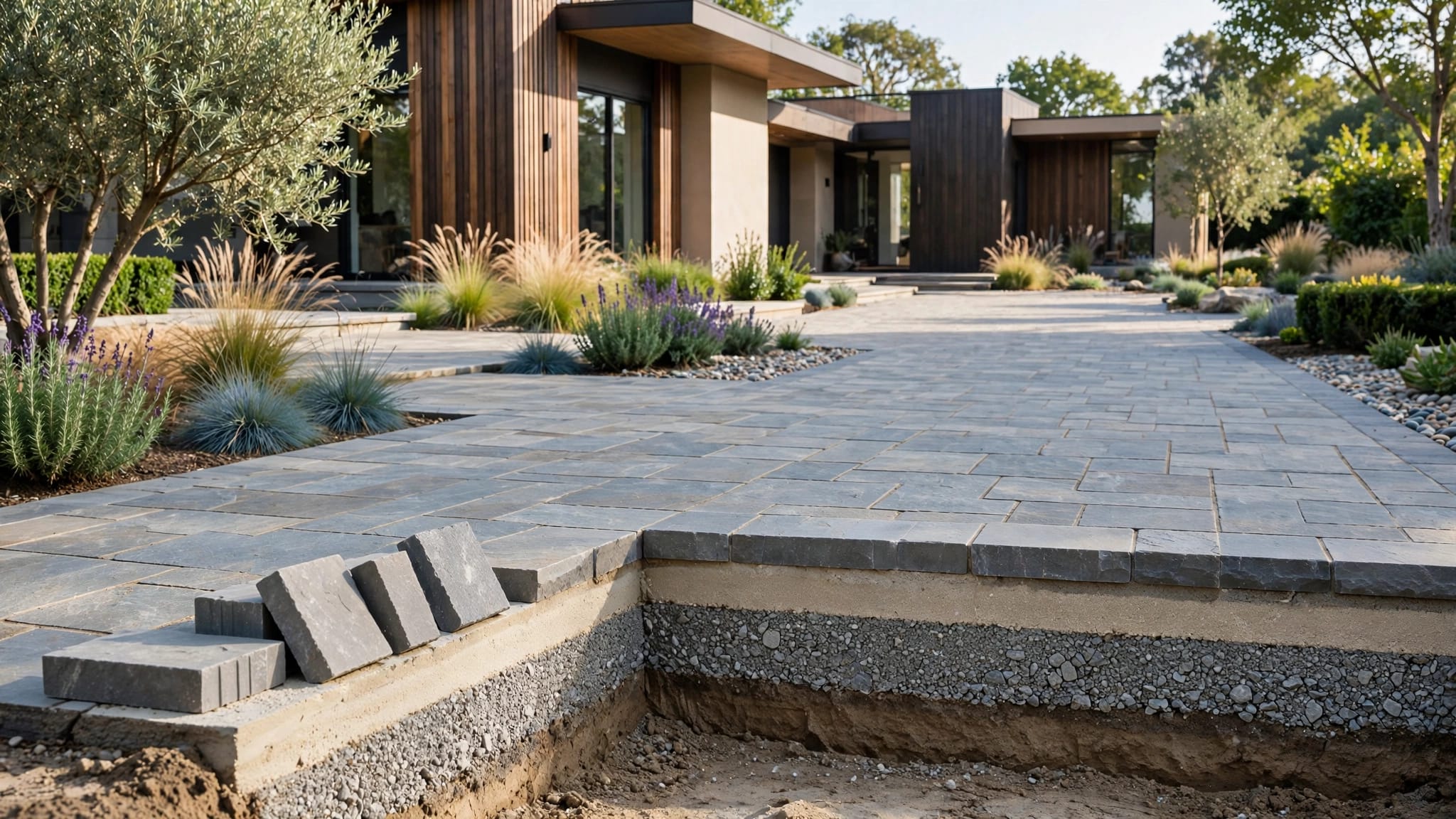
A finished paver surface relies on the layers below it. Bedding material helps create an even setting surface, while aggregate and the underlying soil provide support. Loose bedding sand can't take the place of a stable aggregate foundation.
Soil and aggregate stability
Cape Coral properties can have sandy soil, compacted fill, or areas that stay wet after rain. Conditions can also change across a single driveway, especially where previous construction disturbed the ground.
Soft soil, buried organic material, and uneven fill can settle under repeated pressure. Aggregate needs to form a firm, uniform supporting layer. Otherwise, even pavers that remain intact can shift as the ground beneath them moves.
Separating different materials
On unstable or silty ground, an installer may recommend a suitable geotextile separator between soil and aggregate. The fabric helps limit mixing between the layers. Its use depends on the soil and the driveway design.
A separator doesn't replace sound preparation or solve every wet-site problem. If the ground is soft, the repair plan needs to address that condition before the finished surface goes back in place.
Drainage Considerations for Cape Coral Driveways
Cape Coral's low-lying lots can have limited slope, drainage swales, or groundwater close to the surface. Heavy rain adds another demand: water needs somewhere to go without collecting beneath the driveway or against nearby structures.
Directing water away from the parking area
The finished surface should move water away from the house and toward an appropriate drainage path. A driveway that sits too high can redirect runoff toward a fence or neighboring property. One that sits too low can collect water in the parking area.
Existing swales need room to carry water. Widening a driveway or raising its edge without accounting for that flow can create a wet spot where none existed before.
Planning for saturated ground
Even sandy soil absorbs less additional water when it's saturated. High groundwater can also limit how much water an infiltration system handles. A permeable surface may need an overflow route or an underdrain connected to a suitable outlet.
Keep permeable joints clear of sediment, leaves, and landscape debris. When those openings clog, water reaches the stone below more slowly and can pool on the surface.
Signs an Existing Driveway Needs Attention
A sound-looking driveway isn't proof that every layer is ready for an RV. Look along the route the vehicle will take, including the final parking position and any area where you turn.
Watch for these visible warning signs:
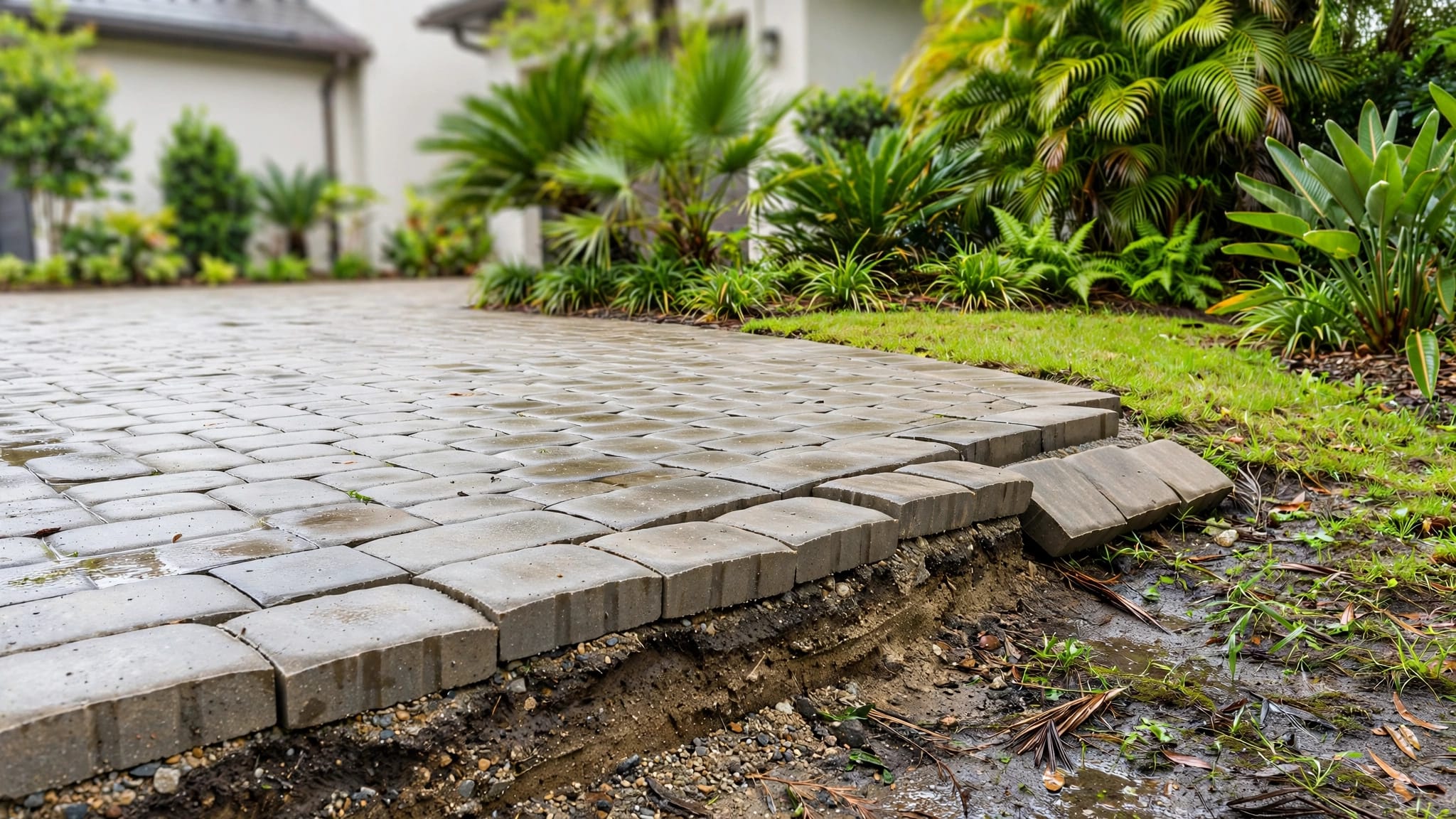
- Tire-shaped depressions or low spots that collect water after rain.
- Pavers that rock, tilt, crack, or sit noticeably lower than their neighbors.
- Joints that have widened or lost material, especially along turning areas.
- Borders that bow outward, separate, or allow pavers to spread.
- Soft ground, exposed soil, or washouts beside the paved edge.
A small isolated defect doesn't explain the condition of the whole driveway. However, a pattern of movement along tire paths can point to a problem below the surface.
Repeated puddles deserve attention even when the pavers are unbroken. Water can reveal a low area or an outlet that doesn't carry runoff away. If the ground feels soft beside a sinking section, stop parking the RV there and arrange an assessment.
Repairing or Reinforcing an Existing Paver Driveway
The right repair depends on the cause of movement. Replacing a cracked paver can restore the surface, but it won't correct a soft area underneath it.
Localized repairs
When movement is limited to a small area, an installer can lift the affected pavers and examine the materials below. The repair may involve correcting uneven support, replacing damaged units, and restoring joint material.
Loose borders need attention too. Resetting the edge restraint and addressing the adjacent soil can keep the pavers from spreading again. Drainage changes may be necessary if water caused the original movement.
Larger foundation work
Widespread sinking, repeated repairs, or soft ground can call for removal and reconstruction of a larger section. The installer can then address the soil and supporting materials across the areas where the RV travels and parks.
Repairs should cover the vehicle's full path, including turns. Reinforcing only the final parking spot can leave the approach vulnerable to the same movement.
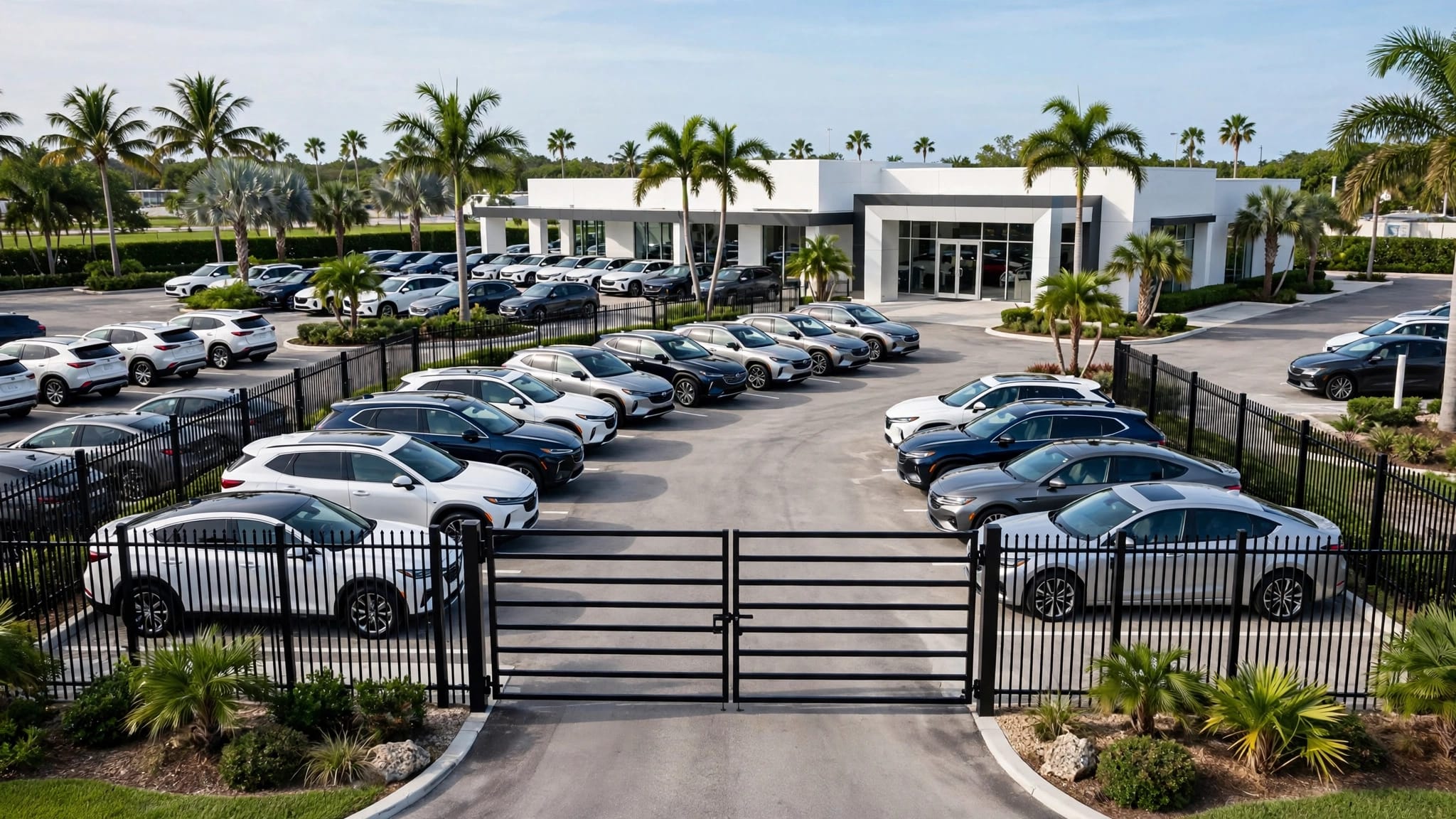
Leave Room for Fences, Gates, and Drainage
An RV parking plan affects more than the paving. Measure the route through any gate, including mirror clearance and the space needed to turn. A gate that fits the RV when it's parked may still be awkward on the approach.
Fence posts and footings also need protection during driveway work. Excavation close to a footing can disturb the soil that supports it. Plan the paving edge and post locations together, especially if the RV will pass close to the fence.
Our guide to installing a fence over pavers covers how fence placement and supporting footings interact with paved areas. Keep the drainage path open along the fence line, too, so runoff doesn't collect around posts.
What to Discuss With a Local Installer
Give your installer the RV's expected loaded weight, tire positions, and usual parking location. Explain how often you'll move it and whether the route requires tight turns. Photos of puddles or existing damage can help show how the driveway behaves after rain.
A useful written proposal identifies the paver product, preparation work, supporting materials, edge restraints, joint material, and drainage plan. It should also describe how the crew will handle any soft ground or damaged areas it finds.
Our Cape Coral paver patio cost guide outlines items to look for in a paving proposal. An RV driveway has different demands from a patio, so its scope should address vehicle use rather than rely on a patio estimate.
Frequently Asked Questions
Do I need to remove an existing paver driveway?
Removal depends on the condition and extent of the problem. An installer may be able to repair an isolated low spot, while widespread movement can require work across a larger area.
Can I park an RV close to the driveway edge?
The edge deserves particular attention because tires there can press on the restraint and surrounding soil. Leave room within the paved area, and include the intended tire positions in the installation plan.
Do paver joints provide drainage?
Standard paver joints allow some water through, but they aren't the same as the open joints in a permeable system. Both designs need a plan for runoff during heavy rain.
Are leveling pads enough to protect the driveway?
Pads can spread contact over a wider area, but they don't repair weak soil or a moving foundation. Include jack and leveling locations when discussing the parking setup with your installer.
A Better RV Parking Plan Starts Below the Surface
The appearance of RV driveway pavers tells only part of the story. The ground, supporting materials, drainage, and tire positions all affect how the parking area performs.
Look for movement and standing water before parking. Then use those observations to develop a site-specific plan with a qualified local installer.