August 15, 2026
A fence that keeps a trespasser out can still fail when a storm tears down the gate or salt air attacks its hardware. An equipment yard security fence must control access, preserve useful sightlines, handle wet coastal conditions, and fit the value of what sits behind it.
Open chain link is often the practical starting point, but aluminum, vinyl, wood, and mixed systems suit different sites. The best choice depends on theft risk, equipment size, privacy needs, drainage, and how much maintenance your team can handle. Start with those conditions, then select the material.
How to choose an equipment yard security fence
A commercial yard fence does more than mark a property line. It controls where vehicles enter, gives staff a clear view of stored assets, and creates a defined boundary for cameras and lighting. It also needs to support daily loading without becoming an obstacle.
Begin with the security risk
Start by listing what leaves the property most easily. Small generators, tools, trailers, attachments, and compact machines may need tighter gate control than large equipment that is difficult to move.
For moderate risk, a properly installed chain-link perimeter with a strong vehicle gate may provide an efficient balance of cost and visibility. Higher-value equipment may justify a taller fence, controlled access, lighting, cameras, and more secure gate hardware.
Budget for the complete system. Posts, concrete, gates, hinges, locks, operators, grading, permits, and drainage work can affect the final price as much as the fence fabric or panels.
Keep privacy and visibility in balance
Open fencing lets employees, cameras, and nearby businesses see activity around the yard. That visibility can discourage trespassing and makes it easier to spot a gate left open.
Privacy fencing blocks public views, but it can also hide activity and create more surface area for wind. A combination often works well. For example, an equipment yard may use open fencing along the operating perimeter and a screened section near an office, dumpster, or employee area.
A useful comparison of Cape Coral commercial fencing options can help when you need to weigh materials, appearance, security, and installation costs.
Compare fence materials for equipment yards
Material selection affects security, maintenance, visibility, appearance, and storm performance. The lowest purchase price isn't always the lowest long-term cost, especially near salt water or in areas that receive frequent heavy rain.
Galvanized or vinyl-coated chain link
Chain link is often the value choice for an equipment yard security fence. It provides a clear boundary without blocking airflow or visibility, and it works well for large perimeters where material costs matter.
Galvanized steel offers a protective zinc coating. Vinyl-coated chain link adds another finish over the metal, which can improve appearance and provide added protection when the coating remains intact. In coastal areas, ask how the installer will protect cut ends, connections, posts, and gate hardware.
Open chain link is often a better fit than privacy slats when cameras and natural surveillance matter. Slats can add screening, but they also increase wind exposure. Chain link can include additional security features, although barbed wire, razor wire, and similar additions may require separate review because of local rules and liability concerns.
Aluminum ornamental fencing
Aluminum fencing costs more than basic chain link, but it gives a commercial property a cleaner appearance. An open picket or rail design keeps equipment visible and works well along a public-facing frontage, office entrance, or customer area.
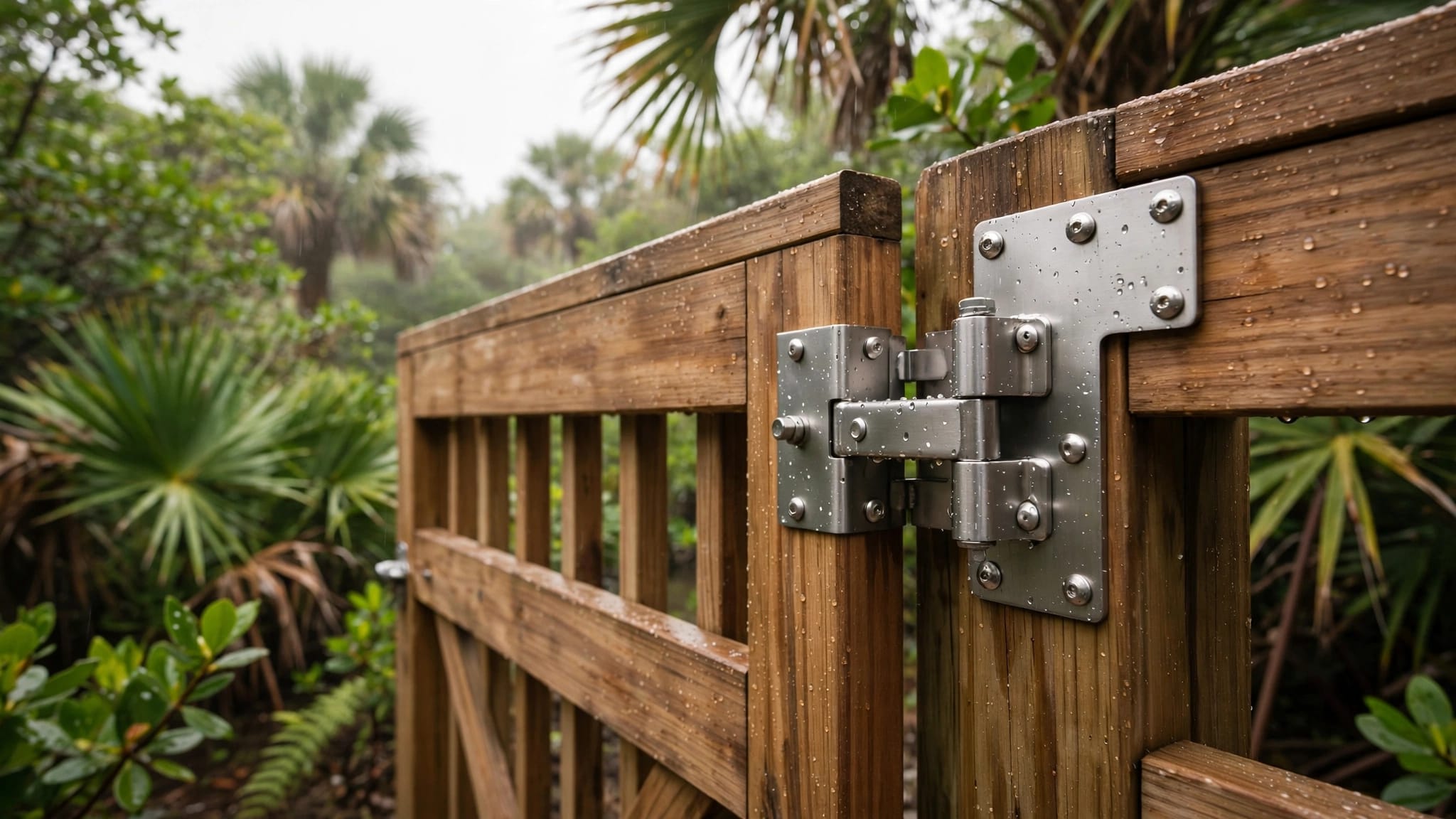
Aluminum doesn't rust like steel, but its finish can chip, fade, or loosen around fasteners. Salt air also affects hardware and connections. Ask about a durable powder-coat finish, compatible fasteners, and 316 stainless hardware for exposed coastal locations.
This aluminum fencing for salty coastal air guide covers finish and hardware details that deserve attention before installation.
Vinyl or wood privacy fencing
Vinyl or plastic fencing suits yards that need screening along a road, beside an office, or near a neighboring property. It doesn't absorb water like wood, and routine cleaning is usually straightforward. However, solid panels catch more wind than open mesh, so the posts, rails, gates, and footings need a design suited to the site.
Wood may offer a lower upfront cost or a more traditional appearance. In Southwest Florida, though, humidity, rain, insects, and salt exposure increase maintenance. Boards can swell, split, stain, or decay around posts and gate hinges. Wood is usually better for limited screening than for the entire perimeter of a high-value equipment yard.
Plan for Southwest Florida weather
Southwest Florida yards face a combination of salt air, high humidity, intense sun, heavy rainfall, tropical storms, and hurricanes. A fence that performs well inland may need different finishes, hardware, and installation details near Cape Coral, Fort Myers, Estero, or Bonita Springs.
Control corrosion in salty humidity
Salt settles on metal surfaces and can collect around bolts, hinges, brackets, cut ends, and low points that stay damp. Humidity slows drying, while heavy rain can wash contaminants into connections and post bases.
Ask the contractor how the system will handle those conditions. Good questions include:
- Which coating protects the chain link, posts, rails, and gates?
- Are exposed fasteners compatible with the surrounding metal?
- How will cut edges and drilled areas receive protection?
- Can the fence be rinsed and inspected easily after installation?
A fresh-water rinse can remove salt deposits before they sit on the finish. After storms, check for scraped coatings, bent rails, loose ties, and rust at damaged areas. Replace badly corroded parts instead of covering them with paint.
Give wind and drainage room
Open chain link and ornamental aluminum usually allow more air through than solid vinyl or wood panels. That can reduce the wind pressure on the fence, but it doesn't remove the need for proper posts, concrete, connections, and gate design.
A solid fence may improve privacy, but an open fence usually gives wind and surveillance fewer problems to solve.
Drainage deserves equal attention. Keep fence lines out of swales when possible, and don't block a drainage path with a solid panel or poorly placed posts. Before installation, identify easements, canals, utility corridors, and areas that carry stormwater. A fence should follow the property without redirecting water toward buildings, roads, or neighboring sites.
Build gates and access control around daily operations
The gate is often the busiest and most vulnerable part of an equipment yard security fence. It must stop unauthorized entry while allowing employees, delivery trucks, trailers, and heavy machinery to move without repeated adjustments.
Select gates for equipment movement
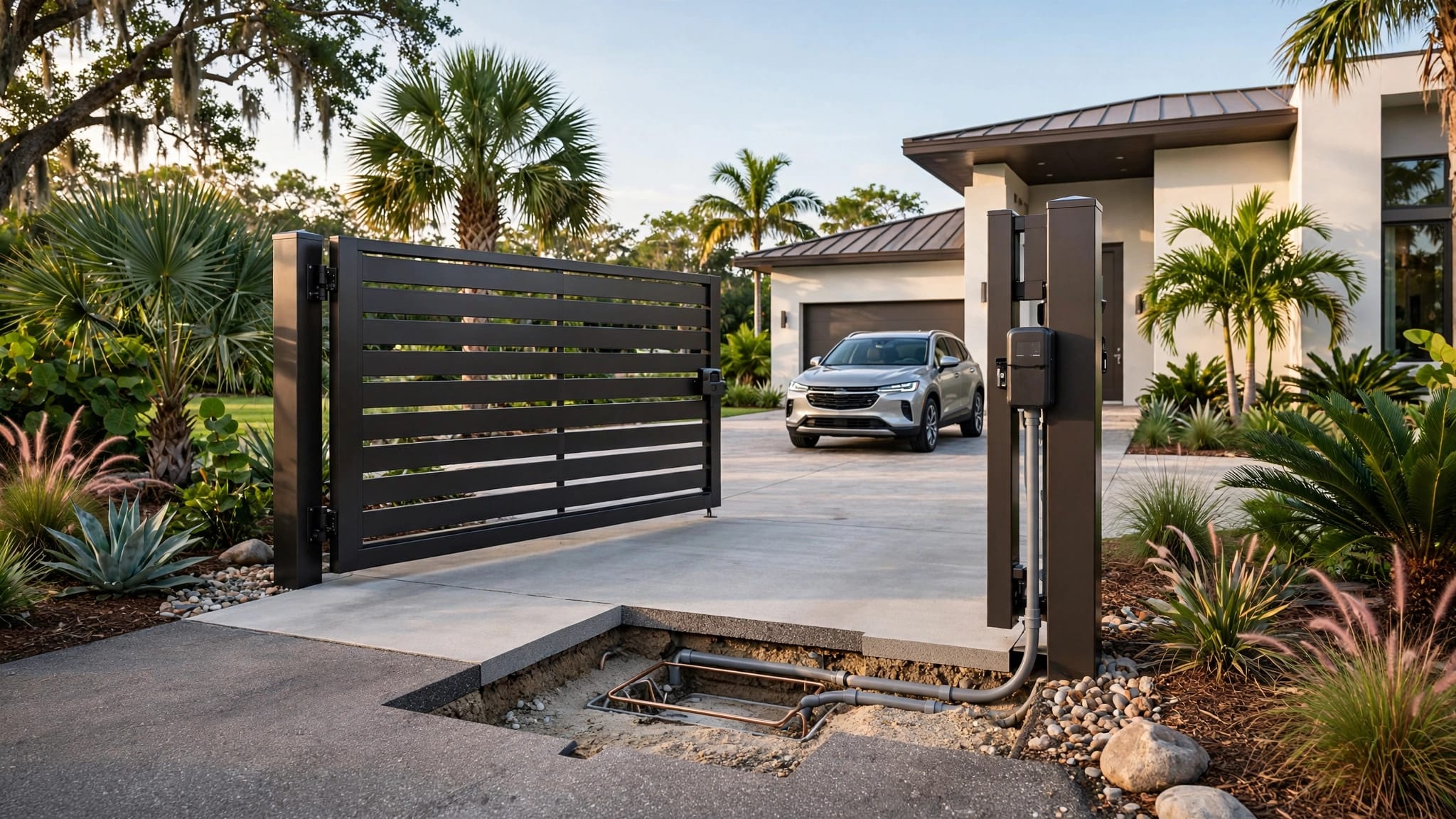
Sliding gates work well where a swing path would interfere with parked equipment, traffic lanes, sidewalks, or drainage areas. They need enough side clearance and a stable track or support system that stays usable after heavy rain.
Swing gates can work on smaller sites when the opening has a clear arc. An inward-swinging design may keep the gate from projecting into a public sidewalk or roadway, but the property needs enough room inside the fence.
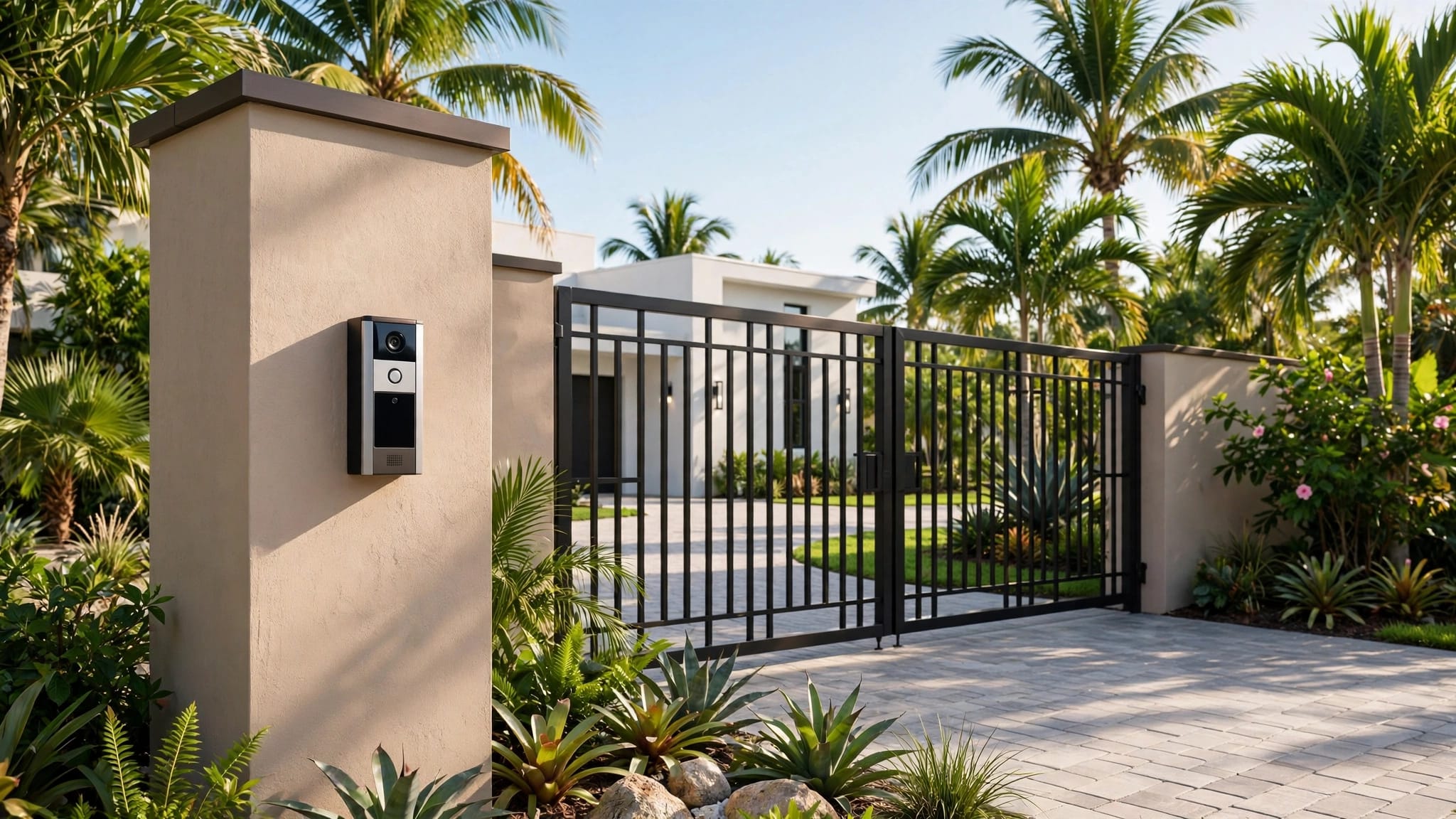
For frequent truck traffic, consider an automatic operator with controlled entry. Keypads, access cards, RFID devices, or remote controls can reduce the number of people who handle keys. Include a manual release and a plan for power failures. A simple, heavy-duty lock may be the better choice for a smaller yard with limited traffic.
Gate height and width should match the equipment that uses the property. Measure trailers, service trucks, and attachments before ordering. Also leave room for turning, since a gate that technically fits may still force drivers to make unsafe corrections.
Keep cameras and lighting useful
Place lights and cameras where the fence, gate, and equipment remain visible. Avoid stacking machines, pallets, or materials directly against the perimeter because they can create climbing points and obstruct inspections.
Open chain link gives cameras a broader view of the yard. Privacy panels can hide valuable equipment from passersby, but they may also hide tampering from employees or neighboring properties. If screening is necessary, limit it to areas where privacy matters most.
Lighting should cover the gate approach, lock area, and equipment access lanes without creating glare that blinds drivers or washes out camera images. Keep vegetation trimmed away from gates, cameras, and fence fabric.
Check permits, easements, and local installation rules
Fence requirements vary by jurisdiction, zoning district, property type, location, height, and proximity to water or an easement. Rules in Cape Coral may differ from those in Fort Myers, Estero, Bonita Springs, or another part of Lee County.
A qualified installer should review the parcel before materials arrive. That review can identify property lines, setbacks, drainage restrictions, utility conflicts, gate locations, and permit needs.
Verify the parcel before ordering materials
Cape Coral's published residential fence regulations list materials such as aluminum, chain-link without slats, plastic or vinyl, and galvanized steel panels with alkali-resistant coatings. The same published rules address open mesh in the rear 20 feet of residential properties that abut waterways.
That waterway provision isn't a universal commercial rule. It does show why canal frontage, drainage corridors, and easements need a parcel-specific review before you choose solid screening.
Lee County's residential permitting guide also lists aluminum, chain link, coated galvanized metal, plastic or vinyl, wire, wood, and other common categories. Commercial equipment yards may follow different requirements, so confirm the applicable rules with the local authority and your installer.
The Florida Building Code includes fence provisions for chain link in high-velocity hurricane zone areas. For example, chain-link fences over 12 feet may require design for code loads, while lower fences may follow prescriptive requirements in applicable situations. The exact treatment depends on location and design. Use the Cape Coral commercial fence permit guide as a starting point, then confirm current requirements for the actual parcel.
Specify foundations and plan maintenance
Fence performance depends on more than the visible material. Soil conditions, drainage, post spacing, footing size, gate loads, and wind exposure all affect the installation. A contractor should review those factors instead of using the same layout for every property.
After installation, set a simple inspection schedule. Check the fence after major storms and at regular intervals throughout the year.
- Walk the perimeter after heavy rain and look for standing water, erosion, leaning posts, or exposed concrete.
- Inspect chain-link ties, tension wire, cut ends, post connections, and gate latches.
- Check aluminum rails, pickets, brackets, finish damage, and corrosion around incompatible metals.
- Look for cracks near vinyl posts, hinges, rails, and impact points.
- Rinse salt and dirt from exposed surfaces, then repair damaged coatings before corrosion spreads.
This Fort Myers commercial fence maintenance checklist can help organize inspections for chain link, aluminum, vinyl, and other commercial fence systems.
Match the system to your yard
A low-visibility yard with moderate equipment value may need open chain link, a locked vehicle gate, lighting, and routine inspections. A high-value site may need controlled entry, stronger gate hardware, cameras, and a more detailed perimeter plan.
Aluminum fits properties where appearance and corrosion resistance matter. Vinyl or wood can provide targeted privacy, but solid panels need careful storm planning. Mixed materials often give the best balance, with open fencing around equipment and screened sections near offices or sensitive work areas.
The right equipment yard security fence is a complete system, not a panel choice. Review the security risk, weather exposure, drainage, access pattern, and local rules with a qualified Southwest Florida fence contractor before requesting an installation proposal.
Conclusion
A well-designed equipment yard security fence keeps access controlled while preserving visibility, drainage, and daily operating space. Chain link is often the practical baseline, while aluminum, vinyl, wood, or a combination can address appearance and privacy needs.
Salt air, humidity, heavy rain, and hurricanes make coatings, hardware, gates, footings, and maintenance part of the decision. When a contractor evaluates the full site instead of quoting a material alone, your fence has a better chance of protecting both the equipment and the way your business operates.