August 13, 2026
Fort Myers weather can turn a small fence defect into an access, security, or liability problem before the next inspection. A practical commercial fence maintenance routine helps property managers spot loose posts, failing gates, corrosion, and storm damage while repairs are still manageable.
Heavy rain, high humidity, strong sunlight, and salt air all affect commercial fencing in Southwest Florida. Use this checklist during regular property walks, after severe weather, and before your annual maintenance budget is finalized.
Commercial fence maintenance checklist for Fort Myers properties
A fence inspection should cover more than visible panels. Walk the entire perimeter, check each access point, and look at how water, landscaping, vehicles, and daily traffic affect the system.
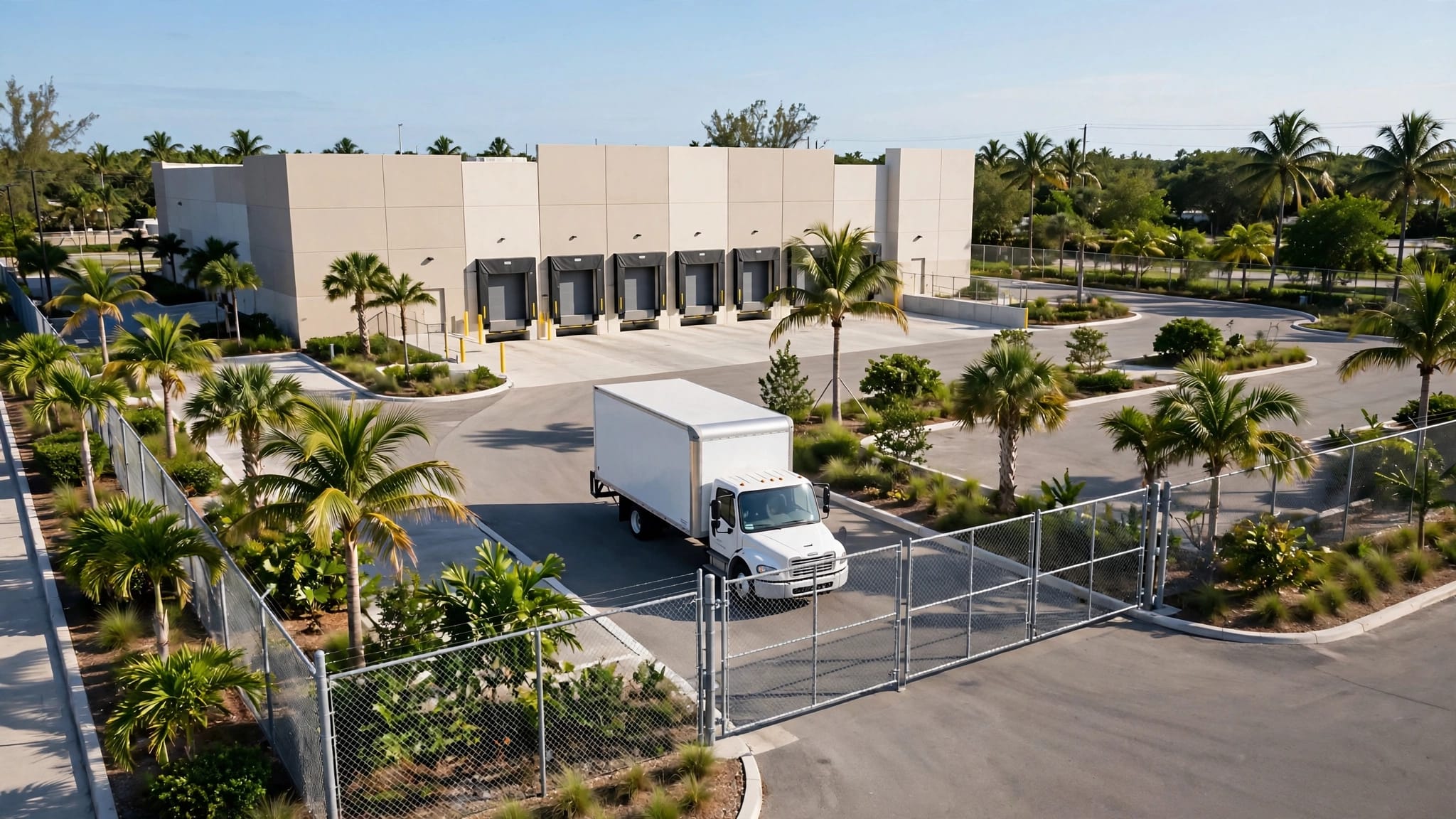
For retail centers, office buildings, warehouses, multifamily communities, and construction sites, schedule a documented inspection at least monthly. Inspect high-traffic gates and loading areas more often.
Walk the perimeter and check the structure
Start at one property corner and follow the fence line in a consistent direction. A repeatable route makes it easier to notice new damage and compare conditions over time.
Use this monthly checklist:
- Look for leaning posts, lifted footings, loose rails, and sections that move when pushed lightly.
- Check for gaps beneath the fence that could allow unauthorized entry, pets, or stormwater to pass through.
- Inspect corners, terminal posts, brace bands, tension wire, ties, and fasteners on chain-link fencing.
- Look for cracked vinyl rails, split wood, bent aluminum pickets, damaged privacy panels, and sharp edges.
- Check areas near dumpsters, parking spaces, delivery lanes, and sidewalks for impact damage.
- Trim vines, branches, and shrubs that press against panels or hide signs of damage.
- Confirm that fence signs, address markers, and warning placards remain visible and secure.
- Check drainage paths so soil and mulch don't build up against posts or block water flow.
Pay close attention to the bottom of posts. Standing water and saturated soil can weaken support even when the upper portion looks sound. If a post shifts, don't try to straighten it by force. Mark the location, photograph it, and arrange a professional assessment.
Inspect gates as working equipment
Gates receive more stress than standard fence sections. Delivery drivers, tenants, staff, and visitors may use them dozens of times each day, so a small alignment problem can become a full access failure.
Open and close every gate during the inspection. Watch for dragging, swinging, grinding, excessive movement, or a latch that requires lifting or slamming. Hinges, rollers, tracks, drop rods, latches, and stops should remain tight and aligned.
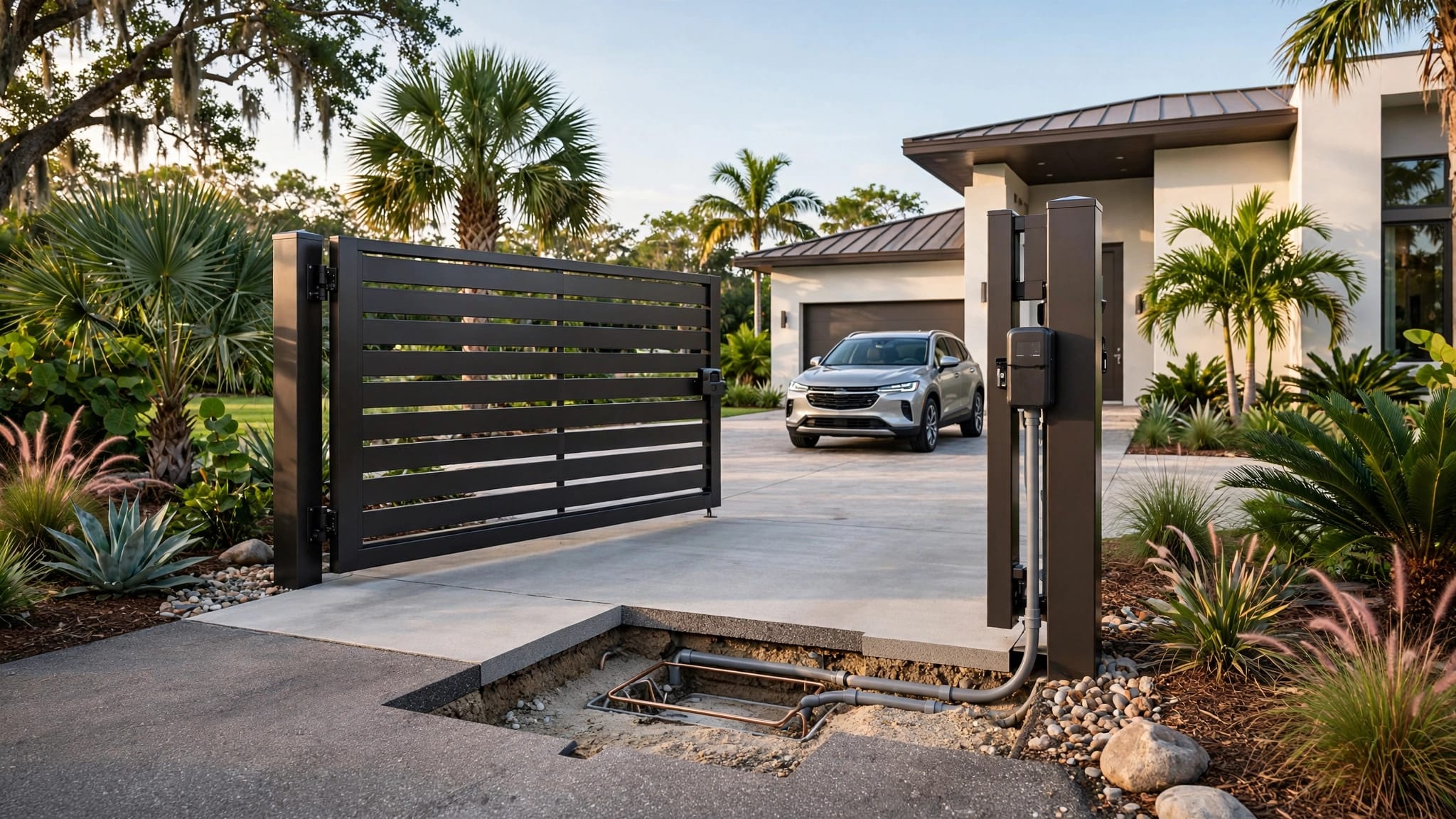
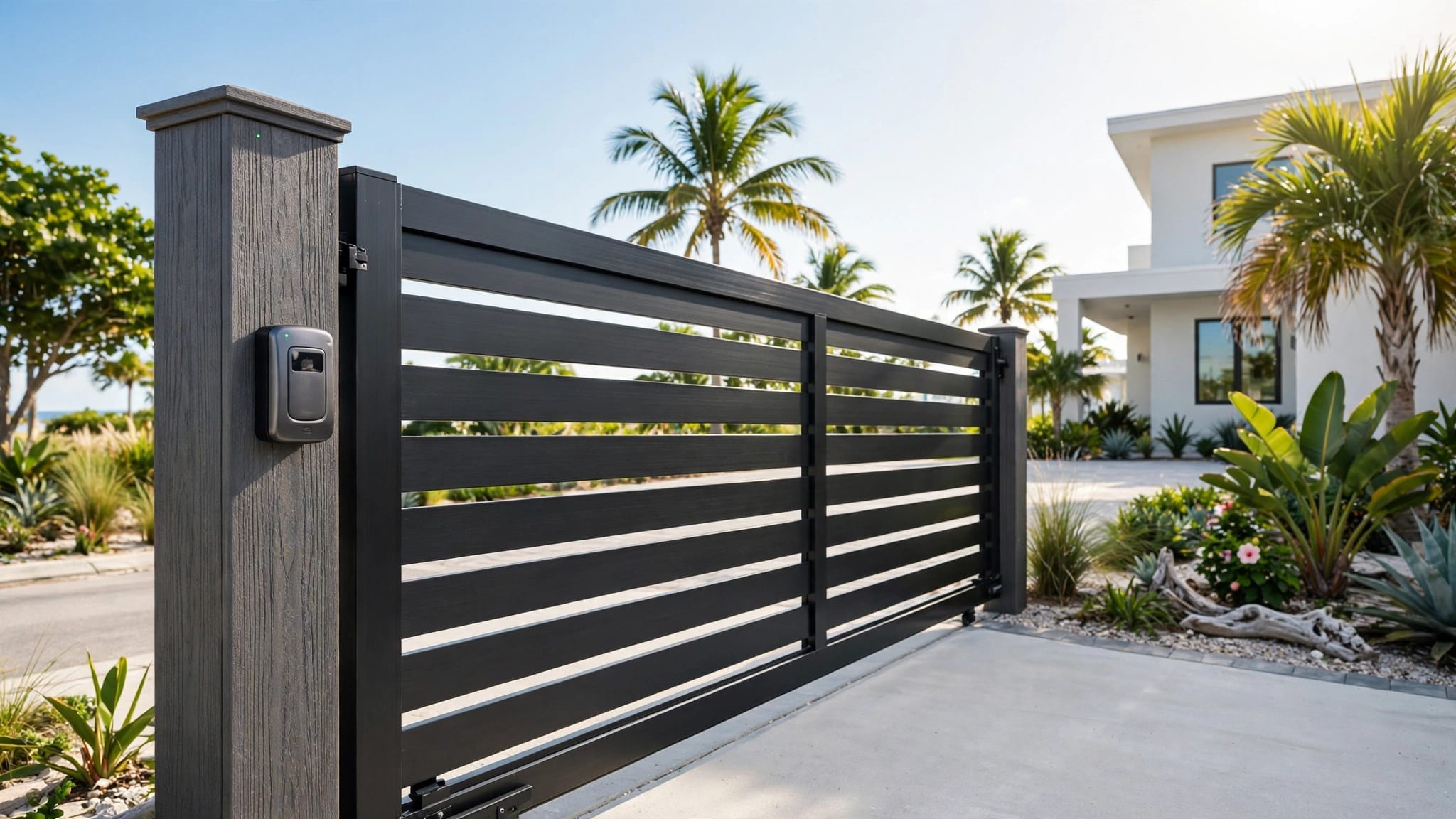
For automated gates, test the controls and safety equipment according to the manufacturer's instructions. Check the keypad, card reader, remote controls, photo eyes, loop detectors, emergency release, and stop or reverse functions. Never bypass a safety device to keep a gate operating.
A gate can appear secure while its photo eyes or reversing function has failed. Test the safety equipment, not only the lock.
If an automated gate fails a safety test, take it out of service when possible and contact a qualified gate technician. Keep pedestrians away from the opening until the repair is complete.
Adjust inspections for Fort Myers weather
Southwest Florida's weather requires a seasonal approach to commercial fence maintenance. A monthly inspection provides a baseline, but it shouldn't replace checks after heavy rain, high winds, or nearby lightning and flooding.
Fort Myers experiences a pronounced rainy season, generally lasting from May through October. Frequent rainfall can saturate soil around posts, wash out backfill, expose footings, and move mulch against the fence. Standing water also increases the chance of corrosion on unprotected steel hardware.
Humidity and heat can leave mildew or algae on some surfaces. Strong ultraviolet exposure can fade finishes and weaken certain plastics over time. Properties near the Caloosahatchee River, canals, or the Gulf may also see faster corrosion because of salt-laden air.
Use a wet-season inspection routine
During the rainy months, inspect low areas and drainage points after major storms. Check whether water flows toward a gate, pools around a post, or carries soil away from the fence line.
Keep irrigation heads aimed away from posts and gates. Broken sprinkler heads can create the same saturated-soil problem as rainfall. Correct roof-drain discharge and parking lot runoff when they repeatedly wash against the fence.
Clean dirt and organic growth with water, mild detergent, and a soft brush when the material allows it. Rinse thoroughly and follow the product manufacturer's care instructions. Avoid harsh chemicals that can damage coatings or run into planted areas and storm drains.
Complete a storm inspection safely
During hurricane season, which runs from June 1 through November 30, add a storm-readiness review to the property calendar. Before a forecasted storm, remove loose objects near the fence and confirm that gates, access controls, and emergency routes work correctly. Don't make unapproved changes that could affect the fence's design or wind performance.
After the weather clears, wait until the site is safe before starting the inspection. Watch for downed wires, unstable trees, flooding, broken glass, and damaged structures. If a fence touches a power line, keep everyone away and contact 911 or the utility company. Never touch the fence.
Once the area is safe, photograph damaged sections before cleanup. Look for missing panels, bent posts, uprooted footings, broken gate hardware, and debris caught in the fence. Use temporary barriers only when they can be installed safely, then schedule permanent repairs.
Match the maintenance to the fence material
Different fence materials show failure in different ways. Your inspection notes should identify the material and the exact component that needs attention. That information helps a contractor provide a more accurate repair scope.
Chain link, aluminum, vinyl, and steel
Chain-link fencing often needs attention at cut ends, ties, tension wire, and post connections. Surface rust may begin where the galvanized coating is scratched. Remove light surface oxidation only with a method approved for the finish, then address the cause. Replace badly corroded parts instead of covering them with paint.
Aluminum fencing doesn't rust like steel, but its finish can chip, fade, or loosen at fasteners. Check for bent rails, damaged pickets, loose brackets, and corrosion around dissimilar metals. Tighten or replace hardware with compatible parts.
Vinyl fencing is easy to clean, yet impact can crack posts, rails, and brackets. Look for splits near gate hinges and stress points. A cracked component may need replacement rather than adhesive repair, especially where the section provides security or supports a gate.
Steel gates and security fencing require close attention to welds, hinges, locks, and coating damage. Treat exposed metal according to the coating specification. Keep lubrication limited to products approved for the hinge or roller system, since the wrong product can attract grit.
When damaged sections need replacement, review commercial fencing solutions based on the property's security needs, exposure, traffic, and future maintenance demands.
Wood and privacy fencing
Wood fencing needs a closer inspection after wet weather. Press gently near the base of posts and rails with a screwdriver or similar tool only when doing so won't create a hazard. Soft wood, dark staining, peeling finish, insect activity, and movement at the post line can indicate deterioration.
Keep soil, mulch, and leaves below the lowest wood component. These materials hold moisture against the fence and make decay harder to spot. Trim vegetation so air can move around the panels.
Use stain, sealant, or paint only when the fence specification and product instructions allow it. Before coating, repair damaged boards and confirm that the wood is dry. Coating over active rot only hides the problem and can complicate later repairs.
Privacy fencing near parking lots and loading areas also needs impact checks. A vehicle can bend posts or loosen several panels without leaving an obvious break in the top line.
Prioritize repairs by safety and business impact
Property managers often handle several maintenance requests at once. Rank fence repairs by the risk they create, not by appearance alone.
Address these conditions first:
- A broken section leaves a pool area, utility area, loading zone, or secured yard accessible.
- A gate won't latch, close, stop, or reverse correctly.
- A leaning post or loose panel could fall beside a walkway, driveway, or occupied area.
- Sharp wire, broken metal, splintered wood, or exposed fasteners could injure someone.
- Storm debris blocks an emergency route, service entrance, or required access point.
- Corrosion has weakened a hinge, lock, support, or structural connection.
Schedule cosmetic work after safety and security issues receive attention. Faded color, minor surface rust, or small dents still belong in the work order system, but they don't carry the same urgency as a failed latch or unstable post.
Don't ask onsite staff to weld, cut, or force a damaged gate unless they have the training and authorization to do so. Improvised repairs can create sharp edges, damage automation, or make a later repair more expensive. Keep a damaged opening secured with an approved temporary measure and notify tenants or vendors when access changes.
A written commercial fence maintenance plan should also identify who can approve emergency repairs. Delays often occur when a manager discovers damage but the ownership group, tenant, or security provider hasn't agreed on the response process.
Keep clear records and plan the annual budget
A good inspection log gives you more than proof that someone visited the property. It shows which areas fail repeatedly, how quickly damage develops, and whether repair or replacement makes better financial sense.
Maintain a simple asset map with fence runs, gate numbers, materials, access-control equipment, and areas with special security requirements. For each inspection, record the date, weather conditions, observed defects, photographs, temporary actions, work order number, and person responsible for follow-up.
Before closing a work order, verify that the repaired gate latches, the fence line is stable, and the work area is free of sharp scraps or leftover materials. For automated gates, have the technician document the safety test and any parts replaced.
Review the records at least once each year. Look for recurring problems near irrigation, drainage outlets, parking spaces, and delivery lanes. Those patterns may point to a site condition that needs correction, not another isolated fence repair.
Budget for routine cleaning, hardware replacement, storm response, and larger capital work separately. Ask contractors for a written scope that identifies the affected sections, materials, access requirements, and any permit questions. If a repair changes the fence height, location, gate system, or site layout, confirm local requirements before work begins.
A maintained fence protects more than the property line
A strong inspection routine helps Fort Myers property managers control security risks, protect visitors, and reduce surprise repair costs. Walk the perimeter monthly, test gates as equipment, adjust checks for rain and storms, and document every issue that needs follow-up.
The best commercial fence maintenance plan is specific to the property. Pay closest attention to the places where water, vehicles, people, and access systems put the greatest strain on the fence. Small repairs found early are easier to schedule, explain, and budget.