November 10, 2026
Commercial pool fencing for a Southwest Florida hotel needs to do more than separate the water from the rest of the property. It must support guest safety , fit the hotel's traffic patterns, and hold up to sun, rain, and coastal exposure.
A successful plan also accounts for permits and inspections before the fence goes in. Start with the public-pool requirements, then design the enclosure around how guests and staff will use it.
Start With Public-Pool Permitting
A hotel pool available to guests falls under Florida's public-pool program. That makes its planning process different from the residential pool-fence rules you may find in a homeowner's guide.
Coordinate With the Florida Department of Health
The Florida Department of Health's public swimming pool guidance covers construction, modifications, and operating permits. For pool construction or a covered modification, the application includes form DH 4159, plans and specifications, and other required information. The submission comes before the building department issues the pool construction or modification permit.
The pool also needs an operating permit before it opens for public use. The department recommends contacting it at least two weeks before the planned opening. Allowing time for that step helps keep a fence installation date from becoming an unrealistic reopening promise.
Keep Building Inspections in the Schedule
The building department's final inspection is part of the application process. The health department also says the building department cannot issue a certificate of completion or occupancy until the operating permit is issued.
A hotel fence project may involve separate approvals for the pool and its enclosure. Put both tracks on the project schedule, with room for corrections before guests return.
Account for Local Permit Steps
Your property's jurisdiction affects the permit sequence. A hotel in the City of Fort Myers, for example, should not assume that unincorporated Lee County's process applies to its project.
Fort Myers and Cape Coral
The City of Fort Myers pool checklist calls for barrier plans that show the fence location, height, openings, gates, and distance from the pool. It also identifies separate permits for fences and pool enclosures. Its checklist calls for the barrier to be in place before the pool is filled.
Cape Coral's commercial pool guideline places the pool enclosure or fence permit application after the pool permit has been issued to the contractor. That sequence matters when ordering materials and reserving installation dates.
Unincorporated Lee County
Lee County's pool permit application identifies the pool enclosure as a separate permit. It calls for the permanent enclosure to be in place and its permit posted before final inspection and the certificate of compliance.
These are planning steps, not interchangeable local rules. Our guide to commercial fencing regulations in Cape Coral offers more context on business-property fence projects.
Map Guest Circulation Before Drawing the Fence
Start with a site plan that shows how people reach the pool throughout the day. Include routes from guest rooms, elevators, the lobby, parking, restrooms, and any food-service areas. Then mark where staff bring in towels, cleaning supplies, and pool equipment.
The shortest fence line isn't always the best hotel layout. A gate that opens into a busy walkway can create congestion, while an entrance hidden behind landscaping can leave guests searching for the pool. Place access points where people can find them without cutting through service areas.
Keep space for wheelchairs, strollers, and guests moving in both directions. The design must also preserve applicable accessible routes and emergency exits. An outward-swinging pool gate alone doesn't settle those requirements: the surrounding building and fire-safety layout matter too.
Visibility deserves attention before materials are selected. An open fence can help staff and guests see the pool area, but furniture and planting can obstruct those sight lines. Include them on the same plan as the barrier.
Choose Gate Locations for Daily Use
Gates take more wear than most fence panels. They also have to balance controlled entry with a route that guests can use comfortably.
Plan the Approach and Hardware Together
Consider the clear opening, the space available on both sides, and where the gate leaf will swing. A gate beside a narrow deck or a change in elevation may need a different location to provide a usable approach. Avoid placing it where an opening leaf blocks another door or pushes guests into a circulation route.
Pool-access gates need hardware suited to the applicable public-pool barrier design. Self-closing and self-latching operation are central planning considerations. The gate's swing, latch position, accessibility, and emergency egress also need to work together.
If the hotel uses key cards, coordinate the reader and locking hardware with the gate design early. Guest access control must not prevent required exit from the pool area. Staff should never need to prop a gate open to make routine deliveries practical.
Separate Guest and Service Traffic Where Useful
A service gate can give maintenance staff access without sending carts through the main guest entrance. Its location should connect to the equipment or storage area while leaving enough space for the gate to close and latch after each use.
Additional gates add hardware, installation work, and inspection points. Include only the access points the hotel needs, then assign responsibility for maintaining each one.
Compare Materials for Coastal Conditions
Southwest Florida's sun, humidity, salt air, and sprinkler spray affect the entire fence assembly. Posts and panels matter, but hinges, latches, fasteners, and connections often need attention first.
Aluminum and Chain Link
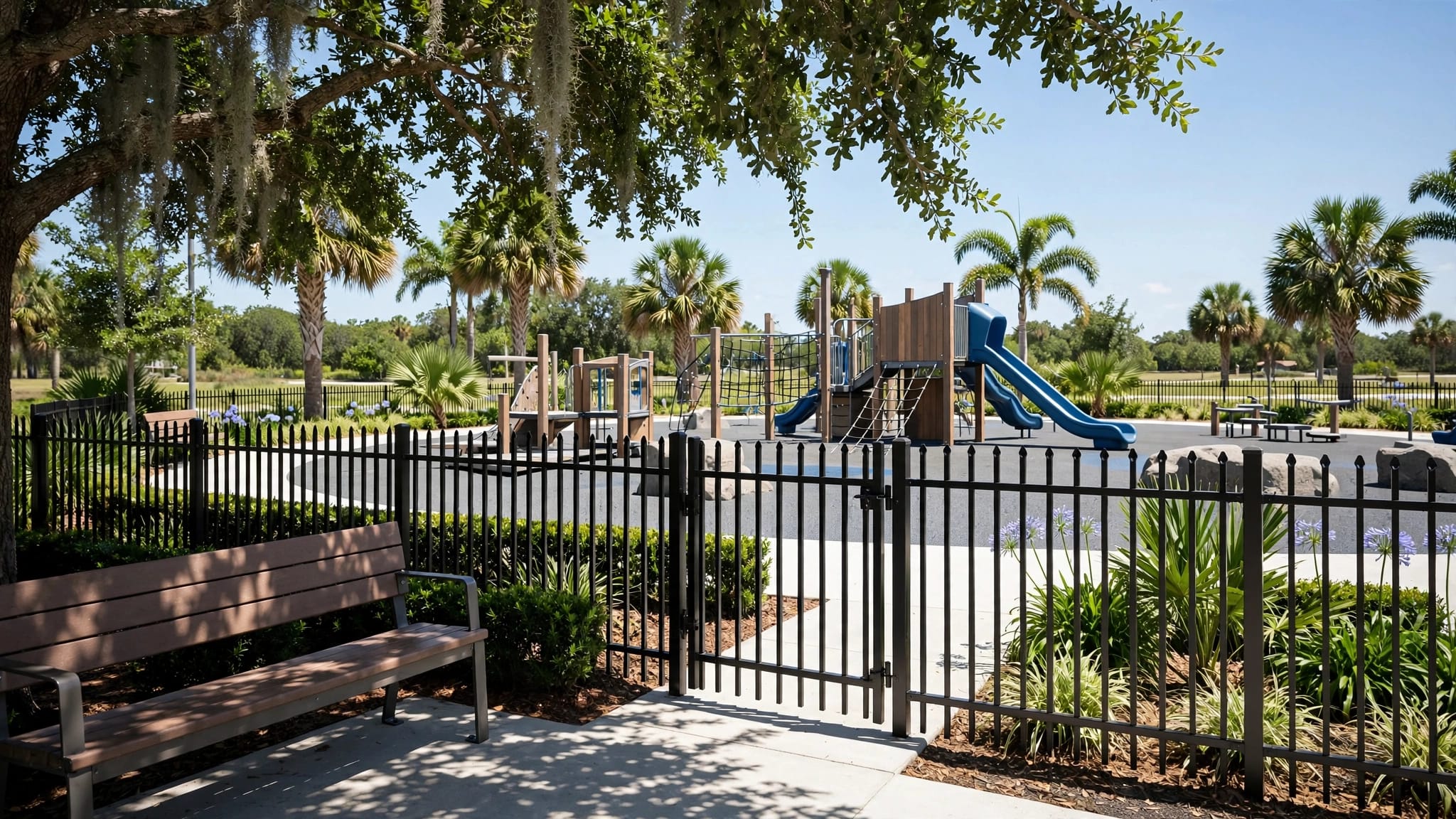
Powder-coated aluminum can provide an open appearance and clear sight lines around a pool deck. Aluminum doesn't rust like steel, although it can corrode when coatings are damaged or incompatible metals remain in contact. Our aluminum fencing options can help hotel owners compare styles for the property's design.
Chain link also provides visibility and may fit a more utilitarian service area. Its coating and fittings matter in a humid coastal setting, and the selected fabric must suit the applicable barrier requirements. A material comparison should include the entire assembly, not only the panel price.
Finishes, Fasteners, and Connections
For exposed properties, discuss coating performance and corrosion-resistant hardware as part of the specification. Type 316 stainless steel fasteners are one option for coastal exposure. Compatible connections and appropriate isolation between dissimilar metals can also reduce corrosion risk.
Wood and vinyl offer different looks, including more privacy, but a solid fence may limit views into the pool area. Wood also needs attention to moisture and finish maintenance. Our guide to powder-coated aluminum finishes covers finish considerations for Florida weather.
Coordinate Fencing With Landscaping and Resort Design
Landscaping can soften a pool enclosure, but it shouldn't create an easy route over it. Keep planters, low walls, equipment pads, and movable furniture away from places where they could act as steps. Review the outside of the barrier as carefully as the pool-deck side.
Account for mature plant size, not only the installation-day layout. Branches that rub against a coated fence can damage its finish, while dense growth can hide a gate or obstruct the view of the water. Leave room for staff to reach hinges and latches without cutting through planting beds.
Irrigation deserves a place on the plan too. Redirect sprinkler heads that repeatedly soak the fence and gate hardware. If the hotel wants privacy around an outdoor shower or service area, locate that screen so it doesn't interfere with the required pool barrier or guest route.
Phase Construction Around Hotel Operations
For an operating hotel, the project schedule must address both construction access and guest safety. Agree on the work area, material delivery route, storage space, and contractor access before removing an existing section of fence.
If construction leaves the pool without the required barrier, close the pool until a compliant enclosure is in place. A temporary arrangement belongs in the approved construction plan. It must not create an unsafe opening or obstruct required exits.
Coordinate fence work with deck repairs, landscape installation, and access-control wiring. For example, setting posts before a planned deck change can lead to rework if the finished surface alters the clearance beneath the fence. Similarly, planting after installation gives the landscape team a clear view of gates and maintenance access.
Keep guests informed about pool closures and alternate routes. At handover, allow time for final inspections and any corrections before announcing a reopening date. The schedule should include the operating-permit steps where they apply to the pool project.
Build Inspection and Maintenance Into Operations
A durable fence still needs routine attention. Give a named staff role responsibility for walking the enclosure and recording problems, including issues found outside normal pool hours.
Pay particular attention to gates. Open each one and let it close on its own, then check that the latch engages. Look for dragging, loose hinges, damaged closers, and gates held open by furniture or landscaping. If a gate won't secure the pool area, restrict access and arrange repair rather than waiting for the next scheduled inspection.
Walk the fence line for loose posts, damaged panels, new gaps, and objects that could help someone climb over. After storms, look for shifted sections and debris around the base. Also watch for rust stains on hardware, chipped coatings, and bubbling finishes.
Fresh-water rinsing and mild soap can remove salt and dirt. Avoid abrasive cleaning tools that scratch the finish. Keep plants trimmed and adjust sprinklers that repeatedly wet the hardware.
Request a Detailed Commercial Fence Estimate
A useful estimate gives the hotel enough detail to compare the full project. It should identify the fence material and finish, approximate layout, gates, hardware, installation scope, and any removal or disposal work. Permit responsibilities and construction timing should also be clear.
Ask for access-control wiring, landscape changes, deck repairs, and inspection-related work to be identified separately when they affect the project. That makes it easier to see what the fence contractor will provide and what belongs with another part of the hotel renovation.
At Royal Fence Inc., we provide commercial fencing and landscaping services in Cape Coral, Fort Myers, Estero, and Bonita Springs. Our commercial fencing service is a starting point for discussing the enclosure alongside the rest of the property.
Plan for the Fence's Working Life
The best pool enclosure fits the hotel on opening day and remains workable after months of guest traffic. Gate placement, accessible circulation, coastal hardware, and maintenance access all deserve attention before installation begins.
Bring the pool plans and operational needs into the same conversation early. A well-planned barrier gives staff a practical way to maintain safe, controlled access around the pool.