May 18, 2026
Why do some fences still look clean after years in Florida, while others fade fast?
The answer usually comes down to the finish. Sun, salt, humidity, and sprinkler spray all hit a fence at once, and weak coatings give up early.
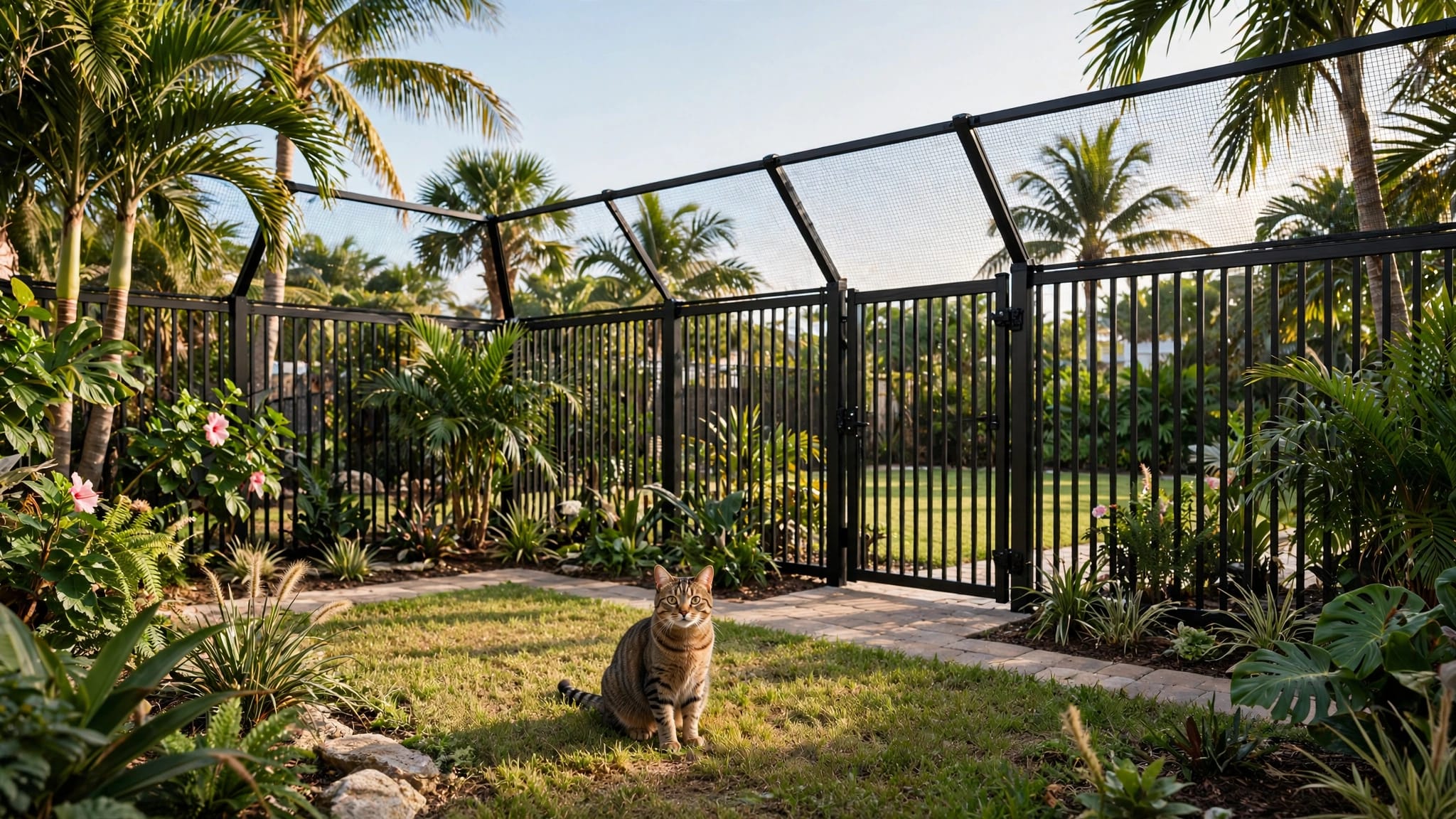
For a powder-coated aluminum fence , the finish has to do more than look neat on install day. It needs to hold color, resist chalking, and stay smooth through daily wear.
That matters in Southwest Florida, where coastal air and constant moisture can age a poor coating quickly. The good news is that the right finish choices make a clear difference.
Why Florida weather is hard on fence finishes
Florida sun is rough on color. UV rays break down the binder in many coatings, which leads to fading and a dusty look called chalking.
Near the coast, salt adds another layer of stress. It settles on the surface, holds moisture, and can make small flaws show up faster. If a finish has thin spots, salt finds them.
Inland homes avoid some salt exposure, but they still deal with strong sun, rain, and overspray from irrigation. Fertilizer, lawn debris, and pool chemicals can also leave marks over time.
Aluminum itself does not rust the way steel does. Still, the finish matters because it protects the look of the fence and helps it stay easier to clean.
If you are comparing styles, durable aluminum fence installation is worth a close look, because the coating matters as much as the frame.
What separates a long-lasting powder coat from an average one
A good powder coat starts before the color goes on. The metal has to be cleaned well, pretreated properly, and coated evenly. If prep is weak, the finish will fail sooner.
Look for these signs of better quality:
- The surface has full, even coverage on rails, posts, and pickets.
- Welds and cut edges are coated well, not left thin or bare.
- The finish looks smooth and consistent, with no rough patches from poor cure.
- Fasteners and hardware are chosen with corrosion in mind.
A smooth finish on day one means little if the coating is thin at the welds or weak at the edges.
Ask about the coating process, not just the color. A fence can look great in a showroom and still age badly if the prep is rushed.
The feel of the finish matters too. A high-quality coat usually looks uniform, with no streaking or patchy shine. It should also hold up to light cleaning without leaving marks.
For homes in Cape Coral, Fort Myers, Estero, and Bonita Springs, that extra attention is worth it. The weather here exposes weak work fast.
Finish and color choices that age better in the sun
Color choice affects how a fence looks after a few seasons. Some shades hide dust and salt film better. Others show every splash and smudge.
Here is a simple way to compare common choices.
| Finish or color | Why homeowners like it | What to watch |
|---|---|---|
| Satin black | Classic look, hides light scratches well | Salt film shows if it is not rinsed off |
| Textured bronze | Soft look, hides scuffs and glare | Can cost a bit more |
| Matte charcoal | Modern style, low shine, easy on the eyes | Dust shows if care is skipped |
| White or light tan | Bright look, cooler in direct sun | Shows dirt, mildew, and sprinkler marks faster |
For most Florida homes, satin or matte finishes age better than high-gloss surfaces. They hide small wear marks and cut glare in strong sun.
Darker colors also fit many Florida yards because they blend with landscaping and pool areas. Black and bronze are common for a reason. They stay sharp looking longer when the coating is strong.
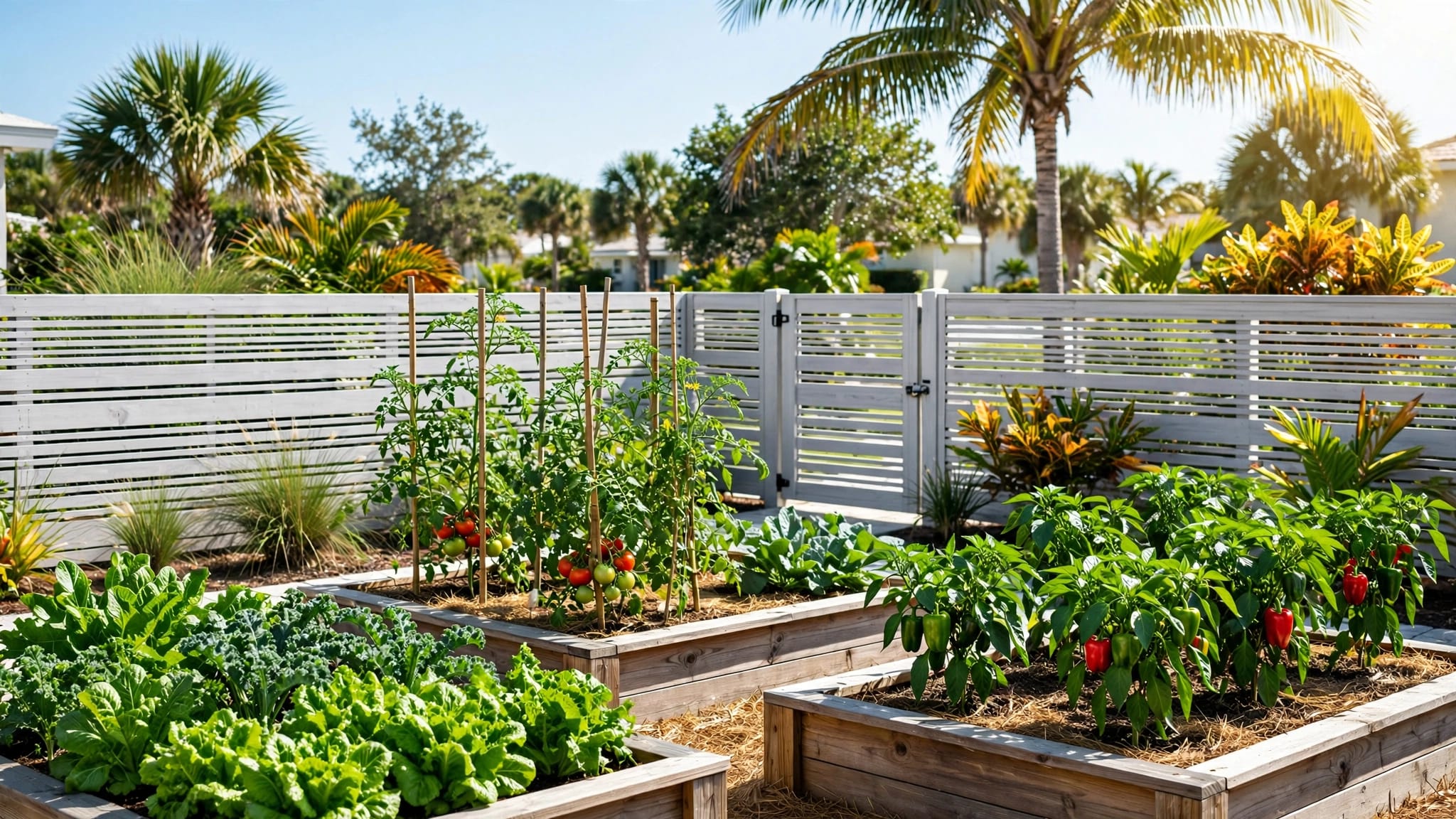
Light colors can still work well. They just need more cleaning. If your fence sits near sprinklers or sandy walkways, white may need more upkeep than you want.
The right choice depends on where the fence sits and how much cleaning you want to do. A good finish should match your routine, not fight it.
Coastal Florida and inland neighborhoods do not age the same
A fence near the Gulf faces salt spray, wind-driven rain, and more moisture in the air. Farther inland, the biggest enemies are usually UV, irrigation, and heat.
That means the same finish can age differently depending on location. Coastal properties need stronger corrosion protection, while inland properties benefit most from UV resistance and easy cleaning.
| Setting | Main stress | Finish priorities |
|---|---|---|
| Coastal Southwest Florida | Salt air, wind, heavy moisture | Strong pretreatment, corrosion-resistant hardware, smooth rinse-friendly finish |
| Inland Southwest Florida | Sun, sprinklers, dust, yard debris | UV-stable powder coat, color that hides dirt, finish that resists fading |
If your yard sits on open water or gets heavy wind, wind-resistant aluminum fence designs pair well with a coating built for salt air.
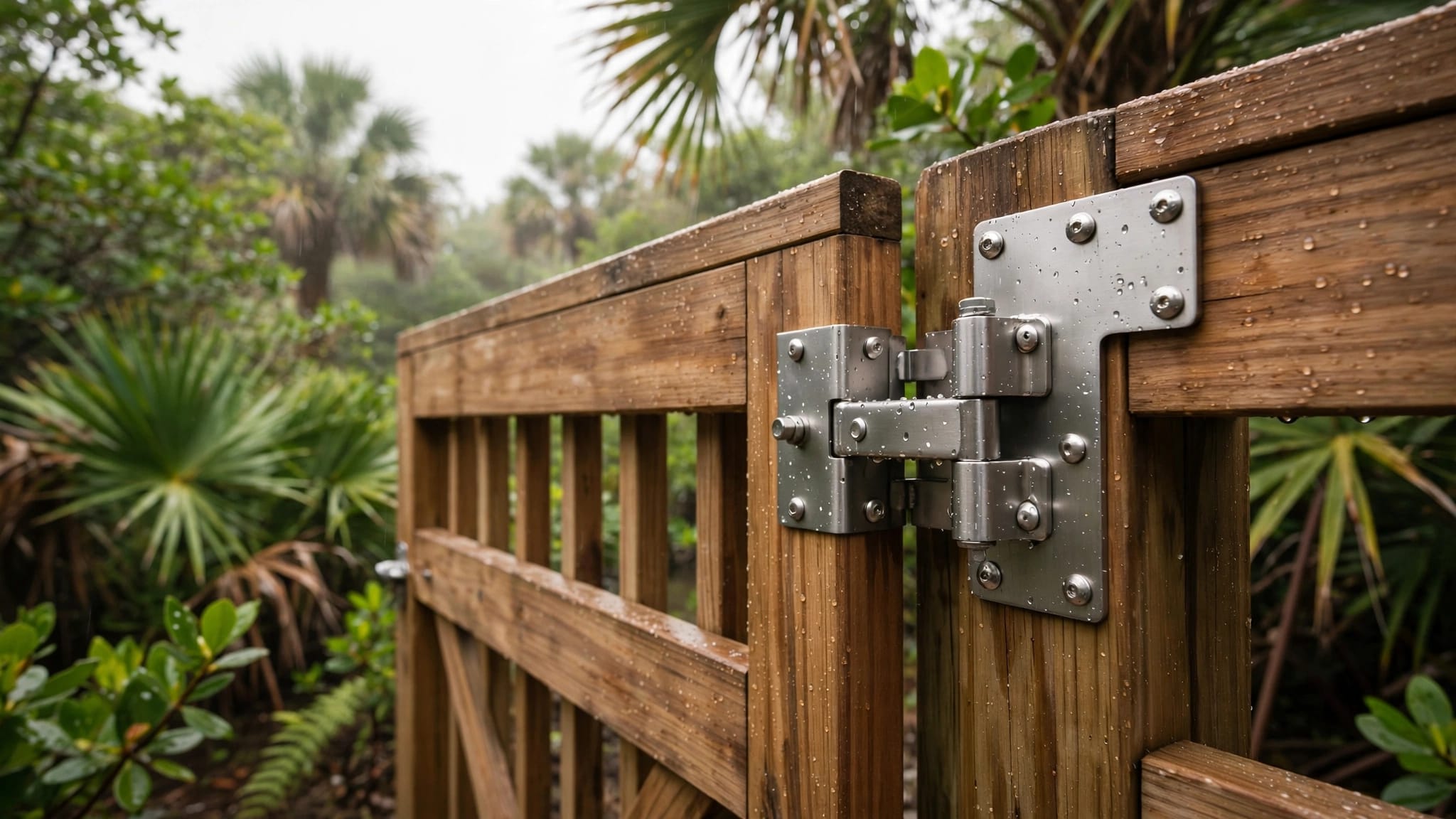
Coastal homeowners should pay extra attention to the hardware, too. A great coating can still suffer if the screws, latches, or gate parts corrode early. The whole system needs to work together.
Inland homes can often focus more on color retention and daily cleanup. That said, Florida sun is still Florida sun. UV can wear down a weak finish anywhere in the region.
Simple care habits that keep the finish looking newer
A strong finish still needs basic care. Luckily, aluminum is easy to maintain.
- Rinse the fence after salty wind, storms, or heavy pollen.
- Wash it with mild soap and a soft cloth when dirt builds up.
- Keep sprinklers from hitting the fence every day, since water spots and minerals add up.
- Trim plants so branches do not rub the surface.
- Check gates, latches, and corners for chips, then handle them early.
Avoid abrasive pads or harsh cleaners. They can dull the finish and leave marks that catch the eye later.
Everyday wear usually starts where people touch the fence most. Gates, latches, corners, and low spots near landscaping need the most attention.
If you keep the surface clean and free of rubbing, a quality coating can stay sharp for years. That is the real payoff of choosing a better finish up front.
Conclusion
A long-lasting fence finish in Florida starts with good prep, even coverage, and the right color for the setting. Sun, salt, and moisture expose weak coatings fast, so the details matter more than the sales pitch.
For a powder-coated aluminum fence , the best results usually come from a finish that matches your location, whether you live near the coast or farther inland. Pick the coating with care, then give it light maintenance over time.
That is what keeps a fence looking crisp long after the first season fades.