November 8, 2026
Paver sealer peeling after heavy rain is a sign that the surface needs attention, but the storm alone doesn't identify the cause. The location and extent of the damage can help you decide what to repair first.
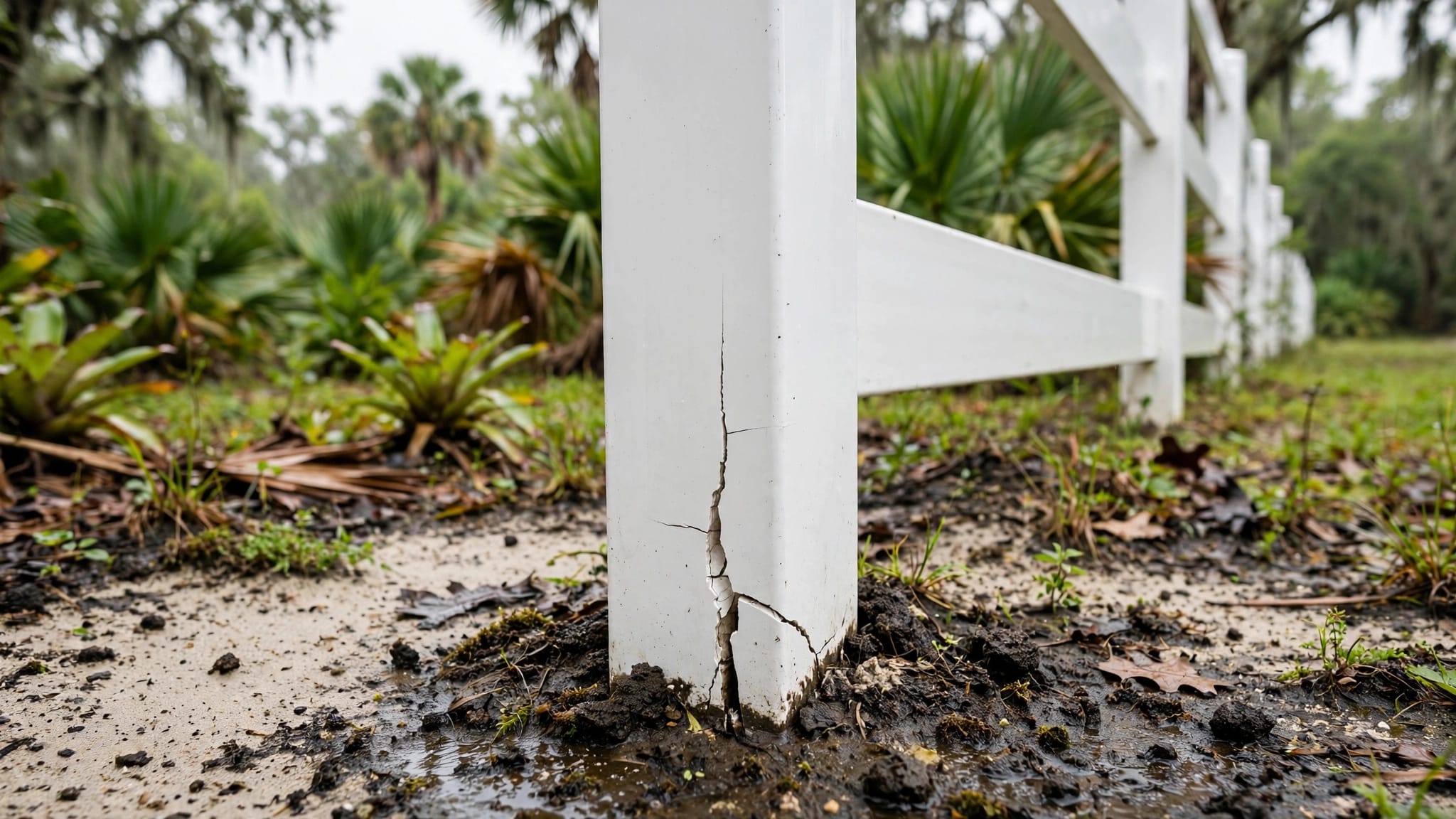
In Southwest Florida, it's also important to look beyond the pavers. Standing water and poor drainage can affect the patio, nearby fence posts, and the ground beneath the surface.
Start by identifying what has changed, then trace where rainwater goes.
How to Recognize Paver Sealer Peeling
A peeling coating can look different depending on how much of the surface has come loose. Look across the patio in daylight and inspect the affected spots up close.
Look for loose edges and flakes
Peeling often appears as thin flakes or lifted edges on the paver face. In other areas, the coating may separate in larger patches, leaving an uneven finish beside the surrounding surface.
Walk around the patio and note whether the damage is limited to one section or appears across the whole installation. Pay particular attention to walkways and pool decks, where a loose surface can affect footing. Keep people away from slippery or unstable areas until they're addressed.
Distinguish peeling from surface residue
A white or cloudy mark isn't always a loose coating. Dirt, mineral deposits, and other residue can change the look of pavers without creating a layer that lifts from the surface.
Photograph the area before cleaning it. If you see a raised edge or a flake, that's useful information for a paver professional. Avoid scraping hard to prove the point, since aggressive scraping can damage the paver face as well as the finish.
What the Location of Damage Can Tell You
The pattern of peeling won't provide a certain diagnosis, but it can help you focus an inspection. Compare affected areas with places where the finish remains intact.
Pay attention to low spots and edges
Look for damage near downspouts, along patio borders, and beside turf or planting beds. These areas can receive concentrated runoff or stay wet longer than the middle of a patio.
A puddle that collects around one low paver deserves attention even if the rest of the surface drains. The issue may be the elevation or the support below that section. Adding more joint sand won't correct a settled base.
Compare exposed and sheltered areas
A covered lanai, shaded walkway, and open driveway experience different conditions. Note where the coating has changed and whether nearby landscaping, irrigation, or roof runoff affects that area.
Photos taken after a storm and again after the surface dries can help show which marks persist. Include a wider view as well as close-ups, so the location is clear if you need help planning a repair.
Follow the Water After a Florida Storm
Heavy rainfall can expose drainage problems that are easy to miss on a dry day. In Cape Coral and nearby communities, flat lots and intense rain can make a small low area noticeable.
Check the patio and the yard together
Watch where water enters the patio area and where it exits. Roof downspouts, pool runoff, and sloped lawns can send water toward a paver edge. Also look for leaves or sediment blocking a drain or a drainage route.
Water should have a clear path away from buildings. Avoid redirecting it toward a neighbor's property or blocking an existing swale. Our guide to paver patio drainage near fence lines covers the relationship between patio grading, runoff, and fence posts.
Address recurring puddles before cosmetic repairs
If water repeatedly collects beside the same paver or along a patio edge, look at the grade and the condition of the base. A low section may need to be lifted, corrected underneath, and reset.
Don't build up a corner with a handful of loose sand. That can leave uneven support and create a trip point. A drainage professional can assess a persistent problem, particularly if water approaches the house or has no obvious outlet.
How to Address Peeling Paver Sealer
A repair should start with the extent of the damage and the condition of the pavers. Covering loose material won't give you a sound surface to work with.
Inspect before removing anything
Look for loose coating, damaged paver faces, washed-out joints, and uneven sections. Mark the affected area in your photos so you can compare it with the rest of the patio.
If only a small patch has lifted, inspect the surrounding finish as well. A patch that looks isolated at first may have loose edges nearby. For widespread damage, a professional assessment can help establish how much of the existing coating needs removal.
Remove loose material without damaging the pavers
Loose coating needs to come off before the affected surface can receive a new finish. The removal method should suit the paver material and the existing coating. Avoid forceful scraping or an aggressive pressure-washing approach that could scar the surface or displace joint material.
For a large area, consider hiring a paver restoration professional. Removal products and equipment can create hazards, and the work may require protection for nearby landscaping, drains, and pool areas. Keep children and pets away from the work area.
Once the surface is sound and clean, address any remaining joint or drainage problems before considering a new finish. A repair is easier to evaluate when the pavers and their surroundings are in good condition.
Protect Paver Joints During Cleanup
Heavy rain and cleaning can leave joints with less material than they had before. Joint care depends on the kind of paving system installed, so identify the system before adding material.
Check standard paver joints
Standard interlocking pavers commonly have narrow joints filled with joint sand or polymeric sand. After a storm, look for gaps, loose material, or sand that has collected at the patio edge.
Replace missing joint material with an appropriate product for the installation. If pavers have spread apart, inspect the edge restraint too. Adding sand alone won't hold an unsupported border in place.
Keep permeable paver joints open
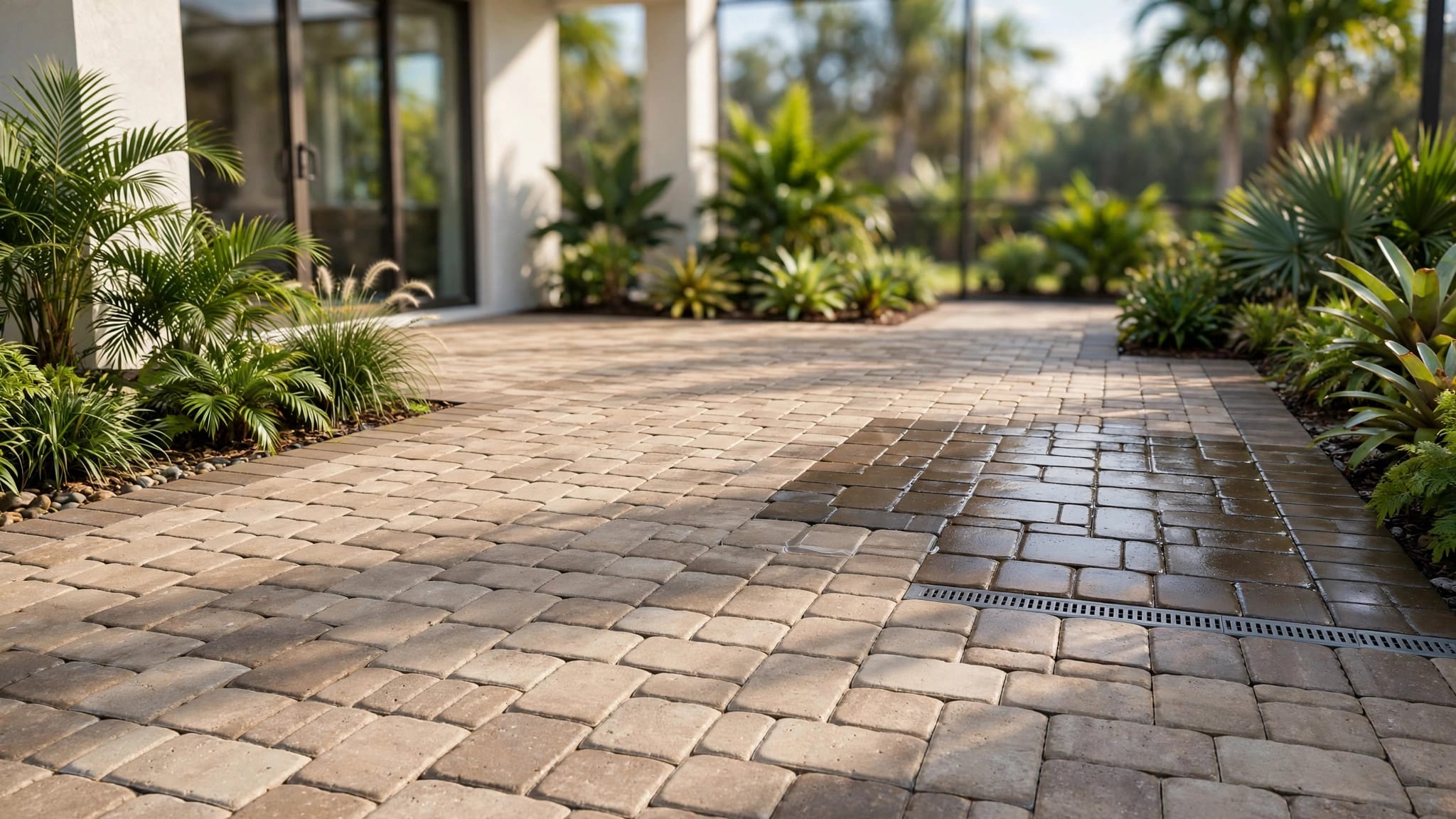
Permeable pavers use open joints and a stone base designed to move water below the surface. Their joints need the specified aggregate, rather than ordinary sand or polymeric sand unless the system manufacturer approves it.
Sweep away leaves and remove sediment that collects after a storm. Pressure washing can remove joint aggregate or push debris farther into the openings, so use a cleaning method suited to the system. Our comparison of permeable pavers and concrete explains how these surfaces handle rain differently.
Reduce Problems Before a Future Sealing Project
A patio that's clean, stable, and properly drained gives you a better starting point for any surface work. Give the whole area a close look rather than focusing only on the most visible patch.
Prepare the pavers and surrounding area
Remove leaves, dirt, and other debris using methods appropriate for the paver surface. Repair loose pavers and address missing joint material. Nearby turf edges, planting beds, and downspouts should also leave water a clear route across the yard.
At a turf-to-paver transition, look for a raised lip, an open gap, or an edge that collects water. Our guide to artificial turf and paver walkway design covers support and drainage at that connection.
Plan for upkeep after storms
After heavy rain, take a few minutes to inspect the patio, especially near downspouts and low edges. Sweep away debris before it collects in joints, and note any new loose areas or uneven pavers.
Keep photos of repairs and the surface condition. They provide a useful record if the same area changes again. On a larger patio, that record can help a professional distinguish a localized issue from damage that extends across the surface.
When to Get Help With Pavers or Drainage
A small area of loose finish may be straightforward to assess, but an uneven patio or recurring puddle calls for a broader look. The right help depends on whether the problem is mainly on the surface or below it.
Consider the scope of the repair
A paver restoration professional can assess widespread peeling and recommend a suitable removal approach. If pavers rock, joints keep opening, or water stands near the house, the work may also involve the base, edging, or drainage.
Keep the issue visible until it's assessed. Furniture, planters, and outdoor rugs can hide the extent of a damaged area or make it harder to trace a drainage path.
Coordinate patio and fence work
If you're planning a patio beside a new fence, address the layout and drainage together. Fence posts need stable support, while the patio needs room for its base, finished elevation, and water flow.
At Royal Fence, our paver design and installation services include patios, walkways, and driveways. We also install fencing, so the relationship between a patio edge and fence line is part of the planning conversation. Our guide to coordinating paver and fence installation explains the usual order of work.
Give the Patio a Sound Starting Point
Peeling after a storm deserves a closer look, but rainfall by itself doesn't explain the damage. Inspect the coating, note where water collects, and address loose pavers or damaged joints before moving ahead with a surface repair.
A clean, stable patio with a clear drainage path is easier to maintain through Florida's heavy rains.