August 14, 2026
An unsecured excavation can turn a commercial lot into a public hazard within minutes. A construction site fence Cape Coral project needs more than mesh around the parcel; it must protect people, control access, and hold up through Southwest Florida weather.
Owners, general contractors, developers, and project managers should plan the fence with site logistics, drainage, utility routes, and the final perimeter in mind. The right layout reduces rework and protects the schedule. Start with the hazards and access points, then choose the fence system.
Construction Site Fence Cape Coral Planning Starts with the Site
Cape Coral's September 2, 2025 Notice to Industry says all active construction sites, residential and commercial, need temporary fencing. For commercial sites, the notice states that temporary fencing must be at least 6 feet high. It also identifies open excavations, holes, swimming pools, septic excavations, utility trenches, and other public hazards that need enclosure and protection.
The notice connects these safeguards with Florida Building Code Chapter 33 and Cape Coral's Land Development Code, Article 5, Chapter 3. Use those references as a starting point, then confirm current requirements with Cape Coral Development Services and the project's safety team.
Before setting a post or placing a panel, mark the actual work limits on the site plan. Show the property boundary, easements, sidewalks, swales, drainage structures, fire access, material laydown areas, dumpsters, and planned gates. If the boundary is unclear, have the surveyor or civil engineer resolve it first. A fence placed several feet wrong can block access or require an expensive relocation.
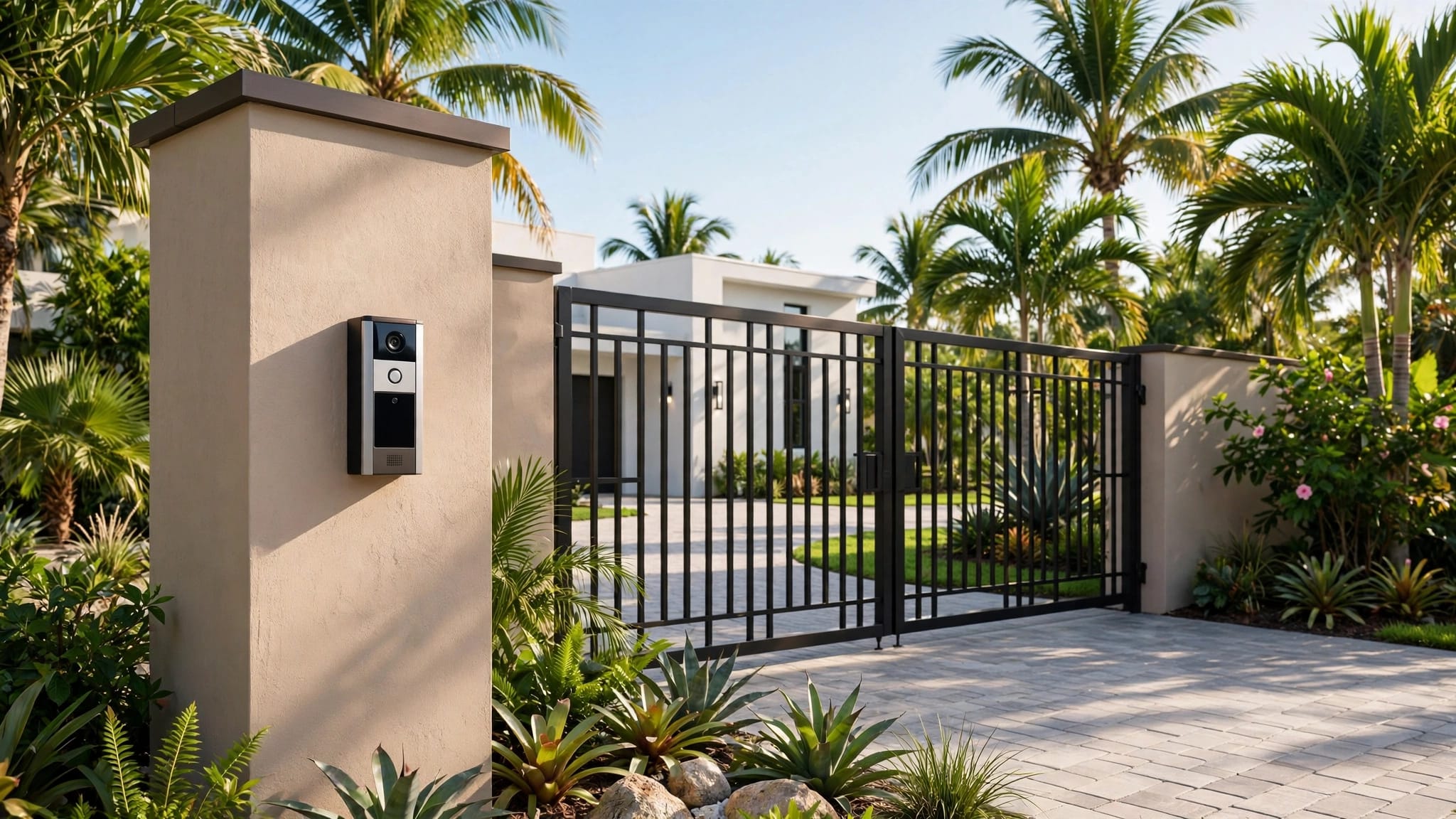
Gates need the same attention as the fence line. Place them where delivery vehicles can enter without crossing pedestrian paths or damaging swales. Select a width that matches the largest planned equipment, then consider a separate pedestrian entrance. Lockable hardware, visible signs, and an end-of-shift gate check should be part of the plan.
Cape Coral's current construction notice identifies utility trenches and other public hazards as areas that need temporary fence protection.
Select the Fence System for the Construction Phase
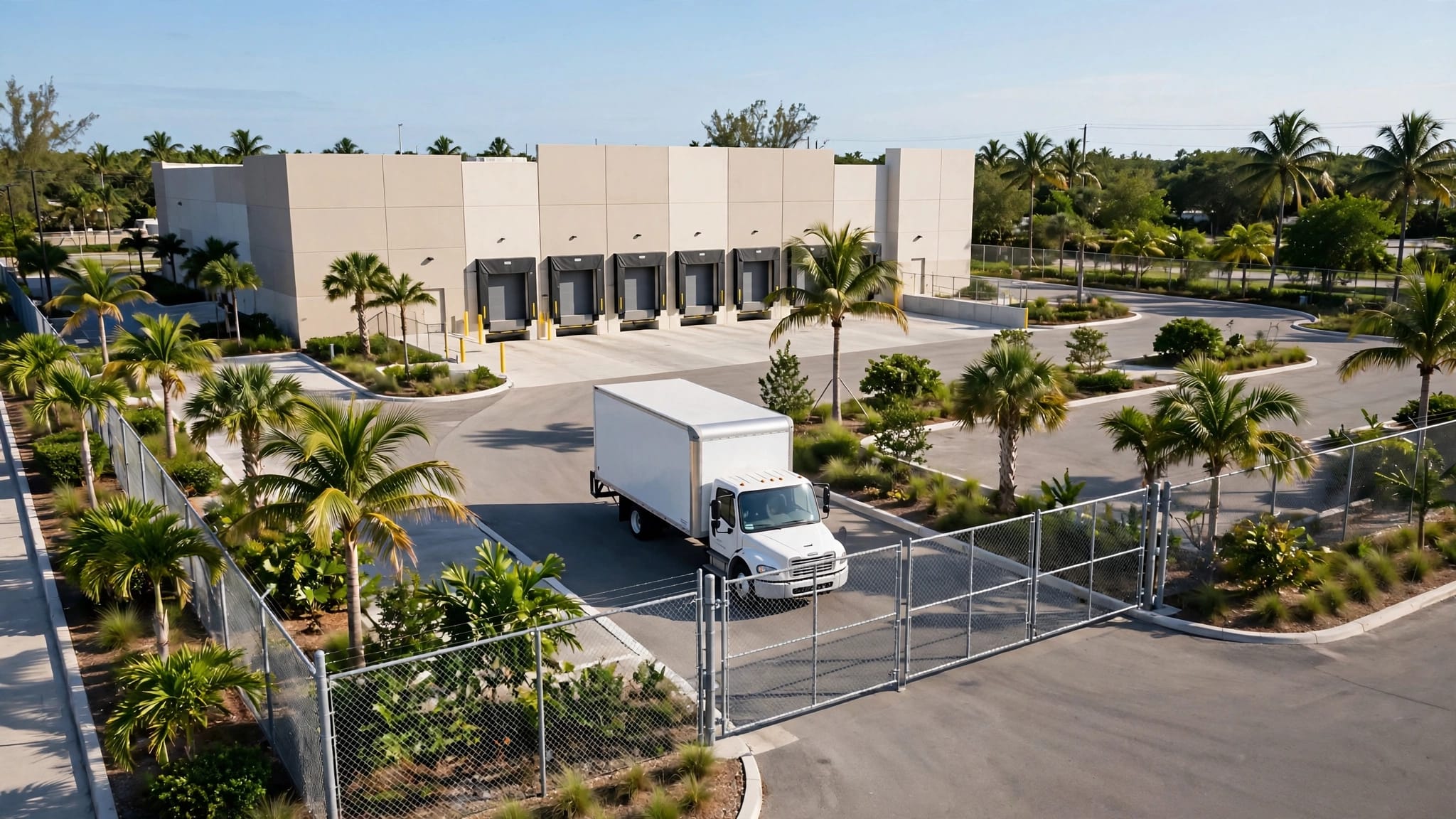
Temporary chain link is a practical choice for many commercial projects because it provides visibility and controls entry. Panelized systems work well when the boundary will move during grading, utility work, or building phases. Post-installed chain link takes more effort to relocate, but it can provide a steadier perimeter for a longer build.
A construction site fence Cape Coral quote should separate fabric, posts, fittings, gates, screening, delivery, installation, relocation, repairs, and removal. Royal Fence's 2026 Cape Coral chain-link guide places many installed projects in a broad range of about $10 to $40 per linear foot. Height, wire gauge, gates, permit work, and exposure to salt air or water can affect the final price.
| Project condition | Practical starting point | Main concern |
|---|---|---|
| Short phase with changing limits | Panelized chain link | Anchoring and relocation |
| Long phase with a fixed boundary | Post-installed chain link | Utility clearance and gates |
| Public-facing work needing privacy | Chain link with screening | Added wind load and sight lines |
| Final security after construction | Approved permanent fencing | Separate design review |
Screening changes the wind behavior of a fence. Opaque fabric catches more wind than open chain link, so the installer may need stronger anchoring, closer bracing, or a different layout. Don't attach tarps, banners, or debris netting without checking the fence system and project safety plan.
Temporary and permanent fencing also have different goals. A warehouse may need open chain link during construction for visibility, then a privacy or ornamental fence along selected frontage areas. Royal Fence's commercial fencing services in Cape Coral include material choices for security, privacy, and business properties.
Plan for Cape Coral Rain, Wind, and Drainage
Heavy rain can soften soil around posts, fill excavations, and push sediment toward streets or neighboring lots. Place fence supports outside swales, inlets, culvert openings, and drainage paths unless the civil plan allows another arrangement. A security fence doesn't replace a silt fence, erosion-control measure, or stormwater plan.
After a major rain event, inspect areas where water stands or flows. Look for leaning panels, exposed footings, washed soil, blocked inlets, and gaps beneath the fence. Keep drainage access open, and don't use the fence line to store fill, pipe, pallets, or other materials.
Wind planning needs the same attention. Open chain link usually presents less wind area than opaque screening, yet any temporary system can shift when soil is wet or gusts hit the site at an angle. Ask the installer to document the anchoring and bracing method. Cape Coral and the project engineer should confirm any wind-load or engineered tie-down requirement because no single storm rating applies to every temporary fence installation.
Cape Coral's exposure to salt air and water also makes corrosion worth considering. Ask about galvanized or coated mesh, posts, fittings, and gate hardware. Inspect cut ends and damaged coatings during the project. A gate that no longer latches can create a security problem even when the rest of the fence remains intact.
Assign someone to check the perimeter before severe weather and after it passes. The storm plan should address loose panels, screening removal, gate security, equipment clearance, and public hazards. Keep excavation protection in place until the hazard has been closed, covered, or handled under the approved safety plan.
Review Permits, Rights-of-Way, Easements, and Utilities
A fence line can cross more than a property boundary. It may touch a public sidewalk, utility easement, drainage facility, street right-of-way, or visibility area. Those conditions can affect the review process, permitted materials, and post locations.
Cape Coral's Permit Document Center lists separate guidance for commercial and residential fencing. The city has also published a fence licensure clarification identifying contractor license categories that may apply for fence permits. Ask the fencing contractor and Development Services which current application, license, plan, and inspection requirements apply. The Cape Coral commercial fence permit guide can help organize questions, but project-specific confirmation still matters.
Don't assume city review covers county right-of-way work. Lee County DOT materials state that a commercial construction right-of-way permit is needed for work within county right-of-way. If the fence, gate swing, sidewalk protection, traffic-control setup, or related work enters that area, contact Lee County DOT Engineering Services before installation.
County materials also state that permit documents and plans must remain on the job while work is underway. Inspections may cover maintenance of traffic, drainage, roadway, sidewalks, and final conditions. Lee County Ordinance 85-15 includes a five-foot provision for fences, walls, and hedges near a street right-of-way or easement, with an exception tied to an approved site plan. Have the civil engineer, permit reviewer, or County Engineer confirm how that provision applies.
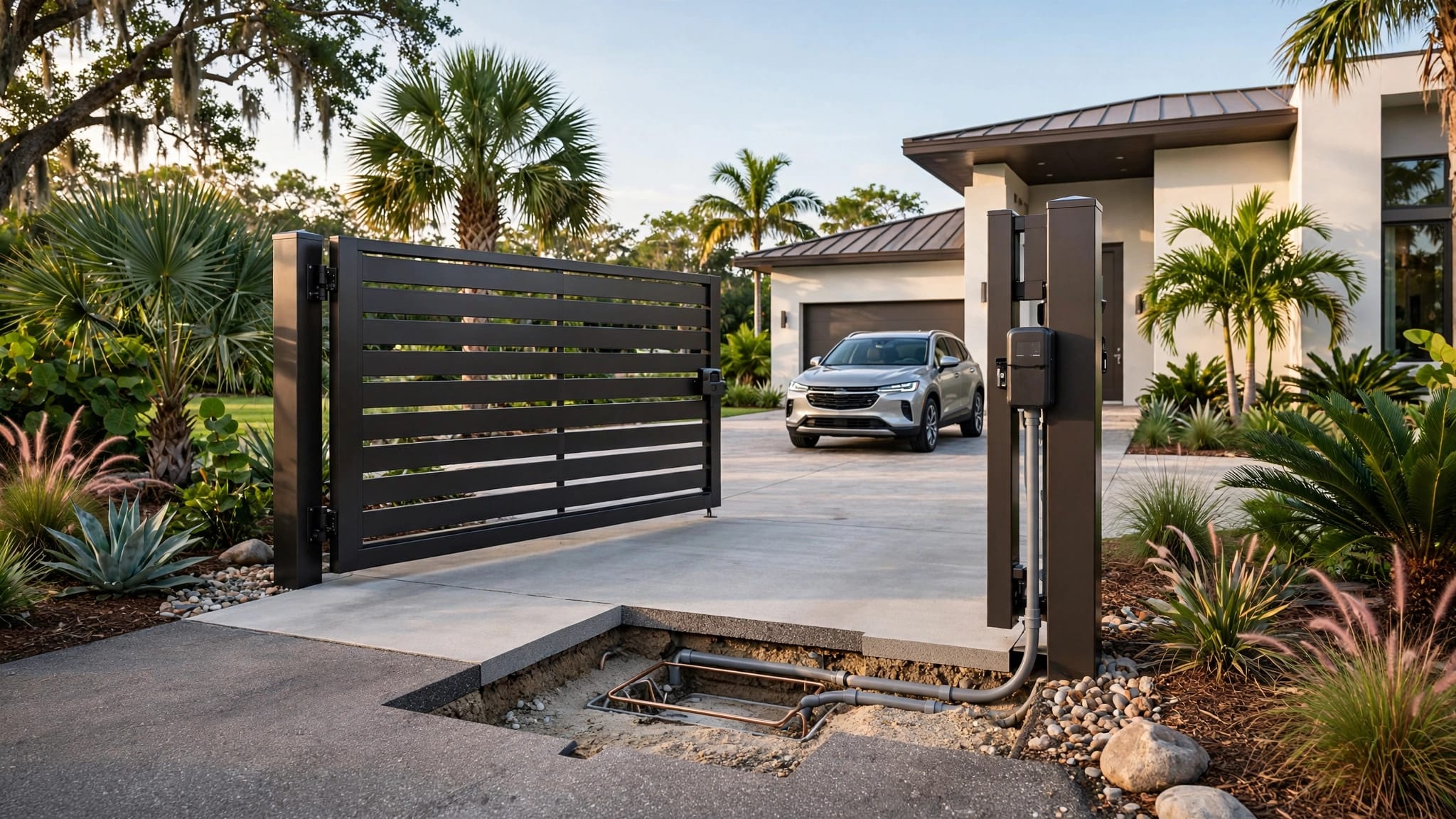
Utility coordination belongs on the pre-installation schedule. A locate request and marked utility plan can prevent damage to electric, water, sewer, communications, and underground drainage facilities. Keep posts, concrete, and driven stakes clear of marked lines. If field conditions differ from the plans, stop work in that area before moving the fence.
If clearing or grading could affect gopher tortoise habitat, add an environmental review before installation. Depending on the site and agency direction, temporary exclusion fencing may involve silt fence, orange construction fencing, or black fabric systems. Review construction fencing and tortoise compliance with the project's environmental professional instead of treating a standard perimeter fence as automatic compliance.
Build Inspection and Maintenance into the Schedule
The fence needs an owner after installation. Assign daily checks to the superintendent, site safety lead, or another named person. The inspection should cover:
- Gates close, latch, and lock correctly.
- Panels and posts remain upright after deliveries, rain, and wind.
- Mesh, ties, feet, braces, and screening show no damage.
- No new gap exposes an excavation, trench, pool, or equipment area.
- Signs remain visible and don't block an approved pedestrian route.
Check the perimeter after strong storms, earthwork near the fence, and any gate relocation. A damaged section should be isolated and repaired promptly rather than left for the next phase.
Keep a simple photo record with the inspection date, location, problem, and repair. This helps the project team track recurring failures and verify that the fence still matches current work limits.
At the end of the job, remove temporary panels, concrete, stakes, and debris without leaving trip hazards or blocked drainage. If an open hazard remains, maintain the temporary barrier until the hazard is removed or a permanent barrier is ready.
Conclusion
A successful construction site fence Cape Coral project starts with a site-specific drawing, not a last-minute order of panels. The plan should account for public hazards, gates, drainage, wet soil, wind exposure, utilities, easements, and city or county review.
Panelized fencing may fit a changing work zone, while post-installed chain link may suit a fixed commercial perimeter. Screening, gates, anchoring, repairs, relocation, and removal each need their own line items. For a site-specific scope, request a commercial fence quote after the project team marks the limits and identifies right-of-way constraints. A fence planned with the work protects the public and keeps construction moving.