November 13, 2026
A chain link fence repair starts with a close look at the hole and the fabric around it. A small, isolated opening may be suitable for a patch, while widespread damage can make fabric replacement the better choice.
The surrounding fence condition matters as much as the hole itself. Before choosing a repair, look at the mesh, its coating, and the parts that hold it in place.
Start by Examining the Damaged Fabric
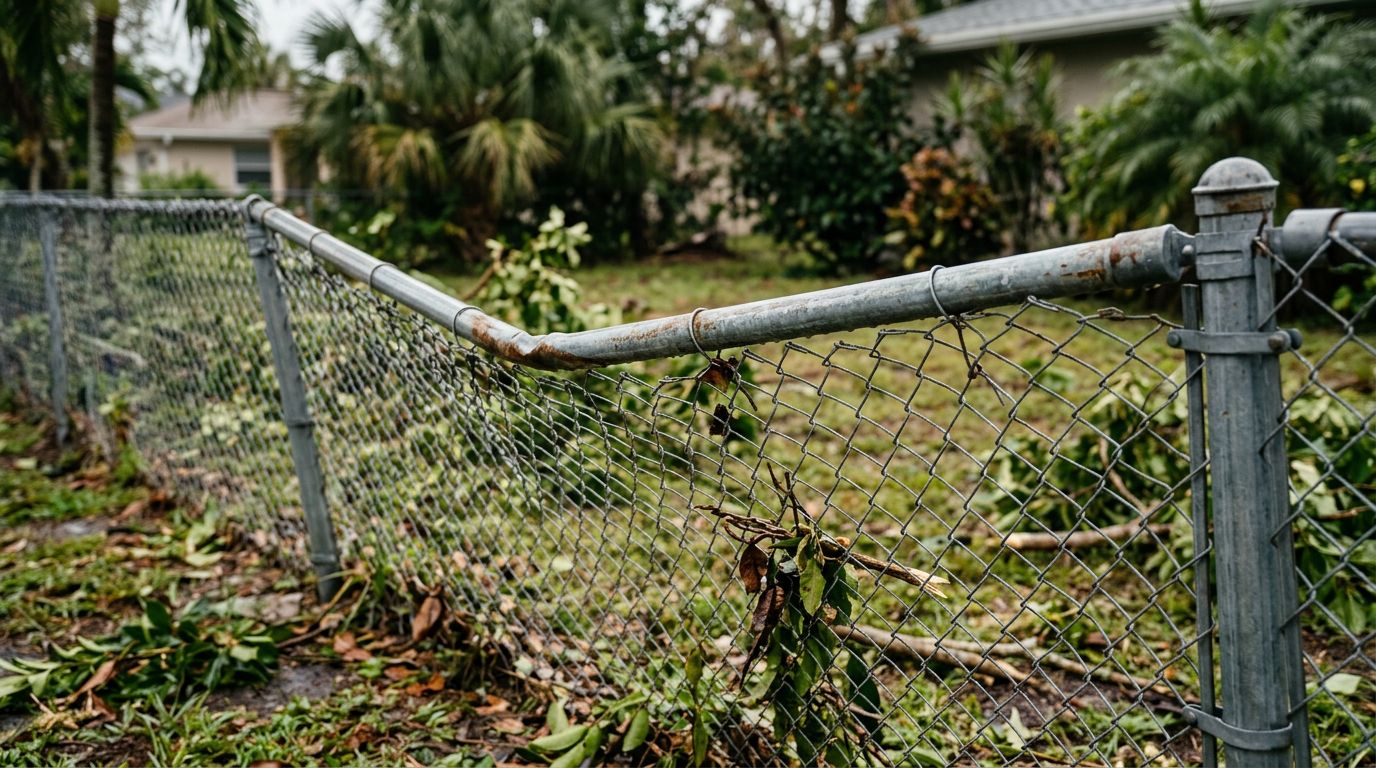
Look at both sides of the fence and identify where the damage begins and ends. A hole may be easy to see, but bent or separated wires can extend beyond the opening.
Notice whether the diamonds around the hole still hold their shape. If the neighboring fabric is firm and the wire is in good condition, the damage may be confined to one area. If the mesh has pulled out of shape across much of the span, the repair needs a broader assessment.
Look Beyond the Opening
Follow the affected wires upward and downward. A damaged strand can leave a weak area above or below the visible gap, even when the rest of the fence looks straight.
Also note whether the damage reaches the top rail, bottom edge, or a post connection. The position matters because fabric at those points depends on ties and tension components for support.
Note Corrosion and Previous Repairs
Orange staining, flaking metal, and brittle wire can indicate that the affected area extends beyond a tear. Surface rust can begin where the galvanized coating has been scratched. Badly corroded fabric or hardware needs replacement rather than paint alone.
Look for earlier repairs as well. Several damaged areas close together can make a larger fabric replacement more practical than treating each opening separately.
Decide Between a Patch and Fabric Replacement
There isn't a universal hole size that determines the right repair. The useful distinction is whether sound fabric surrounds the opening and whether the fence still has support.
A localized patch is most suitable when the hole is limited to one area, the surrounding diamonds are intact, and the fence remains properly tensioned. The nearby rail, posts, and connections also need to be in good condition.
When Damage Is Limited to One Area
A patch can make sense when one impact has damaged a small portion of otherwise sound mesh. The repair material should be compatible with the existing fabric, including its opening size, wire thickness, and coating.
Consider how the finished area will be used. A fence beside a frequently used walkway or an active pet enclosure may receive more contact than a boundary fence along an open side yard. The condition of the surrounding wire matters in either location.
When a Larger Section Makes More Sense
Replacement becomes more attractive when multiple wires are broken, the fabric is badly distorted, or corrosion extends across the span. A section that sags between posts may have a support or tension issue that a localized fabric repair won't address.
Storm damage can affect more than the mesh. Bent rails, leaning posts, or loose connections call for a broader repair plan. Our guidance on matching replacement fence sections covers appearance and compatibility when damage extends beyond a small area.
Match the Mesh Opening
Chain link fabric comes in different diamond sizes. The opening size is separate from the fence height and the wire gauge, so two rolls of fabric can look similar at a distance but have different mesh.
To compare openings, use an undamaged part of the existing fence. The mesh size is measured across the clear opening between parallel wires, rather than along the long point-to-point dimension of a diamond. Compare several openings if the fabric is distorted near the hole.
Matching the opening helps the repair fit the existing pattern. It also helps preserve the spacing used throughout the fence, which can matter for a pet enclosure or another boundary where gaps are a concern.
Fabric height matters when a larger section needs replacement. Match the height of the existing mesh rather than assuming it is the same as the top rail's height above the ground. The rail, ground level, and fabric edge may not all line up in the same way across the property.
Our guide to residential chain link fence options explains how mesh size and fence height relate to different property needs.
Choose a Compatible Wire Gauge
Gauge describes the thickness of the wire in the chain link fabric. A lower gauge number means thicker wire , so 9-gauge fabric is heavier than 11.5-gauge or 12.5-gauge fabric.
Common residential options include 12.5, 11.5, and 9 gauge. Approximate wire diameters in the material specifications are 0.099 inch for 12.5 gauge and 0.113 inch for 11.5 gauge. Those figures help show the difference, though diameter can vary with the manufacturer and coating system.
Compare the Fabric, Not the Post
Fabric gauge doesn't describe the size of the fence posts. A post is identified by dimensions such as its outside diameter and wall thickness. A 2 3/8-inch terminal post, for example, refers to the post diameter rather than the thickness of the woven wire.
That distinction matters when describing a repair. A record that says only "2 3/8-inch chain link" could describe a post without identifying the fabric that needs attention.
Account for the Coating
A vinyl-coated wire can appear thicker because the outside measurement includes its coating. When comparing materials, use the fabric specifications rather than judging thickness by appearance alone.
Heavier wire can resist bending better, but it doesn't make the rest of the fence stronger. Posts, rails, and connections still carry the fabric. Our guide to chain link wire gauge choices compares common residential options.
Match the Finish for Southwest Florida Conditions
A repair should suit the finish on the existing fence. Galvanized chain link has a zinc coating that protects the steel. Vinyl-coated fabric adds a colored outer finish and is available in options such as black.
Matching the finish helps the repaired area look consistent with the rest of the fence. It also helps keep the material choice appropriate for the property. A silver galvanized section beside black-coated fabric will stand out, even if the opening size and height match.
Southwest Florida fences encounter humidity, rain, irrigation overspray, and, in some locations, salt air. Those conditions make the condition of the coating relevant when evaluating damage. Scratches and exposed metal deserve attention because corrosion can begin at breaks in the protective finish.
Look at the nearby fittings and connections as well as the fabric. A replacement material that matches the mesh won't resolve badly corroded hardware elsewhere in the span. Record those areas separately so the repair scope covers the parts that need attention.
Assess the Fence's Support and Tension
Chain link fabric relies on more than the woven wire to stay in position. Rails, posts, ties, tension wire, and post connections each contribute to the condition of the fence.
If the fabric has a dip across a span, look for a detached tie, damaged rail, or shifting post. Loose mesh can also indicate a loss of tension. A hole and a sag may appear together, but the visible opening alone doesn't establish why the fence has lost its shape.
Look at the Rail and Ties
The top rail should follow a consistent line across the span. A bend near the damaged area may indicate that an impact affected the framework as well as the fabric.
Fence ties connect fabric to the framework. Missing or damaged ties can leave the mesh loose even when most of the wire is intact. Note their condition around the damaged area and along the adjacent span.
Look at Posts and Connections
A leaning post, disturbed footing, or loose post connection can affect the fence on either side. Similarly, a problem at a terminal or corner post may affect more than one section of fabric.
Gate areas need separate attention. Movement at a gate post can affect the adjoining mesh, while damaged hinges or a misaligned latch can point to a problem beyond the hole. Our commercial fence maintenance checklist includes other components to inspect during a perimeter review.
Consider How the Fence Is Used
The same visible hole can have different consequences depending on its location. A decorative boundary and a pet enclosure may use similar fabric, but the demands on them aren't necessarily the same.
For a pet yard, look at the lower edge as well as the main opening. Mesh that has pulled away near the ground may leave a gap even when the center of the fence appears intact. Repeated contact can also distort wire around an existing weak spot.
At a business property, damage near a gate or access route may affect an area used throughout the day. A broader inspection can identify whether the issue is confined to the fabric or includes hardware that receives frequent use.
Location also affects the finished appearance. A patch in a prominent front-yard fence may be more visible than one behind landscaping. Matching the mesh and finish helps maintain a consistent look, but a larger section replacement may be preferable when damage covers several areas.
Describe the Scope Before Work Begins
A clear description helps distinguish a fabric repair from a larger fencing project. Record the location of the hole, the condition of the surrounding mesh, and any nearby rail or post damage.
Include the fabric height, diamond opening, gauge, and finish when those details are available. Photos of the overall span and close views of damaged areas can show how the hole relates to the rest of the fence. For a larger replacement, the condition of the posts, rails, and gate hardware also belongs in the scope.
At Royal Fence, we provide chain link fencing services for residential and commercial properties in Cape Coral, Fort Myers, Estero, and Bonita Springs. We also offer free estimates and consultations for fencing projects.
Choose the Repair That Fits the Damage
A small hole in sound fabric may call for a localized repair. Widespread corrosion, distorted mesh, or damaged supports point toward a larger scope.
The best starting point is a complete assessment of the affected span . Once you know what remains sound and what needs attention, you can choose fabric that fits the fence and the way you use it.