March 11, 2026
A warehouse fence has two jobs at once. It has to stop problems and it has to keep your site moving. If either one fails, you feel it fast in theft risk, driver delays, and after-hours headaches.
In Fort Myers, the fence also fights the environment every day. Salt in the air speeds up corrosion, UV beats up finishes, and wind tests every post. So choosing warehouse fencing is less about picking a style, and more about picking a system that fits your security needs, your traffic flow, and Florida conditions.
Below are practical commercial fence options, gate considerations, and planning tips that facility managers can use to compare solutions with fewer surprises.
Start with threats, traffic flow, and Florida wear and tear
Before you compare materials, map how your site actually works. Think like a thief and a yard driver for five minutes. Where's the quiet corner with no visibility? Where do trucks stack at shift change? Where does the site need a "hard no" versus a controlled entry?
Florida conditions should drive the specs, not just the look. In coastal Southwest Florida, corrosion resistance matters as much as strength. Galvanized steel helps, but coatings and hardware choices matter too. Hinges, rollers, and fasteners often fail before fence fabric does. UV also degrades cheaper plastics and fades dark finishes faster. Meanwhile, wind loads push and pull on panels, posts, and gates, so post depth, concrete, and bracing can't be an afterthought.
Operations usually decide the gate plan. A tight turning radius can turn a secure entry into a daily bottleneck. For 53-foot trailers, you typically want enough throat depth inside the gate so drivers can clear the roadway before stopping. Also plan for delivery peaks, because gate cycle time that feels "fine" at 2 pm can feel brutal at 7 am.
A good rule for warehouse fencing is simple: security should never force unsafe driving . Design the entry so trucks don't queue into the street.
If you need a starting point for fence types and gate options used on commercial sites, the service overview on commercial fencing lays out common materials and use cases in Southwest Florida.
Comparing warehouse fencing options that perform in Fort Myers
Most warehouse sites in Fort Myers land in one of two lanes: see-through security fencing (so you can patrol and monitor) or privacy screening (to block views of inventory and yard activity). The best answer often mixes both, for example, open fencing along the front and sides, then privacy panels around outdoor storage or dumpster areas.
Chain link remains a go-to for warehouses because it's economical, repairable, and fast to install, especially when you use heavier framework and corrosion-resistant finishes. If your site is near salt exposure, consider upgraded coatings and be picky about fittings. For many facilities, chain link warehouse fencing with an anti-climb mesh size and a clear interior zone gives strong value per foot.
Ornamental aluminum is another strong option in Fort Myers because it doesn't rust like steel and holds up well in humidity and sun when you choose quality powder coating. It's also harder to cut than chain link fabric. It won't give privacy, but it can look more "front-of-house" while still being secure.
Vinyl privacy can work in warehouse settings, but it needs the right application. It shines for hiding laydown yards, blocking headlights, and reducing casual visibility from the street. On the other hand, solid panels catch wind and can be less forgiving if posts and footings are underbuilt. If you use privacy fencing, match it to wind-rated engineering and leave room for maintenance access.
Here's a quick comparison to keep options straight:
| Fence option | Pros | Cons | Typical warehouse use | Maintenance | Relative cost |
|---|---|---|---|---|---|
| Galvanized or coated chain link | Cost-effective, easy to repair, good visibility for patrol | Can be cut, can look industrial | Perimeter security, large runs | Low to medium | $ |
| Anti-climb welded wire (security mesh) | Harder to climb and cut, clean look, good visibility | Higher material cost, repairs can be more involved | High-theft areas, utility yards | Low | $$ |
| Ornamental aluminum | Corrosion-resistant, professional look, strong pickets | Not private, higher upfront cost | Frontages, office-side perimeter | Very low | $$ |
| Vinyl privacy panels | Blocks views, reduces nuisance visibility, clean finish | Wind load concerns, less "see-through" security | Screened storage, dumpster enclosures | Low | $$ |
| Mixed system (open perimeter plus screened zones) | Balanced security and privacy, targeted spending | More design coordination | Most active warehouse sites | Low to medium | $$ to $$$ |
The takeaway: for most Fort Myers facilities, the "best" warehouse fencing is the one that matches exposure and risk by zone, not a single material used everywhere.
Gates, code checks, and recommended fence packages for Fort Myers warehouses
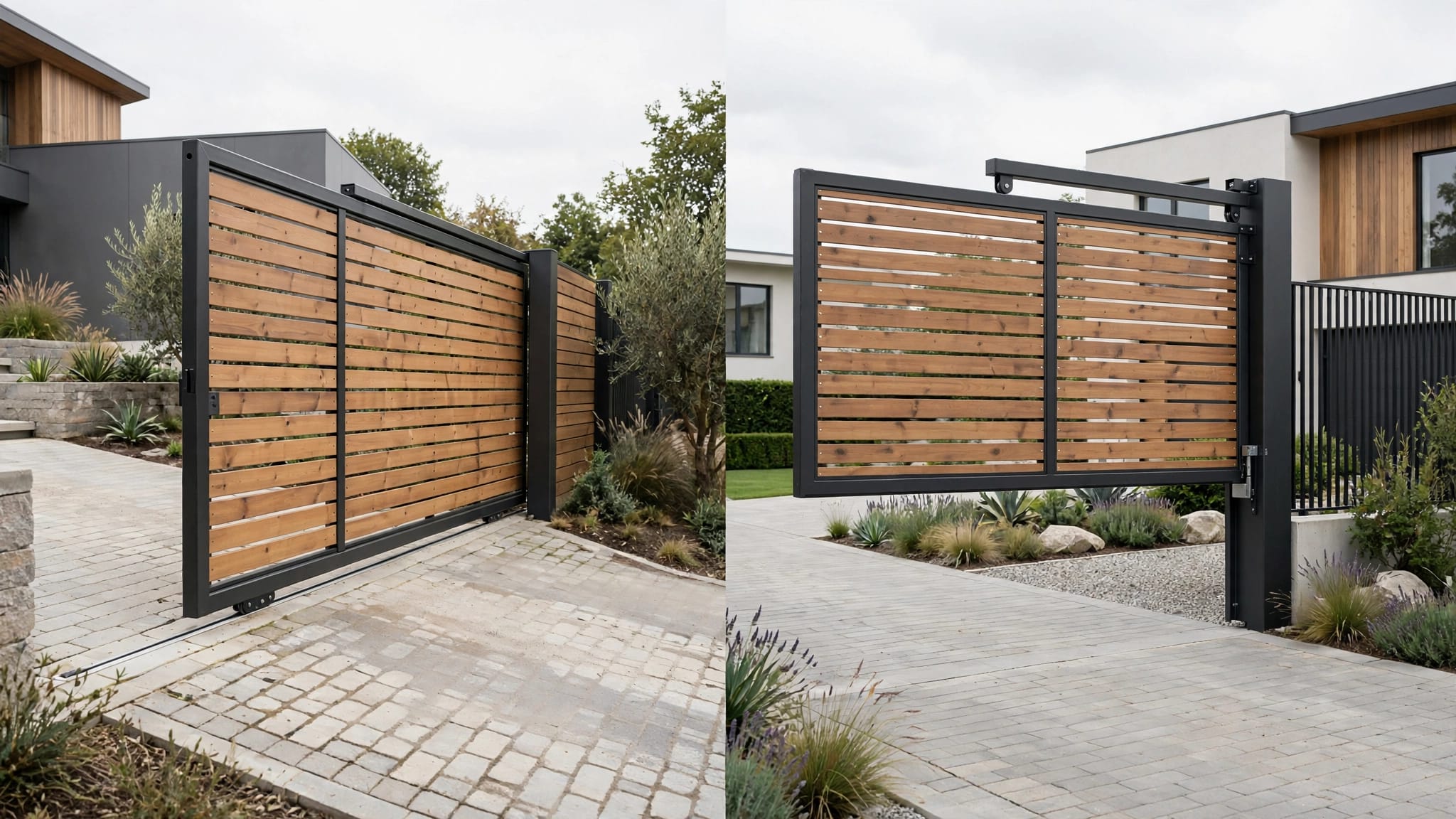
A fence is only as strong as its gates, because gates get used, bumped, and tested daily. For logistics-heavy sites, sliding or cantilever gates often make sense because they don't swing into truck paths and they tolerate tight entries better. Swing gates can still work well for secondary access, especially where space is limited and traffic is light.
For powered operators, prioritize three things: cycle time, safety, and what happens during an outage. Battery backup and manual release are not "nice to have" on a busy site. Also decide whether a gate should fail-open or fail-closed based on life safety and your emergency plan.
Don't wait for the first power outage to learn your gate plan. Confirm egress and manual operation during downtime before you finalize the operator and access control.
Permitting and code details vary by jurisdiction and parcel, even inside the Fort Myers area. Your site might fall under City of Fort Myers rules, Lee County, or another local authority. Florida projects also commonly reference the Florida Building Code, and wind-load design can affect post sizing and foundations. Because requirements change and zoning matters, verify your fence height, setbacks, and gate placement with the local building, permitting, and planning offices before fabrication.
To reduce liability and help with internal safety reviews, document your security plan early. That includes clear zones, camera sightlines, lighting placement, and how visitors enter. For more on the risk side of commercial enclosures, see commercial fencing and liability.
Recommended packages for warehouse fencing in Fort Myers
- Baseline security (value-first) : Coated chain link perimeter, strong corner bracing, a manual swing gate for secondary access, and a powered slide gate at the main drive. Add lighting aimed along the fence line, not into drivers' eyes.
- High-security perimeter (theft deterrence) : Anti-climb mesh or upgraded chain link, limited climb aids, controlled access at all vehicle entries, and camera coverage with clean sightlines. Use a defined clear zone inside the fence for patrol and visibility.
- Logistics-heavy site (traffic-first) : Wide entries with generous turning geometry, fast cycle operators, safe loop detection, and separate lanes for employees and carriers. Add a knock-down protection plan for gate areas (bollards and barriers) to reduce impact damage.
Conclusion
Warehouse fencing in Fort Myers works best when it's planned like a perimeter, a traffic system, and a piece of storm hardware, all at once. Choose materials that resist corrosion and UV, design entries that keep trucks moving, and treat gates as critical equipment. When you're ready to compare options for your property, a site walk with a fence contractor can turn a rough idea into a durable plan you can operate for years.