April 28, 2026
Cape Coral salt air can wear out fence hardware faster than most homeowners expect. Hinges get stiff, screws stain the fence, and latches start to sag after a few wet seasons. If your home sits near a canal, the hardware often fails before the fence panel does.
That makes fence hardware Cape Coral homeowners choose a bigger deal than it looks on the shelf. The right parts need to handle salt, humidity, UV, and storm wind without turning into a maintenance chore.
Why coastal weather is hard on fence hardware
Salt doesn't need a dramatic storm to cause trouble. It lands on metal, stays damp, and keeps corrosion active. Add daily humidity, sprinkler overspray, and hot sun, and weak hardware starts to age fast.
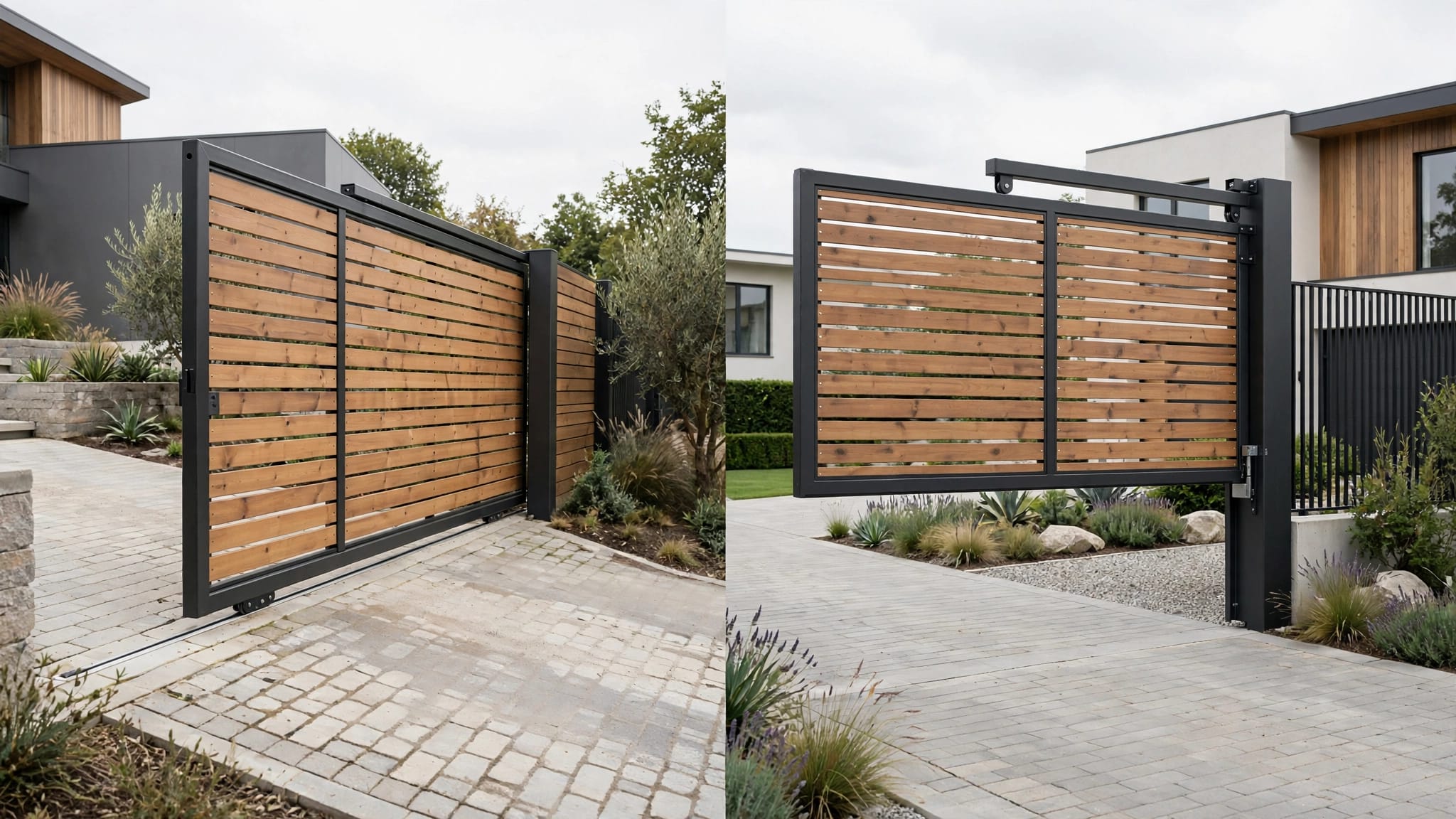
Gates take the most abuse. They move every day, catch wind, and put stress on hinges, latch plates, and fasteners. A fence panel can still look fine while the hardware around it is already breaking down.
In Cape Coral, the gate usually tells the truth first.
That's why cheap plated screws and light-duty brackets are a poor fit here. Once the coating cracks, rust moves in quickly. After that, screws loosen, gates shift, and repairs start stacking up.
If you're still choosing the fence type itself, vinyl vs aluminum fences in Cape Coral is a helpful place to start. The fence material and the hardware need to work together.
The best hardware materials for salt air
For most Cape Coral homes, 316 stainless steel is the best choice for exposed hardware. It handles chloride better than 304 stainless, so it stands up to salt air, coastal rain, and frequent wet-dry cycles.
Use 316 stainless for:
- gate hinges
- latch sets
- screws and bolts
- brackets and straps
- spring-loaded parts that move often
304 stainless is still better than plated steel, but it's not the best pick near the coast. It can hold up in milder spots, sheltered yards, or inland areas. Near canals or open salt exposure, 316 is the safer long-term choice.
Here's a quick comparison:
| Material | Salt-air performance | Best use in Cape Coral | Watch for |
|---|---|---|---|
| 304 stainless | Good, but can pit over time | Sheltered areas and inland yards | Surface staining and pitting |
| 316 stainless | Excellent in coastal air | Gates, latches, hinges, screws | Higher cost, but longer life |
| Hot-dipped galvanized | Fair to good | Lower-stress parts, budget repairs | Eventually rusts in exposed spots |
| Plated steel | Poor | Temporary, low-risk use only | Early rust and fast loosening |
Polymer-coated hardware can also work well when the coating is thick and the base metal is solid. It adds another shield against moisture and sun. Still, coating chips can expose the metal underneath, so it's best used where wear is moderate.
Avoid thin electroplated hardware on gates and high-stress parts. It may look fine at first, but it often gives out early in salt air. That failure can mean loose gates, noisy movement, and repeated replacements.
Keep metals compatible to avoid corrosion
Mixing metals can create galvanic corrosion , which is a simple way of saying one metal starts eating away at another when moisture is present. Salt air speeds that reaction up.
This matters a lot with aluminum fences. Aluminum itself resists rust well, but the wrong fastener can still cause problems. Steel screws against bare aluminum, for example, can lead to corrosion around the contact point.
The fix is simple in concept:
- match metals when you can
- use isolation washers or barriers where different metals meet
- seal cut edges and drilled openings
- choose hardware made for the fence system, not random parts from a bin
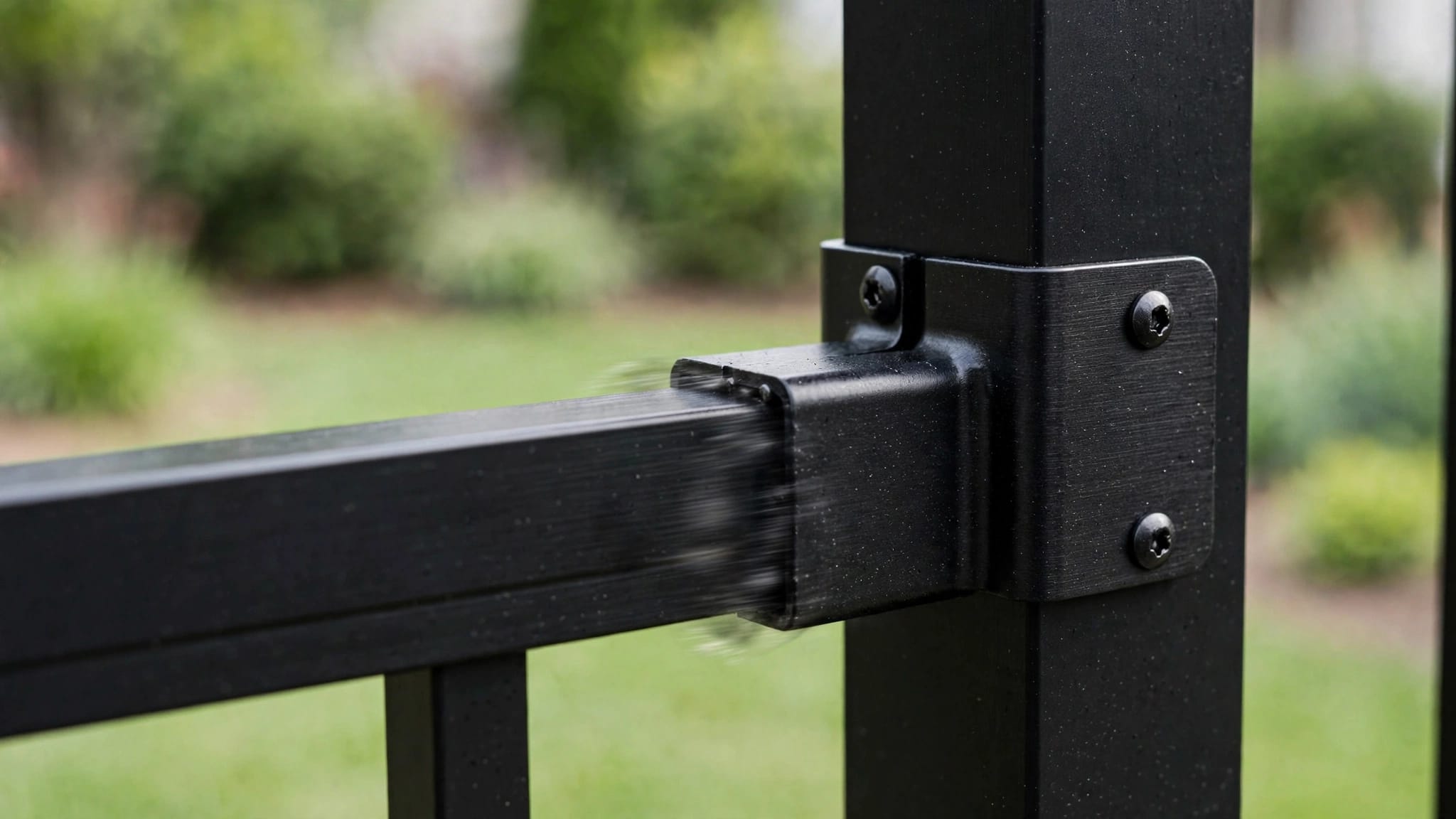
For aluminum fences, hardware should be aluminum-friendly and corrosion-resistant. Stainless fasteners are often the right call, but they need to be paired correctly. If the fence manufacturer calls for separators, use them. A small plastic washer can save a lot of future repair work.
When the fence is exposed to canal spray or open wind, the safest setup is usually aluminum framing with 316 stainless fasteners and sealed contact points. That combo keeps the structure and hardware working together instead of fighting each other.
Buying tips that save money later
Good hardware usually costs more up front. Cheap hardware costs more over time.
When you shop, look for clear labeling on the metal grade. If the seller can't say whether the fastener is 304, 316, hot-dipped galvanized, or plated, that's a warning sign. For Cape Coral, vague product labels are not enough.
A smart purchase often comes down to the gate, not the panel. Heavier gates need stronger hinges, better latch alignment, and reinforced posts. If the hardware is undersized, the gate will sag, even if the fence itself is solid.
For gate planning, vinyl fence gates that prevent sagging shows why post size and hinge placement matter so much. The same lesson applies to aluminum and mixed-material gates.
A few habits help during installation and later repairs:
- use stainless or coated fasteners on exposed parts
- choose heavier hinges for wide or tall gates
- replace rusted screws in sets, not one at a time
- keep a small touch-up kit for chips and scratches
- rinse salt off after storms or heavy wind
If you notice rust stains, grinding hinges, or a latch that no longer lines up, don't wait too long. Small problems spread fast in salty air. Replacing worn hardware early is cheaper than fixing a warped gate or damaged post later.
When to replace hardware instead of patching it
Some hardware can be cleaned, tightened, or lubricated. Other parts are past that point.
Replace hardware when you see deep rust, stripped threads, cracked coating, or repeated loosening. If a hinge keeps slipping after tightening, the metal is probably too far gone. The same goes for latch parts that stick even after cleaning.
On 304 stainless, surface staining near the coast is a sign to watch closely. On plated steel, rust bleed usually means the part is already on borrowed time. In exposed Cape Coral yards, full replacement is often the better choice.
A gate that drags or swings crooked is usually trying to tell you something. It may need stronger hinges, better screws, or a post upgrade. Waiting rarely helps.
Conclusion
Cape Coral salt air is hard on fence hardware, so the safest choice is usually simple: 316 stainless steel , corrosion-safe fasteners, and metal combinations that work together. Add polymer-coated parts where they make sense, but don't rely on low-grade plated hardware for gates or exposed connections.
The best setup is the one that matches your fence material, your wind exposure, and your level of upkeep. If the hardware is right, the fence has a much better chance of lasting through heat, storms, and salt air without constant repairs.