September 15, 2026
A clear 811 ticket doesn't prove your yard is free of buried lines. In Southwest Florida, private utility lines may run to a pool, well, shed, irrigation system, or detached garage without appearing in the marks before fence installation.
Sunshine 811 typically locates facilities owned by participating utility companies, often up to the service point. Homeowners remain responsible for identifying many customer-owned lines. Before a fence contractor drills, augers, or hand-digs post holes, confirm every underground route that could cross the fence layout.
Why 811 Did Not Mark the Line
811 covers participating utility facilities
Florida's 811 system helps locate underground facilities owned by member utilities. A request generally covers the marked work area and the lines those utility companies own or maintain. It doesn't automatically include every cable, pipe, wire, or drainage feature installed on a private property.
For fence projects, that distinction matters. A marked electric or water service may stop near a meter, while a privately installed line continues toward a backyard structure. The absence of paint or flags only means that a facility was not marked through that locate request.
For a Cape Coral project, review these 811 utility locate steps for fence installation before the crew schedules excavation.
Coverage varies by location and ownership
811 procedures, participating providers, response times, and digging requirements vary by location. Some utility companies may not participate in the same way, and private providers may own facilities that remain outside the standard locate process.
That is why a contractor should treat 811 markings as one part of site preparation. Property records, utility-provider records, prior construction plans, and a private locating service may all be needed before the final fence line is approved.
What 811 Usually Marks Before a Fence Install
In a typical Florida locate, participating utilities may mark electric, communications, gas, water, sewer, and reclaimed-water facilities. Common paint colors include red for electric, orange for communications, yellow for gas, blue for water, green for sewer, and purple for reclaimed water.
The marks apply only to the requested work area. If the fence route changes, the original ticket may not cover the new section. A contractor should not assume that marks near the front of the property apply to a side or rear yard.
Florida homeowners should contact Sunshine 811 at least two full business days before digging . Weekends and holidays don't count toward that period. Wait for responses from all participating utilities, then confirm that the locate is complete before excavation begins.
A "clear" 811 response does not confirm that private irrigation, pool wiring, well lines, or septic components are absent.
Markings also aren't exact measurements. They show an approximate route, so crews need extra care near every mark and must avoid digging outside the ticket area.
Private Utility Lines 811 May Not Locate
Common lines in residential yards
Private utility lines often connect a home to equipment or structures located beyond the utility service point. Examples include lines serving:
- Detached garages, sheds, workshops, and other outbuildings
- Pools, spas, pool pumps, heaters, and control equipment
- Private wells, pressure tanks, and well pumps
- Irrigation pipes, sprinkler-control wires, and irrigation valves
- Landscape lighting and low-voltage outdoor systems
- Septic tanks, drain fields, sewer laterals, and private cleanouts
- Invisible pet fences, private communications cables, and fiber wiring
- Propane systems, boat lifts, docks, and other outdoor equipment
Abandoned lines can create another problem. An old electric feeder or irrigation route may not appear on a current plan, yet it can still be damaged during excavation.
Irrigation and well lines deserve special attention
Irrigation systems are a frequent source of fence-installation damage. Sprinkler pipes may cross a proposed fence line, while valve boxes and control wires can be hidden beneath grass or mulch. A post hole placed over a main irrigation line can create leaks across more than one zone.
Well equipment requires a wider site review. Show the installer the well casing, cap, pressure tank, and electrical disconnect. If the route of the well's water or power lines is uncertain, contact the well installer or a qualified private utility locator.
You can also review these tips for protecting irrigation lines during fence installation before finalizing post locations.
What to Do Before Fence Posts Are Dug
Start with the final fence layout
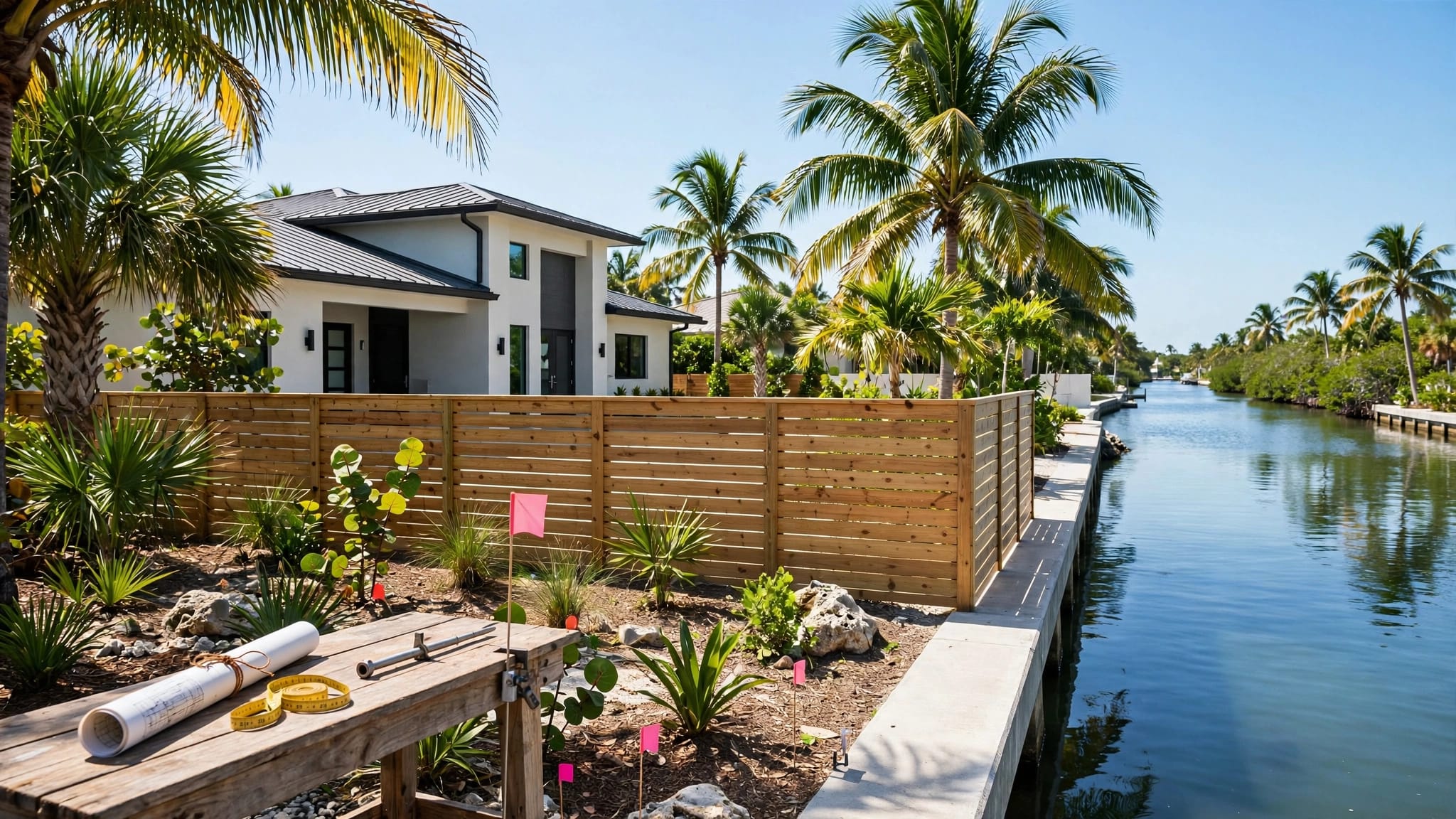
Don't request a locate for a rough idea and then move the fence line after the marks appear. First identify the proposed corners, ends, gate openings, terminal posts, and any sections that may need to shift around utilities.
Mark the route with stakes or temporary paint. Include gates and their swing areas, because a gate post can require a larger or deeper footing than a line post. A layout that avoids one private line may still conflict with another near a gate or corner.
If you plan a taller privacy fence, include post spacing, footing details, and any manufacturer or engineered requirements in the project notes. Southwest Florida's sandy soil, wind exposure, heavy rain, and salt air can affect the installation details.
Complete the 811 and private-line checks
Use this sequence before excavation:
- Request the Florida 811 locate at least two full business days before digging.
- Wait for every participating utility to respond and confirm the work area is complete.
- Review surveys, plats, easements, site plans, pool plans, irrigation drawings, and well records.
- Contact utility providers, the irrigation installer, pool contractor, well company, or septic contractor when a route is uncertain.
- Hire a qualified private utility locator for customer-owned lines that aren't documented.
- Walk the marked site with the fence installer before any auger or hand digging begins.
A utility map or visual inspection can reveal clues, but neither replaces professional locating. A visible sprinkler head may show where a system exists, but it doesn't establish the depth or route of the main pipe.
Review Records, Surveys, and Site Conditions
Property documents may show recorded easements, utility corridors, drainage areas, or prior improvements. They won't always show customer-installed lines, but they can reveal restrictions that affect where a fence may go.
A current survey helps confirm the property boundary and may identify easements along side or rear yards. It does not replace an 811 request or private locating. Two nearby homes can have different service routes, drainage patterns, and private improvements.
For vacant lots and new construction, review the plat, deed, title documents, builder site plan, and available utility information. A new home may have irrigation, pool, septic, or temporary service plans that aren't visible after landscaping is installed. These property survey checks before fence installation can help organize that review.
Well access also needs to remain practical. A fence should not block a pressure tank, disconnect, cleanout, service path, or equipment route. Moving a proposed post before installation is easier than removing a finished fence after a damaged line or blocked wellhead.
Understand the Limits of Utility Marks
Stay cautious near marked facilities
Sunshine 811 describes a tolerance zone extending 24 inches from the outside edges of a marked facility. Inside that area, use extra care and follow the applicable local excavation requirements. Never assume that paint gives you permission to run an auger directly over a line.
Marks can also fade, wash away, or be disturbed by weather, landscaping, or foot traffic. If a mark disappears or becomes unclear, stop work and request clarification or a new locate before digging continues.
Watch the ticket expiration
Sunshine 811 states that flags and other marks are valid for 30 calendar days. A project delayed beyond that period may need a new locate. The same applies when the fence route changes, the work area expands, or the original marks no longer identify the route clearly.
The fence installer should verify the ticket status before arriving. Work should stop if a required utility has not responded, if the crew reaches an unmarked conflict, or if private lines remain unidentified.
Connect Utility Locating to Fence Permits
Utility safety and permitting are separate steps, but they affect the same fence layout. A permit application may require a site plan showing the fence route, gates, height, length, easements, and other site features.
The Lee County Department of Community Development's residential fence materials require the proposed fence height and length to be shown, along with gate information where applicable. Requirements can differ between Cape Coral, Fort Myers, Estero, Bonita Springs, and unincorporated Lee County, so verify the current rules with the relevant local office.
For Fort Myers homeowners, review these fence permit utility locate requirements before submitting plans. Local requirements may also involve setbacks, corner-lot visibility, drainage, pool barriers, easements, and HOA approval.
A fence may fit inside the property boundary and still conflict with a utility or drainage easement. Utility access could require a gate, removable section, or a different fence alignment. These Cape Coral fence easement and utility considerations are especially relevant on canal lots and properties with narrow side yards.
Key Takeaways
- Call Florida 811 at least two full business days before digging.
- Expect 811 to cover participating utility facilities, not every private line.
- Treat irrigation, well, pool, septic, landscape-lighting, and outbuilding lines as separate locating concerns.
- Review surveys, easements, site plans, and property records before finalizing the fence route.
- Contact relevant providers when line ownership or routing is uncertain.
- Hire a qualified private utility locator when private lines cannot be confirmed.
- Keep fence installers from digging until all known and suspected lines are identified and marked.
- Follow local permit, HOA, excavation, and fence-layout requirements.
FAQ About Private Utility Lines and Fence Installation
Why didn't 811 mark the line to my detached garage?
The line may be customer-owned rather than owned by a participating utility. A private electric feeder, communications cable, water line, or gas line to a detached garage may fall outside the standard 811 locate. Contact the installer or utility provider, then hire a private locator if the route can't be confirmed.
Does a clear 811 ticket mean I can safely dig?
No. It means participating utilities have responded for the requested area. It doesn't prove that private utility lines are absent. Review site records, inspect known equipment, contact relevant providers, and arrange private locating before the fence crew digs.
Who should locate private irrigation and pool lines?
The property owner should arrange identification of customer-installed systems. An irrigation or pool contractor may know the original route, but a qualified private utility locator can help identify buried lines when records are missing or unreliable.
Can the fence contractor locate every underground line?
A fence contractor can review the site and adjust the layout, but ordinary construction experience isn't a substitute for utility locating. Ask the contractor what locating services are included. If private lines remain uncertain, hire a qualified locator before excavation.
Conclusion
811 is an essential first step before fence installation, but it has limits. Participating utility marks may protect you from a major public utility strike while leaving private lines to a pool, well, irrigation system, septic system, or outbuilding unidentified.
The safest fence project combines an accurate layout, a timely 811 request, property-record review, provider contacts, and professional private locating when needed. Once every known line is marked, the installer can place posts, gates, and footings without relying on assumptions beneath the yard.