October 28, 2026
Artificial turf around pools can reduce muddy patches and mowing, but its performance depends on the turf, base, drainage, and installation. It can also get hot in direct sun, and a soft-looking surface doesn't guarantee secure footing when wet.
For Southwest Florida homeowners, the strongest plan starts with site preparation , especially where heavy rain meets flat ground. Before choosing a grass color or blade style, consider how water, bare feet, and everyday traffic will move through the space.
Key Takeaways
- Water needs a continuous path through the backing, base, and surrounding drainage system.
- A firm, properly graded base supports the surface and helps prevent depressions.
- Sun exposure and reflected heat affect barefoot comfort.
- Seams, edges, debris, and transitions deserve attention around wet walking areas.
- Turf doesn't replace a pool barrier, supervision, or routine maintenance.
Plan Drainage for Artificial Turf Around Pools
Follow the water beyond the backing
Drainage involves more than holes in the turf backing. Rain and pool splashes must pass through the surface, enter the base, and reach soil or a drainage outlet that can receive them.
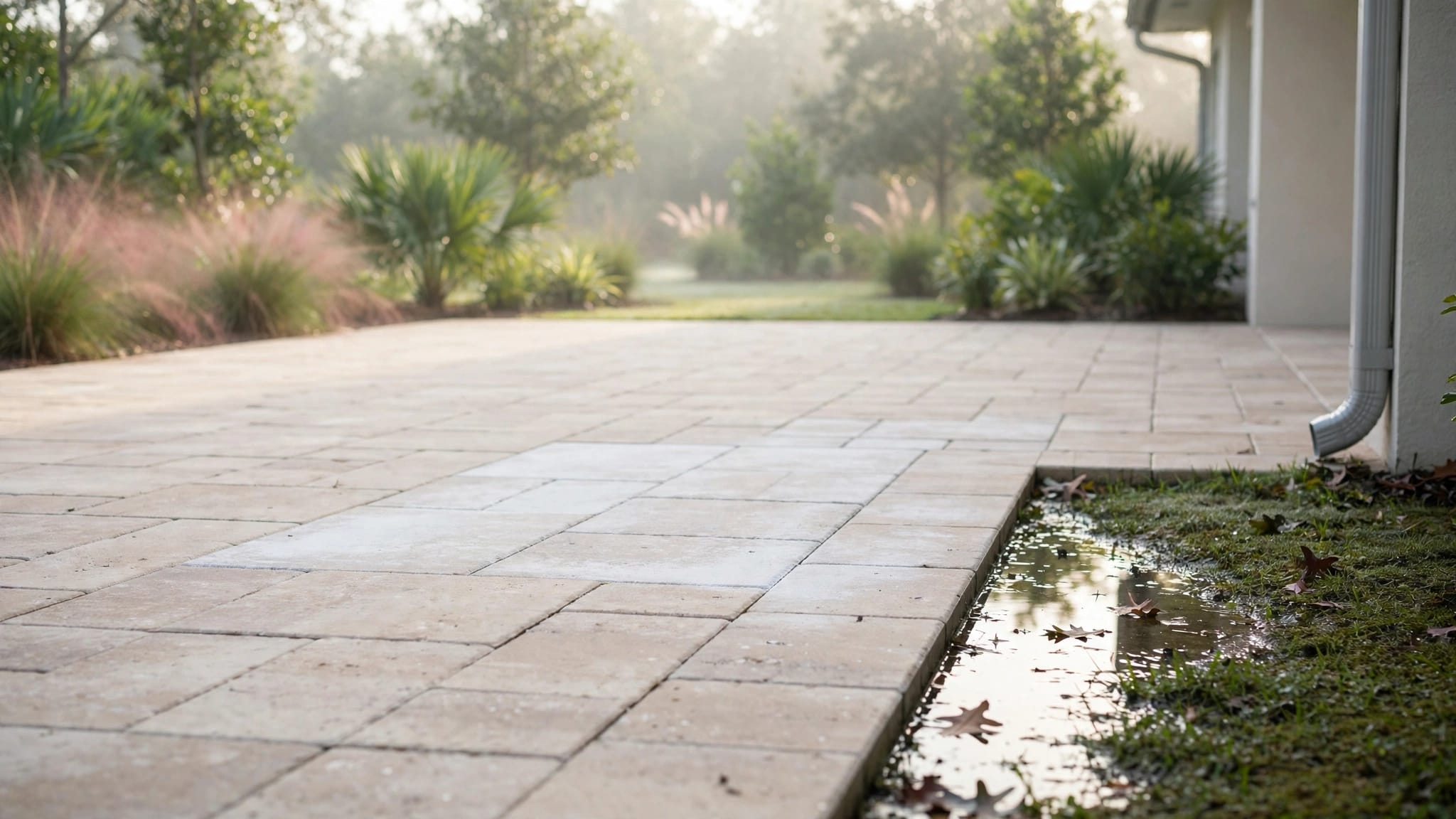
In Southwest Florida, intense downpours, compacted soil, and flat lots can expose weaknesses in that path. Water may also arrive from roof downspouts, neighboring paved areas, or higher sections of the yard.
Start by identifying existing puddles and runoff routes. Then design the finished grade so runoff doesn't carry soil and loose material toward the pool or house. Preserve access to deck drains, catch basins, and other drainage features.
Permeable turf backing can't compensate for a saturated base with nowhere for water to go.
Correct drainage problems before covering them
Installing turf over a low spot won't remove the depression. Likewise, adding infill won't solve water trapped beneath the backing.
Depending on the site, drainage work may involve regrading, drainage aggregate, catch basins, or perforated pipe connected to a suitable outlet. These components need to work together rather than collect water without releasing it.
Our guidance on artificial turf drainage fixes covers recurring problems such as clogged base material and poorly directed runoff.
Where standing water reaches the house or drainage work affects pool structures, professional assessment is appropriate before excavation begins.
Build a Firm Base Before Laying Turf
Prepare the ground for support and drainage
A poolside installation needs a stable foundation. Existing vegetation, loose organic material, and unsuitable fill can leave weak areas beneath an otherwise attractive surface.
The base material should support foot traffic while allowing water movement. Material selection and depth depend on the soil, drainage design, and installation conditions. A single base recipe won't suit every pool yard.
Installers should place and compact suitable aggregate in controlled layers. They should also shape the base before laying turf, rather than hide dips with extra infill.
Geotextile fabric can help separate soil and aggregate where the design calls for it. However, fabric alone won't correct poor grading or an inadequate outlet.
Protect roots, utilities, and finished elevations
Excavation near a pool requires care around plumbing, electrical lines, and structural components. Mature tree roots can also limit how much ground an installer can remove.
Cutting large roots without qualified guidance can damage the tree. Instead, the layout may need to change to accommodate the root zone.
Finished height matters just as much. Turf shouldn't create a raised lip beside coping, pavers, or a walking path. It also shouldn't obstruct drain openings or change the intended operation of a pool gate.
A written scope for professional artificial turf installation should identify preparation, base materials, drainage work, edging, seams, and infill.
Manage Sun Exposure and Surface Heat
Plan for afternoon conditions
Artificial turf can become uncomfortable under strong sun. Its temperature varies with the product, infill, exposure, weather, and nearby surfaces, so appearance alone won't tell you how it will feel.
Map the area during the hours your household uses the pool. A strip shaded in the morning may receive direct afternoon sun when children are walking between the water and patio.
Walls, pavers, and fencing can also reflect heat into nearby areas. A shaded edge therefore deserves consideration alongside the open yard.
A screen enclosure doesn't provide the same conditions as solid overhead shade. The amount of sunlight reaching the turf still affects comfort.
Use shade without overlooking the tradeoffs
Existing shade can make a poolside layout more comfortable, although trees also bring roots and falling debris. Umbrellas and other shade features need placement that preserves clear walking routes and doesn't interfere with pool barriers.
Natural grass generally provides a cooler living surface when growing conditions support it. Our comparison of turf and grass in shade discusses that tradeoff alongside maintenance and sunlight needs.
A gentle rinse may offer temporary cooling, but it isn't a lasting heat-control plan. Shade and suitable footwear are more practical considerations for regularly used sunny routes. Keep people and pets off any surface that feels uncomfortably hot.
Pay Attention to Wet Footing, Seams, and Edges
Surface texture doesn't establish wet traction
Artificial turf around pools shouldn't carry an automatic promise of slip resistance. Wet footing depends on the product and installation, as well as water, debris, footwear, and how someone moves.
Pile height, density, backing, and infill affect how the surface feels underfoot. However, none of those features alone establishes safe performance in every poolside condition.
Also consider the base beneath the fibers. A surface that shifts, sinks, or develops hollows needs attention even if the blades still look good.
Keep running and rough play away from the pool edge regardless of the surrounding material. Turf doesn't remove the risks associated with wet walking areas.
Make transitions part of the installation plan
Seams and perimeter edges deserve particular attention along frequent walking routes. Loose edges, raised joins, wrinkles, or exposed fasteners can create hazards.
The finished installation should have firmly secured edges and smooth transitions between turf and adjacent surfaces. Infill should match the turf system and stay distributed as intended.
Avoid treating a pronounced height difference as a cosmetic issue. A lip beside a deck or gate route affects how people step through the area.
If seams lift or the base settles, restrict access to the affected spot until repairs address the cause. Repeatedly covering a depression won't stabilize the material underneath.
Plan Turf and Pool Fencing Together
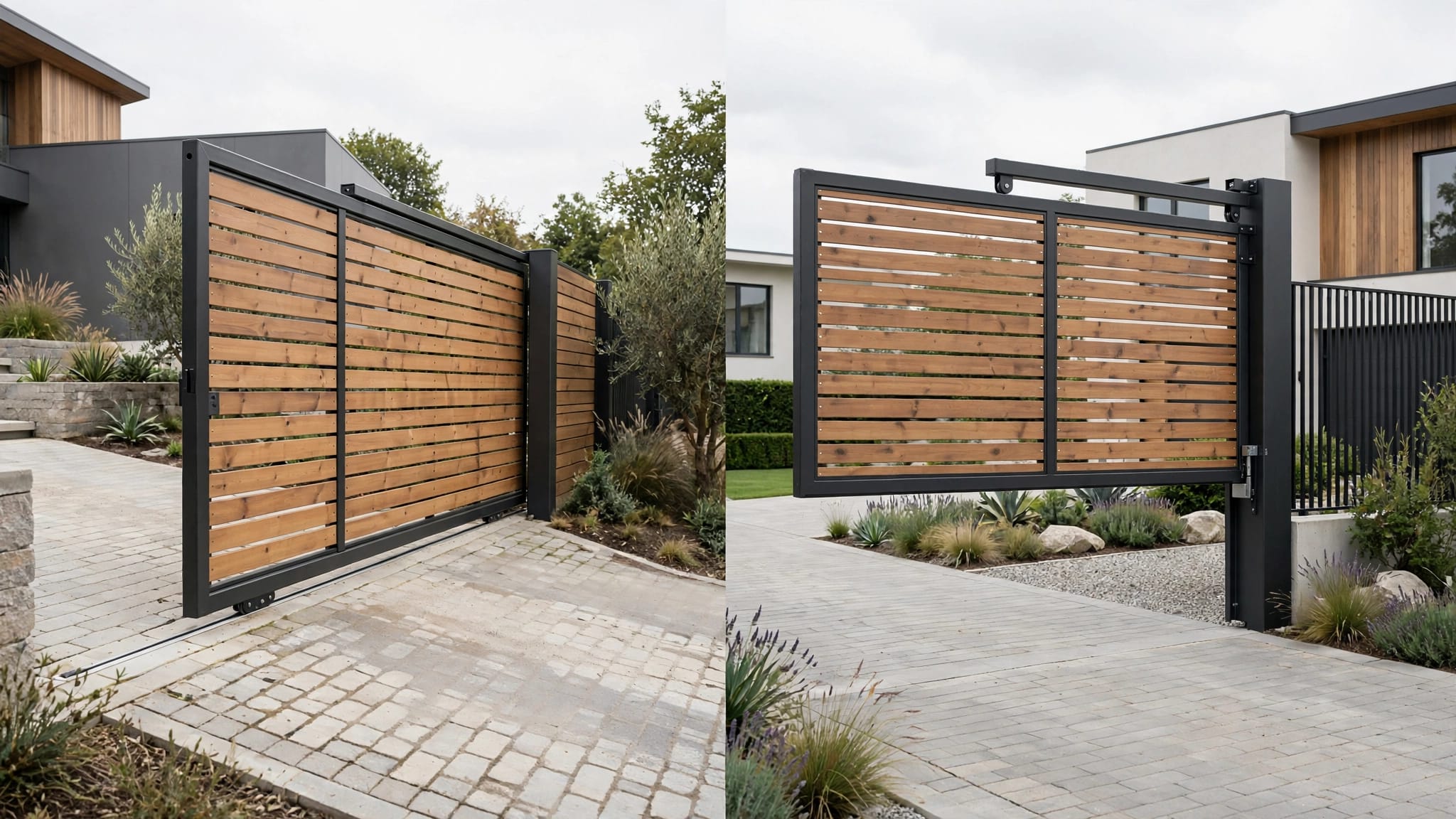
Turf, gates, and fencing share the same finished ground level. Raising the landscape can change the gap beneath a barrier or reduce clearance under a swinging gate.
For that reason, establish final elevations before completing either installation. Keep drains and edging out of the gate's operating path, and preserve access for fence repairs.
Construction order also matters. Pool excavation, deck work, and material deliveries can damage newly finished turf. Our guidance on pool fence installation timing addresses how to coordinate those stages.
At Royal Fence, we offer fencing and landscape design and installation. For a combined project, the layout should account for drainage, walking routes, planting areas, and barrier operation together.
Artificial turf is a landscape surface. It doesn't replace a required pool barrier or other pool-safety measures.
Keep Poolside Turf Clean and Drains Open
Synthetic grass needs less lawn care, but it still needs cleaning. In Cape Coral and nearby communities, oak leaves, palm fibers, and storm debris can build up between the blades.
Remove loose material with a blower or a brush suited to the turf. Then use occasional gentle rinsing to clear dust and smaller debris. Avoid a concentrated pressure-washer jet that can disturb infill or damage seams.
Keep concentrated pool chemicals off the turf. Routine splash exposure and chemical handling are different conditions, so store and mix treatment products in an appropriate area away from the lawn.
After heavy rain, look for new puddles, soft areas, lifted edges, or debris blocking drain openings. A dry-looking surface can still conceal a saturated base.
If the same spot remains soft after storms, investigate beneath the turf. More brushing or infill won't repair an unstable foundation or blocked drainage route.
Frequently Asked Questions
Can artificial turf go directly over soil beside a pool?
Laying turf over unprepared soil leaves drainage and stability problems unresolved. Poolside areas need ground preparation, suitable base material, grading, and secure edging. Existing low spots and soft ground should be corrected before the surface goes down.
Is artificial turf always cooler than pool pavers?
There's no universal temperature ranking for every turf and paver combination. Product characteristics, color, shade, exposure, and surrounding surfaces affect heat. Artificial turf can become hot in direct sun, so plan barefoot routes around actual sunlight conditions rather than appearance.
What should a poolside turf estimate include?
The scope should describe excavation, base construction, drainage provisions, turf specifications, infill, seams, and perimeter attachment. It should also address transitions to the pool deck and work near gates. Comparing those details gives a clearer picture than comparing the turf material price alone.
Does a soft spot mean the turf needs replacing?
Not necessarily. Softness can originate in saturated or poorly supported base material. The repair may require lifting the turf and rebuilding the affected foundation. Replacing only the visible surface leaves that underlying problem in place.
Make the Whole Pool Area Work Together
Artificial turf around pools performs according to the system beneath and around it. Drainage and stable preparation deserve as much attention as the finished appearance.
Plan for sun exposure, smooth transitions, clear drains, and unobstructed pool gates. A coordinated layout gives you a more practical poolside space without relying on unsupported promises about cooling or slip resistance.