October 26, 2026
White haze on pavers and poor drainage need separate assessments: a pale surface alone doesn't show how a patio handles water. In Florida, drainage deserves attention because heavy rain, flat yards, and high groundwater can leave outdoor areas wet.
If your new patio also has puddles, washed-out edges, or water collecting beside a fence, those conditions need attention on their own. Start by separating what you see on the paver faces from what happens when water reaches the yard.
Key Takeaways
- A white surface appearance doesn't establish whether a patio's grading or base has a problem.
- Southwest Florida drainage depends on rainfall, elevations, soil conditions, groundwater, and a suitable discharge path.
- Standard sand-jointed pavers aren't automatically permeable pavement.
- Fence lines, turf transitions, and downspouts belong in the same drainage plan as the patio.
- Standing water, settlement, and soil erosion provide more useful drainage clues than surface color alone.
Separate White Haze on Pavers From Drainage Problems
Surface appearance doesn't describe the whole installation
A new patio has several parts that you can't assess by looking at its color. The pavers sit above bedding and supporting material, while edging holds the perimeter in position. Finished elevations determine where surface water travels.
A pale area doesn't reveal the condition of those hidden layers. Similarly, an evenly colored patio may still send runoff toward a house or leave water against a fence.
Keep those observations separate. That makes it easier to describe the actual problem without assuming every change belongs to the same issue.
Movement and water patterns provide different clues
Look for physical changes alongside the surface appearance. A rocking paver, a spreading joint, and a low section are different observations.
For example, a low paver beside artificial turf may need its supporting layer corrected. Sweeping additional sand into the joint won't raise that paver or restore its elevation.
Meanwhile, water traveling toward a doorway points to a drainage concern regardless of the paving's appearance. These distinctions help keep repairs focused on the condition that needs correction.
Why Southwest Florida Yards Can Stay Wet
Heavy rain meets limited slope
Southwest Florida rain can arrive faster than a yard can absorb or discharge it. On a flat lot, water also has little elevation change to move it toward an outlet.
Cape Coral properties may have canal frontage, filled land, drainage easements, or groundwater conditions that affect how quickly an area dries. Compacted fill can behave differently from loose sand.
As a result, two nearby patios can have different drainage needs. The important comparison is the route water takes across each property, including where it stops.
Groundwater and shade affect the setting
Sandy soil can accept water when it has available capacity. However, saturated soil and high groundwater limit that capacity. Adding a drain doesn't automatically solve a problem if the drain has nowhere suitable to discharge.
Shade and restricted airflow also matter when observing how long surfaces remain damp. Compare sheltered areas with exposed sections rather than treating the entire patio as one uniform space.
These conditions describe the yard's moisture environment. They don't identify the material responsible for a white surface appearance.
Follow the Water Across the Property
Start with roof runoff and irrigation
A downspout can concentrate roof water at one patio corner. That flow may overwhelm a small area even when the surrounding yard looks dry.
Roof discharge belongs in the overall drainage design rather than beside a paver edge or fence post. Otherwise, concentrated runoff can erode nearby soil.
Also observe irrigation during a normal watering cycle. Note whether sprinklers reach the paving, saturate an adjacent planting bed, or send water toward a low spot. This identifies where water enters the area without turning the observation into a diagnosis of white haze on pavers.
Trace the route to an outlet
Water needs a continuous path beyond the patio edge. A surface can slope away from the house yet still empty into a blocked corner.
Follow that route through planting beds, turf, and fence lines. Look for edging, accumulated sediment, or landscaping that interrupts an existing drainage path.
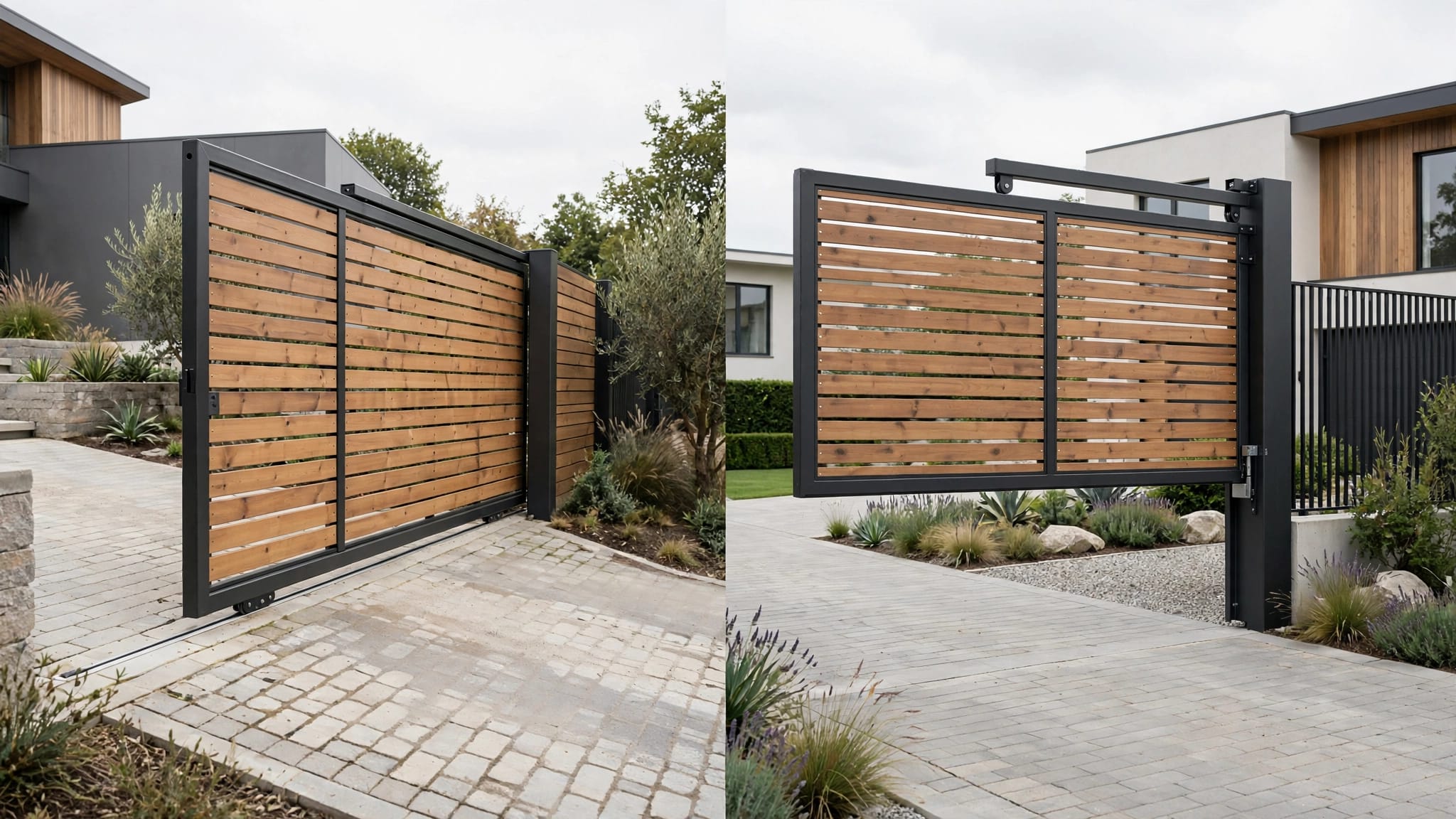
For patios beside property boundaries, paver patio drainage near fences depends on finished elevations and an appropriate discharge point. Runoff shouldn't create erosion around posts or move onto neighboring property.
A drain can collect water successfully and still fail to solve the problem if its outlet can't accept the flow.
Standard Pavers and Permeable Pavers Handle Water Differently
The word "paver" doesn't describe a single drainage system. Standard interlocking paving and permeable pavement use different joint and base designs.
Here's how the main options handle rainfall.
| Surface | Main water path | Drainage requirement |
|---|---|---|
| Standard interlocking pavers | Water travels mainly across the surface, with limited movement through ordinary joints. | Planned slope and suitable collection or discharge points. |
| Permeable pavers | Open joints and a compatible stone base move water below the surface. | Storage capacity, suitable ground conditions, and an overflow or underdrain plan where needed. |
| Concrete | Most rain travels across the slab. | Reliable grading, drains, or collection points. |
The choice between permeable pavers and concrete depends on the whole site's water conditions.
Ordinary sand-filled joints don't turn a conventional patio into permeable pavement. A permeable installation requires compatible pavers, joint aggregate, and supporting layers.
Even then, high groundwater or saturated soil can restrict performance. Neither paving option removes the need for sound grading and a plan for heavy rainfall. Surface color doesn't reveal whether those requirements were included in the installation.
Fence Lines and Landscape Edges Need Shared Planning
Protect posts and preserve drainage routes
A patio beside a fence must leave water somewhere to go without washing soil away from the posts. Raising the finished paving can also change how water crosses a previously open strip of yard.
Existing swales need to remain functional. A solid border or newly filled planting bed can interrupt their path.
At Royal Fence, our fencing and landscape installation services make these shared boundaries relevant to outdoor planning. Fence access, patio elevations, and surrounding ground levels belong in the same layout.
Treat turf transitions as part of the installation
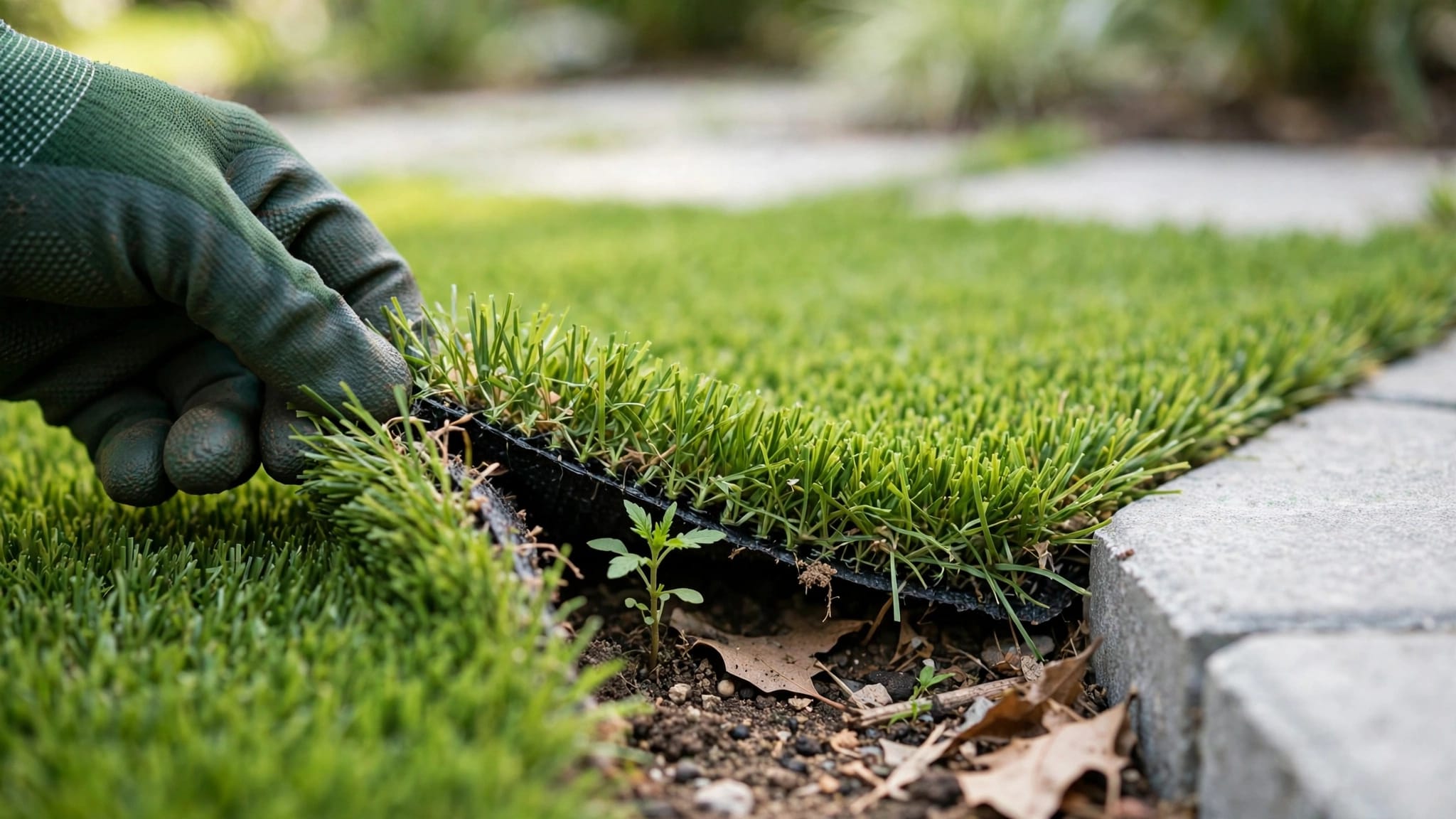
A walkway shouldn't act as a dam between artificial turf and the rest of the yard. Although turf allows water through its backing, the base and soil underneath can still hold water.
The finished joint needs stable support and elevations that preserve the planned drainage route. Concentrated downspout or pool runoff also needs attention near that transition.
If one section settles, the repair may require lifting pavers and correcting the supporting material. Adding infill or joint material alone won't correct an underlying height difference.
Record Conditions Before Choosing a Repair
Useful observations describe location, movement, and water flow. They give you something more precise than "the patio looks different."
Use this sequence to distinguish the issues:
- Photograph the surface while dry, including wide views that show the house, fence, and surrounding yard.
- After rainfall, record where water enters, collects, and leaves the paved area.
- Observe a normal irrigation cycle and note which paved sections receive spray or runoff.
- Look for rocking units, widening joints, settled edges, and exposed soil around fence posts.
- Compare those locations with the pale areas without assuming they share a cause.
Keep the observations factual. "Water collects beside the gate after rain" describes a drainage condition. "The white area means the base failed" jumps beyond what you can see.
Also distinguish temporary surface water during a storm from water remaining in a low section afterward. The location and route matter more than a single photograph taken during heavy rainfall.
Where runoff approaches a building or undermines fence support, a professional drainage assessment is appropriate. Its scope should include finished elevations, supporting conditions, existing drainage routes, and the outlet.
Match the Repair to the Physical Problem
A drainage repair should address an observed water or support problem. Different conditions call for different work.
For a settled paver section, correcting the supporting layer can restore the intended elevation. Where an edge restraint has moved, the boundary may need re-anchoring and the affected pavers resetting.
If water pools because a drainage route is blocked, restoring that route addresses a different issue than replacing paving. Sediment at a collection point also needs attention because accumulated material can reduce its capacity.
More complicated yards may need surface grading, channel drains, catch basins, an underdrain, or a combination. The appropriate arrangement depends on site elevations and where collected water can go.
Avoid treating a dry well or French drain as a universal solution. High groundwater and unsuitable discharge conditions can limit either approach.
These repairs address water movement and pavement stability. They shouldn't be presented as a promised remedy for a white surface appearance.
Frequently Asked Questions
Does white haze prove that new pavers were installed incorrectly?
Appearance alone doesn't establish whether the base, edging, or grading was installed incorrectly. Assess physical performance separately. Settlement, spreading joints, and runoff toward the house are observations that support an installation assessment. A pale surface doesn't provide the same information.
Do ordinary paver joints provide enough drainage?
Standard sand-filled joints aren't a substitute for a planned drainage system. Conventional pavers generally need surface grading and a suitable runoff route. Permeable pavement requires a compatible system of joints and supporting layers, plus a way to manage water when ground conditions limit infiltration.
Should drainage work come before fence or patio changes?
Plan them together before changing finished elevations or blocking access. A patio extension, replacement fence, or raised landscape border can affect existing drainage routes. Coordinating those elements helps preserve swales, protect post support, and leave access for future maintenance.
Look Beyond Color Without Assuming a Cause
White haze on pavers doesn't provide a complete assessment of a new patio. Water flow, settlement, and edge support each need their own observations.
In Florida, a continuous drainage route matters throughout the yard, including beside fences and landscape borders. Address visible drainage defects for the problems they create, while keeping the surface appearance a separate question.