May 9, 2026
A fence can be the first thing you think about, or the last. When a pool is part of the plan, the timing matters because a pool fence installation can either fit cleanly into the project or get in the way.
If you put the fence up too early, you may block excavation, decking, or equipment access. If you wait too long, you can delay the final inspection or leave a safety gap. For most homeowners, the smartest move is to plan the fence early, then install it after the major pool work is finished.
The best order for most pool projects
In most cases, the fence should go in after the pool shell, deck, coping, and nearby utility work are complete. That gives the contractor a final layout to work with, which usually means fewer changes later.
However, there's one catch. If the project needs a safety barrier during construction, a temporary fence can make more sense than rushing the permanent one. The final answer depends on your lot, your pool design, and the local permit path.
A quick comparison of both timelines
A simple side-by-side look makes the trade-offs easier to see.
| Timing | Main upside | Main drawback | Best fit |
|---|---|---|---|
| Fence before the pool | You can mark the property edge early and set a safety boundary sooner | It can block heavy equipment, deck work, and grading, and may need changes later | Temporary protection or early permit planning |
| Fence after the pool | The fence matches the finished yard and gate locations | The yard stays open during construction | Most final pool barriers |
If the fence touches grading, deck edges, or gate hardware, the final install usually works better after the pool work is done.
That is why many pool fence projects are staged instead of rushed. The fence is part of the final picture, so it helps to wait until the picture is clear.
When fence-before works better
Putting the fence up before the pool can make sense in a few cases. The biggest one is safety. If children, pets, or guests are already using the yard, a barrier can help keep everyone out of the work zone.
It also helps when the fence line is simple and the pool is still far from breaking ground. In that case, the contractor can mark property lines, check setbacks, and get the permit process moving without waiting on the pool schedule.
Still, there are trade-offs. A fence installed too soon can get damaged by excavation equipment, trenching, or concrete trucks. It can also force crews to work around posts that should have been moved later. That means more labor and more chances for a bad fit.
Why fence-after is usually the cleaner choice
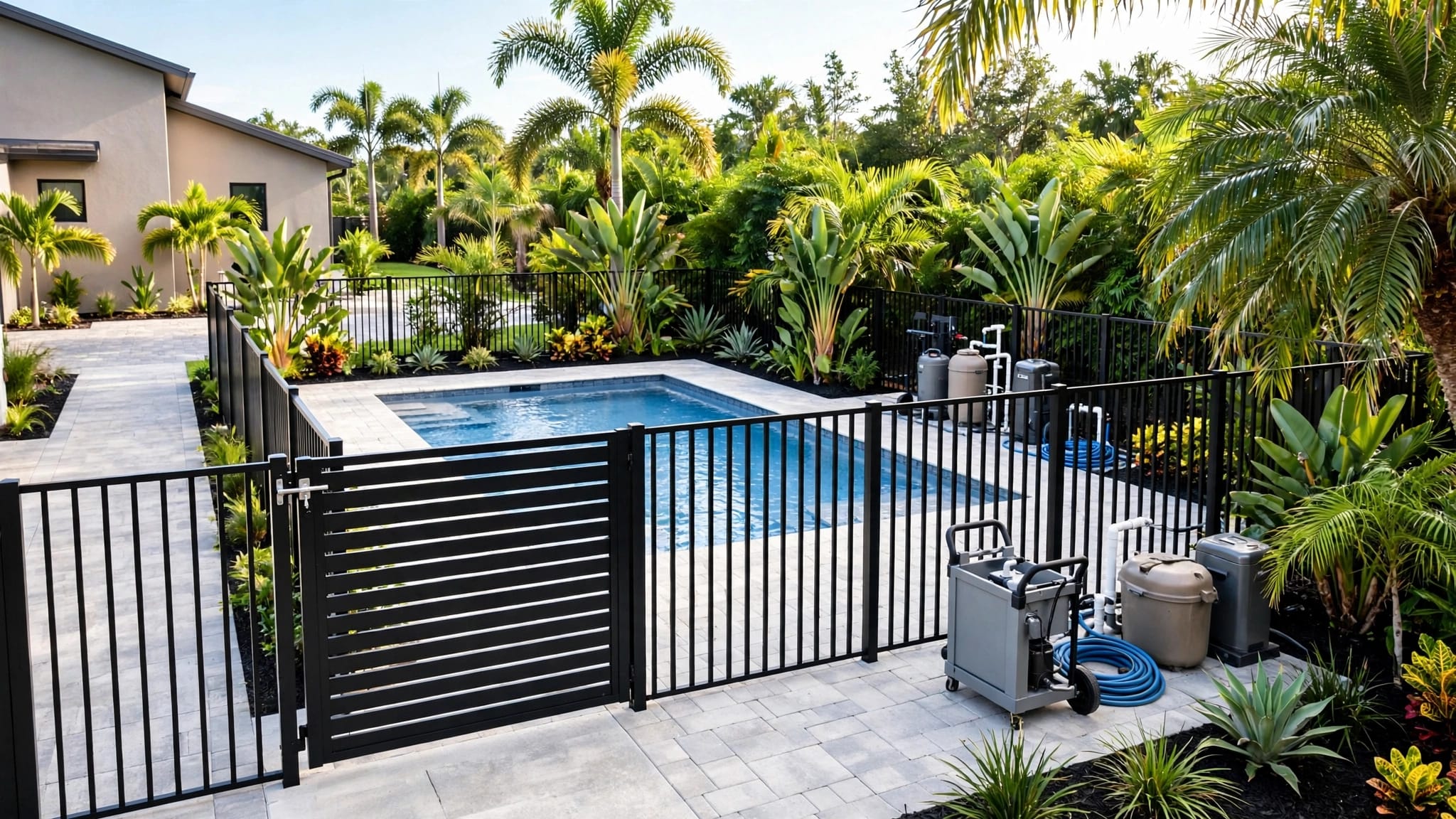
For most homeowners, waiting until after the pool is built is the smoother path. The deck edge is set. The equipment pad is in place. The gate can be positioned where people will actually use it.
That matters because pool barriers are about more than a line in the dirt. The gate, latch, swing direction, and spacing around the barrier all affect how the fence works day to day. If the pool plan changes, the fence plan often needs to change too.
Waiting also helps with appearance. A fence built around the finished pool looks more intentional. In a Southwest Florida yard, where many people want a clean view and easy access, that matters. If you are choosing a long-term barrier, aluminum vs wood for SWFL pool fences is a helpful comparison once the timing is settled.
Local rules can change the timeline
This is where many projects get slowed down. Pool barrier requirements can vary by state, county, city, HOA, and insurer, so the same fence plan may not work everywhere. Before you set dates, confirm the local code and permit requirements.
If you're in Cape Coral, start with Cape Coral pool fence rules in 2026. If your home is outside the city, Fort Myers fence permit basics 2026 is a useful reference for permit details and plan setup.
The big things inspectors and reviewers tend to care about are the same ones homeowners sometimes overlook. Gate hardware, latch height, swing direction, and the relationship between the fence and the pool area all matter. A small change can trigger a resubmittal, which is why the schedule should start with the permit path, not the install date.
A practical rule of thumb for Southwest Florida
Use this order when you're planning a pool project in Cape Coral, Fort Myers, Estero, or Bonita Springs:
- Confirm the pool barrier rules for your exact address.
- Get a current survey and verify setbacks.
- Finalize the pool layout, deck edge, and equipment locations.
- Install the permanent fence after the heavy pool work is finished.
- Use a temporary barrier if the site needs protection during construction.
That rule keeps the fence out of the way while the pool is being built, and it reduces the chance of rework. It also gives the installer a better shot at clean lines, better gate placement, and a barrier that fits the finished yard.
Conclusion
If you're trying to decide whether the fence should go in before or after the pool, the safest answer is usually after. You can still plan early, but the final install is easier once the pool, deck, and access points are finished.
The best projects feel orderly because each step has a purpose. Get the code right, lock in the layout, and let the fence follow the pool instead of fighting it.