March 3, 2026
A pool fence in Southwest Florida has a harder job than most. It's not just a "looks" project. It's a safety barrier that has to deal with salt air, heavy rain, intense sun, and long bug seasons.
If you're comparing aluminum vs wood fence options for a pool area in Lee, Collier, or Charlotte County, the bottom line is simple: aluminum usually wins for longevity and low maintenance. Wood can still make sense, but only in the right setup and with realistic upkeep.
Before you choose, it helps to think like a contractor for a minute: what will this fence look like after two wet summers, one tropical storm, and a few months of sprinkler overspray?
What SWFL pool fences have to survive (and still pass inspection)
Pool fences aren't like backyard boundary fences. They're part safety device, part code requirement, and part daily convenience. In Florida, most pool barriers need to meet common rules like minimum height, limited gaps, and self-closing, self-latching gates . On top of that, cities, counties, and HOAs can add their own requirements.
If you want a practical local starting point, review these Cape Coral pool fence requirements and then confirm what applies to your address.
Now add the Southwest Florida "stress test":
- Salt air and canal moisture : Even if you're inland, humid air carries salts. Near canals and the Gulf, it's stronger. That moisture finds every scratch and fastener.
- Termite pressure : Wood in SWFL is never "set it and forget it." Termites and moisture work as a team here.
- Wet season plus sprinklers : Pool decks stay damp, especially in summer. Repeated wet-dry cycles are rough on wood bottoms and gate hardware.
- Storm season : Wind loads and flying debris don't care what you paid. Fence failures often start at corners and gates.
A pool fence should behave like a seatbelt. You don't want to "hope" it works when it matters.
With those realities in mind, aluminum and wood take very different paths over time.
Aluminum vs wood fence performance around pools in SWFL (real maintenance, not brochure talk)
Aluminum pool fencing: built for visibility and low upkeep
Most aluminum pool fences use a picket style. That matters because wind passes through, and you can still see the pool. For many families, that visibility is a safety feature, not a design choice.
Typical aluminum maintenance tasks and intervals (SWFL-friendly):
- Rinse salt and dirt : Monthly if you're near salt air or a canal, otherwise every 2 to 3 months.
- Wash with mild soap and water : 2 to 4 times per year, especially around sprinklers.
- Check gates and latches : Monthly, because gate alignment changes with use and weather.
- Touch up chips or scratches : As soon as you see bare metal, because salt can creep under coatings.
- Tighten hardware : Twice a year, more often on high-use gates.
Common aluminum failure modes in Southwest Florida:
- Gate sag from weak hinge posts, shallow footings, or light-duty hinges. This is the big one.
- Corrosion at hardware when installers mix metals or use cheap screws. Aluminum itself does not rust, but hardware can.
- Powder coat damage from weed whackers, pressure washers, or pets scratching at a gate corner.
- Wobble in long runs when post spacing, panel grade, or anchoring doesn't match the site.
Aluminum's success in SWFL is less about the material alone and more about correct installation. If you want a deeper storm-focused overview, this hurricane-resistant fencing guide for Cape Coral homes explains why open styles tend to survive better.
Wood fencing near pools: privacy and warmth, but it's a commitment
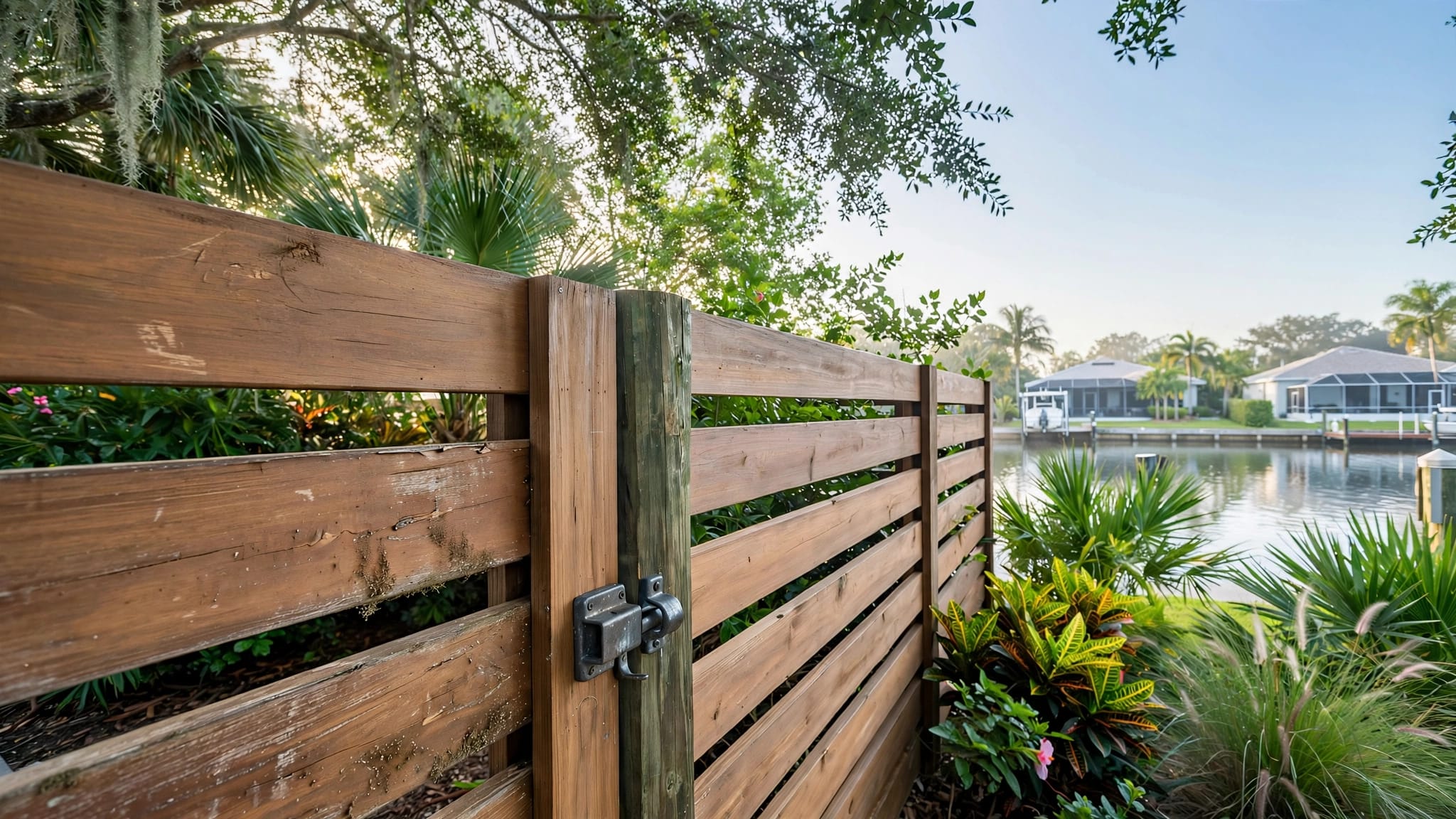
Wood looks natural, and it can feel "right" next to tropical landscaping. It also creates privacy fast, which aluminum does not. Still, wood around a pool acts a bit like a sponge. It soaks up splash-out, sprinkler mist, and wet-season humidity, then dries in full sun. That cycle causes movement, and movement causes problems.
Typical wood maintenance tasks and intervals for SWFL pool areas:
- Inspect for rot at the bottom edge : Monthly during wet season, because early rot is easier to stop.
- Check for termite activity : Quarterly, plus keep up with your pest control plan.
- Clean mildew and algae : 2 to 4 times per year (pool shade and damp air make growth common).
- Re-seal or re-stain : About every 12 to 24 months, depending on sun exposure and product.
- Replace cracked or warped boards : As needed, because one bad board can loosen the run.
- Re-square gates : At least yearly, because wood gates tend to rack with time and moisture.
Common wood failure modes in Southwest Florida:
- Rot at posts and picket bottoms , especially where boards meet soil or stay damp near a deck.
- Warping and cupping from sun and uneven moisture.
- Termite damage , particularly in older fences or untreated areas hidden behind rails.
- Fastener staining and rust , because pool chemicals and salty air are tough on cheap nails and screws.
- Storm blowouts on solid privacy panels that catch wind like a sail.
Wood can work, but you'll want realistic expectations. If you love the look yet hate maintenance, wood around a pool can become a weekend chore you didn't sign up for.
Side-by-side comparison for SWFL pool areas (and what to ask your installer)
Here's a quick, contractor-style comparison to help you decide.
| Category | Aluminum pool fence | Wood fence near pool |
|---|---|---|
| Pool safety visibility | Open view, easy to monitor swimmers | Often blocks sight lines (privacy wins, safety visibility loses) |
| Salt-air performance | Strong, especially with quality coating and hardware | Weak, salt and moisture speed up rot and staining |
| Termites | No termite risk | Ongoing risk, needs monitoring and treatment |
| Storm behavior | Wind passes through pickets, less pressure | Solid sections catch wind, higher failure risk |
| Typical upkeep | Rinsing, hardware checks, touch-up paint | Cleaning, sealing, board swaps, termite vigilance |
| Common "first failure" | Gate sag or latch alignment | Rot at bottoms, warped boards, gate racking |
| Best fit | Code-friendly pool barrier, low maintenance | Privacy-first yards where you accept upkeep |
So what should you ask before you sign a contract? These questions prevent the most common SWFL headaches:
- What post depth and concrete footing size are you using for gate posts? Gate posts carry the job.
- What hardware is included (hinges, latch, screws), and is it corrosion-resistant? Cheap hardware fails fast here.
- How will the fence meet pool barrier rules for gaps, climb resistance, and gate swing? Don't assume.
- For wood, what lumber and fasteners are you using, and how will you protect the bottom edges? The bottom is the danger zone.
- How will you handle drainage and grade changes so the fence doesn't end up with big gaps? SWFL yards settle.
- What warranty covers workmanship and gate alignment? Gates are where callbacks happen.
Costs vary by layout, gates, and site conditions, but it helps to start with realistic ranges. This guide on fence installation costs in Cape Coral breaks down common pricing drivers that also apply across SWFL.
If two quotes are close, choose the installer who talks most about posts, gates, and hardware. That's where fences are won or lost.
The takeaway for SWFL homeowners
For most Southwest Florida pool areas, aluminum is the smarter long-term choice because it handles salt air, storms, and daily use with less work. Choose wood when privacy is the priority and you're willing to seal it regularly, watch for termites, and replace boards over time. Either way, the install details matter as much as the material, especially at the gate. If you want your pool fence to stay straight, latch cleanly, and pass inspection year after year, start with strong posts and corrosion-resistant hardware.