January 31, 2026
You can pick the perfect fence style, budget the project, and still get stuck on the most frustrating question: “Where am I actually allowed to put it?”
In Cape Coral, Cape Coral fence setbacks can feel confusing because the rules are not just about your yard. They’re also about canal access, seawalls, drainage, street visibility, and utility easements that may not be obvious until you’re already planning posts and gates.
This guide breaks down what setbacks and easements mean on real Cape Coral lots, how canal and corner properties change the plan, and how to verify your exact limits before a single hole gets dug.
Setbacks vs. easements in Cape Coral (and why both matter)
A setback is a “keep-back” area. It’s the required space between a structure (like a fence) and something else, usually a street, sidewalk, or property line. An easement is different. An easement is a legal right for someone else (often the City or a utility company) to access part of your property for a specific purpose.
A quick analogy helps. Think of your property line like the edge of your dinner plate. It’s yours. An easement is like a spot on that plate reserved for someone else to reach in when they need to. You still own the plate, but you can’t block that reserved area with something that prevents access.
In Cape Coral, fence placement rules come from multiple places, including the Land Development Code and permitting guidelines. If you want to read the source language yourself, the City’s online code viewer is the best starting point, see the Cape Coral Land Development Code viewer. For permit submittals and current handouts, the City posts documents through the Permit Document Center.
One important reality: setbacks and easements can vary by zoning and by subdivision plat . Two homes on the same street might not match if they were platted at different times or have different drainage or utility layouts. That’s why guessing distances is risky, even if your neighbor’s fence looks “standard.”
Canal and seawall lots: planning for water access and waterfront rules
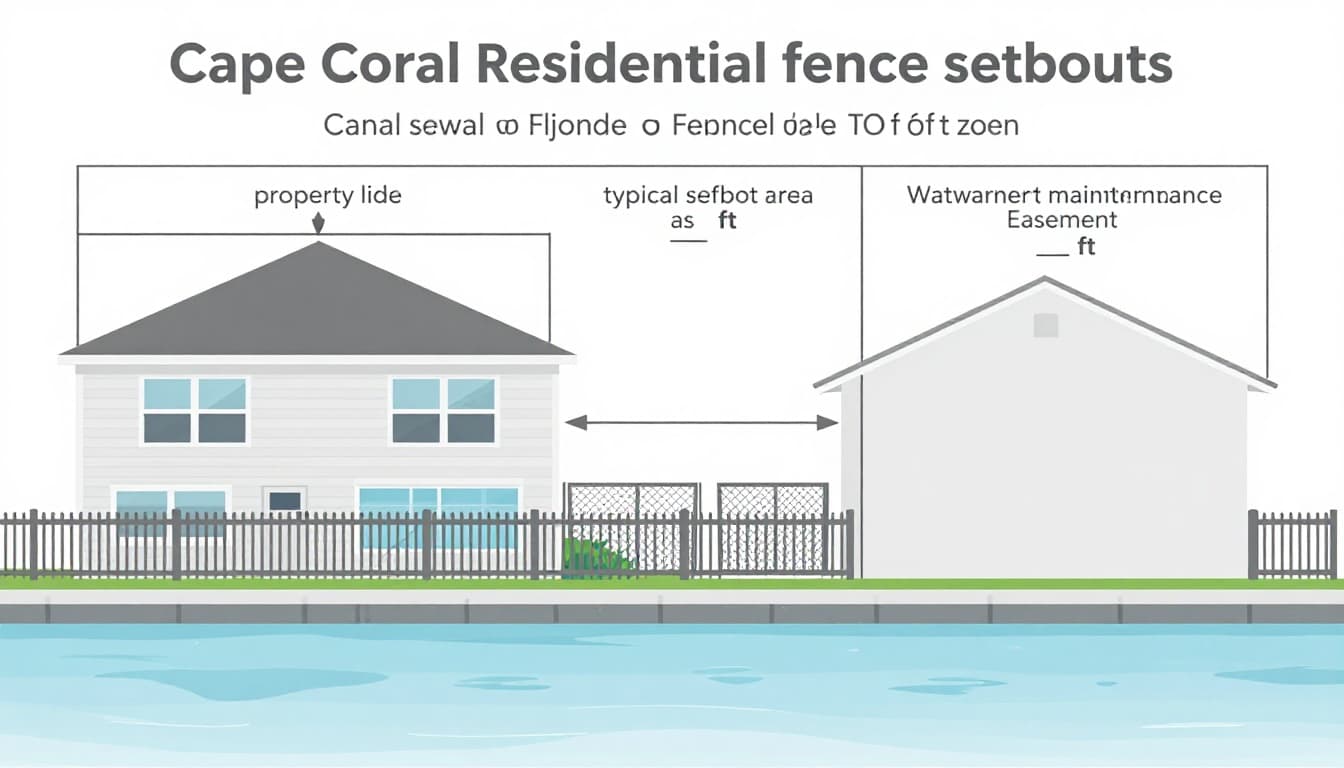 Diagram showing common fence planning zones on a canal and seawall lot, created with AI.
Canal lots are why “just fence to the back line” can turn into a permit headache. The back of your property may border a canal, a seawall, or a maintained area that needs access. A fence that blocks maintenance can be flagged, even if it’s technically on your side of the line.
Waterfront rules can also affect the type of fence allowed near the canal. In some cases, the City limits solid privacy fencing close to waterways and favors more open styles near the water. Rather than relying on what you’ve heard, verify the current language in the City’s fence section (because updates happen).
If your project touches the seawall side of life, it helps to understand that seawalls and other marine improvements are regulated separately from fencing. The City’s marine improvement ordinance is published online, see Cape Coral marine improvement rules for seawalls and bulkheads. And if you’re looking at alternative seawall designs on freshwater canals, the City also posts guidance, see the Residential Seawall Alternative Guideline (PDF).
Example: canal lot behind a pool. A homeowner wants full privacy, right up to the canal. The safer plan is often to place the fence so it respects waterfront access needs, then build privacy with landscaping, spacing, and material choices that still meet waterfront visibility and maintenance expectations.
Utility and drainage easements: the hidden strip that changes the design
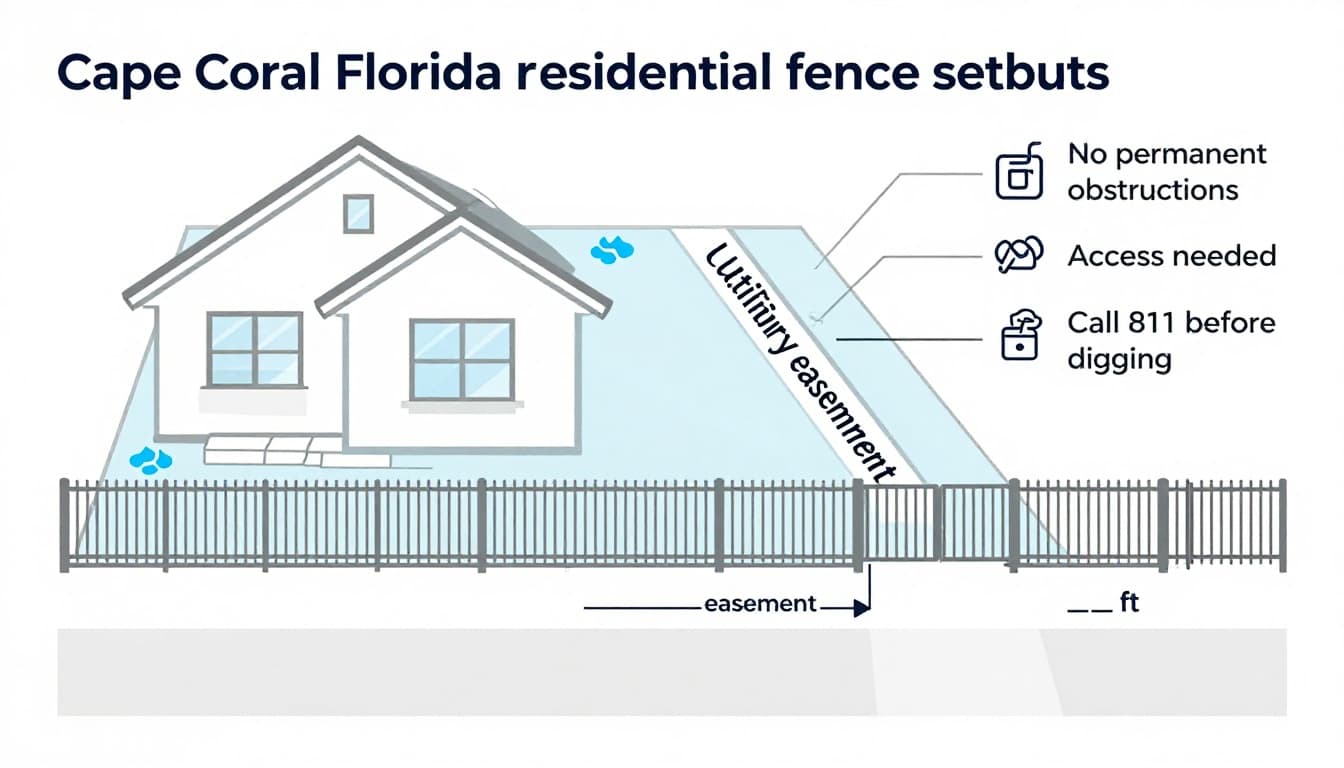 Diagram showing a typical side-yard utility easement and fence gate solution, created with AI.
Easements are where good fence plans go sideways. A common scenario in Cape Coral is a utility or drainage easement running along a side yard or rear yard. It might hold water, sewer, electric, stormwater, or communications lines. Some easements exist for access, even if nothing is currently visible.
Important note: Easements are for access. If you build a fence in an easement, the easement holder may need entry later. That can mean you must provide a gate, use removable panels, or accept that the fence could be taken down for repairs and you (not the City) may be responsible for restoration.
Cape Coral’s fence rules address easements directly. In the City’s ordinance language, fences are restricted in areas like utility or drainage easements, and visibility triangles must remain clear. You can review the fence standards in the Cape Coral accessory structures section covering fences.
Before any digging, get utilities marked. In Florida, that means calling Florida 811 (dial 811) a few business days ahead. Markouts help prevent dangerous hits and can also reveal conflicts that impact where posts can go.
Example: side-yard easement with underground utilities. A homeowner wants a side gate for boat storage, but the easement sits right where the gate posts would land. A workable fix can be shifting the fence line, changing gate width, or using a design that keeps access practical if the utility company ever needs that strip.
Corner lots, right-of-way, and visibility triangles (the “don’t block the view” rule)
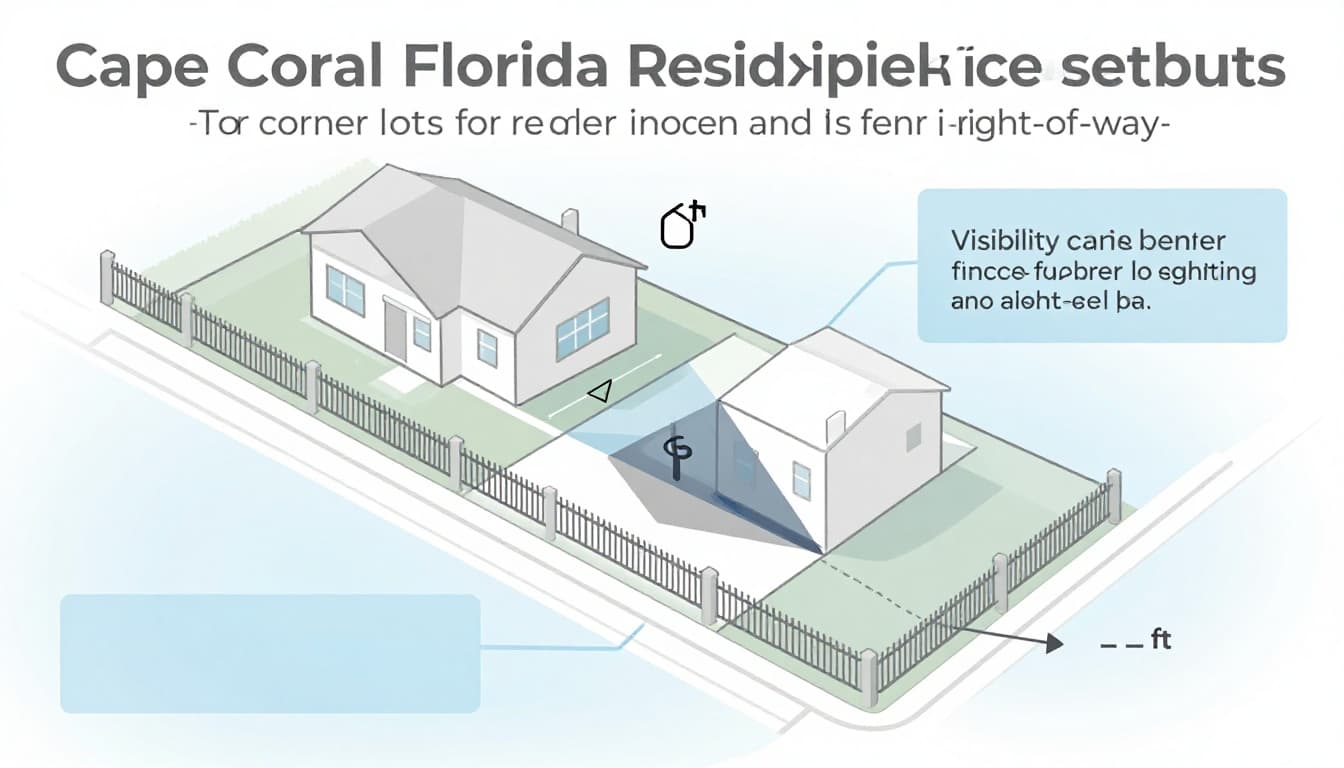 Diagram illustrating why corner lots have special sightline zones, created with AI.
Corner lots can feel like they have two front yards, because they sort of do. Along the side street, you’re dealing with right-of-way space, sidewalks, and driver sightlines. That’s where visibility triangles come in.
A visibility triangle is a safety zone near intersections and driveways. The idea is simple: fences and walls can’t sit in a spot that blocks a driver’s view of cross traffic, cyclists, or pedestrians. Cape Coral’s code specifically calls out that fences can’t be placed within the visibility triangle (see the ordinance link in the previous section).
Also, don’t assume the sidewalk edge is your property line. The public right-of-way often extends beyond the sidewalk, and that space is not a safe place to build, even if it looks like “your grass.”
Example: corner lot with a side-street fence. A homeowner wants a full-height privacy fence wrapping the side yard. The fence may need to step back, change height near the corner, or switch to a more open style near the intersection to keep sightlines clear.
A practical checklist to confirm your fence layout before you apply
A clean plan saves time, money, and neighbor drama. Here’s a simple process that fits most Cape Coral fence projects:
- Find your survey or plat : Look for property lines, easements, and any labeled building lines.
- Confirm the front plane of the home : Many fence layouts fail because they extend too far forward on street-facing sides.
- Identify canal or seawall conditions : Note the seawall location, water edge, and any area that looks maintained.
- Locate easements : Check the survey, plat notes, and any recorded documents tied to your parcel.
- Call Florida 811 : Markouts help prevent utility strikes and can influence post placement.
- Talk to neighbors (briefly) : Agree on the fence line early, especially if you’re near a shared side yard.
- Prepare a site plan for permitting : The City’s Residential Fence Permit Guideline (PDF) lists common submittal items, including showing gates, structures, streets, and waterways.
- Schedule inspections if required : Don’t rush to final until the City signs off.
Questions to ask the permit office or your fence contractor
- “Does my lot have recorded easements where the fence is planned?”
- “Do waterfront rules limit privacy panels near my canal or seawall?”
- “Am I near a visibility triangle on this corner or driveway?”
- “If the fence is allowed in an easement, do I need a gate or removable section ?”
- “What inspections or documents do you expect for my specific address?”
Conclusion
Fence projects in Cape Coral go smoother when you treat setbacks and easements like part of the design, not an afterthought. Your survey, plat, and permit review do the heavy lifting, and Florida 811 helps keep digging safe.
If you’re planning a canal, corner, or easement-heavy lot, aim for a fence layout that respects access needs and sightlines, then pick the material that fits your privacy goals. The best fence is the one that looks great and doesn’t get flagged later.