February 1, 2026
A vinyl fence height decision sounds simple until you picture real life in Southwest Florida: neighbors on lanais, dogs that can jump, corner-lot driveways, and wind that shows up sideways in August.
In Lee, Collier, Charlotte, and Sarasota areas, the “right” height is usually a balance of three things: how much privacy you want, what you’re trying to contain (or keep out), and what your city, county, and HOA will approve. Get that balance right, and your fence feels like it belongs. Get it wrong, and you’re stuck with a fence that doesn’t solve the problem you bought it for.
If you’re comparing options, start here, then confirm your local rules before you buy materials or schedule installation.
What fence height really changes in SWFL (privacy, wind, and day-to-day comfort)
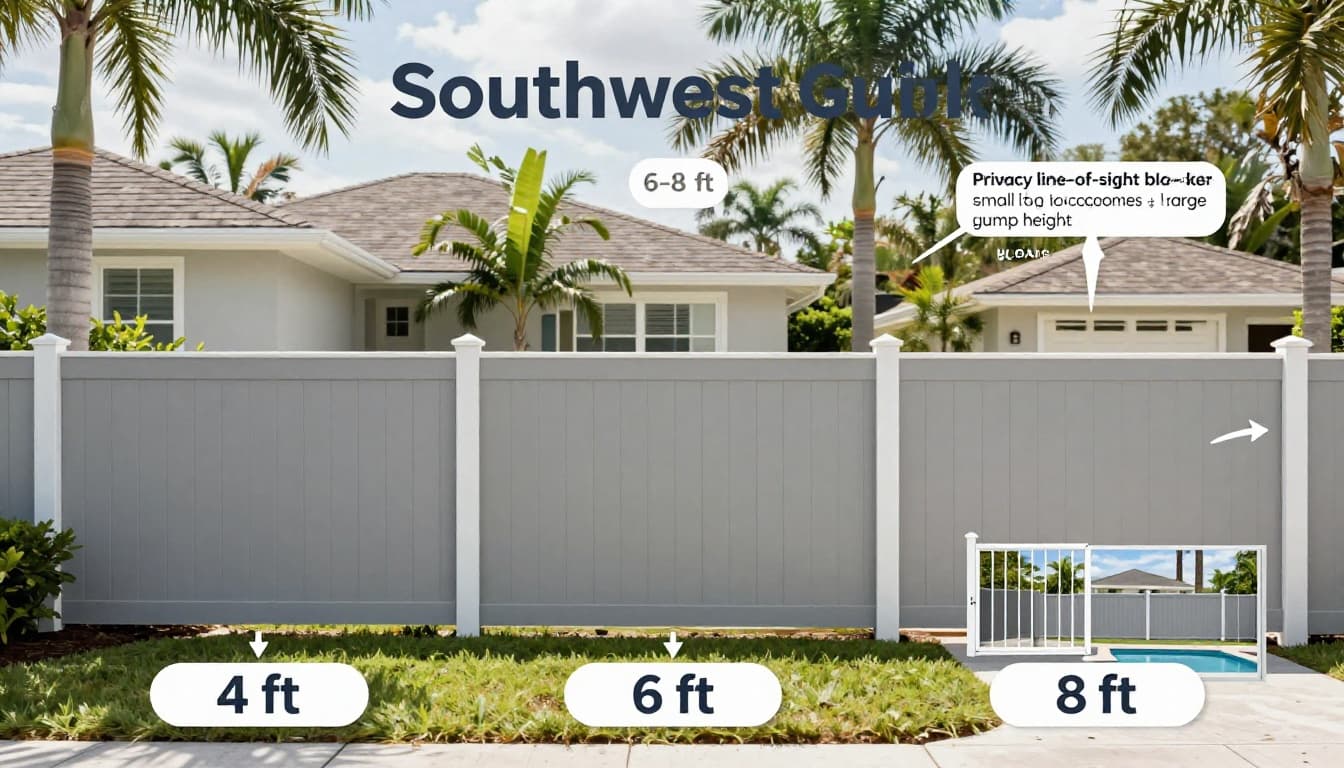 Side-by-side height comparison for common vinyl fence options, created with AI.
In Southwest Florida neighborhoods, the privacy part is easy to picture. A 4-foot fence can define a yard and look clean from the street, but it won’t block much of a standing adult’s view. A 6-foot fence starts to feel like a true privacy barrier, especially along side and rear property lines. An 8-foot fence can be the “backyard disappears” option, but it also brings more scrutiny from permitting, HOA review, and structural needs.
Height also changes how the fence behaves in wind. A solid privacy vinyl fence acts like a sail. Taller panels catch more gusts, which means posts, footings, and overall layout matter more. In hurricane-prone counties, the goal isn’t just “tall enough.” It’s “tall enough, built correctly, and permitted when required.”
Then there’s the human side. A taller fence can make a small yard feel more enclosed, especially on narrow lots in Cape Coral, Fort Myers, Estero, and Bonita Springs. Some homeowners prefer a 6-foot fence with smart placement (screening the patio and pool area) instead of going taller everywhere.
If you’re still early in planning, it helps to review what local installers mean by durable vinyl fences for Florida homes and how panel styles affect privacy and strength. One place to start is Royal Fence vinyl fence services, which outlines common vinyl options used locally.
4 ft vs 6 ft vs 8 ft: a practical comparison for privacy and pets
Most homeowners narrow it to three heights. Here’s how they compare in plain terms.
| Fence height | Privacy feel | Pets and containment | Cost and materials | Wind load and build | Permitting likelihood |
|---|---|---|---|---|---|
| 4 ft | Low to moderate, good for defining space | Better for small dogs, not great for jumpers | Lowest | Lowest wind pressure | Often simplest, but rules still apply |
| 6 ft | Strong privacy for patios and backyards | Works for many dogs, still not “escape-proof” | Mid-range | Higher, needs solid posts and layout | Commonly permitted/allowed in side and rear areas |
| 8 ft | Maximum screening, blocks most views | Helpful for athletic dogs, still needs gate discipline | Highest | Highest, needs stronger engineering details | More likely to trigger extra review or limits |
A few pet-specific truths that save headaches:
For jumpers, height helps, but it’s not the only answer. A determined dog can use a planter, pool cage frame, or outdoor furniture as a step. If you go 6 feet, keep “launch points” away from the fence line.
For diggers, height doesn’t matter. You’ll want a clean grade line, no gaps at the bottom, and sometimes a buried deterrent detail depending on your yard.
For small dogs, 4 feet can work if the yard is calm and the gate is tight. If your dog rushes fences, a taller fence often reduces reactivity because they can’t see every passerby.
If your goal is privacy for people and containment for pets, 6 feet is usually the starting point homeowners ask for. If your yard backs up to a busy road, canal walkway, or rear neighbor’s patio, that’s when 8 feet comes up. The key is making sure 8 feet is even an option where you live.
How to check fence height rules in Lee, Collier, Charlotte, and Sarasota (without guessing)
Fence rules can change by county, city, zoning district, and even lot type. A corner lot in a city neighborhood can have different visibility rules than a rear-lot home in unincorporated county areas. Add an HOA, and the “real” limit might be lower than the county.
Here’s a simple way to confirm what applies to your address:
First, find your jurisdiction. Are you in Cape Coral city limits, Fort Myers city limits, or unincorporated Lee County? The permitting office that controls your fence depends on that.
Next, identify your zoning (and lot type). Zoning often drives what’s allowed in the front yard vs side and rear yards. If your home is on a corner, ask about the clear-sight triangle near the driveway and intersection.
Then, check permitting guidance. In Lee County, start with the county’s own residential fence permitting guide. It lays out what documents are typically needed, how to submit, and what details reviewers want to see (site plan, materials, and height).
If you’re in Lee County and you’re ready to apply, the county also provides a residential fence application form that shows the kind of information you’ll be asked for. Seeing the form early helps you avoid last-minute surprises, like needing a survey or showing setbacks.
If you’re in Charlotte County, their residential fence permit page is a helpful starting point. It also notes that pool-related barriers can be handled differently than a standard yard fence, which matters if you’re fencing near a pool.
Finally, check your HOA and ARC rules. HOA standards often control fence color, style (full privacy vs semi-private), and height. Even if the county allows a taller fence in side and rear yards, the HOA might not. Get HOA approval in writing before installation.
One more step that protects you: confirm your property line and easements. A fence placed a foot onto the wrong side can turn into a costly move. If you don’t have a recent survey, ask your installer what they recommend for your lot.
Safety details people miss: gates, pools, and driveway visibility
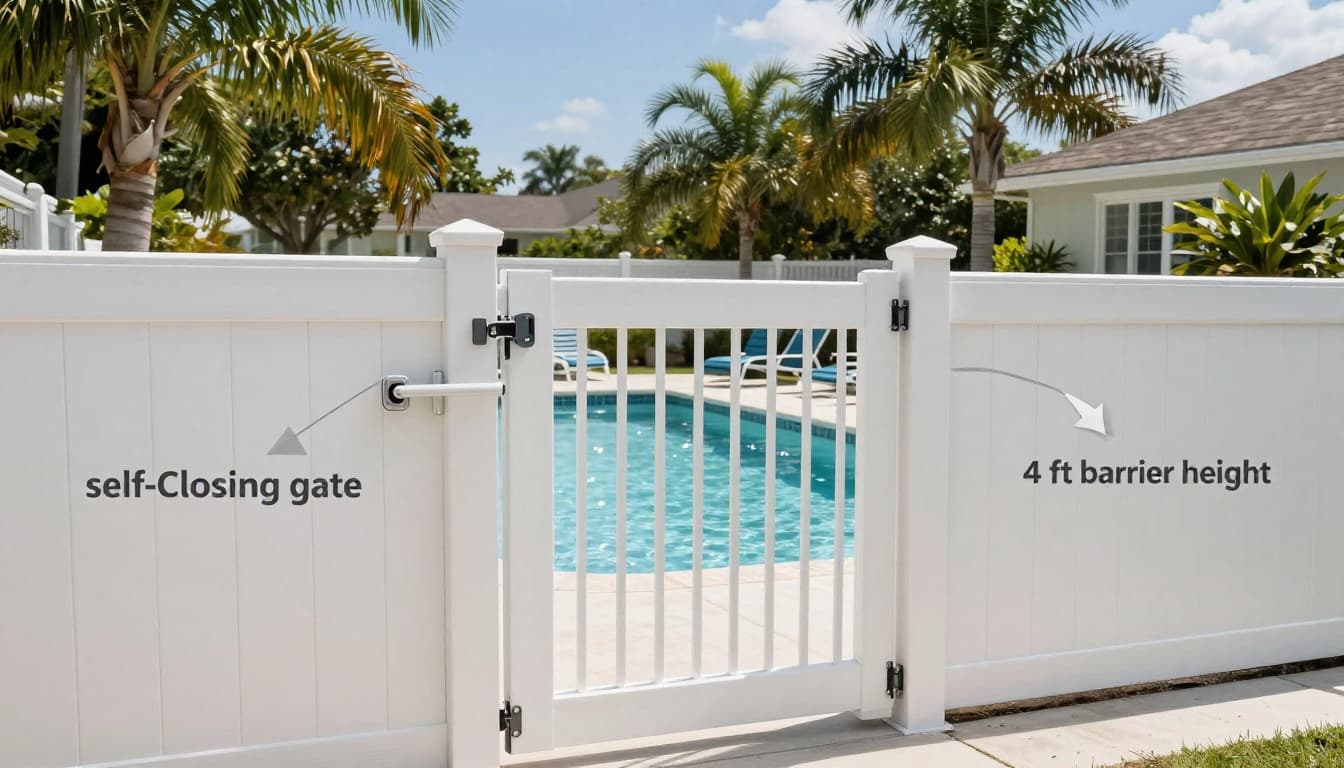 Example of a pool-area barrier fence with a self-closing, self-latching gate, created with AI.
Height gets the attention, but gates decide whether the fence actually works.
For pets and kids, prioritize self-closing hinges and a reliable latch . A 6-foot fence with a loose gate is like buying a safe with a weak lock. Also think about gate swing and placement. A gate that opens into a tight walkway tends to get propped open, and “just for a minute” is how dogs end up in the street.
Pool areas deserve extra caution. Pool barrier rules are often separate from normal perimeter fence rules, and they usually focus on gate behavior and climb resistance, not just fence height. If your vinyl fence will act as a pool barrier, confirm the exact barrier requirements with your local building department before choosing panel style and gate hardware.
Visibility is another common miss in Southwest Florida, especially on corner lots and homes with short driveways. Many land development codes include a clear-sight triangle concept near intersections and driveways, meaning tall solid fencing might be restricted in that area. For an example of how “clear-sight” language is written, review this gates, fences, and walls code section and then ask your local zoning counter what applies to your address.
Conclusion: choose the height that fits your yard, then confirm it the right way
The best vinyl fence height is the one that matches your privacy needs, keeps pets safe, and passes local review without drama. For many SWFL homes, that decision lands at 6 feet, while 4 feet works for front-yard looks and 8 feet can be the right call in specific backyards.
Before you commit, confirm your jurisdiction, zoning, and HOA rules, then match the height with the right gate hardware and wind-ready construction. If you want a fast, clear plan for your property, schedule an estimate and ask for a height recommendation based on your lot layout and goals.