September 14, 2026
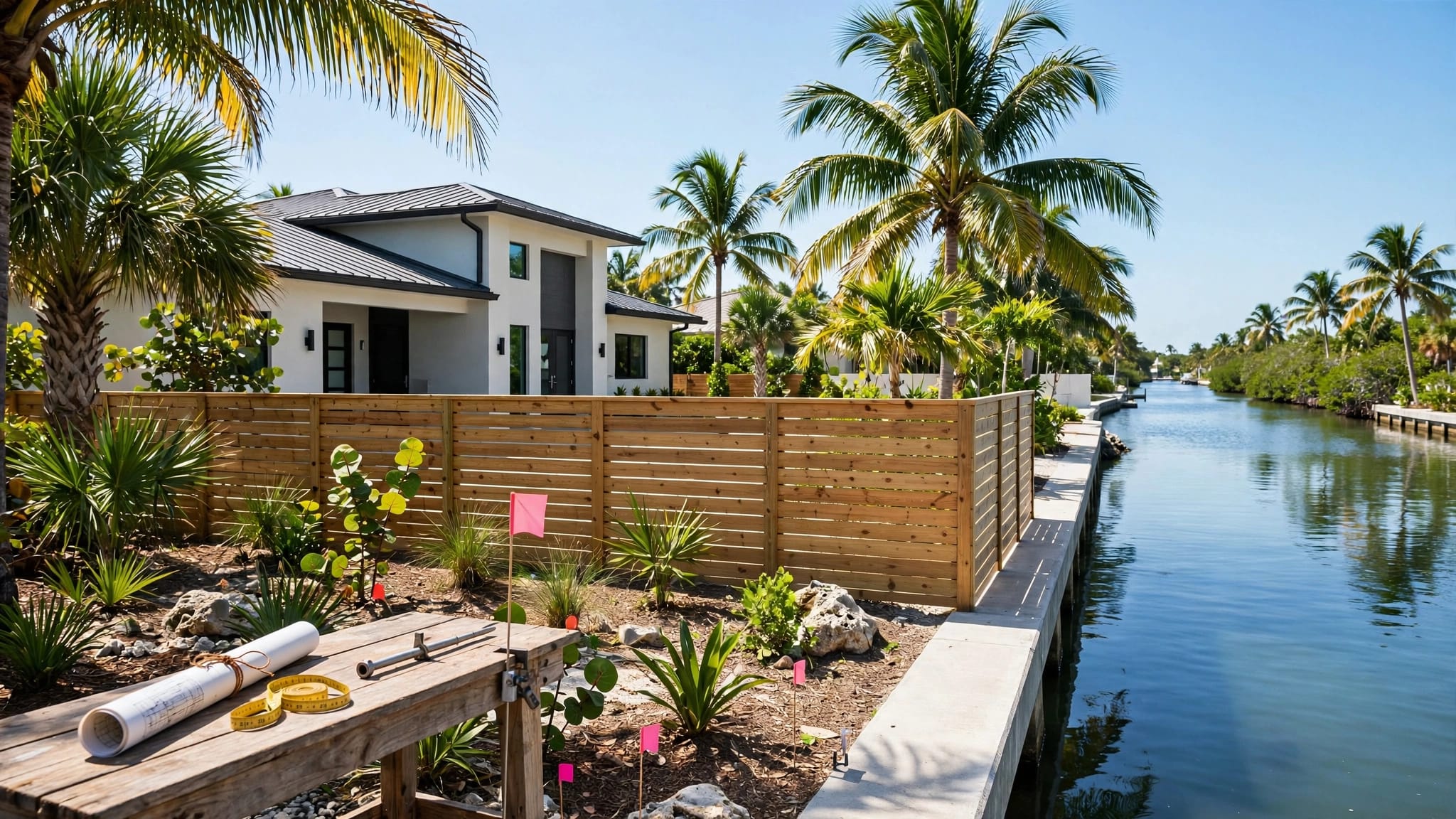
A fence can protect your yard without creating a problem for solar equipment, but only when both plans are drawn together. Cape Coral solar fencing needs to account for property lines, setbacks, rooftop or ground-mounted panels, inverters, disconnects, and battery access.
The safest approach is to map the energy equipment first, then place the fence around it. Local fence rules and electrical requirements can vary by parcel, neighborhood, waterfront location, and equipment type. Start with the site plan, confirm the current requirements, and keep every service point reachable.
Key Takeaways
- Treat the fence and solar installation as one coordinated site plan.
- Do not guess the required clearance around an inverter, disconnect, or battery.
- Cape Coral generally allows residential fences up to 6 feet, but front-yard, corner-lot, and waterfront rules can be stricter.
- Waterfront fencing may require open mesh above a specified height.
- Confirm the equipment manufacturer's instructions and current electrical and fire review requirements before installation.
- Use the city or county permit path that matches your property's jurisdiction.
Start With Jurisdiction, Zoning, and a Current Survey
Before choosing a material, confirm whether the property falls within Cape Coral city limits or unincorporated Lee County. Lee County rules don't automatically apply to every Cape Coral address, and city requirements can differ by zoning and yard location.
A current survey helps identify the actual property line, drainage areas, utility easements, setbacks, sidewalks, canals, and seawalls. The edge of the pavement or sidewalk isn't always the legal boundary. A fence that looks correctly placed can still sit in a right-of-way or easement.
Cape Coral's broad residential guidance allows fences up to 6 feet in many areas. However, front-facing sections, corner lots, canal frontage, and visibility areas can have lower limits or open-design requirements. Review the details in these Cape Coral front-yard fence height rules before finalizing the fence line.
If the property is part of a new build, plan the fence before sod, irrigation, or hardscape installation. Mark underground utilities and call 811 before digging. A few minutes of planning can prevent damage to irrigation lines, electrical conduits, or drainage features.
Map the Solar and Battery Equipment Before Drawing the Fence
Solar panels on the roof usually don't create a fence-clearance issue by themselves. The equipment at ground level needs closer attention. That may include an inverter, rapid-shutdown equipment, service disconnects, a battery cabinet, conduit runs, or a backup power connection.
Mark each item on the site plan. Show doors, removable panels, ventilation points, disconnects, and the path a technician would use to reach the equipment. Include gates and fence returns so the proposed layout is clear during review.
Keep manufacturer and inspection access clear
Battery and electrical equipment need access for installation, inspection, maintenance, and emergency response. The exact clearance depends on the equipment, installation method, applicable electrical requirements, and fire review. The available local information doesn't confirm one universal Cape Coral distance for every battery system.
For that reason, don't place a solid fence directly beside a battery cabinet and assume the arrangement is acceptable. Confirm the manufacturer's installation instructions, the current electrical review requirements, and any fire-clearance conditions before setting posts.
The same principle applies to an exterior electrical panel or disconnect. A fence shouldn't force someone to reach over a gate, remove a panel, or enter an unsafe position to shut off power.
Separate privacy from equipment access
A homeowner may want a tall privacy fence around the entire side yard. The battery or inverter may need a different treatment, such as an open section, a wider gate, or a fence return that leaves the required working area unobstructed.
That doesn't mean the equipment must remain exposed. An aluminum fence, louvered design, or carefully placed open screening can provide separation while preserving airflow and access. The final choice should follow the equipment instructions and the approved plan, not a standard fence pattern.
Apply Cape Coral Fence Height and Placement Rules
Fence height is only one part of compliance. The fence's location, openness, relationship to the home, and distance from streets or waterways can matter just as much.
Cape Coral's general residential guidance identifies a 6-foot maximum in many rear-yard situations. Other city material and local planning guidance describe lower limits near front yards, street frontages, and waterfront areas. These rules can appear inconsistent when they apply to different parts of a lot, so verify the rule for the specific fence run.
Check front setbacks and corner-lot sight lines
Cape Coral front fences generally cannot sit forward of the principal structure's forward-most side or enclose the front facade. Corner lots can be treated as having two street-facing areas, which affects height, placement, and visibility.
A solid fence near an intersection may block drivers or pedestrians. In that location, an open design or a stepped-down section may work better than a continuous privacy panel. Your site plan should show each fence run, its height, and its distance from the property line or street area.
The Cape Coral fence setbacks and easements guide can help you identify common concerns involving rights-of-way, canals, seawalls, and utility corridors.
Review waterfront and canal requirements
Waterfront lots require extra care. Cape Coral guidance restricts fencing in certain rear waterfront areas, including requirements for open mesh above a specified height. One city rule references open fencing above 3 feet in the rear 20 feet of a property abutting a waterway.
Lee County guidance also includes open-mesh conditions near bodies of water, but those county rules should only be applied after confirming the property's jurisdiction. A solid vinyl or wood fence may therefore work in one yard section but require a different design near the canal.
Solar equipment near a seawall or rear property line adds another layer. Keep the fence away from drainage paths, preserve access for service work, and show the waterway or seawall line on the plan when required.
Choose Materials That Work Around Energy Equipment
Material selection affects airflow, maintenance, storm performance, and the appearance of the equipment area. It also affects how easily a technician can see and reach the battery or inverter.
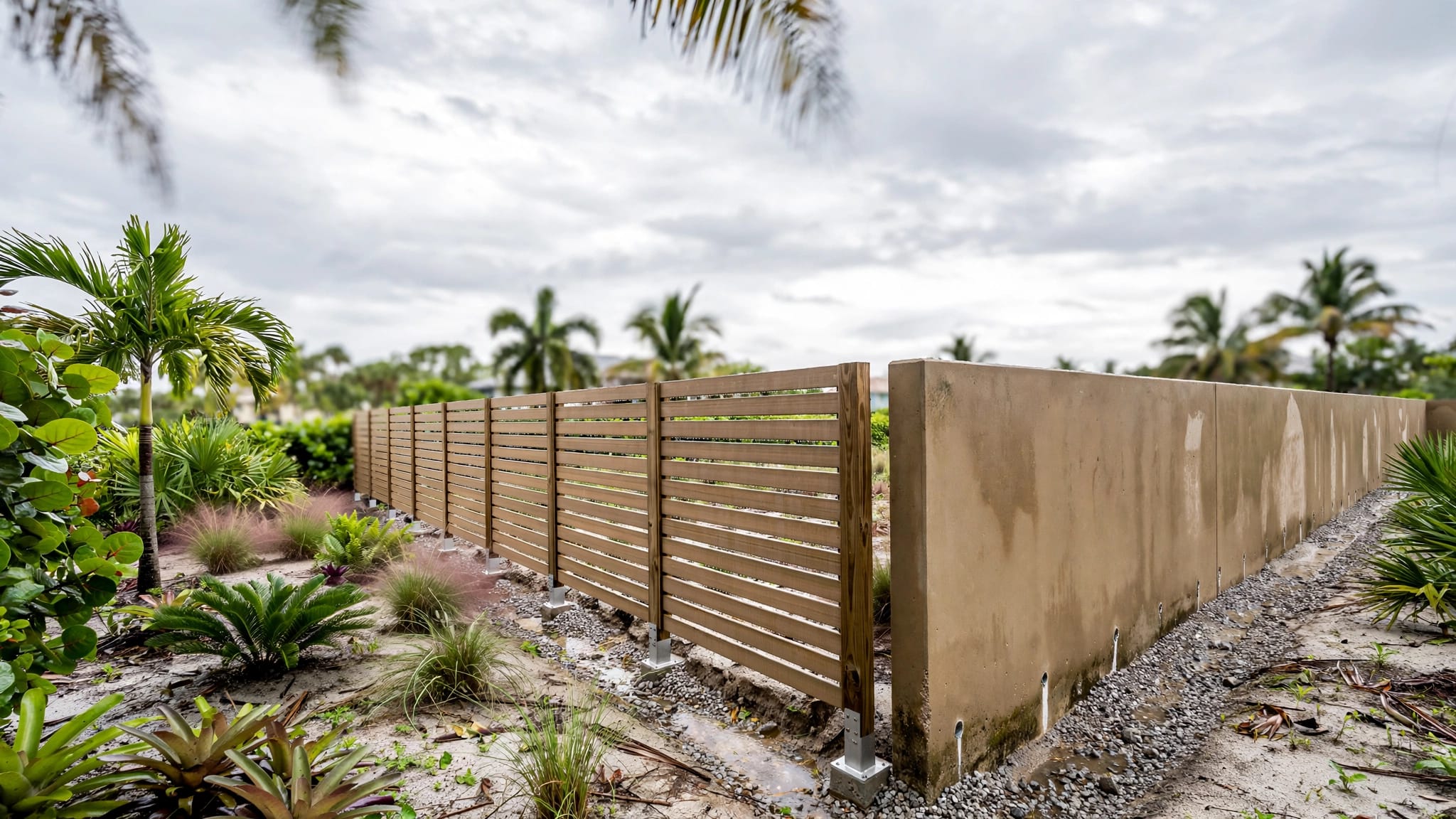
Vinyl offers strong privacy and low upkeep. It can be a good choice for screening equipment from neighboring yards, provided the layout leaves all required service space open. Wood provides privacy but needs more maintenance in Southwest Florida's heat, humidity, rain, and sun.
Aluminum is often useful where visibility and airflow matter. It also resists corrosion better than untreated steel, though hardware and finish quality still matter near canals or salt exposure. A louvered fence can reduce direct views while allowing air movement through the openings.
Don't treat a fence as a substitute for the equipment's approved enclosure. Screening should not cover vents, block removable panels, trap heat, or prevent emergency shutoff access. Ask the solar installer to mark the equipment clearance area before the fence contractor prepares the final layout.
For front-facing sections, compare Cape Coral front-yard fence design ideas that preserve sight lines while matching the home's exterior.
Coordinate Fence and Solar Permits Before Installation
Cape Coral's photovoltaic guidance dated January 23, 2026 directs residential applicants to use the Electrical, Residential application in the city's CSS portal and select Photovoltaic. The solar contractor typically handles the solar permit package, but the fence plan still needs its own review when required.
The two projects should reference the same property lines and equipment locations. If the fence is installed first, the solar contractor may have to redesign conduit routes or service access. If the solar equipment is installed first, a fence contractor can build around the approved clearances.
Prepare a clear fence plan
A complete fence plan should identify the property address, fence material, height for each run, gates, setbacks, easements, canals, and equipment locations. It should also show where the fence changes height or switches from solid to open construction.
Use the Cape Coral fence permit checklist to organize drawings, surveys, dimensions, and gate information before submission.
A clear drawing reduces questions during review. It also gives the solar installer and fence contractor one document to follow in the field.
Ask the right officials before digging
Battery-specific clearance information wasn't confirmed in the local materials reviewed for this project. Confirm the current requirements with the equipment manufacturer, solar contractor, electrical reviewer, and fire official when needed.
Cape Coral lists its Permitting Help Desk at 239-574-0546 and permits@capecoral.gov. Ask which department reviews the proposed fence, whether the property is subject to a waterfront rule, and whether the fence layout affects the solar or battery permit.
Also check HOA or deed restrictions before ordering materials. An HOA may regulate fence color, height, location, or material even when the city approves the project.
Use This Pre-Installation Checklist
Before installation begins, make sure the project team has:
- A current survey showing property lines, easements, setbacks, canals, and seawalls.
- A site plan with every fence run, gate, height, and material.
- The locations of the inverter, disconnect, battery cabinet, conduit, and service panels.
- Written confirmation of manufacturer-required access and clearance areas.
- A verified city or county jurisdiction.
- Current HOA approval, if applicable.
- Confirmation of the required fence and solar permit applications.
- Utility markings and irrigation locations before excavation.
- A drainage plan that keeps fence posts and panels from blocking swales or water flow.
- A gate layout that allows technicians and homeowners to reach equipment safely.
Leave the final post locations for the installer after the site plan and equipment clearances have been checked. Field conditions can reveal a buried utility, drainage feature, or easement that isn't obvious from the initial walk-through.
Cape Coral Solar Fencing FAQ
Can a fence go around a solar battery?
It may be possible, but the answer depends on the battery model, installation instructions, electrical review, fire requirements, and local fence rules. Don't assume a fence can touch or fully surround the cabinet. The approved layout must preserve required working space, ventilation, access, and emergency controls.
Does a rooftop solar array change fence placement?
Usually, the roof panels themselves don't determine the ground-level fence line. However, related equipment may sit beside the home or in a side yard. Map the inverter, disconnect, conduit, and battery before choosing the fence location.
Is a 6-foot fence allowed everywhere in Cape Coral?
No single height applies to every fence run. Six feet is a broad residential maximum in many rear-yard situations, while front yards, corner lots, waterfront areas, rights-of-way, and HOA rules may require a lower or more open fence. Verify each section separately.
Should the fence contractor or solar installer draw the layout?
Both should review it. The solar contractor knows the equipment and its required access. The fence contractor understands posts, gates, setbacks, materials, and site conditions. Their plans should match before either installation begins.
Conclusion
Good Cape Coral solar fencing keeps privacy and equipment access working together. Start with a survey, map every electrical component, confirm the applicable city or county rules, and verify the battery clearances instead of guessing.
A fence can screen solar equipment without making it difficult to inspect or service. When the fence contractor and solar installer work from the same approved layout, the finished yard is safer, easier to maintain, and less likely to require costly changes.