September 16, 2026
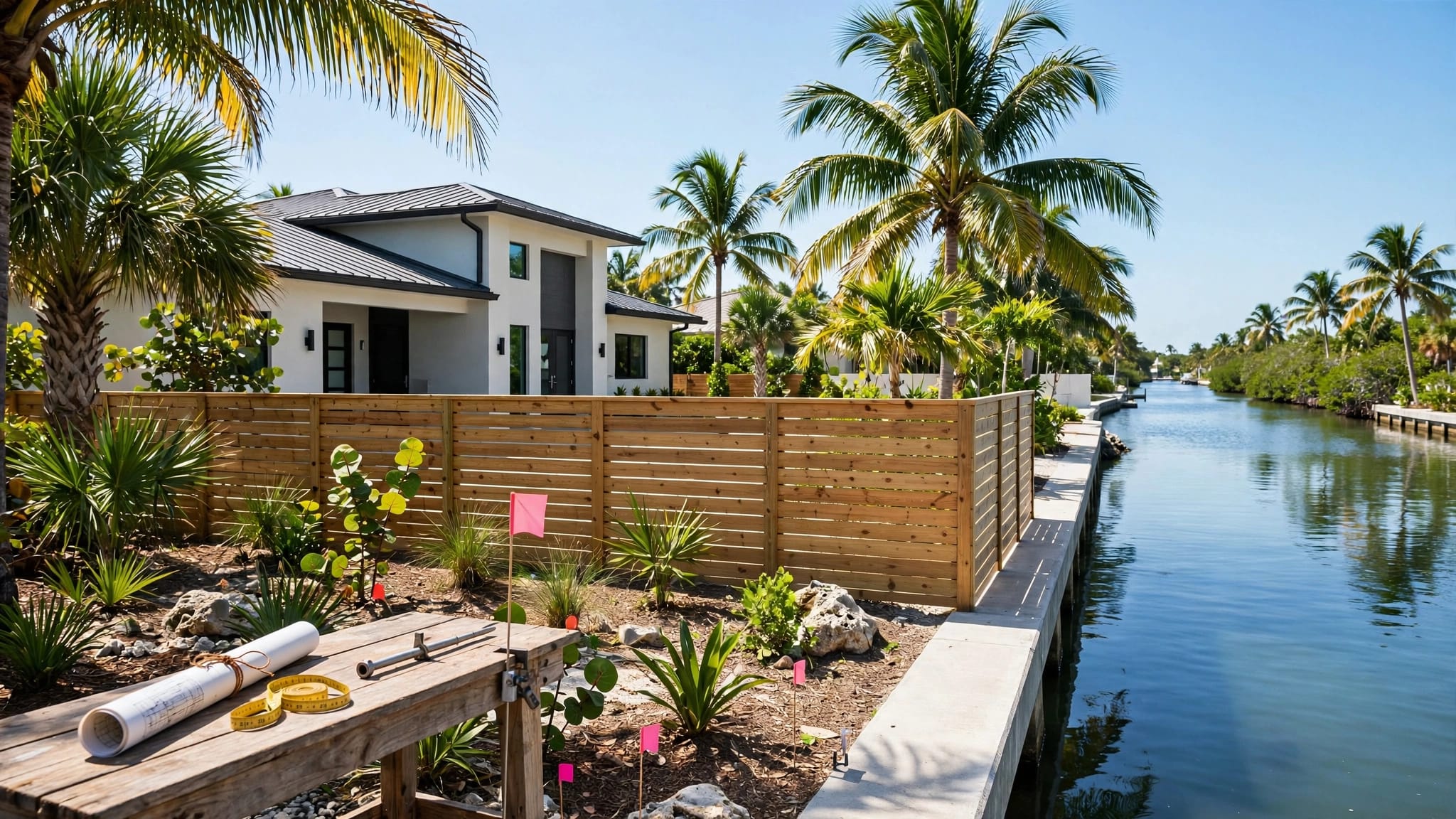
A retention pond can make Cape Coral pond fencing far more complicated than a standard backyard installation. The visible grass edge may not match your property line, and a drainage easement may run between your yard and the water.
The safest plan starts with records, surveys, drainage paths, and access requirements. Once those details are clear, you can choose a fence style that fits the lot without blocking water flow or creating permit problems.
Why retention ponds change fence planning
A retention pond is not automatically the same as a canal, waterway, or private lake. Its legal classification may depend on the recorded plat, easement documents, stormwater plans, or the City of Cape Coral's review of your property.
The pond edge may not be your boundary
The edge of the water, the edge of mowed grass, and the legal property line can all sit in different locations. A pond may also be located in a common tract or drainage area maintained by an association, the city, or another entity.
Never use the pond bank, an old fence, a hedge, or a neighboring driveway as proof of the boundary. A recent survey can show the lot corners, easements, rights-of-way, drainage areas, and existing improvements that affect the fence route.
Cape Coral's rules also restrict fences in drainage easements. If a French drain, stormwater pipe, or other drainage facility sits in that easement, moving the fence outside the restricted area is often the practical solution.
Water needs a clear path
Cape Coral lots can depend on swales and shallow drainage routes to move stormwater. A solid fence, raised soil, concrete footing, or tightly placed gate can interfere with that movement.
Walk the proposed line after heavy rain if possible. Look for standing water, outlets, cleanouts, low spots, and places where runoff crosses the yard. Mark each feature on the plan before deciding where posts will go.
A retention pond does not create a universal fence setback. The recorded easement, property documents, drainage design, and current city review control the usable fence area.
For more detail about related restrictions, review these Cape Coral fence setbacks and easements before choosing a waterfront or rear-yard layout.
Start with property records, not fence materials
Material samples can wait. First, confirm who owns the land, where your parcel ends, and which parties may have access rights.
Gather the survey and recorded documents
Ask for the most recent signed and sealed survey available from your closing documents. If it doesn't clearly show the boundary and relevant easements, a licensed surveyor may need to prepare or update it.
Review the survey for:
- Property corners and boundary lines.
- Drainage, utility, access, and ingress-egress easements.
- Rights-of-way and public access areas.
- The pond, swale, outlet, French drain, or other drainage feature.
- Existing structures, gates, walls, and encroachments.
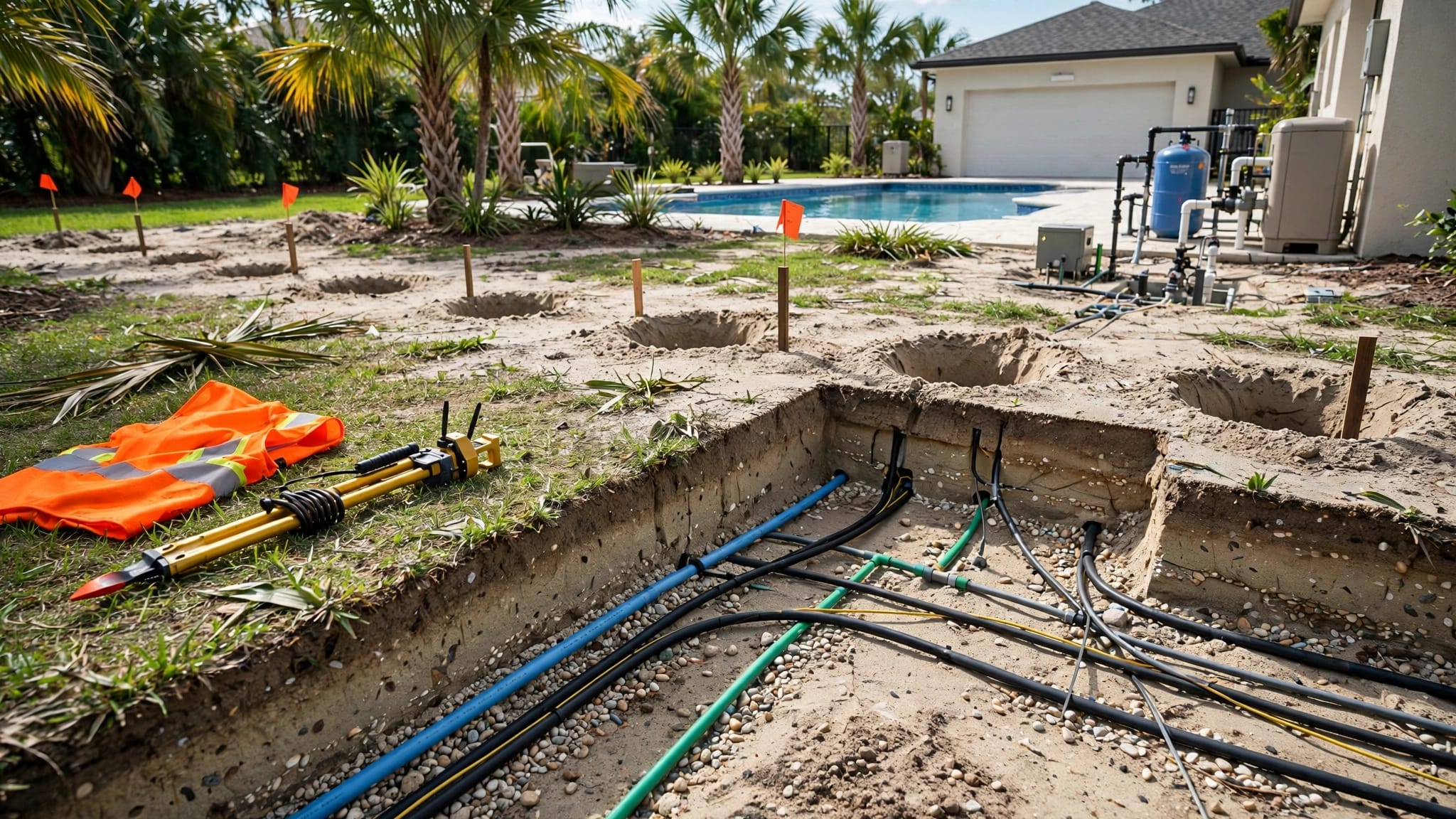
- Cleanouts, utility boxes, irrigation lines, and buried service routes.
Lee County Property Appraiser records can help you locate a parcel by address, owner, or STRAP number. Recorded deeds, plats, and easement documents may require a search through the Lee Clerk of Court's official records.
A map can guide your research, but it doesn't replace a boundary survey. Cape Coral GIS includes parcel, canal, infrastructure, zoning, and future-land-use information. It should be treated as a planning reference, not final proof of a retention pond boundary or fence location.
Check access rights before you draw the line
An easement gives another party a defined right to use or access part of the property. Nothing may be visible today, but a utility provider or drainage authority could need that area later.
A fence in or near an access area may need a gate, removable panel, or a different alignment. If the easement holder later needs access, you may have to remove part of the fence and pay for restoration under the applicable documents.
A practical example is a rear fence that crosses a drainage cleanout. Moving the entire run may waste usable yard space. A removable section or gate near the cleanout can preserve access without requiring a full fence removal.
The Cape Coral fence permit checklist covers the survey and plan details that help identify these conflicts before installation.
Confirm Cape Coral rules and HOA requirements
Once the property information is assembled, compare the proposed fence with current city requirements and your community documents.
The permit plan must show the real layout
Cape Coral's residential fence application calls for a plot plan showing street names, property lines, a north arrow, existing and proposed structures, distances to property lines, fence dimensions, and gate locations.
For a pond-side project, the drawing should also identify:
- The retention pond or drainage feature.
- Any drainage or utility easement.
- The proposed fence distance from the boundary.
- Gates and removable sections.
- Cleanouts, outlets, swales, and maintenance routes.
- Nearby seawalls, canals, sidewalks, or common areas, if present.
The current city guideline requires approval and permitting before construction. Do not assume a replacement fence is exempt because an older fence already exists nearby. Requirements can change, and the old installation may not show the legal line.
Height and waterway rules may affect the design
Cape Coral's residential fence rules list a maximum height of 6 feet. An 8-foot fence may be allowed where a residential property abuts commercial property, subject to approval.
For a single-family home or duplex, the fence cannot extend in front of the forward-most part of the primary structure. Corner lots can require extra attention because both street-facing sides may affect visibility.
Waterfront rules deserve separate confirmation. The city guideline requires open mesh above 3 feet in the rear 20 feet of lots abutting a waterway. That rule should not automatically be applied to every retention pond. Ask the city whether the pond is classified as a waterway for the parcel under review.
Your HOA may impose stricter requirements for height, color, finished sides, materials, or approval timing. HOA approval is separate from city permitting, so obtain written confirmation from both when required.
Plan for drainage and maintenance access
A fence should fit the yard without making future drainage work difficult.
Keep posts and panels out of restricted easements
If the proposed line crosses a recorded drainage easement, do not assume a particular material solves the problem. Cape Coral's rules can restrict fences in public easements and add limits where underground drainage facilities exist.
Some materials, including wood, aluminum, chain-link without slats, plastic, and vinyl, may be conditionally allowed in certain public utility or drainage easement situations. That does not make every fence location acceptable. The easement language and city review still control.
A fence contractor should see the survey, easement information, and drainage notes before preparing the final layout. If the fence needs to move several feet, that decision is easier before ordering panels or setting posts.
Make access usable after installation
Maintenance access should work for the equipment and people who may need it. A narrow pedestrian gate may not help if a drainage contractor needs to reach a cleanout or outlet with tools.
Place gates where they won't sit in a low spot or block runoff. Keep gate tracks, hinges, and latches away from standing water when possible. Tell the installer about every known cleanout, outlet, irrigation control, and utility box.
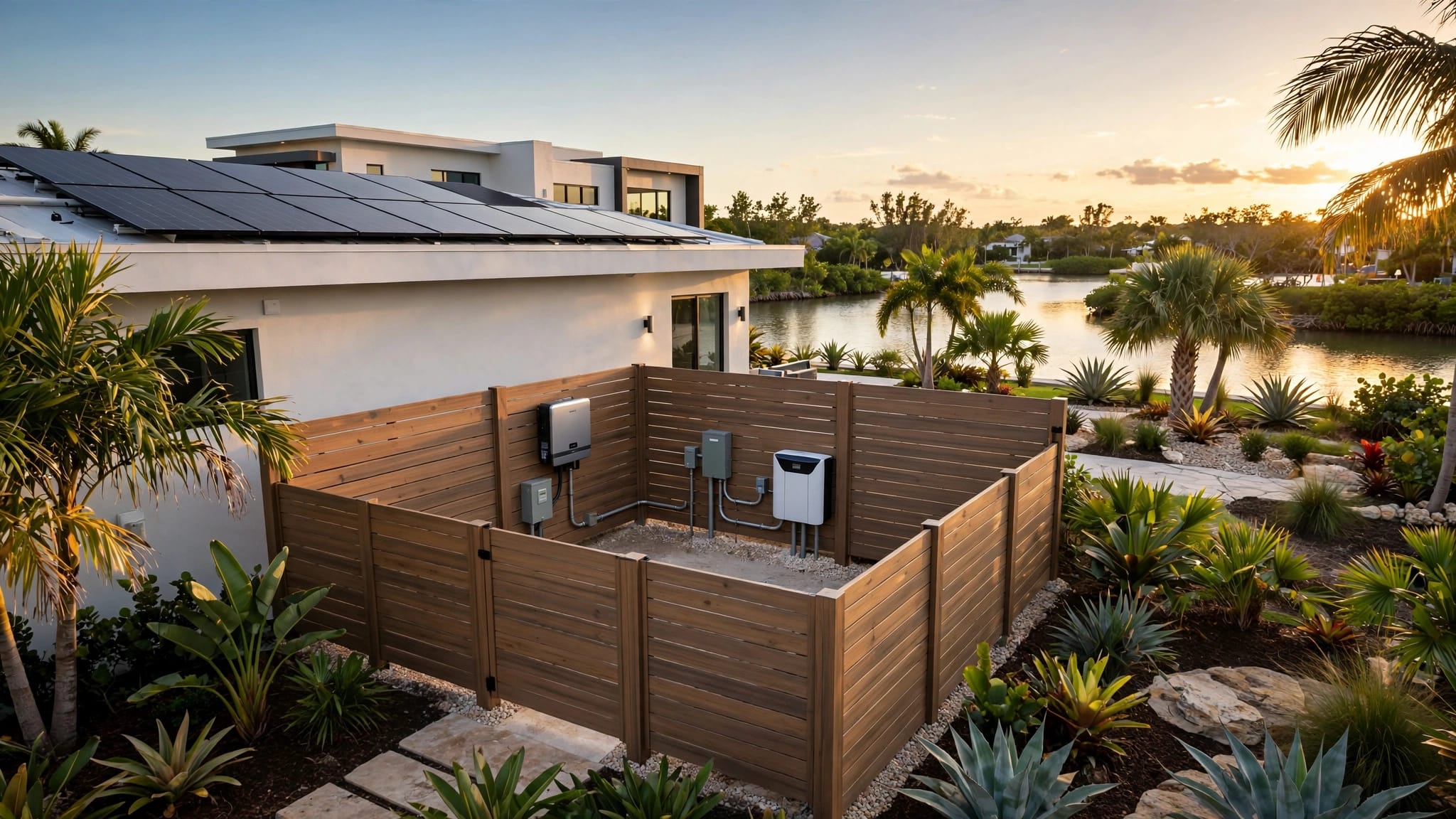
If a permanent gate would weaken privacy or create a difficult opening, a removable fence panel may be a better solution. Label its location in your property records so future owners and contractors know how to access it.
For sloped or wet ground, review guidance on proper ground clearance for Cape Coral fences. The final gap should follow the approved design, drainage needs, grade, and HOA requirements.
Choose the fence style after the site review
The best material depends on what the approved area allows and what the fence needs to do.
Open designs can suit pond-side areas
Aluminum fencing and chain link without slats allow more airflow and visibility than solid panels. They can be useful where you need to see the pond edge, preserve sightlines, or reduce the visual barrier near a drainage area.
Open pickets may also make inspection easier. A contractor or maintenance crew can see the ground, outlet, and fence posts without removing panels.
However, open construction does not override an easement restriction. The fence still needs an approved location, suitable footing details, and access planning.
Privacy materials need more site planning
Vinyl and wood can provide more screening for patios, pools, and rear living areas. Yet solid panels can catch more wind and may create a larger obstruction near drainage features.
Vinyl usually needs less routine maintenance than wood, while wood can offer a more flexible appearance around landscaping. Both still require correct post placement, drainage around footings, and enough clearance for grade changes.
Compare vinyl versus aluminum fencing in Cape Coral after the city, survey, HOA, and drainage checks are complete. A material comparison is useful only after you know where the fence can legally go.
Final Cape Coral pond fencing checklist
Use this checklist before signing off on the installation layout:
- Confirm that the property is inside Cape Coral city limits and identify the correct permitting authority.
- Find the latest survey, deed, plat, and recorded easement information.
- Verify the property corners instead of following an old fence or landscaping.
- Mark the pond, swale, French drain, outlet, cleanout, and visible drainage route.
- Check whether the pond is classified as a waterway under the applicable city rule.
- Identify utility, drainage, access, and right-of-way areas on the plan.
- Confirm whether any easement prohibits fencing or requires future access.
- Show fence distances, dimensions, gates, removable panels, and existing structures.
- Check the 6-foot residential height limit and front-yard placement rules.
- Obtain HOA approval if your property is governed by an association.
- Call 811 before digging and identify private irrigation, electrical, and drainage lines separately.
- Confirm post locations after the approved layout is marked on the ground.
- Keep written records of access gates, removable sections, cleanouts, and maintenance routes.
Key Takeaways
- The pond edge is not proof of your property line.
- A survey should identify boundaries, easements, drainage features, and access areas before installation.
- A retention pond is not automatically treated as a canal or waterway.
- Cape Coral's current rules and permit documents control the final fence location.
- A drainage easement can restrict fencing even when a material appears acceptable.
- Gates and removable panels can preserve maintenance access without moving the entire fence.
- Choose aluminum, vinyl, wood, or chain link only after the approved route is clear.
Frequently asked questions
Can I put a fence directly beside a retention pond?
Possibly, but the answer depends on the surveyed boundary, easements, drainage facilities, ownership of the pond area, HOA rules, and city approval. There is no single pond-side setback that applies to every Cape Coral property.
Does a retention pond count as a waterway?
Not automatically. Cape Coral has a specific open-mesh rule for portions of rear yards abutting waterways, but you should ask the city how it classifies your pond before applying that rule to your design.
Can a fence cross a drainage easement?
Do not assume it can. If the area is a drainage easement, current city regulations may prohibit a fence there. Other public utility or drainage easements may have conditional requirements, but material choice alone does not approve the location.
Should I install a gate for maintenance access?
A gate or removable panel may help when a cleanout, outlet, drainage line, or easement requires future access. Its size and position should match the actual maintenance need, and it should appear on the permit plan.
Does my neighbor's fence prove where I can build?
No. Older fences may sit on an incorrect boundary or occupy an area that current rules no longer allow. Use your survey and recorded property information instead.
Conclusion
Good Cape Coral pond fencing planning begins with the line beneath the grass, not the fence sample in the showroom. Confirm the boundary, drainage easements, pond classification, maintenance access, city rules, and HOA requirements before choosing a layout.
When those details are settled first, your contractor can place posts with fewer surprises and select a material that fits the site. Around a retention pond, the best fence plan protects privacy and property use while leaving water and maintenance access where they belong.