August 18, 2026
A manual gate should pass a simple test before you plan automation: you must be able to open and close it smoothly by hand. An automatic gate opener adds movement and force, but it won't repair a sagging gate, weak post, dragging wheel, or misaligned latch.
For homeowners in Cape Coral, Fort Myers, Estero, and Bonita Springs, preparation includes rain, drainage, salt air, driveway slope, and local rules. Fix the gate first, then plan power, controls, and safety equipment around its condition.
Start with a Gate That Moves Freely
An opener needs a gate with low, consistent resistance. Start with the operator area clear and the gate unlocked.
Test the Full Travel
Open and close a swing gate by hand through its full arc. It shouldn't scrape pavement, bind near a post, or fall toward the opening. A double gate should meet at center without one leaf pushing the other.
For a sliding gate, move the panel across its entire opening. Check the track, rollers, end stops, and ground clearance. Remove dirt and vegetation, but don't use an opener to pull a gate through damage. Record the gate width, travel distance, and points of resistance.
Inspect Posts, Hinges, and Latches
Posts should stay plumb as you move the gate. Loose concrete, base movement, cracked welds, worn rollers, and hinge play need repair. A latch that works only when you lift or shove the gate will create problems for an operator.
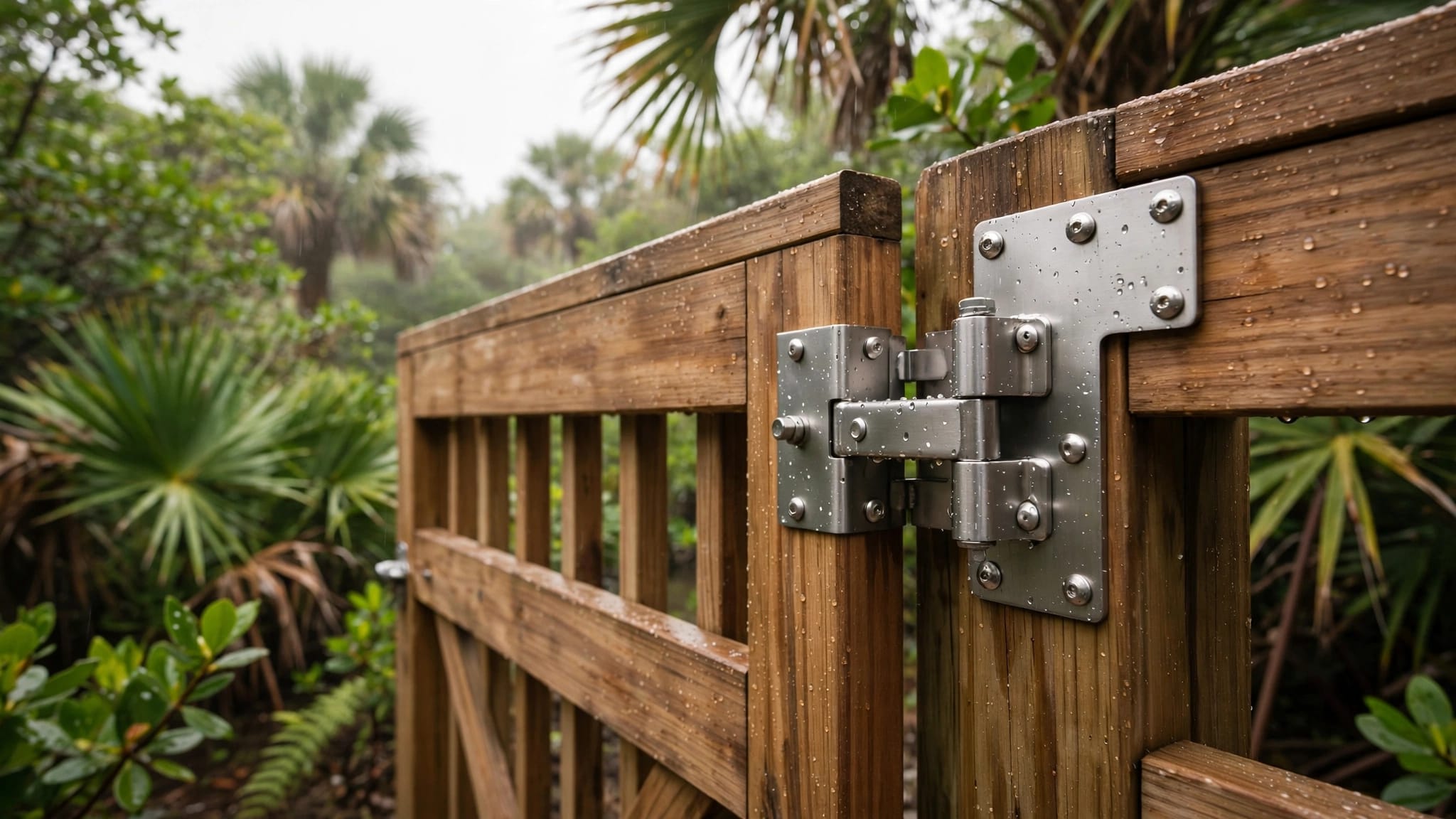
Replace rusted or undersized hardware with parts suited to the gate and coastal exposure. Salt-resistant gate hardware can help you compare fasteners, hinges, and latches. Don't remove a spring, counterweight, or tensioned component yourself. It may contain stored energy.
Choose Preparation Based on Gate Type
The setup depends on whether the panel swings on hinges or travels beside the fence. Review choosing between sliding and swing gates when the existing layout limits your options.
Preparing a Swing Gate
Measure the clear opening and space inside the property. A swing gate needs room for its full arc, including operator brackets. Keep vehicles, landscaping, walls, utility boxes, and slopes outside that path.
Hinges and posts carry the gate's load, so a tall or heavy panel may need reinforcement. Install solid open and closed stops before the operator arrives. If the gate opens toward a sidewalk or roadway, check local requirements first. Wind adds force to broad privacy gates in exposed Southwest Florida locations.
Preparing a Sliding Gate
A sliding gate needs a clear fence line beside the opening for full travel. The track must stay level, and rollers should carry the gate without wobbling or binding. Cantilever systems also need strong support and room to move.
Plan drainage around the track. Sand, leaves, mulch, and standing water can interfere with manual operation. Add positive end stops and an anti-lift arrangement suited to the design. The panel should roll freely before anyone selects an operator.
Plan Power for an Automatic Gate Opener
Preparation is also a site-planning job. The future automatic gate opener may use AC power or a solar setup, and each choice affects trenching, conduit, equipment location, and maintenance.
Map the Power Route
For AC power, identify the closest practical source and check whether the route crosses concrete, pavers, irrigation, drainage, or the driveway. Mark underground utilities before digging by calling 811. Electrical connections, circuits, disconnects, grounding, and outdoor conduit should follow local requirements and be handled by a qualified electrician.
Solar power still needs a clear panel location, protected cable routing, and a suitable battery location. Trees, palms, and new landscaping can shade a panel later. Review solar-powered gate openers in Florida before choosing an off-grid layout.
Plan Controls and Emergency Release
Decide where a keypad, remote receiver, intercom, vehicle sensor, or exit control could go without placing users in the gate's path. A driveway control should let a driver stop safely before the panel moves. Keep pedestrian access separate when the property layout allows it.
Every automated gate needs a reliable way to open during a power failure or equipment problem. Plan a manual release that authorized users can reach without entering a pinch zone. Ask how emergency responders will access the property, and confirm that local fire or access rules don't require a specific arrangement.
Gate hinges, rollers, closing edges, and meeting points are pinch hazards. Keep children and pets away during testing. Never reach through a moving gate, bypass safety sensors, or work on electrical equipment while energized.
Finish the Gate Work Before Installation
Preparation and installation are separate stages. Preparation includes repairing the frame, setting or reinforcing posts, correcting the track, confirming stops, planning conduit, and checking permits or HOA rules. It also includes selecting an operator based on the gate's size, weight, travel, frequency of use, and site conditions, rather than choosing equipment by appearance alone.
Installation comes later. It involves mounting the operator, connecting power and controls, fitting safety devices, setting travel limits, and testing force and stopping behavior. A contractor should test the gate under normal conditions and after a power interruption.
Check city requirements before construction. Cape Coral, Fort Myers, Estero, and Bonita Springs may have different permit, setback, easement, sidewalk, or pool-barrier rules. The Cape Coral fence permit requirements page includes gate locations, swing direction, hardware, and site-plan details that may affect your preparation.
Conclusion
A future automatic gate opener works best when the manual gate already feels solid, balanced, and easy to move. Repair drag, sag, weak posts, poor drainage, and worn hardware before planning motors or controls.
Then choose the preparation that fits a swing or sliding design, map power and emergency access, and leave electrical connections and final safety testing to qualified professionals. Good automation starts with a good gate.