August 18, 2026
A beautiful fence can become a weekly obstacle when your garbage cart can't reach the curb. The right fence access solutions let you protect your yard without making every collection day a struggle.
In Southwest Florida, pickup procedures vary between Cape Coral, Fort Myers, Estero, Bonita Springs, and nearby communities. Manual service and automated collection also require different gate arrangements. Start with the collection method, then plan the fence, gate, and bin route around it.
Fence Access Solutions for Curbside Garbage Pickup
Your fence should support the way your household uses the property. A gate that works for people may still be difficult to use with a full cart, especially on a narrow side yard or uneven walkway.
Start with the collection method
Manual curbside pickup usually requires a resident to roll the cart through a gate and place it near the street. Depending on the local provider, collection workers may empty the container by hand and leave it at the curb. Your plan should make that path easy in both directions.
Automated collection uses a truck arm to lift and empty a cart. In many service areas, the cart must sit outside the fence at the curb, with room around it for the truck. A gate may still matter if you store the cart inside the yard, but the collection vehicle won't enter your property.
Check your city's current collection instructions and ask the waste provider about cart placement before finalizing the fence layout. Rules can cover container size, setout times, side clearance, and obstructions.
Map the route before installing posts
Walk the route with your actual cart. Measure the narrowest point beside the house, around the air-conditioning equipment, and through the proposed gate. Check the path when the cart is full because weight makes turns and slopes harder.
A direct route usually works better than a gate at the back corner of the yard. Keep the opening away from irrigation heads, raised pavers, tree roots, and areas that collect rainwater. If the cart must cross a driveway, position the gate so the open leaf doesn't interfere with vehicles.
A gate can have enough width on paper and still fail when its swing blocks the cart's turning space.
Manual Curbside Pickup Gate Options
Manual collection gives homeowners more control over bin storage. You can keep containers behind the fence and roll them out on collection days, but the gate must handle repeated use without becoming a daily annoyance.
Choose a practical walk gate width
A basic pedestrian gate may work for people, but garbage carts need additional clearance. A 36-inch opening can fit ordinary foot traffic, while a 42- to 48-inch opening is more comfortable for moving carts, bicycles, or lawn equipment. The best width depends on the cart, path, posts, and available yard space.
Review these privacy fence gate planning ideas when a narrow lot limits your options. A wider gate may require a different post location, but a gate that feels easy to use is often worth giving up a small amount of fence line.
Use a latch that you can reach while holding the cart. A hold-open feature can help on windy days, but it should not allow the gate to swing into a sidewalk, street, neighboring property, or parked vehicle.
Consider a double gate for larger access
A double gate makes sense when the same opening must handle carts, mowers, bulky items, or occasional maintenance equipment. It creates more clearance than a standard walk gate, yet it needs enough room for both leaves to swing without hitting walls or landscaping.
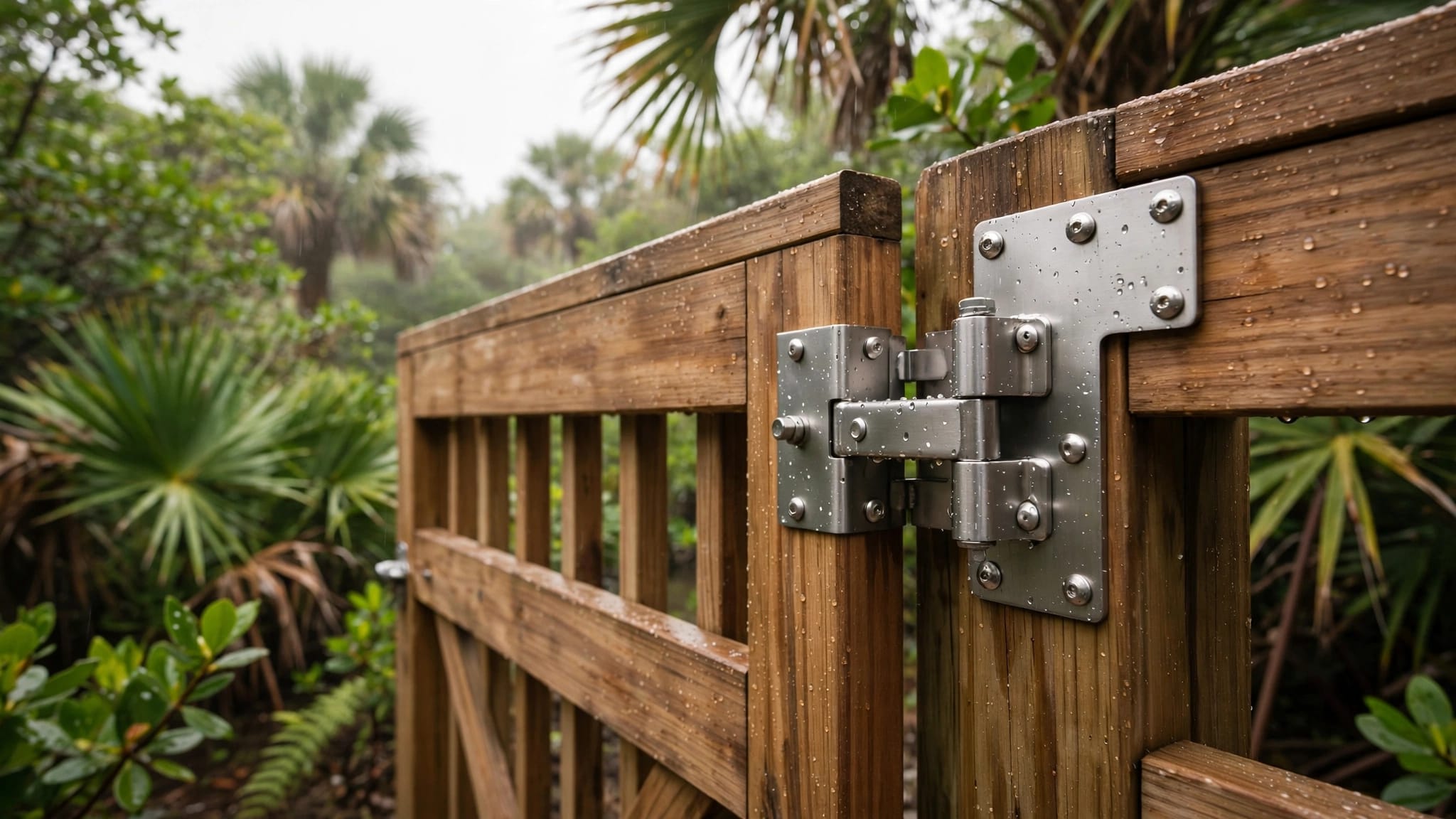
Double gates require careful alignment. Wide leaves place more load on the hinges and posts, so the contractor should use suitable hardware and a strong footing for the gate posts. Ask how the gate will stay closed during heavy wind and how you can open it when carrying a full cart.
A removable fence panel may help with rare repairs or large deliveries, but it is inconvenient for weekly garbage service. For regular access, a properly placed gate is the better choice.
Automated Collection Needs Clear Curb Space
Automated pickup changes the main concern. The truck needs room to operate at the street, and the cart often needs to remain outside the fence during collection.
Keep carts away from obstacles
Place carts according to the local provider's instructions. A fence, mailbox, parked vehicle, utility pole, low branch, or second container can interfere with the truck arm. The required clearance differs by equipment and municipality, so don't rely on a neighbor's setup as your guide.
If your community requires carts at the curb, design the fence so residents can move them through a convenient gate. Avoid a route that forces the cart through a narrow passage and then around a parked car. The short path from storage area to curb should stay usable after rain.
Some homeowners build a small screened area for bins. That enclosure should have a wide opening and enough interior space to remove the cart without lifting it over a fence. Screening also needs to comply with local fence, drainage, and HOA requirements.
Plan for collection days and weather
Southwest Florida rain can make a narrow route muddy or slippery. A stable walking surface helps residents move heavy carts safely. Keep gate hardware above standing water and select components that fit the fence material and local conditions.
Automated carts also need a place to sit when they aren't at the curb. Don't position the storage area where a gate leaf, pool equipment, or outdoor furniture blocks the cart. If the fence screens the bins from view, leave enough room to pull them out without scraping the posts.
Match the Gate to the Fence Material
The material affects visibility, maintenance, gate weight, and the amount of screening around your carts. Access planning should happen before you choose the final style.
Privacy fences need deliberate openings
Vinyl and wood privacy fences can hide carts and improve backyard separation. They also remove visibility, so residents may not see whether a gate is fully open or whether a cart is catching on the latch.
A privacy gate should have enough clearance for the container's wheels and handle. Leave room for the gate to open fully, even if the fence borders a narrow side yard. When a home sits close to its neighbor, these narrow-yard privacy fence ideas can help balance screening with everyday access.
Wood gates may need periodic care as the material weathers. Vinyl avoids painting, but the posts, hinges, and latch still need inspection. In either case, a sagging gate can turn a simple cart route into a frustrating chore.
Open styles can simplify bin handling
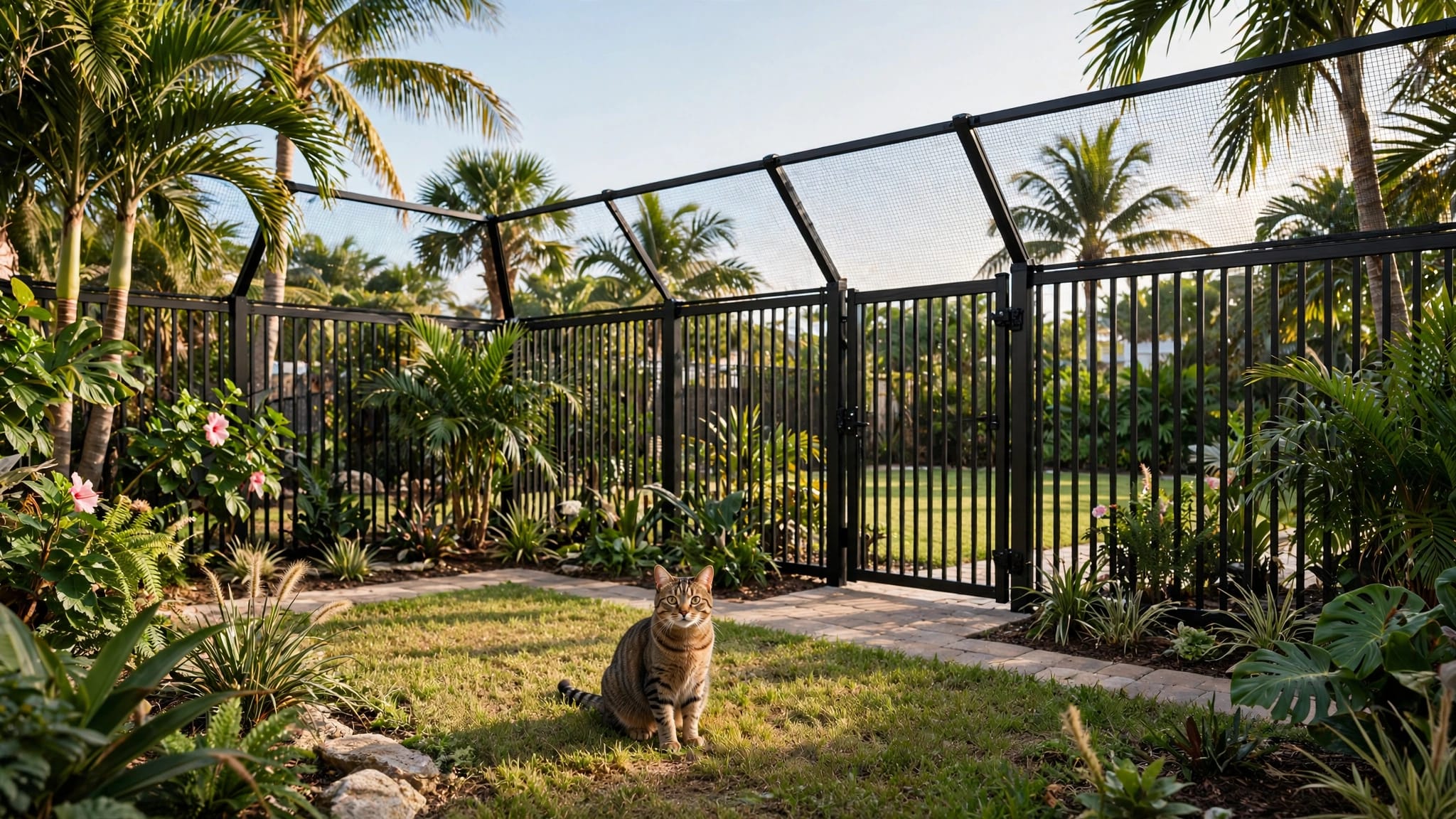
Aluminum and chain link fences provide more visibility around gates and storage areas. That can make it easier to spot an open latch, a blocked path, or a cart that needs to move before pickup.
Chain link works well when visibility and airflow matter more than full privacy. Aluminum can provide a finished appearance with a lighter visual profile. Louvered designs can offer partial screening while retaining airflow, but the access opening still needs to fit the cart.
The gate post matters as much as the panel. A heavy or frequently used gate can shift if the post isn't set and aligned correctly. Ask the contractor how the posts, hinges, latch, and ground conditions affect long-term operation.
Check Local Rules Before Finalizing the Layout
A fence plan has to work for garbage pickup and meet the requirements that apply to your property. Those requirements aren't identical across Southwest Florida.
Verify city, utility, and HOA requirements
Cape Coral homeowners should review the current fence permit process before construction. The plan may need to show the fence location, height, gates, widths, property lines, and easements. This Cape Coral fence permit checklist covers details that can affect gate placement.
Fort Myers has its own permit considerations, while Estero and Bonita Springs may follow different city or county procedures. Review the applicable rules for your address instead of assuming a fence approved nearby will meet the same standards.
HOA documents may also control fence height, materials, colors, gate locations, and bin screening. Utility and drainage easements can limit where posts go. A gate placed over an access area may create a problem later, even if it improves the cart route today.
Plan for tight side yards
A narrow side yard can leave little room for a cart, gate swing, and installation access. Before work begins, mark the fence line and walk the proposed route with the contractor. Point out walls, air-conditioning units, irrigation, pavers, trees, and utility equipment.
If installation requires temporary access through a neighbor's yard, discuss that need before materials arrive. These Cape Coral fence access agreements address practical concerns such as equipment passage, gate placement, and neighboring property conditions.
A small change in the fence line may create a better route, but it can also affect drainage, maintenance, or usable yard space. Review the whole path before approving the final drawing.
A Simple Access Plan for Your Contractor
Before the fence layout is approved, confirm these details:
- Identify whether your provider uses manual or automated collection, then follow its current cart placement instructions.
- Measure the cart, gate opening, path width, and turning area instead of estimating by eye.
- Decide where the cart will stay between collection days and whether that location needs screening.
- Confirm that the gate swing avoids vehicles, sidewalks, pool areas, equipment, and neighboring property.
- Mark easements, drainage paths, utilities, irrigation, and other features that could affect post placement.
- Ask how the contractor will build the gate for repeated use, local weather, and the weight of the selected material.
- Check city, county, utility, and HOA requirements before ordering materials.
Give the contractor a photo or sketch of the cart route if the yard has tight access. A clear plan helps keep the gate useful after the fence is complete.
Conclusion
Good fence access solutions begin with the garbage cart's actual route. Manual pickup usually calls for a convenient gate and a clear path, while automated service depends on proper curb placement and open space for the collection truck.
Measure before installation, verify local rules, and coordinate gate width with the fence material and yard layout. A well-planned fence can protect privacy and property value without turning every garbage day into a chore.