August 17, 2026
Choosing between solar gate openers Florida homeowners can install and utility-powered equipment comes down to one site question: can the system get dependable power after a storm? Solar can avoid a long trench across a driveway, while an AC opener usually delivers steadier performance when power is already nearby.
In Cape Coral, Fort Myers, Estero, and Bonita Springs, the decision also includes heat, salt air, heavy rain, shade, vegetation, and utility outages. The right choice depends on the gate's size, traffic, sun exposure, and access to electrical service. Start with how each system operates.
What solar gate openers Florida homeowners need to know
In this comparison, an electrical gate opener means a system connected to utility power. A solar opener uses a panel and battery, although both systems run an electric motor.
Solar trades trenching for battery management
A solar panel charges a battery that powers the opener, controls, keypad, receiver, and safety sensors. The gate can keep operating during a utility outage because it draws energy from the battery. However, the battery has a limited reserve, and several cloudy days or heavy shade can reduce available cycles.
LiftMaster's LA412UL is a 12VDC solar residential linear actuator package. LiftMaster also sells a 210-watt, 24-volt solar kit for access systems that need more charging capacity. Mighty Mule's FM123 is a 10-watt solar panel kit, and light-duty residential bundles commonly pair a small panel with a 12-volt battery.
Those examples show why solar systems need proper sizing. A small accessory panel may suit a lightly used single swing gate, but a wide driveway gate, keypad, or commercial entrance can require a larger battery and panel setup.
A solar opener is still a battery-powered opener. The panel recharges the battery, and shade, salt film, or storm debris can reduce that reserve.
AC electric operators favor nearby utility power
An AC opener receives power through a dedicated electrical route, usually with conduit running to the operator. It doesn't depend on daily sunlight, so performance stays consistent when the gate receives frequent use.
The tradeoff is installation work. A new circuit may require trenching, electrical routing, and coordination with an electrician. Utility outages also stop the gate unless the system includes a backup battery or another power source.
AC equipment often fits heavier gates, busy driveways, and commercial entrances. Still, the motor must match the gate. Extra power won't correct a sagging frame, weak hinges, poor alignment, or excessive wind load.
Florida conditions that should guide the choice
Solar gate openers Florida properties can support need more than a sunny forecast. The panel location, battery enclosure, gate structure, and surrounding landscaping all affect real-world performance.
Intense sun helps charging, but heat ages batteries
Southwest Florida gets strong sunlight, which can help a properly positioned panel recharge its battery. That advantage disappears when palms, rooflines, privacy fences, or growing shrubs shade the panel during key parts of the day.
Heat is the other side of the equation. High temperatures can shorten battery life and speed up wear on plastic housings, wire insulation, and exterior finishes. A shaded, ventilated battery location often works better than a sealed box sitting in direct afternoon sun.
Panel placement also needs storm awareness. After a hurricane or severe thunderstorm, check for a shifted bracket, cracked panel, damaged cable, or debris covering the surface. A system that worked well before the storm may charge poorly afterward.
Rain, salt, wind, and vegetation affect both systems
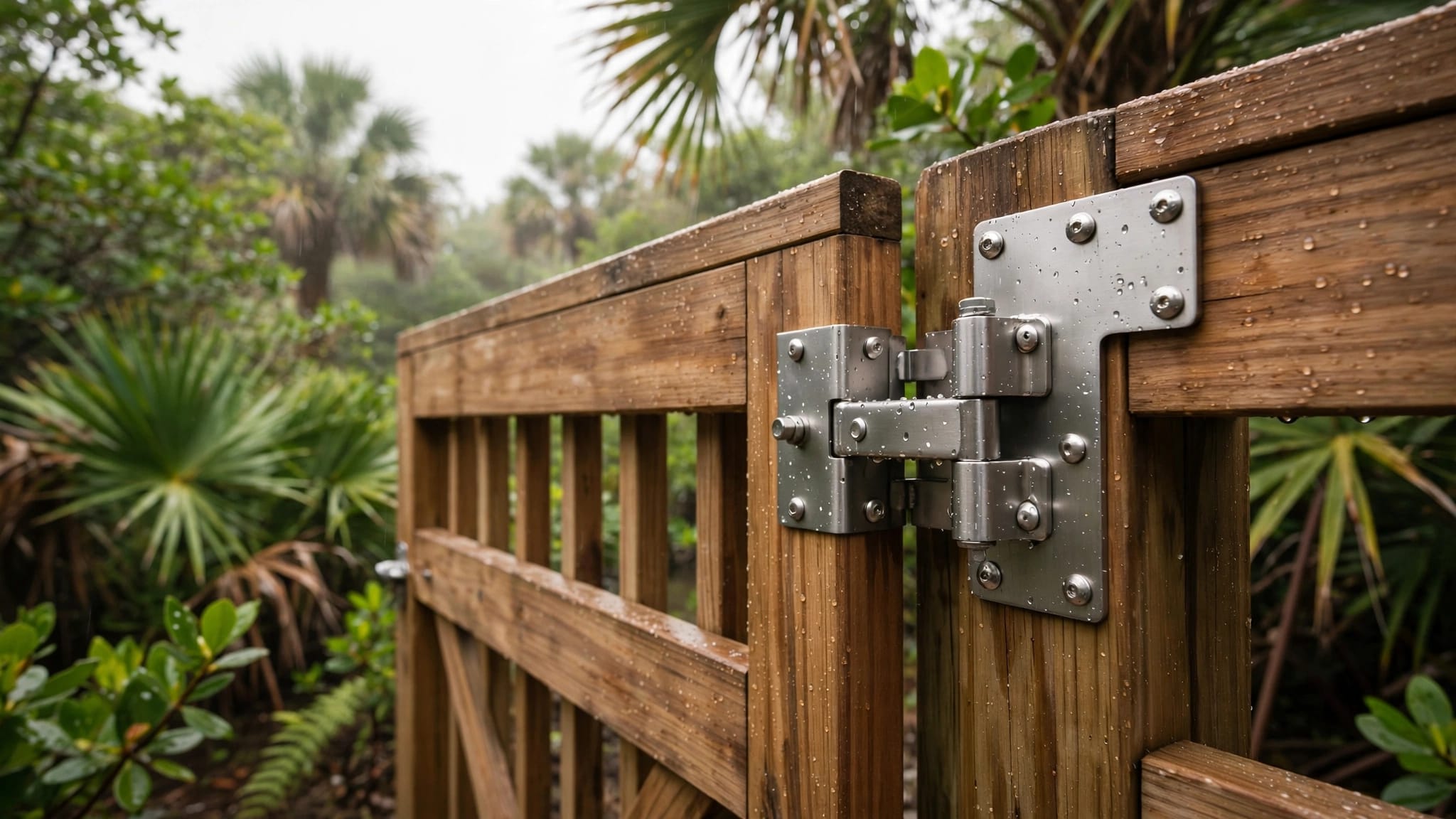
Humidity and salt air can corrode terminals, hinges, brackets, fasteners, control boxes, and exposed connectors. Coastal and canal-side properties need corrosion-resistant hardware and sealed electrical connections. Royal Fence's guide to salt-resistant gate opener options offers additional guidance for Cape Coral conditions.
Heavy rain calls for good drainage and protected mounting. Keep control boxes out of low spots, prevent water from collecting around posts, and use properly protected electrical connections for AC installations. Ask how the installer will protect any new circuit and whether local electrical requirements call for GFCI protection.
Wind affects the gate itself more than the power source. A broad solid gate catches wind, placing extra force on posts, hinges, and the operator. Strong gusts can also move debris into the gate's path or damage safety sensors.
Vegetation creates two separate problems. Vines and grass can interfere with hinges or wheels, while leaves and palm fronds can shade solar panels and trigger photo-eye faults. Regular trimming helps either type of opener work correctly.
Solar vs. electric gate openers in Florida
This quick comparison shows where each option usually fits.
| Factor | Solar opener | AC electric opener |
|---|---|---|
| Power source | Solar panel charging a battery | Utility power through wiring or conduit |
| Outage performance | Can continue operating while battery charge remains | Stops unless backup power is installed |
| Installation | Often avoids a long electrical trench | Usually needs an electrical route to the gate |
| Best site | Remote gate with strong sun and moderate use | Gate near reliable utility power |
| Main Florida concern | Shade, battery heat, and panel damage | Outages, wiring exposure, and water intrusion |
| Frequent traffic | Requires careful battery and panel sizing | Usually handles steady cycles more easily |
| Maintenance | Panel, battery, wiring, alignment, and sensors | Wiring, battery backup if present, alignment, and sensors |
The practical difference is simple: solar reduces dependence on the grid, while AC reduces dependence on sunlight and battery capacity. A battery-backed AC opener can provide outage protection, but it adds equipment and maintenance.
If you're comparing solar gate openers Florida installers recommend, ask what happens after three or four cloudy days, not only how the system performs on a clear afternoon.
Match the opener to the gate and daily use
Power selection should follow the gate design. An opener is only as reliable as the structure it moves.
Gate weight, width, and wind load come first
Measure the gate's width and estimate its weight before choosing an operator. Swing gates with linear actuators need suitable hinge placement, solid posts, and enough clearance for the arm to move through its full cycle.
A tall privacy gate may weigh more and catch more wind than an open aluminum design of the same width. Wood can also absorb moisture and gain weight over time. Aluminum often reduces weight, but the frame still needs proper bracing and hardware.
Sliding gates have different requirements. Their operators must match the gate's wheels, track, travel distance, and safety equipment. Soil movement, roots, gravel, and standing water can affect the track and increase motor strain.
The opener won't solve structural problems. If the gate drags, sags, binds, or swings in the wind, fix those conditions before adding automation.
Traffic levels change the power calculation
A private home may open the gate a few times each day. A small business, apartment entrance, equipment yard, or shared driveway may cycle dozens of times. Each cycle uses battery power on a solar system.
That makes duty cycle a major decision. A solar opener can work well for moderate residential traffic when the panel gets reliable exposure. Busy entrances usually favor utility power, a larger solar package, or a professionally designed battery system.
Access devices also add demand. Keypads, card readers, remotes, loop detectors, intercoms, and photo eyes draw power or require additional wiring. Tell the contractor how many users and vehicles the gate will handle each day.
For commercial properties, access control and a manual release deserve the same attention as the motor. Royal Fence's information on commercial security fence options covers related planning issues, including outage planning and local site reviews.
Installation, permits, and maintenance in Southwest Florida
A good installation starts with the property, not a product box. The contractor should review the gate opening, posts, driveway slope, drainage, vegetation, sun exposure, and available utility routes.
Plan the site before ordering equipment
For solar, identify a panel location with clear exposure and a protected route for the panel cable. Avoid placing the panel where a palm, new tree, fence, or roof will shade it as landscaping grows.
For AC, locate the closest practical power source and determine whether trenching crosses concrete, pavers, irrigation lines, drainage features, or a driveway. Mark utility lines before digging. The site may need a new circuit, conduit, disconnect, or weather-protected connection.
Local rules vary among Cape Coral, Fort Myers, Estero, Bonita Springs, Lee County, and nearby jurisdictions. New electrical work, structural changes, driveway modifications, or work near an easement can trigger different reviews. Check with the applicable city or county building department, and review HOA rules before installation.
Ask the contractor how the operator and safety equipment address UL 325 requirements. Photo eyes, obstruction detection, stop settings, emergency release, and clear travel space all matter for safe operation.
Build maintenance into ownership
Both systems need routine attention. Keep hinges, wheels, tracks, and moving hardware clean and properly lubricated. Check gate alignment and confirm that safety sensors stop or reverse movement when they detect an obstruction.
Solar systems add several tasks. Clean salt film, pollen, dust, and leaves from the panel. Inspect the battery, cable jacket, mounting bracket, and control box after major storms. Watch for a gradual drop in daily cycles, which can indicate battery aging, shade, or a charging fault.
AC systems need less sunlight management, but they still require inspection of wiring, control boards, backup batteries, and weather seals. A backup battery also has a service life, so outage protection isn't permanent without testing and replacement.
How to choose solar gate openers Florida sites can support
A site survey usually makes the decision clearer than a product comparison.
Solar is a strong fit when
Solar makes sense when the gate is far from utility power or trenching would disturb a finished driveway. It also suits properties that need basic operation during outages and have a panel location with reliable sun.
Moderate residential use is easier to support than constant traffic. The installer should size the panel and battery for the gate's weight, cycle count, access devices, and seasonal weather. A system that works for a lightly used side driveway may not suit a busy entrance.
Homeowners searching for solar gate openers Florida properties can support should ask for a charging plan, not only the panel's wattage. The plan should account for shade, battery location, cloudy weather, and storm recovery.
AC is usually better when
Choose utility power when the gate sits near an existing electrical source and receives frequent use. AC also makes sense when the site has heavy shade, limited panel visibility, or a gate that needs a high cycle capacity.
Adding a backup battery can reduce outage problems, but the system still depends on a sound electrical installation. Keep the control box and connections protected from standing water, irrigation spray, and salt exposure.
Before accepting a quote, compare the complete installed scope. It should identify the operator, battery, panel or electrical route, safety sensors, access controls, manual release, posts or structural changes, and maintenance expectations. For a local cost reference, review this gate budget breakdown for Southwest Florida homes.
Conclusion
The best gate opener for a Southwest Florida property depends on power access, sunlight, gate design, traffic, and storm conditions. Solar can keep a properly sized system operating during utility outages, while AC offers consistent cycles when reliable power is close by.
Heat, salt air, rain, vegetation, and wind deserve attention in either installation. Choose the system that matches the actual gate and site, then protect it with sound hardware, safe controls, regular inspections, and a clear plan for storm recovery.