March 8, 2026
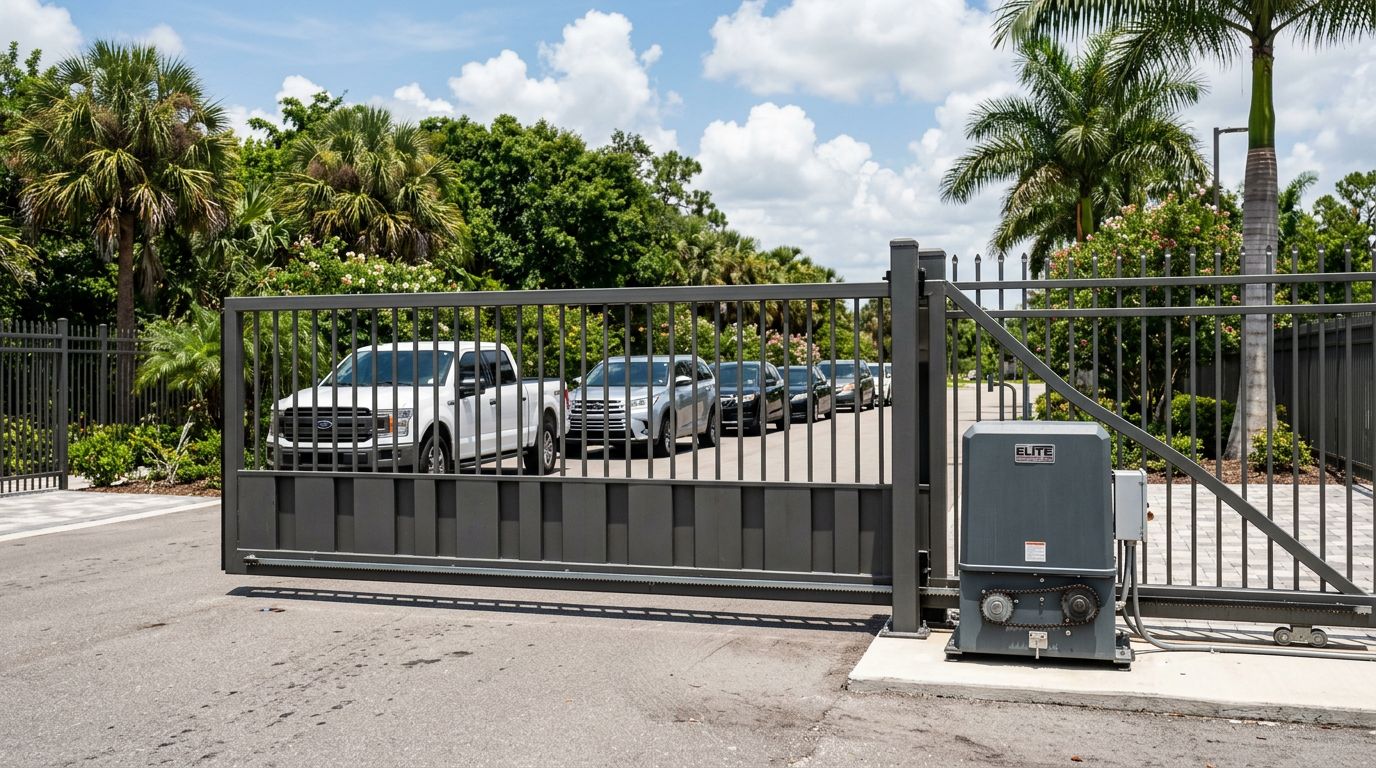
If you live in Cape Coral, you already know the truth: metal doesn't just "age" here, it gets tested. Cape Coral gate openers sit outside all day, breathing humid air, taking rain sideways, and collecting a fine layer of salt that you can't always see.
The good news is you can buy an automatic gate opener that lasts in this climate. The trick is picking it like you'd pick a boat part, not like you'd pick a garage door opener.
Below is a practical buyer-guide for homeowners and HOAs, plus a maintenance plan that fits Florida storms and coastal wear.
Why salt air and storms beat up gate operators in Cape Coral
Salt air acts like a slow leak in your system. It gets pulled into tiny gaps, then it holds moisture against metal and electronics. Add daily humidity and afternoon downpours, and you get corrosion plus electrical headaches.
Most failures start in predictable places:
- Hardware and fasteners : Hinges, brackets, and gate arm bolts rust first, especially near sprinklers.
- Enclosures and seams : A "weather-resistant" box still fails if it traps water inside.
- Control boards : Moisture and salt film can corrode terminals and cause random faults.
- Limit switches and sensors : Wet grime on magnetic or mechanical parts can confuse the operator.
Lightning is the other big factor. Southwest Florida sees frequent storms, and long runs of low-voltage wire to keypads and photo eyes can act like antennas. A nearby strike doesn't need a direct hit to damage a controller.
The fastest way to shorten opener life is simple: let salty moisture sit on it, then ignore the first signs (surface rust, slow movement, intermittent sensor trips).
If your gate ties into an HOA fence line or a street-facing entry, it's also smart to align the project with community rules early. Many delays happen before installation day, not after. This guide to Cape Coral HOA fence rules explains what usually gets approved quickly and what tends to get kicked back.
What to look for in a gate opener that survives salt air
When you compare Cape Coral gate openers , don't start with "horsepower" or a flashy app. Start with protection from corrosion, water intrusion, and surges. Then match performance to your gate.
Here's a quick way to read a spec sheet with coastal life in mind:
Coastal durability criteria that actually matter
Housing and finish : Look for powder-coated metal designed for outdoor use, or non-corroding housings where appropriate. Avoid thin painted steel that chips easily.
Sealing and drainage : Check for gasketed covers, sealed conduit entries, and a design that won't trap water. "Sealed" is great, but "sealed with no way to vent condensation" can be a problem too.
Board protection : Ask whether the control board has conformal coating or other corrosion protection, and whether the enclosure keeps salt air off terminals.
Duty cycle : Duty cycle tells you how hard the motor can work without overheating. This is crucial for communities, short-term rentals, and homes with lots of daily use.
Surge protection and grounding provisions : The opener should support proper grounding and surge protection on power and low-voltage accessory lines.
One table makes the shopping easier. Use it to compare features across quotes and submittals.
| Material or feature to compare | What it helps with in salt air and storms | What to verify before you buy |
|---|---|---|
| Stainless or corrosion-resistant fasteners | Slows rust at brackets, arms, and hinges | Grade/type, and where it's used (gate hardware matters most) |
| Powder-coated or corrosion-resistant housing | Reduces surface corrosion and paint failure | Coating quality, thickness, and touch-up process |
| Gasketed enclosure and sealed wire entries | Keeps wind-driven rain out | Gaskets, conduit fittings, and cable glands |
| Board protection (coating, sealed terminals) | Prevents corrosion-driven faults | How terminals are protected, not just "weatherproof" claims |
| High duty-cycle rating | Handles HOA traffic and peak hours | Cycles per day, and whether it's rated for continuous use |
| Battery backup option | Keeps access during outages | Run time, battery type, and replacement cost |
| Surge protection compatibility | Reduces lightning-related damage | Whole-system plan (AC power, low-voltage lines, grounding) |
The takeaway: for Cape Coral, you're buying a system, not a box. The operator, accessories, wiring methods, and hardware all need to fit the environment.
Match the opener to your gate size, weight, and traffic
Salt air destroys weak points faster, so the wrong opener size shows up as strain, slow movement, and early wear. Start by matching the operator type to the gate design, then match the operator class to daily use.
Swing vs slide (and why it matters near canals)
Swing gates look simple, but wind load and hinge alignment matter a lot. A sagging swing gate makes an opener work harder every cycle.
Slide gates often behave better in wind, but they demand a solid track or a well-designed cantilever system. In heavy rain, drainage around the track becomes a real maintenance item.
Residential use vs HOA or community entrances
A typical home might see a handful of cycles per day. A small community can see dozens to hundreds, especially during rush hours. That's where duty cycle and heat management stop being "nice to have."
Here's a practical way to decide what to request in a quote:
- Light residential (few cycles, one household): prioritize corrosion protection, safe accessories, and battery backup.
- Busy residential (multi-driver homes, frequent guests): move up in duty cycle and focus on stronger hardware and better surge protection.
- HOA/community (many cycles, peak traffic): spec higher duty cycle, commercial-grade accessories, and a plan for service response.
Safety features and code-adjacent best practices (not legal advice)
Automatic gates can injure people when sensors are missing, miswired, or ignored. As you compare proposals, look for an operator that supports UL 325 entrapment protection , plus redundant safety devices.
At a minimum, many setups use:
- Photo eyes to stop or reverse when something crosses the path.
- Safety edges on pinch points (leading edge, posts, and other trap zones).
- Clear signage so guests don't tailgate or walk through moving gates.
If your gate ties into a new fence layout, permit steps can come into play. For a plain-English overview of the process, see this Cape Coral fence permits guide. It's not gate-specific, but it helps set expectations for site plans, approvals, and timing.
A maintenance schedule that keeps gate openers reliable year-round
Think of maintenance like rinsing sand off a bike chain. Skip it, and everything wears faster. In salt air, small habits beat "big repairs later."
Before the schedule, one rule saves a lot of money: keep sprinklers off the operator and gate hardware. Constant spray is like giving corrosion a daily ride to work.
Here's a simple schedule HOAs and homeowners can follow.
| Timing | What to do | Why it matters in Cape Coral |
|---|---|---|
| Monthly | Rinse exterior surfaces with fresh water, wipe salt film, clear leaves from enclosures | Removes salt that holds moisture and speeds corrosion |
| Quarterly | Inspect hinges, brackets, and fasteners for rust, tighten as needed, check gate alignment | Misalignment increases motor strain and shortens life |
| Quarterly | Test photo eyes and edges, verify smooth stop and reverse behavior | Dirty sensors cause nuisance stops or unsafe operation |
| Every 6 months | Check weather seals, conduit entries, and any exposed wire junctions | Wind-driven rain finds small gaps fast |
| Annually | Have a technician review wiring, grounding, and surge protection, replace worn hardware | Lightning season is unforgiving to weak protection |
| After major storms | Inspect for water intrusion, debris jams, and surge-related glitches, then re-test safety devices | Storm damage often shows up days later |
If the gate starts moving slower or sounding strained, treat it like a check-engine light. Don't keep cycling it and hope.
Budgeting helps too, especially for HOAs planning reserves. Gate automation is part of the overall perimeter investment, along with fences and access points. This breakdown of fence installation costs in Cape Coral can help you think through labor, hardware, and site conditions that affect total project cost.
Conclusion
Salt air doesn't mean you can't have a dependable automatic gate, it just means you need the right specs and a real maintenance rhythm. Choose Cape Coral gate openers with corrosion-resistant hardware, smart sealing, strong board protection, and a duty cycle that fits your traffic. Then protect the system with surge planning, safety devices, and regular rinse-and-inspect habits. If you want your gate to keep working after the next storm season, treat it like outdoor equipment, not an indoor appliance.