July 4, 2026
A walk gate should open without making you sidestep, tug harder, or worry about what it will hit. Yet the swing direction changes how the gate feels every day, especially on tight lots and front entries.
For homeowners comparing inward vs outward gate options, the real issue is simple, where does the gate move most cleanly and safely? In Southwest Florida, that choice often comes down to yard space, sidewalks, pool barriers, pet safety, and how much upkeep you want later.
The right answer usually shows up once you look at the space, the traffic around it, and the hardware that holds everything in line.
Key Takeaways
- Inward-swing gates need room inside the fence line, but they keep the moving panel away from public walkways.
- Outward-swing gates save interior space, which helps on narrow lots and tight side yards.
- Safety matters as much as convenience, especially when kids, pets, sidewalks, or pool barriers are involved.
- Strong posts, clean latch alignment, and corrosion-resistant hardware matter more in coastal areas.
- If your yard is tight, measure first, then choose the swing direction that clears the most obstacles.
How Gate Swing Changes Everyday Use
The swing direction changes where your body goes, where the gate lands, and how much space you lose when it opens. That sounds small, but it affects daily use more than most people expect.
An inward-swing gate opens into your property, so the gate leaf stays inside your fence line. An outward-swing gate opens toward the outside, which can be useful when the inside space is limited. The tradeoff is obvious, because the outside space has to stay clear.
| Situation | Inward swing | Outward swing |
|---|---|---|
| Interior clearance | Uses yard space inside the fence | Leaves more room inside the yard |
| Sidewalk or street nearby | Stays away from public traffic | Needs enough outside clearance |
| Kids and pets | Easier to keep the opening inside your space | Needs more supervision near the entry |
| Hardware exposure | Usually more protected | More exposed to weather and contact |
| Best fit | Wider entries, private yards | Narrow side yards, tight layouts |
The table makes the choice look simple, but the details matter. A gate that works on paper can feel awkward if it steals patio room or clips a sidewalk.
When an Inward-Swing Gate Fits Better
An inward-swing gate works well when you have room inside the fence line. That includes front yards with a little open lawn, side yards with a clear path, and entries that do not crowd a sidewalk or driveway.
This direction also feels more controlled for many homeowners. The gate opens into your space, so it stays away from pedestrians, bikes, and anyone walking past the property. If you have kids or pets, that can make daily use feel calmer because the moving panel stays where you can see it.
Inward swing also helps when the entry needs to feel polished. A gate that opens into a garden path or a private courtyard can feel natural, almost like a front door for the yard. It keeps the public side cleaner, too, since guests are less likely to brush against the latch or hinges.
If you are comparing size and budget at the same time, a walk and drive gate pricing guide can help you separate the gate style from the rest of the project. Cost often depends more on materials, posts, and hardware than on swing direction alone.
When an Outward-Swing Gate Makes More Sense
An outward-swing gate shines when the inside of the yard is tight. Zero-lot-line homes, narrow side yards, and compact entries often need every inch they can keep. In that situation, giving up interior space to a gate leaf can make a path feel cramped.
That is where outward swing starts to make sense. The gate opens away from your usable yard, so your patio, landscaping, or storage area stays open. For homes with pool equipment, outdoor furniture, or a tight side run to the back yard, that extra space can matter every single day.
The outside area has to stay clear, though. If the gate opens into a sidewalk, curb, parking area, or shared path, outward swing can create more trouble than it solves. The same is true if the gate would hit a trash can, a planter, or a parked car.
If the gate needs to swing into public space, the layout is usually wrong before installation starts.
Homes with tight layouts often need careful dimension planning, and standard gate opening sizes for residential fences can help you decide whether a smaller opening works or whether the space needs more room. A 36-inch opening fits many walk gates, but a wider opening makes life easier if you roll bins, bikes, or a mower through often.
Safety, Latch Placement, and Maintenance
Safety often matters more than personal preference. A gate that swings the "right" way but puts the latch in a bad spot will still frustrate you.
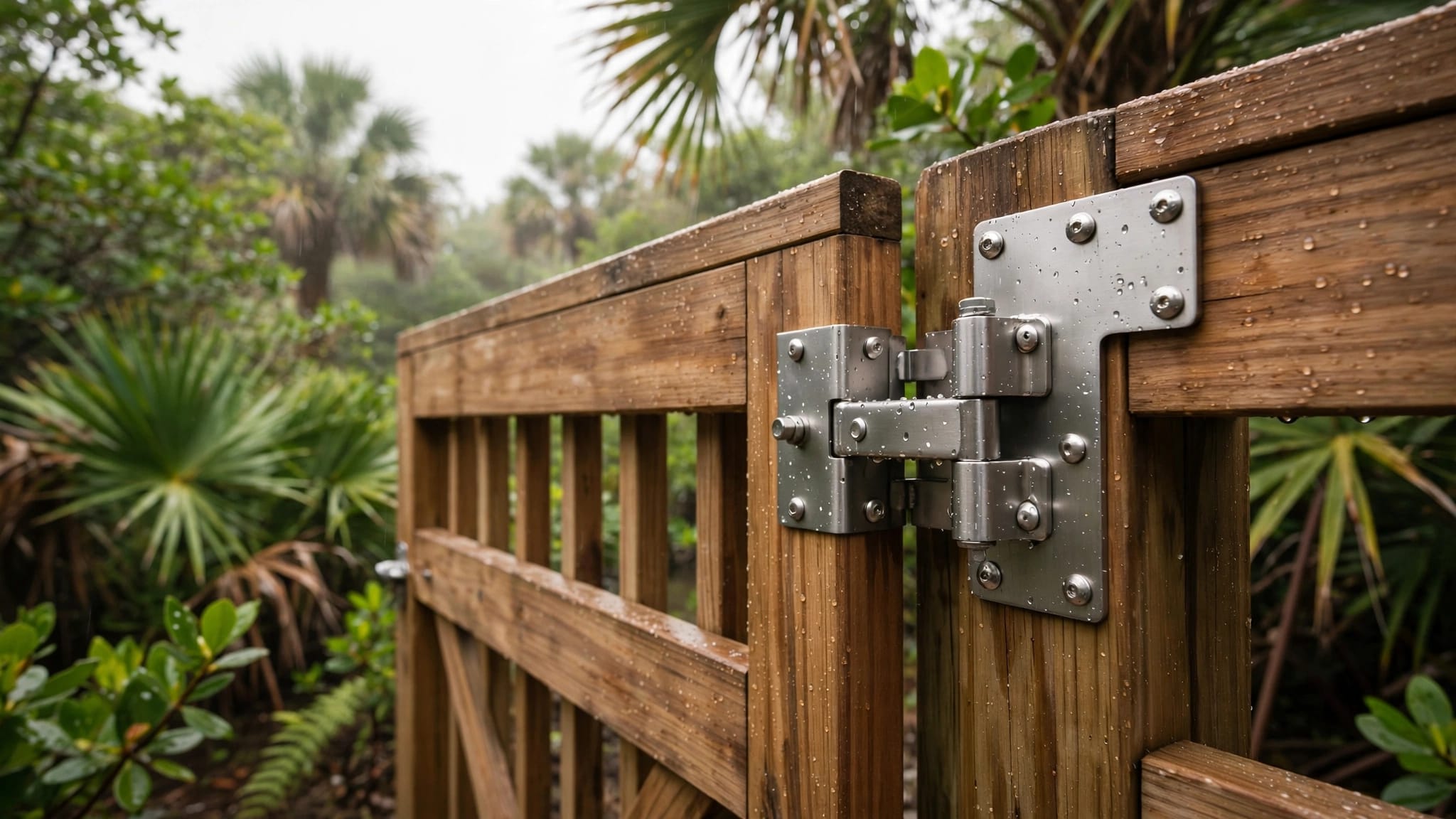
Latch placement should let the gate close cleanly without twisting or lifting. If the latch and hinge line fight each other, the gate will drag, stick, or stop latching the way it should. That matters even more in coastal areas, where heat, rain, and salt air can expose weak hardware fast.
A gate that sags also changes how the swing feels. The leaf starts scraping, the latch line drifts, and the whole entry becomes harder to use. That is why proper latch and hinge placement for gates matters so much, especially on vinyl and other lighter gate builds that need solid support.
For child and pet safety, the details are just as important. The latch should be placed where it closes reliably and is not easy for a small child to reach. If the gate is part of a pool barrier, the barrier rules can affect swing direction and closing hardware, so the code should guide the final setup.
Maintenance is another big factor in Southwest Florida. Salt air, sun, and summer rain can wear out cheap hinges faster than most homeowners expect. Coated, galvanized, or stainless hardware usually holds up better than bare metal, and a well-set gate needs fewer adjustments later.
How to Choose the Right Swing Direction for Your Home
A simple walk-through usually makes the answer obvious. Stand inside the gate area and open the space mentally before you install anything.
Use these checks before you decide:
- Measure the inside clearance with the gate fully open.
- Walk the outside path and look for sidewalks, driveways, walls, plants, or parked vehicles.
- Think about who uses the gate most, kids, pets, delivery access, gardeners, or you carrying bins.
- Check whether the latch and hinges will stay protected from weather and daily wear.
- Confirm that any pool barrier or HOA rule fits the swing direction you want.
If your yard is roomy and the outside path is busy, inward swing usually makes life easier. If the yard is tight and the outside path is clear, outward swing can save space without creating daily headaches.
Conclusion
For most homeowners, the better choice comes down to one question, where does the gate open with the least friction? Inward-swing gates work well when you have room inside the fence and want the opening away from public traffic. Outward-swing gates work better when space is tight and the outside area stays clear.
The best inward vs outward gate decision is the one that fits your layout, your safety needs, and your maintenance expectations. A good walk gate should open cleanly, close easily, and stay that way through Florida heat, rain, and salt air.