November 24, 2026
Choose driveway pavers in Cape Coral by matching a vehicle-rated product to your soil, drainage, and daily traffic. Then compare colors and textures that suit your home and feel comfortable in strong sun.
The visible paver is only one part of the purchase, because base preparation and water management affect how the driveway performs. Start with those requirements before narrowing your choices by appearance.
Key Takeaways
- Choose pavers intended for vehicle traffic, including any work trucks, boats, or RVs that regularly use the driveway.
- Compare samples outdoors, where sunlight and moisture reveal their actual color and texture.
- Prioritize drainage, compacted support, and secure edges before spending more on decorative details.
Compare Driveway Pavers for Cape Coral Conditions
Material affects appearance, stain resistance, maintenance, and installation requirements. However, a material name alone doesn't establish whether a particular product belongs under vehicle tires.
These differences help narrow your shortlist.
| Material | Appearance and practical strengths | Main selection concern |
|---|---|---|
| Concrete pavers | Broad choice of colors, shapes, and surface textures | Choose a vehicle-rated product and consider color changes and stain visibility |
| Clay brick pavers | Fired earth tones and a traditional appearance | Select paving brick intended for driveway traffic |
| Natural stone | Natural variation in color and surface character | Stone type, dimensions, finish, and vehicle suitability all matter |
| Porcelain pavers | Consistent designs and low water absorption | Use a product and installation system intended for vehicles |
The useful comparison is between complete driveway systems , rather than loose samples alone.
Concrete offers considerable design flexibility. Clay suits homes where warm red and brown tones fit the architecture. Meanwhile, natural stone creates variation that manufactured products reproduce through color blends and textures.
Porcelain needs particular care during selection. A porcelain product suitable for a patio doesn't automatically suit a driveway.
For every material, have the proposal name the manufacturer and product line. That identifies what you're buying and prevents a vague description such as "gray pavers" from standing in for an actual selection.
Choose Colors and Finishes for Florida Sun
View samples beside the house
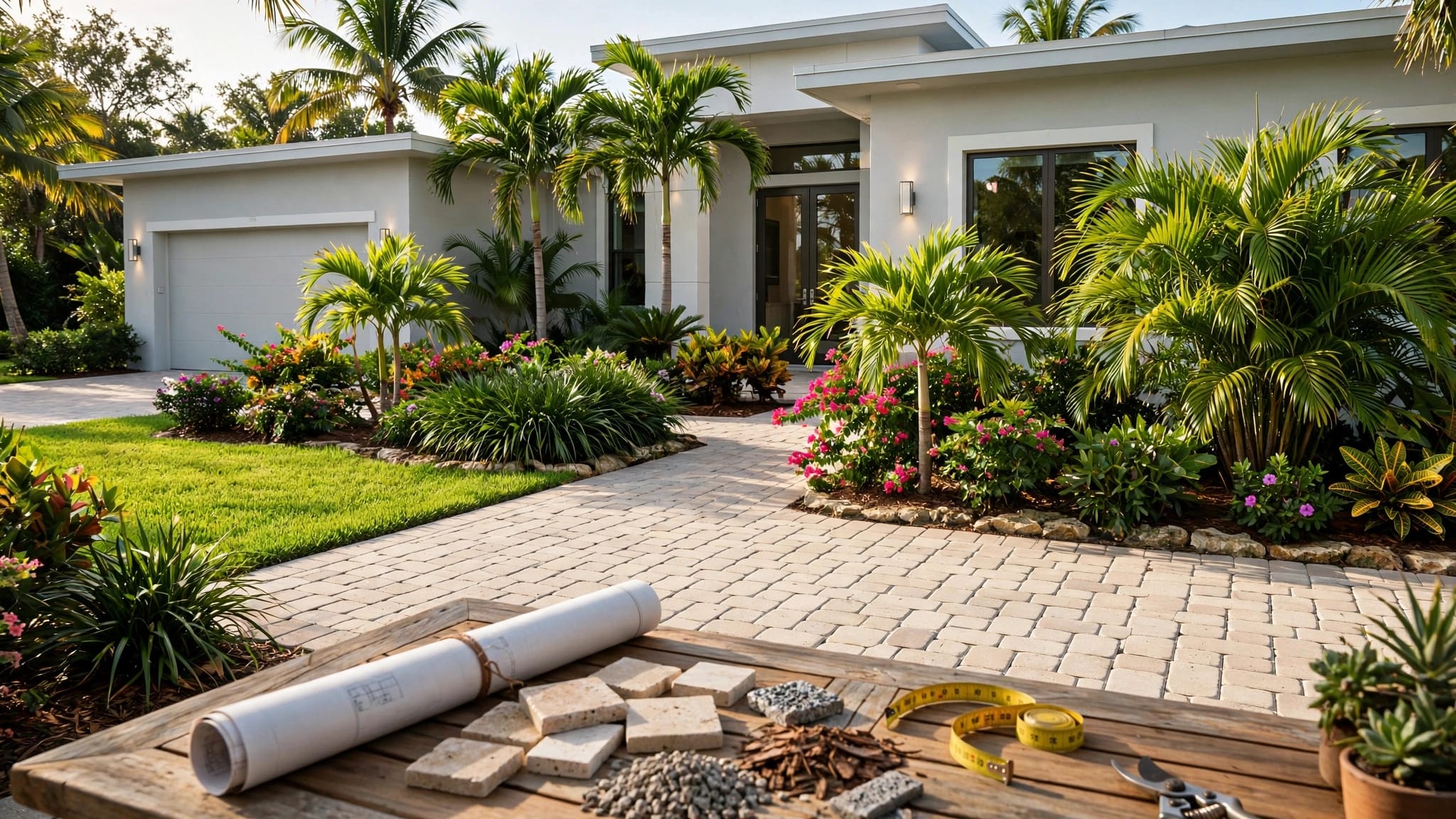
Lighter colors generally absorb less solar energy than darker colors, although any pavement can become hot in direct sunlight. Beige, cream, and light-gray blends are sensible starting points for sunny driveways.
Compare samples beside your roof, garage door, and exterior walls. Then view them in morning light and afternoon sun. Wet a sample, too, because rain can change its apparent color.
Midtone blends can make small stains and everyday dirt less conspicuous than a uniform pale surface. However, don't choose a dark driveway solely to hide tire marks if heat is a priority.
Favor useful texture over shine
Driveways also carry pedestrians, especially between parked cars and the front entrance. Choose a surface with suitable wet traction, rather than judging the finish only when dry.
Tumbled edges create a weathered appearance, while cleaner edges suit contemporary homes. Heavy texture can hold dirt, so balance the look against cleaning effort.
A glossy sealer can alter traction and appearance. Specify a sealer intended for that paver and vehicle use, and consider how the finished surface will behave after rain.
Match Shapes and Patterns to Vehicle Use
Use interlocking patterns where vehicles turn
Tires apply sideways forces when drivers turn, brake, and reverse. That makes laying pattern important near garages and driveway entrances.
Herringbone patterns, commonly arranged at 45 or 90 degrees, help resist movement under turning traffic. Rectangular units work well for this layout.
Large-format slabs create a different look, but size alone doesn't establish strength. A large patio slab shouldn't replace a driveway-rated unit because the color matches.
Our guide to choosing the right paver thickness explains why vehicle use matters alongside the supporting layers.
Plan for everything that parks there
Include pickups, boat trailers, work vehicles, and RVs in the design discussion. A driveway built around passenger cars may face different demands when heavier vehicles use it regularly.
Trailer jacks and RV leveling equipment can also concentrate weight over small areas. Heavy or unusual loading warrants a pavement professional's design.
Meanwhile, keep decorative borders out of repeated wheel paths when possible. Narrow cuts and unsupported outside edges deserve extra attention wherever drivers turn or back out.
Plan Drainage Before Setting Finished Heights
Give stormwater a continuous route
Cape Coral properties can combine flat ground, drainage swales, sandy soil, and high groundwater. Sand doesn't guarantee reliable drainage when the ground is already saturated.
The finished driveway should direct water away from buildings toward a suitable drainage route. Its edges shouldn't dam an existing swale or send runoff toward neighboring property.
Garage thresholds, sidewalks, planting beds, and fence lines all influence finished heights. Our guidance on Cape Coral driveway drainage considerations explains how these conditions affect paved parking areas.
Treat permeable paving as a system
Ordinary sand-jointed pavers aren't automatically permeable pavement. A permeable installation uses compatible units, open joints, appropriate joint aggregate, and a designed stone base.
That system can receive water below the surface, but groundwater and soil conditions limit where it can go afterward. Some sites need an underdrain or overflow route.
Permeable joints also need maintenance because sediment and landscape debris can obstruct them.
Open joints don't solve drainage by themselves. Water still needs storage capacity and a suitable route out when the ground can't absorb more.
Put Base Preparation and Edge Support First
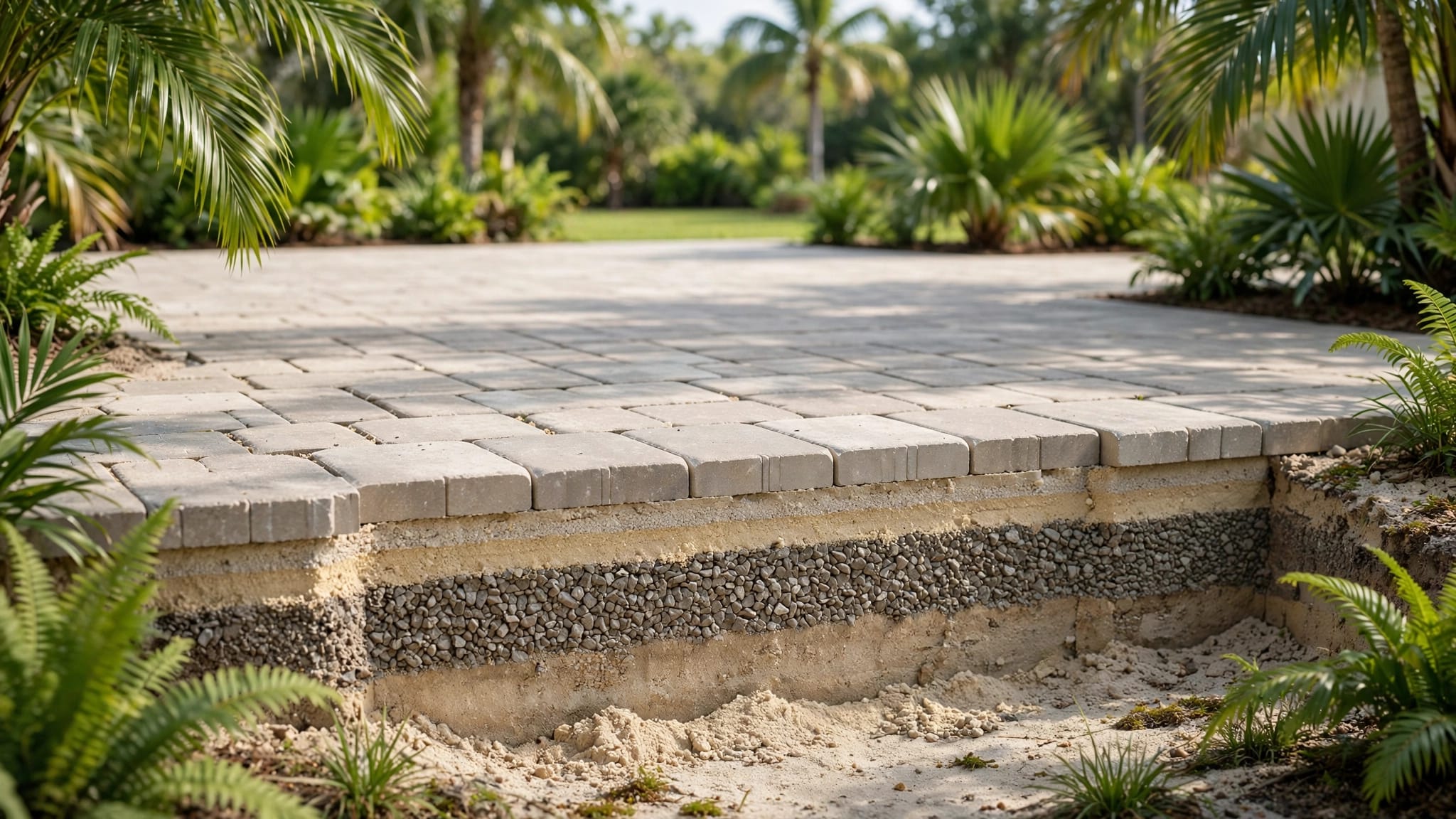
A premium paver can't compensate for unstable support. The installation needs sound soil beneath a properly prepared base, with bedding and joint materials suited to the paving system.
Preparation includes removing unsuitable material, establishing elevations, and compacting the supporting layers. Crews should compact the base in controlled lifts rather than expecting one pass over a thick layer to produce consistent support.
The required base depends on soil conditions, drainage, and loading. A pedestrian patio detail shouldn't automatically become a driveway detail.
Edge restraints matter because they hold the paving field together. Without adequate restraint, outside units can move, joints can widen, and nearby pavers can lose support.
Our explanation of why driveway edge pavers sink covers the connection between restraint, erosion, and repeated tire loads.
If fencing or a driveway gate is part of the project, coordinate post locations and finished paving heights before installation. Gate posts need their own structural support.
Balance Upfront Cost With Long-Term Value
Compare estimates for the same measured area and scope. Otherwise, a lower total may simply exclude demolition, disposal, drainage improvements, or edge work.
A useful proposal identifies the paver product, pattern, excavation, base preparation, bedding, edge restraints, joint material, and cleanup. It should also distinguish optional sealing and decorative borders from required construction.
Installation complexity affects the budget, too. Curves, intricate patterns, numerous cuts, and difficult equipment access require different amounts of labor.
For long-term value, consider repair access and maintenance alongside appearance. Individual pavers can often be lifted and reset, which helps when addressing localized settlement or accessing buried utilities. Keeping spare units from the original purchase can help future repairs blend in.
Spend first on the parts that are expensive to correct later: drainage, support, and finished elevations. A simpler pattern can still look attractive when those fundamentals are right.
Ask Installers About the Whole Driveway
Practical questions should produce clear descriptions of the proposed work. Use the same questions with each installer so the answers are comparable.
- Which manufacturer, product line, and laying pattern are included, and are they intended for our vehicles?
- What material will you excavate, and how will you prepare and compact the base?
- Where will stormwater travel during heavy rain, including water near the garage and fence?
- How will you restrain the edges and handle transitions at the sidewalk, street, and existing pavement?
- Does the price include removal, disposal, drainage work, joint material, sealing, and cleanup?
- What maintenance does this product need, and what does the written workmanship warranty cover?
The proposal should turn those answers into a defined scope, rather than leaving them as verbal promises.
Frequently Asked Questions
Do driveway pavers need sealing?
Sealing isn't a universal requirement for every paver material. Depending on the product, it can help with stain resistance or change the surface appearance, but it also adds future maintenance.
Apply only a compatible sealer under suitable surface and moisture conditions. White deposits deserve a separate assessment before treatment. Our explanation of white haze and paver drainage separates surface discoloration from signs such as standing water and settlement.
How do you maintain driveway pavers in Florida?
Sweep away leaves and soil, address oil spills promptly, and clean with products suitable for the material. Algae can make damp, shaded areas slippery, so those spots need attention.
Avoid aggressive pressure washing that removes joint material or damages the surface. Replenish joints with material compatible with the installation when needed.
Weeds can grow in debris that collects between pavers. Keeping joints maintained and removing accumulated organic matter helps limit that growth. Also address recurring puddles or settlement rather than treating them as cleaning problems.
Choose the System Before the Final Color
The right driveway pavers suit your home's appearance and the demands beneath each tire. In Cape Coral, drainage and stable support deserve priority before decorative upgrades.
Once those requirements are clear, choosing a color, shape, and finish becomes easier. Talk with us about Cape Coral paver design and installation to plan a driveway around your property and everyday use.