November 22, 2026
Cape Coral landscaping costs depend on project size, material choices, and property conditions, not square footage alone. A useful estimate separates design fees from installation and identifies the preparation, plants, and construction work included.
That distinction matters when you're planning landscaping alongside a new fence, patio, or pet area. Start with the major cost categories, then compare proposals built around the same measured layout.
Key Takeaways
- Design fees cover planning; they don't automatically include plants, materials, or installation labor.
- Removal, grading, drainage, and restricted access can raise costs before crews install visible improvements.
- Compare quantities and specifications, because a lower total may exclude preparation, disposal, or finishing work.
Cape Coral Landscaping Costs: Useful Planning Ranges
Published prices offer a starting point, but they don't establish one average for every property. A planting-bed refresh and a backyard reconstruction involve different work.
LawnBySeason's Cape Coral cost guide lists these component ranges.
| Project component | Published planning range |
|---|---|
| Landscape design | $525 to $3,150 |
| Garden beds | $5 to $16 per square foot |
| Installed mulch | $79 to $158 per cubic yard |
| New natural lawn | $1 to $3 per square foot |
Use these figures for early budgeting, not as Royal Fence pricing or a property-specific proposal. The guide lists tree-planting labor at $158 to $525 per tree, which illustrates why plant purchase prices alone don't describe installation costs.
These categories can overlap. For example, a garden-bed price might already include work that another proposal separates into labor and materials. Multiplying every published rate by your yard's dimensions can double-count expenses.
The useful comparison is the finished scope: how much area changes, what gets removed, and what replaces it.
Design Fees Cover Planning Before Installation
Drawings, selections, and revisions
A design fee pays for decisions and documentation before construction begins. Depending on the agreement, deliverables may include a scaled layout, planting plan, material selections, and revisions.
More detailed plans can address patio dimensions, fence clearances, irrigation zones, and lighting locations. Three-dimensional renderings and approval packages add another level of documentation.
The estimate should identify the drawings you'll receive and how many revisions the fee includes. A planting sketch and a construction-ready package aren't equivalent purchases.
Installation is a separate scope
Installation covers the physical work: removing existing landscaping, delivering materials, preparing surfaces, and building the approved design.
Some businesses credit design fees toward installation, but that arrangement must appear in the proposal. A free estimate also doesn't automatically include a completed landscape plan.
Our landscape design and installation services address both planning and the finished outdoor space. When comparing proposals, keep those two parts visible so you can see what each price covers.
Site Preparation and Labor Can Change the Total
Removal and grading come first
Existing conditions determine how much work happens before planting begins. Old sod, unwanted shrubs, buried debris, and concrete removal create labor and disposal expenses.
Grading adds another variable. The crew may need to reshape an area before installing lawn, planting beds, or paving. Moving material off-site differs from redistributing it within the property, so hauling should appear in the scope when needed.
A proposal should describe the removal area and the intended finished surface. A vague allowance for preparation makes price comparisons difficult.
Access affects equipment and crew time
A backyard reached through a narrow gate can require smaller equipment or more hand labor. Long carrying distances also increase installation time, even when the finished landscape is modest.
Fence planning matters here. Installing a new fence before heavy landscape work may restrict equipment access. Meanwhile, finished planting beds can obstruct post installation or suffer damage during construction.
Coordinate these activities around access and construction needs. The objective is to avoid paying crews to remove or repair work that another phase disturbs.
Plant Choices and Yard Size Shape Material Costs
Plant size changes more than appearance
Plant pricing depends on species, container size, quantity, and handling requirements. Larger specimens provide more immediate coverage, but they also require larger planting holes and more difficult transport.
A clear planting schedule identifies each plant and its size. Without that detail, two proposals can promise similar-looking beds while supplying different starting sizes.
Spacing matters too. Pricing should reflect the intended mature layout rather than an unspecified number of plants squeezed into an area. Crowded beds can create future pruning or removal work.
Ground-cover choices create different budgets
Mulch, decorative rock, natural lawn, and artificial turf involve different materials and installation methods. Rock installation may include delivery and substantial handling, while a lawn conversion can require removal and base preparation.
For pet-yard budgeting, installed artificial turf in Cape Coral commonly falls around $11 to $16 per square foot. At that range, 500 square feet equals approximately $5,500 to $8,000.
Our artificial turf installation options are relevant when comparing lawn alternatives. For a pet area, the estimate should identify the base, drainage provisions, turf product, and infill.
Irrigation and Drainage Need Separate Attention
Irrigation costs depend on the existing system
A landscape refresh may need relocated sprinkler heads rather than an entirely new system. Larger changes can require additional zones, valves, piping, or controller work.
LawnBySeason lists irrigation installation at $2,625 to $6,300. That range describes broader installation work, not every small repair or head adjustment.
Cape Coral's irrigation permit requirements require a permit for a new landscape-irrigation system. They also require one for modifications costing $2,500 or more in labor and materials.
The proposal should distinguish existing-system adjustments from replacement and identify permit responsibility.
Drainage work depends on the problem
Drainage expenses depend on where water collects and where it can discharge. A surface adjustment involves different work than installing drains, piping, and an outlet.
Describe drainage work as a defined construction item, with its location and connection or discharge point. Otherwise, a general promise to improve drainage leaves too much unspecified.
Paving choices also affect the plan. Our comparison of permeable pavers and concrete explains why the surface alone can't correct every drainage problem. Budget for the required groundwork separately from the finish material.
Hardscaping and Lighting Add Their Own Cost Drivers
Patio pricing includes the work underneath
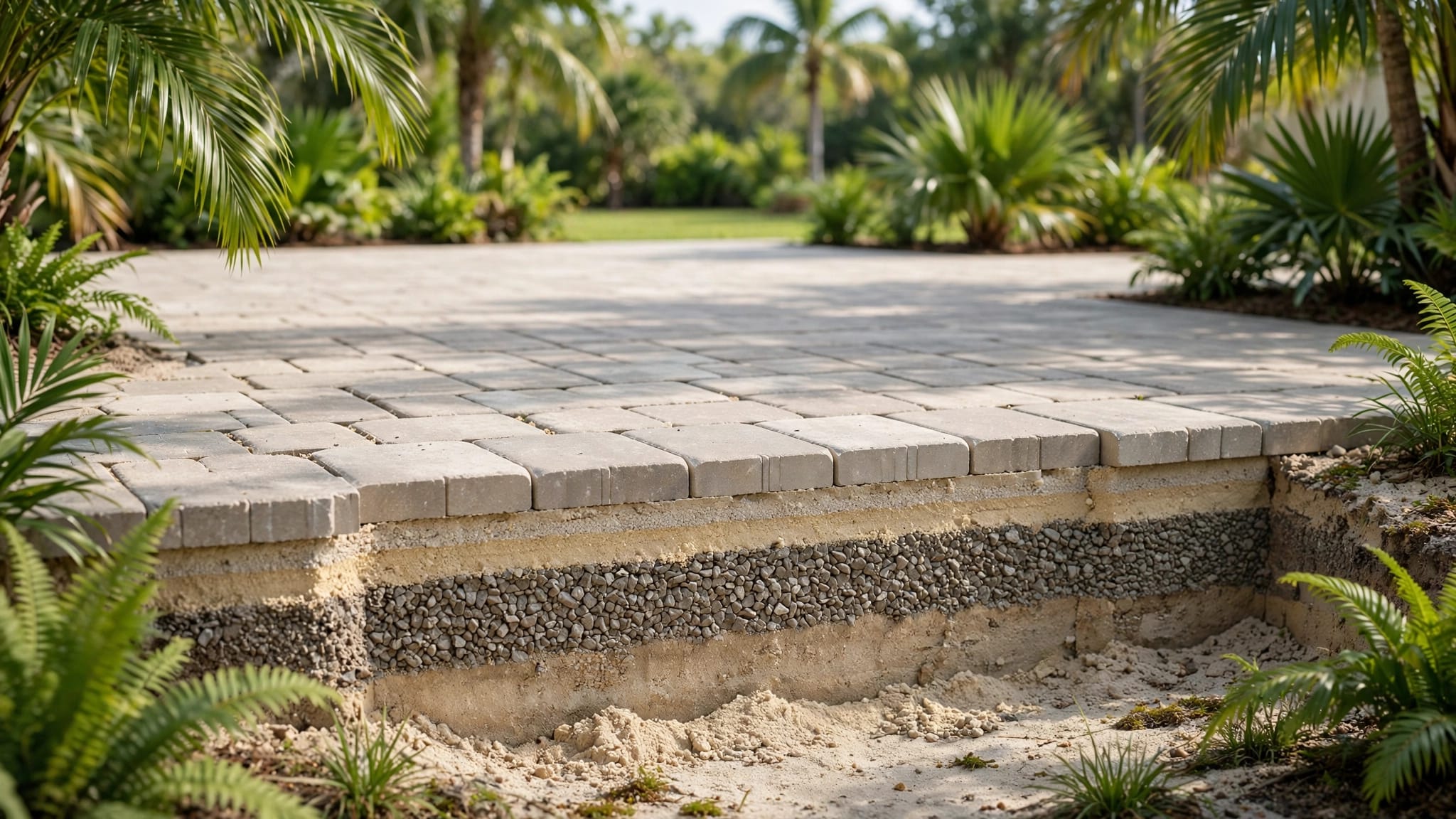
For Cape Coral paver patios, a broad planning range is $10 to $26 per square foot installed. Many straightforward projects fall around $12 to $20.
Using the broader range, a 400-square-foot patio comes to approximately $4,000 to $10,400. Premium materials and demanding installations can exceed it.
The estimate should identify the paver product, pattern, excavation, base preparation, edge restraints, and joint material. Borders, steps, demolition, and drainage may appear separately.
Complex curves and numerous cuts require more work than a simple rectangular layout. However, removing necessary base preparation to lower the price changes the construction specification.
Lighting involves fixtures and infrastructure
Landscape lighting costs reflect more than the number of lights. Fixture materials, transformer capacity, cable runs, controls, and installation access all affect the scope.
A useful proposal identifies fixture quantities and locations, along with the power supply and control method. Trenching beneath an unfinished bed differs from routing wiring around completed paving.
Define whether the plan includes path lighting, plant accents, or illumination near gates. Each purpose affects placement and equipment, so a single unexplained lighting allowance offers little basis for comparison.
Compare Estimates Without Double-Counting
Start with the same layout and quantities for every proposal. Record planting-bed square footage, patio area, plant sizes, and any fence or gate work.
Then compare inclusions. One estimate may include removal and disposal, while another assumes the site is clear. A material allowance can also change the final total if your selections exceed it.
An installed unit price may already include labor and preparation. Adding separate labor charges without reviewing the scope can count the same work twice.
Look for clearly stated exclusions, payment stages, and written change-order terms. Design revisions after material ordering or construction starts can affect both labor and purchasing costs.
If the full project exceeds your budget, reduce the area or phase optional improvements. Keep necessary drainage and structural preparation in the phase they support.
For combined projects, our fence and landscape services allow you to consider both scopes together. Keep fence footage, gates, and fence removal identifiable rather than burying them within a landscape total.
Frequently Asked Questions
Is a landscape design fee the same as a free estimate?
No. An estimate prices a proposed scope. A design fee pays for planning deliverables, such as drawings and planting selections. We offer free estimates, but a finished design package should have its own stated scope.
Why can a small yard have a high price per square foot?
Equipment delivery, setup, material handling, and cleanup don't decrease in direct proportion to yard size. Restricted access or extensive removal can also keep the unit price high on a small project.
Can landscaping and fencing be completed in phases?
Yes. Plan the finished layout first, then sequence construction around equipment access and underground work. Place optional planting or decorative additions in later phases when necessary, without postponing preparation that supports the initial installation.
Build Your Budget Around a Defined Scope
The most useful landscaping estimate connects each price to a measurable quantity, a material specification, or a defined task. Scope clarity makes differences between proposals easier to understand.
Separate planning from installation, account for site preparation, and coordinate landscaping with fencing and other construction. When you're ready, request a free estimate so your budget reflects the work your property needs.