November 19, 2026
You can reduce driveway gate slamming by correcting loose or misaligned hardware, securing the gate in its intended position, and adding properly sized stops or closing controls. The right fix depends on whether wind is moving the gate, the gate is bouncing off a stop, or the hardware no longer lines up.
In Southwest Florida, salt air and heavy rain can make those problems worse. Start by identifying how your gate moves when the wind picks up, then choose a fix that fits its design.
Why Wind Makes a Driveway Gate Slam
A gust can push a gate through its travel path or shake it against a latch. The wider and more solid the gate, the more force wind can place on its supports.
Solid Panels Catch More Wind
A solid wood, vinyl, or privacy gate presents a broad surface to the wind. Open pickets and chain link allow more air through, although they can still move or rattle during strong gusts.
Wind pressure also travels through the frame into the hinges, posts, and footing. A wide swing gate puts added strain on its hinge side because its outer edge sits farther from the post. Our guide to heavy-duty gate hinges for coastal fences explains why gate width matters alongside weight.
Slamming Can Point to an Existing Problem
Wind may expose a loose hinge, a sagging leaf, or a latch that barely catches. You might also hear a gate strike its stop repeatedly because the stop or receiver has loosened.
Replacing one noisy part won't correct a shifting post or twisted frame. Look at the full gate assembly before deciding what needs adjustment.
Inspect the Gate When Conditions Are Calm
Wait for calm weather and keep children, pets, and vehicles out of the gate's path. Don't try to restrain a large gate during a strong gust. A heavy leaf can move faster than you expect.
For an automatic gate, stop using it if it jerks, strikes a stop hard, or moves unpredictably. Don't reach through the gate or into the operator while it runs.
Look for Sagging and Loose Connections
With the gate closed, look at the gaps around the frame. On a double swing gate, compare the center gap at the top and bottom. Fresh scrape marks on the driveway, a dragging corner, or a latch that only catches when you lift the gate can indicate misalignment.
Watch the hinge post as the gate moves slowly. If the post rocks, or if the frame shifts at a mounting point, the problem may extend beyond the hardware. Our article on driveway gate alignment repairs covers these warning signs in more detail.
Identify Where the Gate Makes Contact
Open and close the gate slowly in calm conditions. Notice whether it hits the latch post, rebounds from a stop, rubs a guide, or fails to stay in its intended position.
For a sliding gate, look along the track and at the guide area for sand, leaves, damaged rollers, or scrape marks. If the gate binds or tilts, stop using it until a professional can assess it.
Adjust Swing Gate Hinges and Latches
A swing gate should move freely and meet its latch without being lifted or shoved. Small hardware corrections can help when the frame is sound and the posts remain stable.
Correct Loose or Worn Hinges
Loose fasteners can let a gate leaf sag or shift. If accessible screws or bolts have loosened, tightening them may restore a secure connection. Don't overtighten fasteners or keep tightening a bolt that spins in a damaged hole.
Adjustable hinges may also allow a small alignment correction. A heavy gate must be supported with equipment rated for its weight before hinge bolts are loosened. Bent hinge plates, cracked welds, worn pins, or a leaning post call for professional repair rather than another adjustment.
Replacement hinges need to suit the gate's weight, width, and wind exposure. A hinge that looks similar to the old one isn't necessarily strong enough for the job.
Set the Latch After the Gate Is Aligned
Once the gate hangs properly, the latch and receiver can be positioned so they meet without forcing the leaf sideways. On a double gate, a drop rod can secure the stationary leaf in a ground receiver before the active leaf closes.
Keep that receiver clear of sand and debris. If the latch still misses because the posts move, address the post rather than shifting the latch again. For hardware choices suited to local conditions, see our guide to gate latches for Florida humidity and salt air.
Add Stops or Soft-Close Hardware Where Appropriate
A stop gives a gate a defined end point. A closer or damper can control some of the movement before the gate reaches it. Neither is a substitute for a sound frame, posts, and footing.
Use a Stop That Fits the Gate
A properly mounted stop can prevent a swing gate from traveling too far and striking a fence, wall, or operator. A suitable bumper at the contact point can reduce noise and cushion ordinary closing impacts.
The stop and its mounting surface must be strong enough for the gate. A small rubber pad attached to a weak post won't hold a large leaf against strong wind. The placement also matters: a poorly positioned stop can twist the frame or create a pinch point.
If you need the gate held open during normal use, choose a hold-open device designed for the gate. Don't assume a light hook will restrain a heavy leaf in gusts.
Choose a Closer for the Gate's Size
An adjustable closer, damper, or compatible self-closing hinge may slow a suitable swing gate as it closes. The hardware needs to match the gate's size, weight, travel, and installation. A closer intended for a pedestrian gate may not suit a wide driveway leaf.
A professional can set the closing speed so the gate reaches the latch without a hard impact. On an automatic gate, don't add a closer or change the operator's force or travel settings yourself. The added resistance can interfere with the system's operation and safety features.
Stop a Sliding Gate From Hitting Its End Stops
A sliding gate doesn't swing across the driveway, but wind can still push it against guides or cause movement along its track. Slamming can also come from worn rollers, misalignment, or an automatic operator that needs service.
Clear the Track and Inspect the Guides
For a track-mounted gate, remove leaves, loose sand, and other accessible debris from the track when the gate is stationary. Keep your hands away from rollers and pinch points. If the track is bent or the gate has come off its intended path, leave it in place and call a professional.
A cantilever gate rides on rollers rather than a ground track across the opening. It still depends on properly aligned rollers and guides. Excessive side-to-side movement or a gate that tilts can point to worn or loose components.
Address Hard Stops and Automatic Controls
Sliding gates need secure end stops and guides suited to the gate. If the gate bangs at the same point during every cycle, the stop may be loose, the rollers may bind, or an automatic operator's travel limit may need attention.
Only a qualified technician should adjust operator limits, force settings, wiring, or safety devices. Never disable a sensor to make the gate keep moving. If an automatic gate strikes its stop or reverses unexpectedly, stop operating it until the cause is found.
Reduce Wind Exposure Without Creating New Problems
Hardware fixes work best when the gate design also suits the property. A driveway beside open water may experience different exposure than one sheltered by neighboring buildings.
Consider a More Open Gate Design
If privacy isn't essential, an open picket or chain link design presents less solid surface to the wind than a full privacy panel. That can reduce wind pressure, although the frame and hardware still need to suit the opening.
For a replacement project, compare the space available along the fence line with the clearance needed for a swing arc. Our comparison of sliding and swing driveway gates covers those layout choices for Cape Coral properties.
Keep Landscaping Away From Moving Parts
Existing buildings and vegetation may provide some shelter, but avoid relying on a hedge as the gate's only wind protection. Plants grow, storms damage branches, and a gust can reach the gate from another direction.
Keep branches, mulch, rocks, and irrigation equipment outside the travel path. Don't attach screening to an existing gate without considering the extra wind area and the load it adds to the frame and supports.
Maintain Hardware for Coastal Conditions
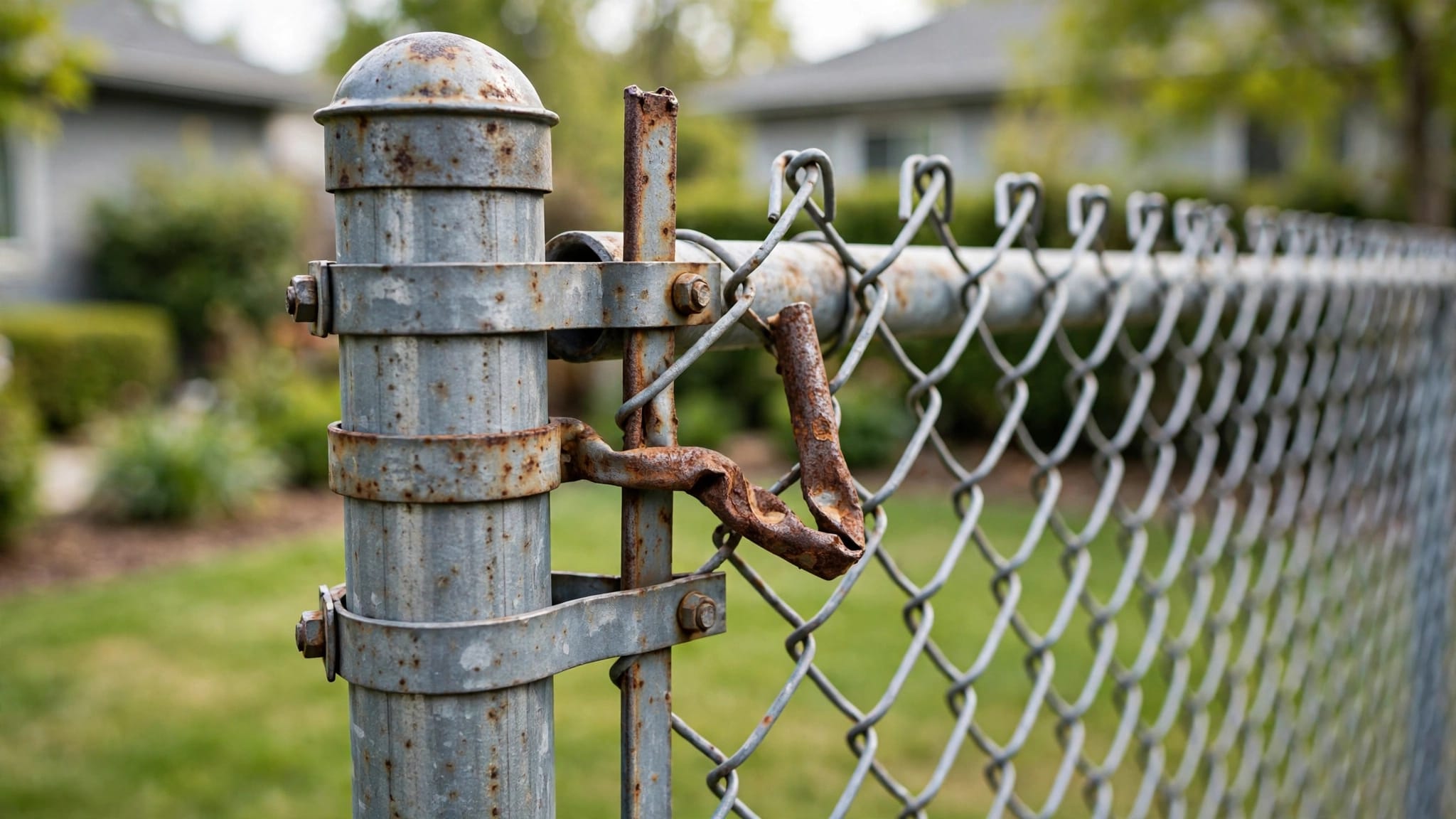
Salt air, humidity, rain, and sprinkler overspray can weaken connections before the gate looks badly damaged. Corrosion around a hinge or latch can also make smooth movement harder.
Inspect Twice a Year and After Major Storms
Look for rust stains, pitting, cracked coatings, loose bolts, bent brackets, and worn hinge pins. Check that the gate latches without dragging and that its posts remain stable. After a major storm, wait until conditions are safe before inspecting the gate.
Rinse salt residue from exposed hardware and keep sprinklers pointed away where possible. Follow the hardware manufacturer's lubrication instructions. A lubricant that holds sand or dirt can make moving parts harder to operate.
Match Replacement Materials
Corrosion-resistant stainless or galvanized hardware can be useful in coastal conditions when it suits the gate material and installation. Contact between incompatible metals can cause corrosion, so the connection needs attention as well as the finish.
For vinyl gates, hardware fastened only into the outer vinyl may lack adequate support. Our guide to vinyl gate hinge and post sizing explains the role of reinforcement.
Know When to Call a Gate Professional
Call a professional if a post rocks, a footing appears to have shifted, a frame is twisted, or hinge mounting holes no longer hold fasteners securely. Cracked welds, severe corrosion, and a gate that has left its track also need more than a latch adjustment.
Wide, solid, highly exposed, or automated gates may need a closer look at the whole assembly. In some cases, site-specific engineering is appropriate because the gate's supports must resist more than its stationary weight.
A professional can also assess whether repairing the existing gate makes sense or whether a replacement better fits the driveway. At Royal Fence Inc., we offer free estimates for fencing and gate projects in Cape Coral, Fort Myers, Estero, and Bonita Springs.
Make the Fix Fit the Cause
A quieter gate starts with a stable, aligned assembly . Once the hinges, posts, rollers, and latch work properly, suitable stops or closing hardware can help control everyday movement.
For strong Florida winds, pay attention to the gate's exposed surface and the condition of its connections. A fix that addresses the source of movement will do more than mask the sound.