October 8, 2026
A hedge can look beautiful while leaving your patio exposed for longer than you'd like. For backyard privacy in Southwest Florida, a solid fence provides immediate screening once installed , while a hedge needs suitable plants, growing space, and ongoing care.
Your choice also has to withstand intense sun, humid summers, heavy rain, and possible salt exposure. Neither option fits every yard, especially when storms, drainage, pets, or pool safety enter the picture.
Start with the views you want to block, then compare the installation and maintenance each option requires.
Hedges vs. Fences: The Everyday Tradeoffs
A fence creates a defined boundary with predictable coverage. A hedge adds greenery and can soften the appearance of neighboring buildings, but its screening changes as plants grow.
Here's how the main differences affect your decision.
| Priority | Hedge | Privacy fence |
|---|---|---|
| Screening | Depends on plant size and density | Available when installation finishes |
| Space | Needs room for mature growth | Usually occupies a narrower strip |
| Maintenance | Pruning, plant monitoring, and replacements | Cleaning, hardware checks, and material-specific repairs |
| Pet containment | Gaps can remain beneath or between plants | Depends on height, openings, and gates |
| Appearance | Living greenery that changes over time | Consistent structure and finish |
The strongest choice follows your daily needs. If you want to screen a seating area, either approach may work. However, containing a dog requires a reliable barrier, not merely a dense-looking row of shrubs.
How Soon Do You Need Backyard Privacy?
A fence provides predictable coverage
A solid privacy fence blocks sightlines as soon as the installation is complete. You don't have to wait for branches to fill gaps.
However, the project still needs scheduling. Approvals, material availability, site access, weather, and required inspections can affect completion. Summer thunderstorms and lightning can also interrupt outdoor work.
Ask your contractor to distinguish the installation period from the full approval-to-completion schedule. That matters if you're preparing for a new pet or want privacy before guests arrive.
A hedge depends on its starting size
A hedge's initial screening depends on the plants you buy and how densely they already branch. Larger plants can provide more coverage at installation, but they still need to establish.
Species, sunlight, soil conditions, and pruning affect how the screen develops. Avoid accepting a guaranteed growth timeline without a site assessment.
Also, view the proposed planting from your patio before committing. A hedge that looks substantial from the street may leave gaps directly across from your seating area.
Heat, Heavy Rain, and Salt Affect Both Options
Plan for airflow and drainage
Solid fencing can reduce breezes around a patio. In a hot backyard, that tradeoff deserves attention before you enclose every side.
Hedges also change airflow as they thicken. Their mature size matters, particularly beside a lanai, pool enclosure, or narrow walkway.
Meanwhile, heavy rain makes drainage planning essential. Keep fence footings, planting beds, and accumulated mulch away from drainage inlets and maintenance routes. Neither a privacy fence nor landscaping should obstruct the property's intended runoff path.
Plant selection must account for wet areas, while fence design must account for soil conditions and footing stability.
Match materials and plants to salt exposure
Coastal air puts extra stress on metal connections, hinges, and latches. Aluminum doesn't develop iron rust, but coatings and attached hardware still need attention.
Vinyl resists moisture and doesn't require painting. However, its brackets and gate hardware remain part of the maintenance picture. Wood faces greater demands from moisture, insects, and repeated wetting.
For hedges, salt tolerance varies by species. Also, tolerance of airborne salt doesn't automatically mean a plant tolerates prolonged flooding with salty water. Describe your property's exposure accurately when selecting plants.
Storm Performance Depends on the Whole System
Solid privacy panels catch more wind than open fencing. As a result, posts, foundations, connections, and gates deserve as much attention as the panel material.
Ask the installer to explain post spacing, embedment, concrete requirements, reinforcement, and corrosion-resistant fasteners. Gate posts and hardware must suit the opening and expected loads.
The discussion of Southwest Florida fence wind ratings covers those installation details.
Adding solid screening to an open fence changes its wind exposure. Existing posts and footings may not support the added load.
Hedges face their own storm risks. Branch damage, leaning plants, or lost foliage can reduce screening after severe weather. No hedge or fence should come with a promise of hurricane-proof performance.
Choose a system suited to the site's exposure, then inspect it after storms. Look for loose connections, leaning posts, damaged plants, and gates that no longer latch properly.
Choose Plants and Fence Materials for Your Site
Treat plant names as candidates, not guarantees
UF/IFAS Extension Miami-Dade lists sea grape ( Coccoloba uvifera ), buttonwood ( Conocarpus erectus ), and pitch apple ( Clusia rosea ) as having high salt tolerance.
Those South Florida references offer useful starting points, but they aren't a planting prescription for your Southwest Florida yard. Confirm suitability with UF/IFAS Lee County Extension or a knowledgeable local nursery.
Buttonwood also deserves scrutiny where low-level screening matters because UF/IFAS notes that it can thin near the bottom. Ask about mature form and pruning before choosing any species.
The guide to plants for Cape Coral fence lines offers additional landscaping ideas to discuss during planning.
Match the fence style to the sightline
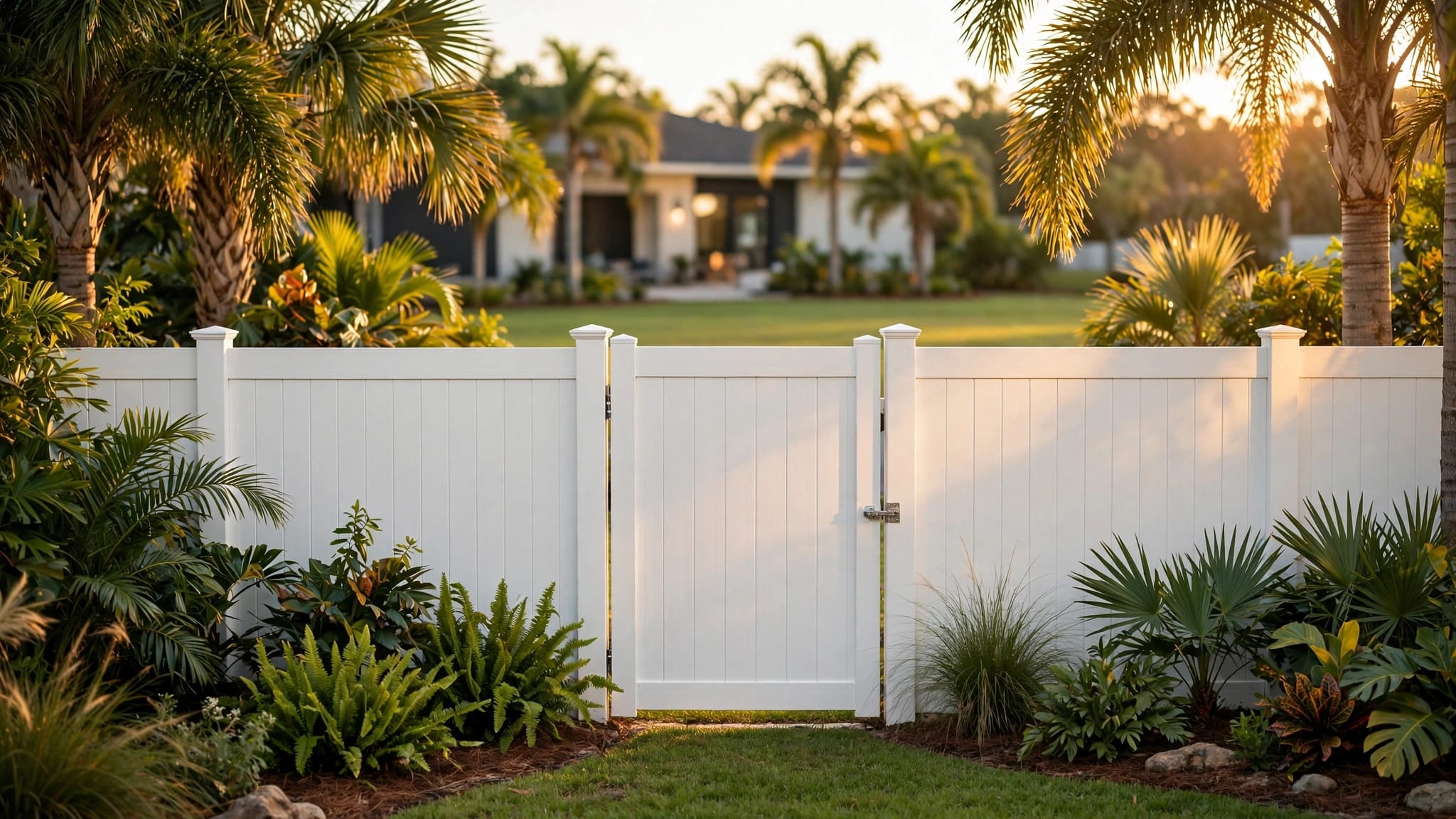
Solid vinyl suits close neighbors and exposed patios. Wood offers a natural appearance, although humidity and insects increase its care requirements.
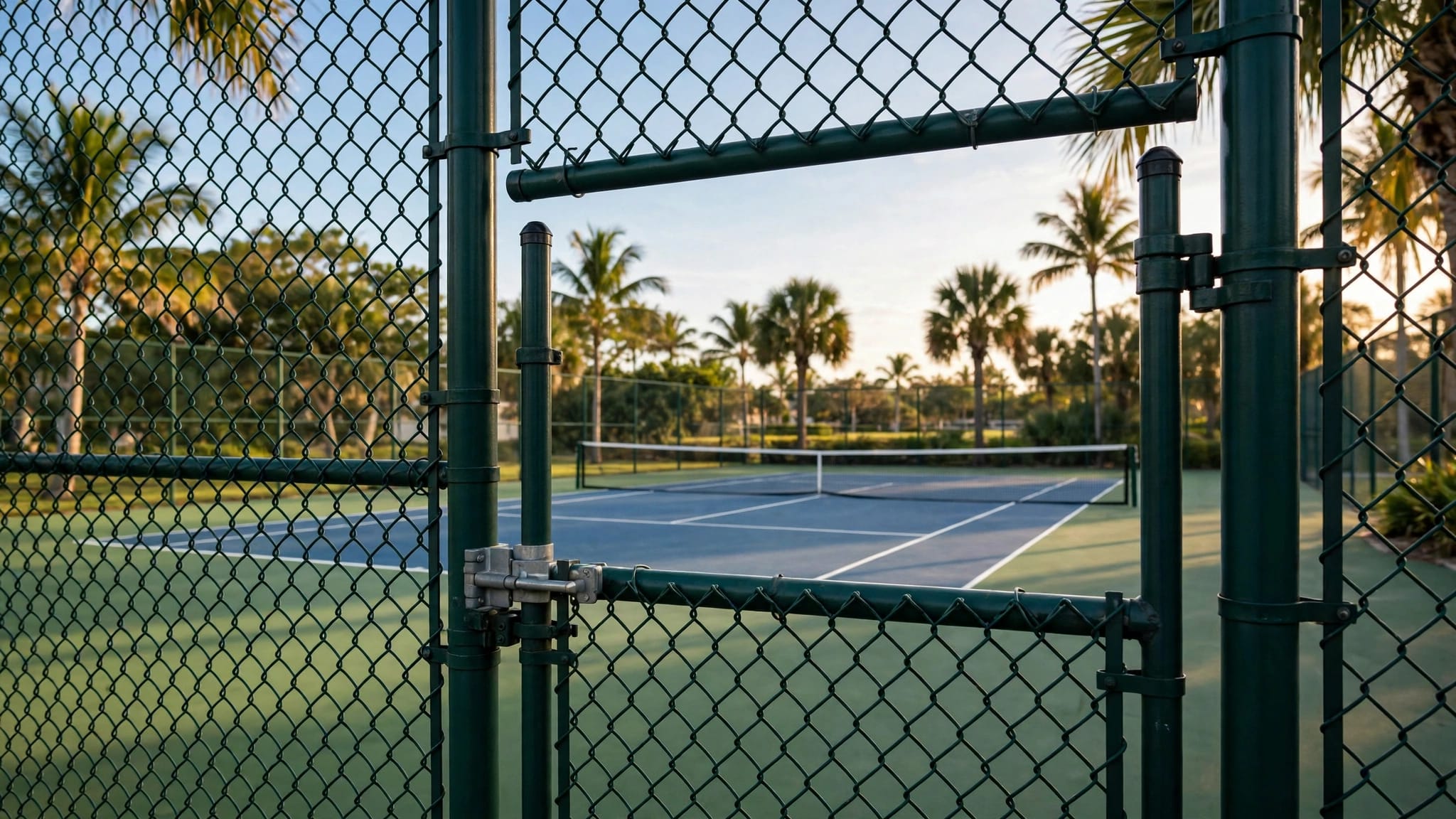
Open aluminum fencing preserves views and airflow, but it doesn't provide full visual screening. Standard chain link also leaves sightlines open.
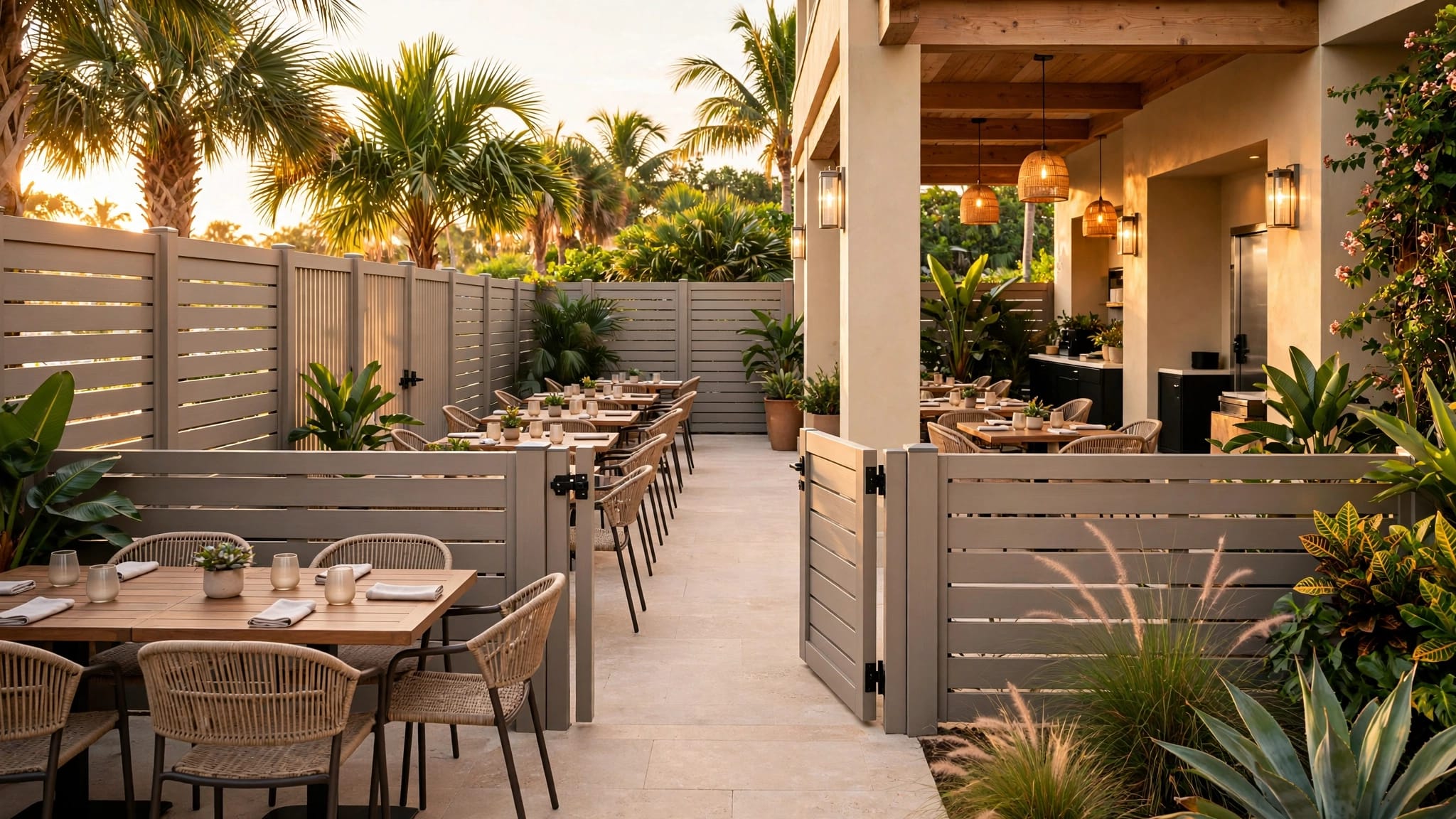
Louvered designs offer another option, although privacy depends on blade spacing, angle, and viewing position. Request a sample or inspect the proposed design from the direction you want screened.
For vinyl, smooth and wood-grain finishes provide different appearances without changing the basic need for a properly installed system.
Compare Installation Costs and Long-Term Care
Request comparable installed quotes
There isn't one reliable price that applies to every hedge or fence project. Compare written proposals for the same boundary and privacy goal.
A fence quote should identify footage, height, materials, gates, removal, site preparation, permitting responsibilities, and any required engineering. Confirm whether cleanup and disposal are included.
A hedge proposal should identify the species, quantities, starting plant sizes, spacing, delivery, planting preparation, and establishment services.
Ask both providers what could increase the quoted price. Difficult access, existing roots, drainage conflicts, and unexpected site conditions can change the work involved.
Include the maintenance commitment
A lower installation total doesn't automatically mean lower ownership costs. Hedges bring recurring pruning and plant-care work, plus possible replacement expenses.
UF/IFAS advises frequent growing-season pruning for formal hedges. It also recommends keeping the base slightly wider than the top.
Vinyl needs cleaning and hardware inspections. Aluminum requires attention to finishes and connections. Wood adds coating work and checks for decay or insect damage.
Compare what you can maintain yourself with what you'll pay someone else to do. Your available time belongs in the budget.
Verify Local Rules Before Planting or Building
Cape Coral, Fort Myers, Estero, Bonita Springs, and unincorporated Lee County don't share one uniform approval process. Confirm the permitting authority for your exact address.
The Lee County residential fence guide cites Land Development Code Section 34-1744. For unincorporated Lee County, it states that fences or walls higher than 6 feet, excluding chain-link fences, require signed and sealed plans from a Florida-registered architect or engineer.
That isn't a universal height allowance or a rule for every nearby municipality. Verify current height, placement, visibility, waterfront, drainage, and permit requirements for your property.
HOAs may separately control materials, colors, locations, and landscaping. HOA approval doesn't replace a required permit.
Use a survey to confirm boundaries, and arrange utility locating before digging. Also, check easements and access requirements before placing posts or plants.
For preserve-adjacent properties, Estero fence planning considerations help identify layout issues before you choose materials.
When Combining a Fence and Hedge Makes Sense
A fence-and-hedge combination can provide dependable screening while adding greenery. However, you don't necessarily need both around the entire perimeter.
Use solid fencing where neighbors have direct views into a patio. Elsewhere, open fencing and carefully selected plants may preserve a water view or leave more airflow.
Keep enough space to maintain both elements. Branches shouldn't interfere with gates, and foliage shouldn't hide hardware that needs inspection. Plan access for pruning without entering a neighbor's property.
If you already have aluminum fencing, compare privacy panel and landscaping options before making changes.
Any added panel requires a review of the existing supports. Landscaping also needs a layout that respects drainage, utilities, and mature plant growth.
Key Takeaways
- Choose a solid fence when you need predictable screening without waiting for plants to fill in.
- Select a hedge when you have growing space and accept regular plant care.
- Compare complete installed proposals rather than material prices or plant prices alone.
- Make storm design, drainage, and salt exposure part of the plan.
- Verify local requirements and HOA approval for your specific property before work starts.
Frequently Asked Questions
Will a fence or hedge block a second-story view?
Neither automatically blocks an elevated view. A standard backyard fence may screen people at ground level while leaving your patio visible upstairs.
A hedge may eventually provide taller screening, but species, placement, and permitted dimensions matter. Assess the actual sightline before spending money. Targeted screening closer to a seating area may address the problem without enclosing the entire yard.
Can a hedge replace a pool safety barrier?
Don't treat a hedge as a compliant pool barrier. Visual privacy and pool safety are separate requirements.
If the project borders a pool, confirm the applicable barrier rules with the permitting authority. Fence openings, gate operation, latches, and nearby landscaping can affect safety. Your contractor should address those requirements before installation.
Choose Privacy That Fits Your Yard
A fence offers predictable screening once installed. A hedge adds living greenery, but its coverage depends on growth and continued care.
The right choice balances privacy, maintenance, and site conditions rather than appearance alone. Get a property-specific plan that addresses the sightlines, storm exposure, drainage, and approvals before committing to either option.