October 7, 2026
A patio gate can look perfectly placed until a server carrying dinner meets guests waiting for a table. Restaurant patio fencing should start with daily movement , then address privacy, appearance, and upkeep.
For Southwest Florida restaurants, that means considering coastal weather alongside chair clearance, service routes, and gate use. A beautiful boundary can still leave awkward corners or crowded entrances.
Start by walking the patio as your guests and staff use it during service.
Plan Restaurant Patio Fencing Around Actual Traffic
Before choosing panels, map the patio's entrances, seating areas, and service stations. Include the indoor connection, host stand, and any route employees use to reach storage or waste areas.
Then review the layout with tables occupied. An empty dining area doesn't show where pulled-out chairs or waiting guests will narrow a passage.
Give arriving guests a clear destination
Place the main patio entrance where guests can understand how to enter and where to check in. If the host stand sits indoors, the outdoor boundary should support that arrangement rather than suggest a separate entrance.
Also consider takeout customers and delivery drivers. Their routes may overlap with outdoor diners, especially near the front door.
Discuss gate placement with the manager who handles busy shifts. That person can identify where guests gather, which corners are hard to supervise, and where a fence opening would create confusion.
Keep service routes distinct from waiting areas
Trace the paths servers take between the kitchen and outdoor tables. Pay attention to tray stands, bussing stations, and doorways that already attract traffic.
Where possible, position the patio boundary so waiting guests don't gather directly in those working routes. However, avoid adding separate gates merely because the drawing has room for them.
Every opening needs a purpose. Consider who will use it, how often, and whether staff can see it during service.
Keep Gates Usable Throughout Dinner Service
Gate decisions deserve their own review because the hardware and swing affect everyday use. A fence panel stays in place; a gate repeatedly interacts with people, furniture, and weather.
Ask the contractor to show the full swing on the layout. Include nearby chairs, planters, and any door that opens toward the same space.
Test gate clearance with chairs pulled out. An opening that works on an empty patio may conflict with occupied tables.
Also discuss how employees will operate the gate while carrying trays or cleaning equipment. A decorative latch may look appropriate without matching the restaurant's working needs.
Avoid choosing locking or closing hardware without reviewing the opening's intended function and site-specific requirements with the project team.
Finally, consider cleanup access. The route used for daily service may also need to accommodate furniture movement and patio maintenance. Ask about hinges, latches, and replacement parts before approving the gate package, especially for openings that employees will use throughout each shift.
Compare Fence Materials for Outdoor Dining
Material selection should follow the layout. Choose each section according to its purpose rather than expecting one fence style to solve every patio concern.
These options have different strengths and maintenance demands.
| Fence material | Useful design role | Trade-off to consider |
|---|---|---|
| Aluminum | Open dining boundaries with visible surroundings | Provides little screening |
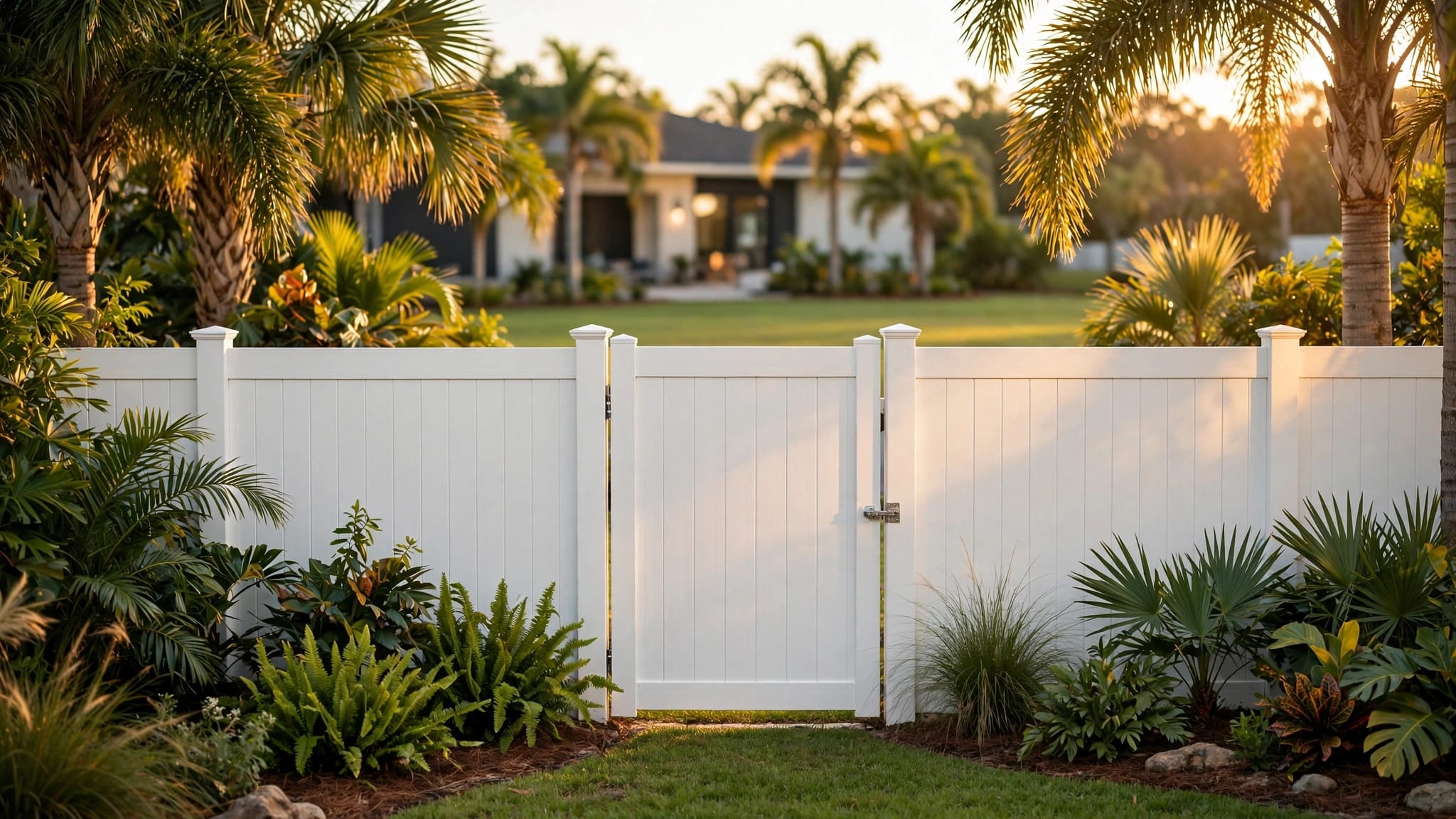
| Vinyl privacy | Concealing service activity or adjacent views | Solid panels catch more wind |
| Louvered | Combining screening with a less enclosed appearance | Usually costs more than simpler styles |
| Wood | Adding a natural finish beside warm-toned materials | Needs more upkeep in Florida |
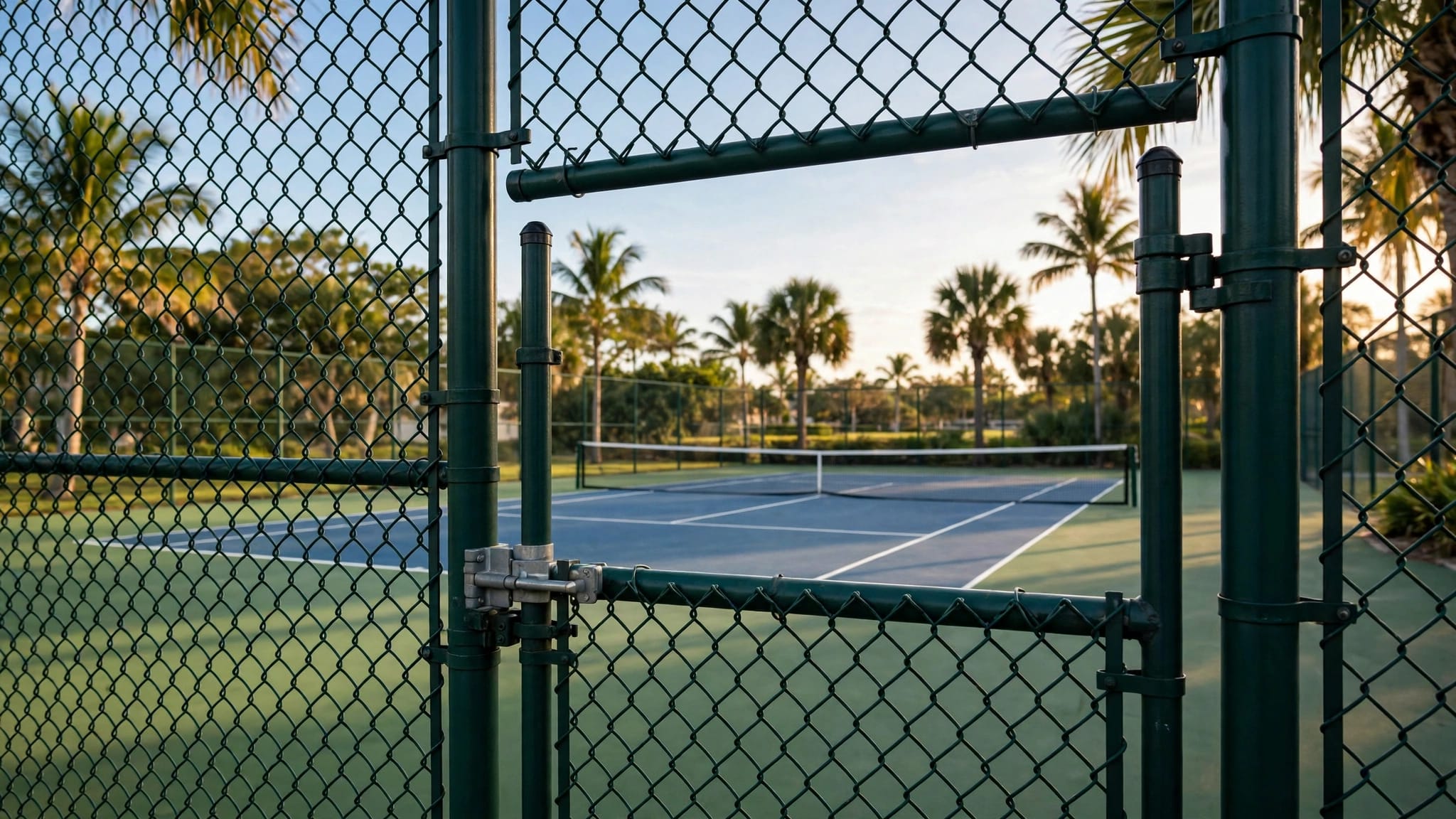
| Chain link | Defining a budget-conscious service perimeter | Less suited to a finished dining atmosphere |
The practical choice may combine materials. An open aluminum boundary can define the guest-facing edge, while a screened section addresses an unattractive service-side view.
The privacy and airflow trade-offs in fence styles for outdoor kitchens also help frame patio material decisions. Restaurant operations add another consideration: frequent gate use.
Ask to see the proposed material, finish, and hardware together. Panel appearance alone doesn't show how the complete installation will look.
For wood, discuss the expected inspection and finish-care routine. For aluminum or vinyl, ask how staff should clean the surfaces and protect the finish. Low upkeep still involves periodic attention, particularly around food service and landscaped areas.
Balance Privacy With an Open Dining Atmosphere
Privacy means different things around a restaurant. Guests may appreciate screening from a parking area while enjoying an open view toward landscaping or a waterfront setting.
Identify the unwanted views first. Full enclosure may be unnecessary if only one edge needs attention.
Protect sightlines where visibility matters
Open fencing lets staff see through the boundary and keeps surrounding views visible. Aluminum pickets are worth considering where the patio's setting is part of the dining experience.
However, review sightlines from seated positions as well as standing height. A fence that looks unobtrusive during a walkthrough may appear different beside a table.
Include the host's view of the entrance and the manager's view across the dining area. These observations should guide placement before the fence design becomes fixed.
Screen service areas selectively
Solid vinyl can hide equipment and activity, while louvered styles offer screening without the same fully closed appearance. Discuss both where guests face storage, utility equipment, or neighboring activity.
Keep equipment access and ventilation needs separate from the desire for visual screening. The contractor should coordinate the layout around those needs.
Also distinguish privacy from shade. A fence can block a view, but patio shade requires its own planning around sun exposure, seating, and existing structures.
Build for Southwest Florida Weather and Daily Use
Heat, rain, humidity, and coastal exposure belong in the project discussion. So do the less visible details: soil conditions, post support, fasteners, and gate connections.
For restaurant patio fencing, material choice is only part of the installation specification. Ask the contractor to explain how the complete system suits the property.
Review the support below the surface
A straight fence on installation day doesn't tell you everything about its support. Soil conditions and the footing design affect how posts hold their position.
Existing pavers or concrete also need assessment before the installer selects a mounting method. Don't assume that every patio surface can support the same fence design.
Have the contractor examine the proposed fence line and explain the attachment approach. Where the design needs additional review, settle that before ordering materials.
Give hardware the same attention as panels
Salt-air exposure and repeated gate operation make connections worth close attention. Ask about corrosion-resistant hardware, finish care, and the compatibility of fasteners with the chosen system.
Solid panels catch more wind than open designs. Therefore, discuss exposure when comparing a screened boundary with an open one, without assuming either option is storm-proof.
Build routine checks into patio maintenance. Staff should report loose hardware, dragging gates, damaged finishes, or leaning posts promptly. After severe weather, keep people away from damaged sections until a qualified contractor assesses them.
Coordinate Fencing With Paving and Landscaping
The patio boundary should relate to the restaurant's existing materials. Compare finish samples beside the actual paving, building exterior, and outdoor furniture rather than relying only on catalog photos.
Dark aluminum can complement charcoal pavers. White vinyl can work beside lighter stucco, while wood pairs naturally with timber accents. These are design options, not reasons to overlook operational needs.
Landscaping can soften the boundary, but mature plant size matters. Leave room for growth and maintenance without crowding gate openings or working routes.
Also consider irrigation. Repeated spray against the fence can leave deposits and add cleaning work. Ask the landscaping and fencing teams to coordinate placement.
Keep drainage features visible during planning. Posts, planted borders, and paving changes should work with the patio's existing drainage approach.
Finally, review the space after dark. Check whether guests can recognize the entrance and whether staff can see gate hardware. Coordinate lighting placement without assuming fence posts can support fixtures or additional loads.
Request a Quote That Matches Your Restaurant's Needs
An estimate is useful only when its scope matches the project. Restaurant patio fencing involves more than a total length and a material name.
Royal Fence Inc. serves Cape Coral, Fort Myers, Estero, and Bonita Springs. For a local site visit, bring the patio layout and explain how the outdoor area operates during busy periods.
Compare complete scopes rather than headline prices
Look for written details covering the fence material, finish, gates, hardware, installation method, and any removal work. Ask what the proposal includes and what remains outside the price.
Also clarify who handles site-specific approvals and any required professional review. Avoid assuming that those responsibilities are included.
These questions for a Cape Coral fence contractor can help you compare proposals beyond their totals. A lower number means little if two contractors priced different work.
Plan around restaurant operations
Discuss customer access, deliveries, and the areas employees need to reach while work takes place. Ask how the crew will separate the work area from restaurant activity.
If you lease the property, get written owner approval before committing to the installation. Clarify responsibility for maintenance and any future removal.
Finish with an on-site layout review. Confirm gate locations and fence transitions with the contractor and restaurant manager together, then make the agreed drawing part of the project scope.
Key Takeaways for Patio Fence Planning
- Map guest arrivals and server routes before choosing fence panels or gate locations.
- Use open and screened sections according to sightlines, privacy needs, and coastal exposure.
- Compare complete proposals, including hardware and installation details, rather than price alone.
Keep the restaurant manager involved throughout planning. Their knowledge of daily service can reveal conflicts that a property drawing doesn't show.
Put the Dining Experience First
Restaurant patio fencing works best as a carefully planned part of the outdoor dining area. The strongest starting point is how people use the space , supported by suitable materials and installation details.
Review the patio with occupied-table clearance, service routes, and gate operation in mind before approving the design. Then ask a Southwest Florida fence contractor to turn that layout into a clearly defined proposal.
A well-considered boundary belongs in the restaurant's daily operation as comfortably as its tables and chairs.