October 6, 2026
A club fence has to stop stray tennis balls while surviving salt air, daily gate traffic, and summer storms. For Southwest Florida clubs, the connections matter as much as the fence material.
Good tennis court fencing preserves visibility, keeps players comfortable, and fits the court layout without creating maintenance problems. A waterfront club in Cape Coral may need different corrosion protection than an inland facility in Estero.
Start with ball containment, then compare the materials, installation details, and access requirements.
Key Takeaways for Club Managers
- Coated chain link is a practical starting point for court enclosures because it combines ball containment, visibility, and airflow.
- Ornamental aluminum can complement club entrances, but ordinary picket spacing may let tennis balls pass.
- Windscreens change wind loading, so the fence design must account for them.
- Compare complete installation proposals, including gates, coatings, permits, and surface repairs, rather than price per foot alone.
Compare Tennis Court Fencing Materials
The playing enclosure and the club's decorative perimeter don't have to use the same material. Separate those jobs before choosing a fence.
These options suit different parts of a club property.
| Fence option | Useful application | Main consideration |
|---|---|---|
| Galvanized chain link | Court enclosure | Protect exposed steel and fittings |
| Vinyl-coated chain link | Court enclosure with a darker finish | Specify coating across the complete system |
| Ornamental aluminum | Entrances and landscaped boundaries | Picket openings may not contain balls |
| Solid vinyl or wood | Separate privacy screening | Greater wind resistance and reduced visibility |
For most clubs, mesh handles the playing enclosure while decorative fencing belongs around adjacent spaces.
Galvanized and Vinyl-Coated Chain Link
Chain link provides a continuous barrier without blocking spectators' views. Contractors can also replace damaged fabric without replacing every sound component.
Galvanizing protects steel with a zinc coating. Vinyl-coated fabric adds another protective layer and offers finishes such as black or green.
However, coated fabric doesn't mean the posts, rails, fittings, and gates receive identical protection. Ask the contractor to specify every component, including treatment for cut ends and drilled holes.
Also, confirm that the mesh openings will contain tennis balls. A general-purpose security specification may not address the court's needs.
Aluminum and Solid Privacy Fencing
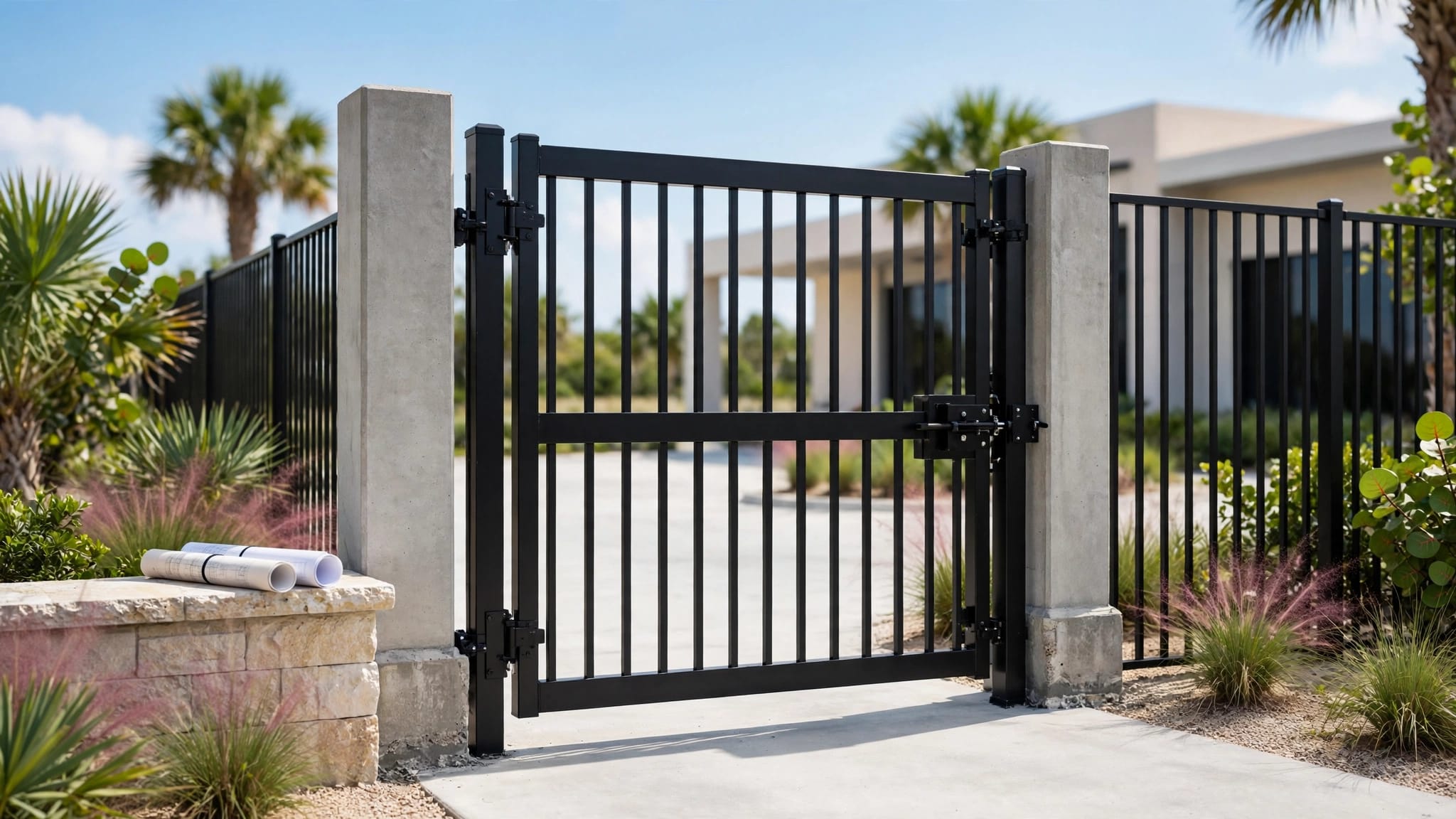
Powder-coated aluminum can improve the appearance of club entrances and walkways. Although aluminum doesn't develop red rust like steel, salt exposure can still cause corrosion.
Standard ornamental pickets shouldn't become the primary ball barrier unless their openings meet containment needs.
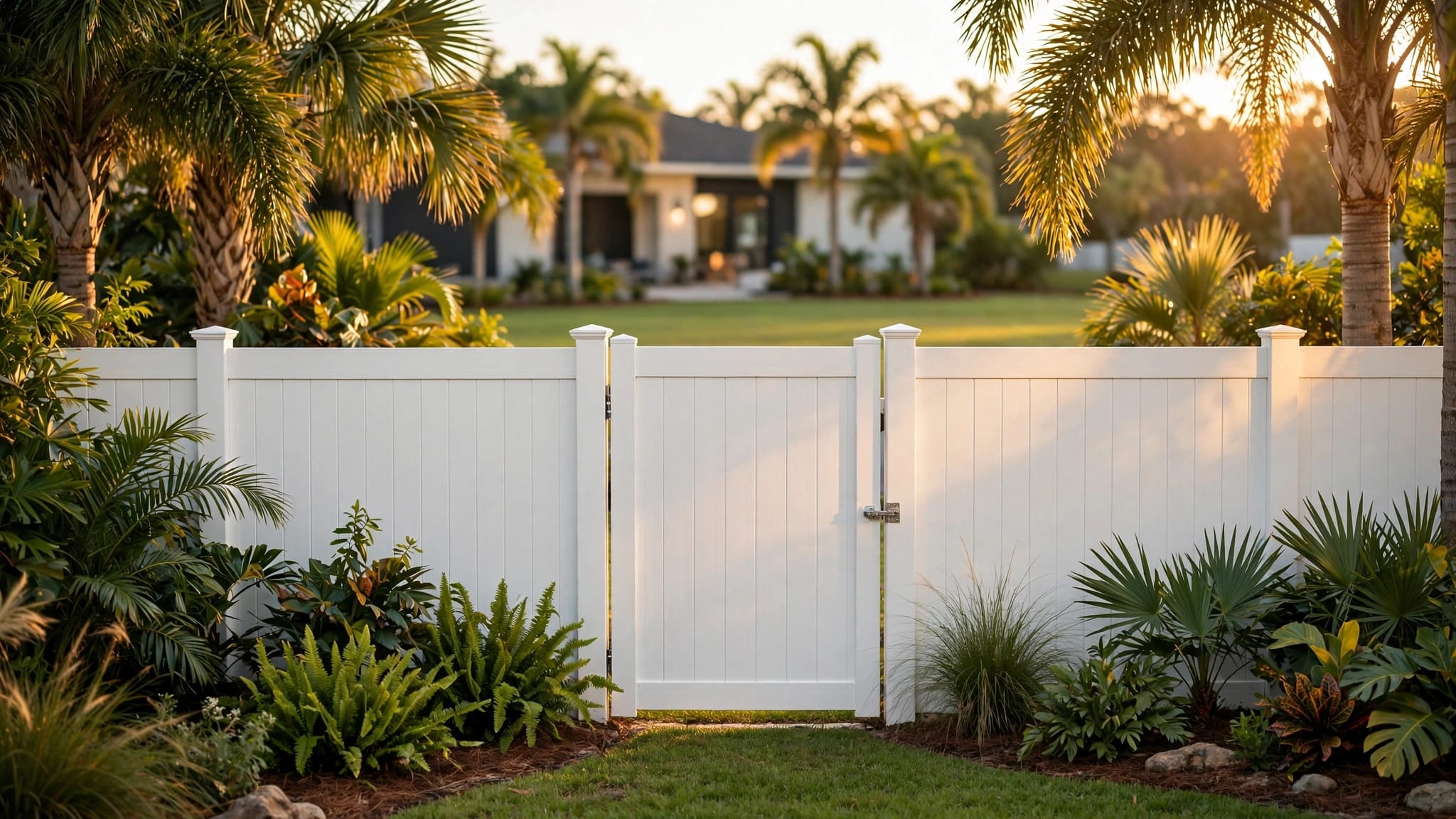
Solid vinyl or wood can screen service areas or neighboring properties. However, those panels restrict views and catch more wind. Royal Fence's commercial fence installation options include these materials for different property uses.
Match Fence Height to the Court Layout
Height affects ball containment, appearance, permitting, and structural demands. Choose it alongside the court layout rather than copying a nearby property's fence.
Perimeter Height and Player Clearance
ASTM F3684-24 describes traditional tennis enclosures as 10 to 12 feet high . That description isn't a universal code requirement or a USTA mandate.
A club should review where balls commonly leave the court, nearby pedestrian areas, and the available runoff space. A tall fence installed too close to play can create an obstruction.
The same ASTM guide reports ITF recommendations of at least 10 feet between a sideline and divider fence, with 12 feet preferred. Confirm the appropriate layout before setting posts, particularly when renovating older courts.
Sidelines and Court Dividers
Every section doesn't necessarily need full perimeter height. ASTM F3684-24 identifies 42 inches as a typical sideline-fence height and describes divider fences as commonly 42 inches or higher.
Lower sections can preserve views and make movement between courts easier. However, they won't catch the same high shots as a tall enclosure.
For busy clubs, review how dividers affect lessons, league matches, and ball retrieval. Gate locations should support those routines without sending people through an active court's runoff area.
Protect the Whole Fence Against Coastal Corrosion
Southwest Florida combines humidity, strong sun, heavy rain, and varying salt exposure. Near the Gulf or brackish canals, connections deserve particular attention.
Coatings Must Cover More Than the Mesh
Ask which finish protects the fabric, framework, gate frames, brackets, and exposed fasteners. Small coating failures can leave steel vulnerable even when most of the enclosure looks sound.
For aluminum components, ask which AAMA coating specification, if any, the product meets. AAMA 2603, 2604, and 2605 describe different performance requirements for architectural coatings.
Still, a coating classification doesn't replace good installation or regular cleaning. Review the manufacturer's coastal warranty, approved cleaners, and repair instructions before accepting the system.
Hardware Compatibility and Routine Care
Stainless steel hardware can improve corrosion resistance, but the grade and compatibility matter. Ask whether manufacturer-approved 316 stainless components suit exposed connections.
Dissimilar metals can corrode where they touch under wet, salty conditions. The installer should explain how compatible materials or isolation details address that risk.
After installation, rinse salt residue according to the manufacturer's guidance. Use mild cleaners, redirect sprinklers, and trim branches that rub coatings.
Inspect hinges, latches, and post bases regularly. After storms, look for loose fittings, coating damage, leaning posts, and gate drag before reopening affected courts.
Plan Windscreens Before the Fence Is Designed
Windscreens can improve the playing background and reduce distractions. However, they also increase the surface area that wind pushes against.
A fence designed as open mesh may need a different structural design once windscreens are attached.
Specify the proposed screen material, coverage, and attachment method before the contractor sizes the framework and foundations. Porosity helps describe a screen, but it doesn't prove the complete enclosure can withstand the site's wind conditions.
Also, include banners and sponsor signs in that conversation. Adding them later can change loading on a fence that was designed without them.
Ask for a written storm procedure covering screen removal, safe access, and responsibility. Staff should complete any removal before dangerous weather arrives. No fence material or open-mesh design makes an enclosure hurricane-proof.
Build Gates for Daily Club Traffic
Gate problems interrupt court access even when the surrounding fence remains sound. Frequent use, coastal corrosion, and misalignment can wear down hinges and latches.
Plan pedestrian entrances around player circulation and spectator seating. Also, provide access for the maintenance equipment your club actually uses. Court resurfacing crews may need access beyond a standard walk-through opening.
Because gate leaves place loads on hinge posts, ask how the contractor supports and reinforces those posts. Include gate-frame construction, corrosion-resistant hardware, and adjustment provisions in the proposal.
Where accessible routes apply, confirm clear openings, maneuvering space, thresholds, and usable hardware. A gate beside a pool may involve separate barrier requirements.
If the club uses member credentials, coordinate commercial gate access systems with safe exit arrangements. Test the complete gate assembly at handover, including latching, clearance, and operation through its full travel.
Confirm Local Permits and Engineering Requirements
The permitting authority depends on the property's location. A club in Cape Coral, Fort Myers, Estero, or Bonita Springs shouldn't assume unincorporated Lee County procedures apply.
Lee County's commercial fence guide requires permits for commercial fences and walls. Its drawing checklist includes fence type, post embedment, gate dimensions and locations, hardware, and manufacturer details.
However, the County's commercial guide and DigEplan checklist describe engineering thresholds differently. Confirm whether signed and sealed plans are required for the proposed height and material. Don't assume a chain-link enclosure receives an automatic exemption.
As of October 2026, Lee County identifies the Florida Building Code, 8th Edition (2023), for permit applications. The 9th Edition (2026) has a scheduled effective date of December 31, 2026. Florida law generally ties the applicable edition to the permit-application date.
For Cape Coral projects, review commercial fence permit requirements, then confirm current requirements with the city.
Also, check easements, drainage, setbacks, and association approvals before finalizing the layout.
Compare Contractor Quotes by Complete Scope
A residential fence price per foot won't reliably predict a tall club enclosure. Height, framework, foundations, gates, screen loading, and coastal exposure all affect the scope.
Ask bidders to price the same layout and specifications. Otherwise, a lower estimate may include lighter framework, fewer gates, or different coating coverage.
The written proposal should identify mesh opening, wire specification, framework dimensions, finish, hardware, and foundation details. It should also state whether engineering, permits, removal, disposal, court-surface repairs, and cleanup are included.
For an operating club, scheduling matters too. Ask how crews will protect the playing surface and keep members away from excavation and construction areas.
Finally, review product and workmanship warranties separately. Coastal exclusions and maintenance conditions can affect coverage.
Comparable specifications make price differences easier to judge. They also give the club a clearer basis for inspection and future repairs.
Frequently Asked Questions
Can a Club Reuse Existing Posts?
Possibly, but appearance alone isn't enough. A contractor should check corrosion, alignment, connections, and foundation condition before recommending reuse.
The review must also consider the replacement fence height and any proposed windscreens. Existing posts may have been installed for different loads.
Have the proposal distinguish retained components from replacements. Also, ask how hidden deterioration discovered during removal will affect the price and schedule.
Can Tennis and Pickleball Share the Same Fence?
They can share an enclosure when the barrier contains both balls and the layout supports safe play. However, court dimensions, dividers, and player circulation still need separate review.
For clubs adding another sport, Royal Fence's guidance on pickleball court fencing in Cape Coral addresses related mesh and material choices. Confirm the shared facility's requirements before extending the existing fence.
Choose a Fence System Your Club Can Maintain
Reliable tennis court fencing combines suitable ball containment with coastal protection and a sound installation. Gates, fittings, and coatings deserve the same scrutiny as the visible mesh.
Start with the court layout, account for windscreens, and compare proposals built around the same specifications. The result should be an enclosure your club can inspect, maintain, and keep in daily use.