August 11, 2026
A pickleball can clear a low backyard fence in seconds, then land in a neighbor's yard, pool area, or landscaping. The right pickleball court fencing keeps play contained while handling Cape Coral's heat, humidity, heavy rain, and coastal air.
For most residential and community courts, black vinyl-coated chain link is the strongest starting point. It provides clear sightlines, allows wind to pass through, and offers better corrosion protection than basic uncoated steel. However, fence height, gate placement, court location, and local requirements also affect the right choice.
What makes the best pickleball court fencing for Cape Coral?
A court fence has three practical jobs. It contains the ball, gives players a clear boundary, and protects nearby property from stray shots. A good design should also withstand regular outdoor exposure without creating a maintenance problem after every storm.
The pickleball playing area measures 20 by 44 feet. The fence should not sit directly on the painted lines because players need room to move beyond the court during fast rallies. Extra space also makes gate access, cleaning, and repairs easier.
Cape Coral properties face conditions that can shorten the life of poorly selected fencing. High humidity can affect steel hardware and cut edges. Salt in the air increases corrosion risk, especially near the Caloosahatchee River, canals, and Gulf-access areas. Strong storms can place heavy loads on posts, gates, and attached windscreens.
Open fencing usually works better than solid panels around a court. Chain link provides ball control without blocking visibility or catching as much wind. Solid wood or vinyl panels can create more wind pressure, limit views, and make the playing area feel closed in.
A fence can be corrosion-resistant without being corrosion-proof. The coating, hardware, fasteners, installation, and maintenance plan all affect service life.
The best pickleball court fencing for one property may not suit another. A private backyard court, a gated community amenity, and a commercial recreation area each have different traffic, appearance, and access needs.
Compare fencing materials for a Southwest Florida court
Material selection affects ball containment, appearance, wind exposure, and long-term upkeep. This quick comparison shows where each common option fits.
| Fence option | Main advantage | Main concern | Best fit |
|---|---|---|---|
| Black vinyl-coated chain link | Strong visibility, airflow, and ball control | Coating and hardware need proper care | Most court perimeters |
| Hot-dip galvanized chain link | Practical and widely available | May show oxidation sooner in coastal exposure | Budget-conscious projects |
| Ornamental aluminum | Clean appearance and rust resistance | Open pickets may allow balls through | Property boundaries and accents |
| Vinyl privacy fencing | Low routine painting needs | Solid panels catch wind and block views | Areas away from the court |
| Wood fencing | Warm appearance and flexible design | Requires more upkeep in humid weather | Decorative boundary fencing |
Black vinyl-coated chain link
Black PVC-coated chain link is often the best all-around option for a Cape Coral court. The dark finish reduces visual glare and gives the enclosure a cleaner appearance than standard silver chain link. Its open mesh lets spectators see the game and allows air to move through the fence.
Ask the contractor about the entire system, not only the mesh. The posts, rails, fittings, ties, gates, and fasteners should match the exposure level and work with the selected coating. A small mesh opening, often around 2 inches, may improve ball containment, but the proper size depends on the fence design and court layout.
A taller backstop can help keep balls away from roads, homes, pools, and busy walkways. The contractor should also account for post strength and footing depth when the fence rises above a standard side barrier.
Aluminum fencing
Aluminum resists red rust and offers an attractive finish for residential properties. It works well for many property boundaries, pedestrian areas, and decorative sections near a court.
Standard ornamental aluminum pickets are usually a poor primary ball barrier because the spaces between pickets allow pickleballs to pass. Aluminum can still fit into a larger design, but the playing area needs a continuous mesh or another barrier that contains shots.
Galvanized chain link
Hot-dip galvanized chain link is a practical choice when the budget is tight or the site has less salt exposure. It provides the visibility and airflow courts need, and local fence contractors commonly install it.
Still, basic galvanized finishes can develop surface oxidation over time in Southwest Florida. Ask about the galvanizing specification, the wire gauge, the framework finish, and the type of hardware included. Spending more on a compatible coating may reduce future repairs.
Vinyl and wood privacy fencing
Privacy fencing can define the outer property line, shield equipment, or separate the court from a neighboring use. It usually isn't the best material for the court enclosure itself.
Solid panels block sightlines and can take on more wind pressure during storms. Wood also needs regular sealing or staining to manage moisture exposure. If privacy fencing must sit near the court, the layout should account for wind, drainage, access, and visibility before installation.
Choose the right height, layout, and gates
Many outdoor court designs use fencing around 4 feet high along the sides and taller barriers, often 10 feet, behind the baselines. This arrangement provides a low visual boundary for side play while reducing the number of balls that travel over the ends of the court.
Those dimensions are common design practices, not a universal requirement for every Cape Coral property. The right height depends on nearby structures, roads, walkways, property lines, lighting, and the amount of space available around the playing area.
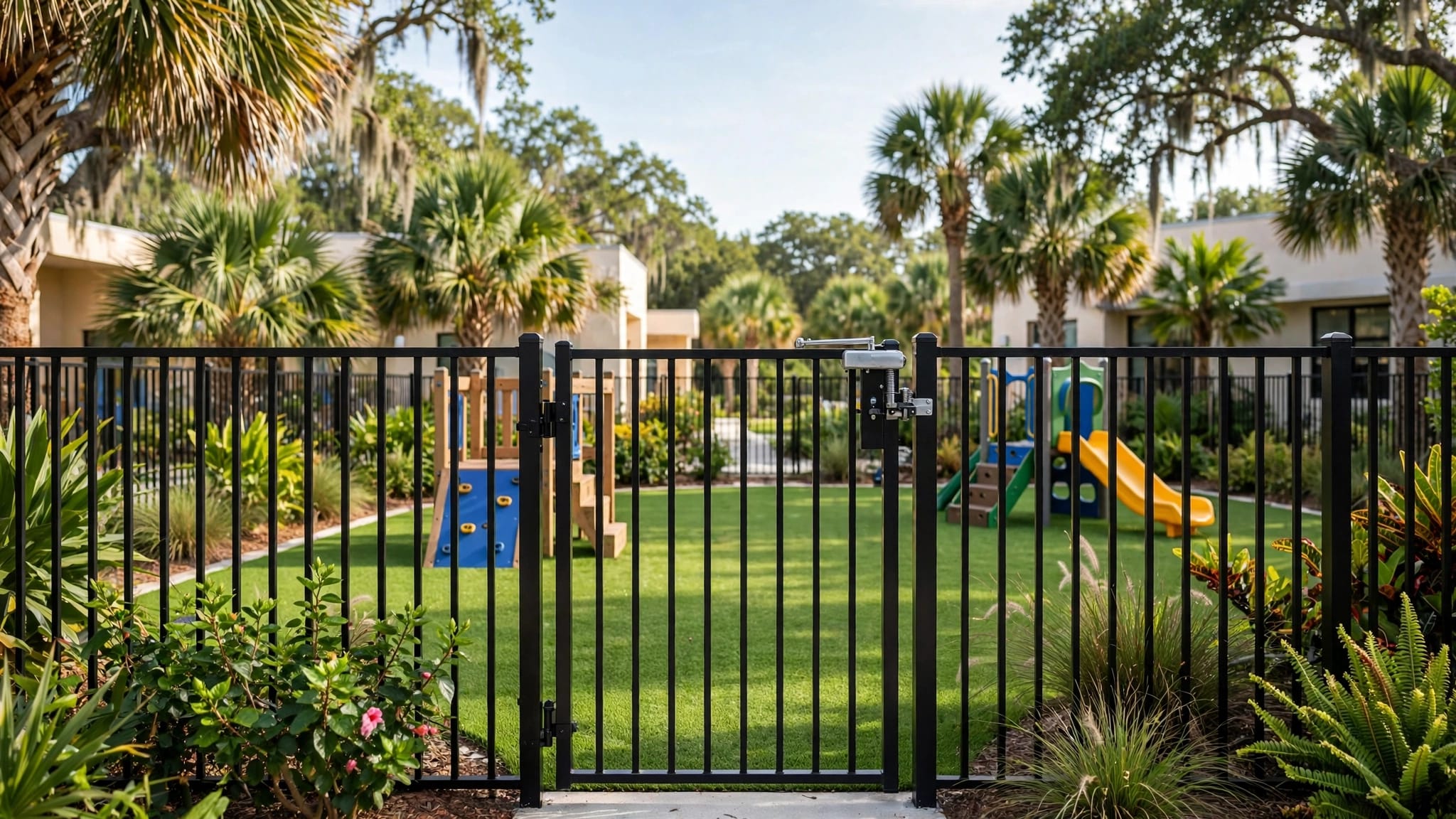
Place gates where players and maintenance crews can enter without crossing the busiest part of the court. A gate that swings into the playing area creates a collision hazard and can interfere with normal movement. It should have a secure latch, suitable clearance, and hardware that doesn't create sharp projections.
The fence posts also need careful placement. Avoid putting posts where a player may run into them while chasing a ball. Rounded post caps, properly tensioned mesh, and protected fittings help create a safer edge.
Windscreens require additional planning. They can improve privacy and reduce visual distractions, but they also add wind load. A full screen attached to every fence section may behave differently during a storm than open chain link. Ask how the screen attaches, whether the system needs seasonal removal, and whether the posts and footings support the added pressure.
Court orientation matters as well. Direct sunlight can affect visibility, while nearby lights, walls, and landscaping can create glare or shadows. A site review can identify these issues before concrete footings and fencing limit future changes.
Plan permits, HOA approval, and site access first
Before installation, check current City of Cape Coral requirements for fences, setbacks, easements, corner-lot visibility, and property improvements. Requirements can vary by location and project type. Court lighting, electrical work, drainage changes, and commercial use may require separate review.
HOA rules may also control the fence's height, color, material, location, and appearance. Some communities require an application, drawings, material samples, or approval before work begins. Get that decision in writing before ordering materials.
A contractor familiar with Cape Coral should inspect the proposed court area and review:
- Property lines, easements, utilities, and existing structures.
- Drainage patterns, irrigation lines, and low areas that hold water.
- Court dimensions, run-off space, gate locations, and service access.
- Fence height, mesh size, post spacing, coatings, and hardware.
- Wind screens, lighting, landscaping, and storm preparation.
A written estimate should separate the fence, gates, site preparation, removal work, concrete, permitting support, and any screening. Longer perimeters and taller backstops require more materials. Challenging access, uneven ground, buried utilities, and demolition can also affect the final price.
For a homeowner, a smaller court enclosure may keep the project manageable. An HOA or property manager may need a stronger framework, wider maintenance access, consistent finishes, and a plan for regular inspections. Those needs should appear in the scope before construction starts.
Maintain the fence through heat, rain, and storms
Even a well-built fence needs periodic inspection in Southwest Florida. Rinse exposed metal and coated surfaces when salt or dirt collects. Pay close attention to the lower sections of posts, gate frames, fittings, and areas where the coating may have been cut during installation.
Check the gates for sagging, sticking, loose hinges, and latch problems. A misaligned gate can place stress on the frame and become difficult to use during busy court hours. Remove vines and other growth before they pull on the mesh or hold moisture against the finish.
After a major storm, inspect the enclosure before reopening the court. Look for bent posts, loose tension components, damaged mesh, displaced caps, and detached windscreens. A contractor should repair structural damage rather than stretching damaged mesh back into place.
Avoid attaching banners, shade cloth, storage racks, or other heavy items without reviewing the added load. These attachments can change how wind reaches the fence and may affect the structure during severe weather.
Conclusion: Build for play, weather, and the property around it
For most Cape Coral courts, black vinyl-coated chain link offers the best balance of visibility, airflow, ball containment, and corrosion resistance. Taller end fencing, strong posts, reliable gates, and carefully selected hardware make the enclosure safer and easier to maintain.
The strongest pickleball court fencing plan also respects the surrounding property. Review current permitting rules, HOA requirements, drainage, utilities, and storm exposure before installation. When the materials and layout match the site, the fence supports better play without becoming a recurring problem.