August 30, 2026
A fence can give your Estero yard privacy and security, but a preserve-edge lot needs more thought than a simple property-line install. Estero fence planning should begin with records, boundaries, and drainage, not a material color or panel style.
A misplaced fence can interfere with an easement, drainage route, HOA standard, or preserve buffer. Getting the layout right before materials arrive protects your budget and helps the finished fence fit the neighborhood.
Start With the Property Facts, Not the Fence Style
Fence lines often look obvious until a survey tells a different story. A row of shrubs, an old stake, or a neighbor's existing fence may sit away from the legal property line.
For Estero fence planning, pull out the most current survey or plot plan before choosing a design. Mark the proposed fence route, gates, pool equipment, drainage features, utility boxes, and preserve-side edges.
Confirm which local jurisdiction reviews your parcel
Some properties fall within the Village of Estero, while others are in unincorporated Lee County. That distinction affects where you confirm current permit and zoning requirements.
The Village of Estero's Residential Fence/Wall Application calls for plot plans that show property lines, buildings, easements, abutting streets or water bodies, fence location, and setback distances. Local requirements can change, so confirm the current process directly with the reviewing jurisdiction before finalizing a contract.
If your parcel is in the Village, the Estero fence permit guide can help you prepare questions for the approval process. It shouldn't replace a current check with Village staff.
Use a current survey to find easements
An easement can give a utility provider, drainage authority, association, or neighboring parcel certain access rights across part of your lot. Fence posts, gates, and concrete footings may create problems if they block that access.
Review the survey and recorded documents for utility, drainage, access, or conservation easements. Then ask the relevant holder and local reviewer whether the proposed location is allowed. Don't assume a narrow strip at the back of the yard is available because it appears unused.
A fence can follow a property line and still conflict with an easement or recorded conservation area.
Estero Fence Planning Near Preserve Boundaries
A backyard preserve view is one of the strongest features of many Estero homes. It also means the visible edge behind your house may not match the actual boundary you can build beside.
The preserve may be a separate tract, a conservation easement, wetland area, drainage corridor, or association-owned common area. Each situation calls for a different review.
Verify the boundary before anyone stakes the route
Ask for the recorded plat, survey, and any community documents that identify the preserve-side line. If markers are missing or the boundary is unclear, speak with a licensed surveyor before installation.
Avoid placing fence posts based on a tree line, pond bank, mowed edge, or maintenance path. Those features can shift over time and may sit outside your property. A contractor can measure a fence route, but a contractor doesn't replace a boundary survey.
Also check whether the association maintains a strip behind the homes. A fence that blocks a mowing route, drainage access point, or preserve-management area can lead to removal demands later.
Keep wildlife movement in mind
Preserved land can support wildlife that moves through connected wet areas and vegetated corridors. There isn't a universal Estero rule that dictates wildlife fence setbacks for every lot, so site-specific confirmation matters.
A solid privacy fence gives the strongest visual screen, yet it creates a hard edge along the yard. Open-style aluminum fencing keeps sightlines open and may feel less enclosing beside a preserve. Your choice should account for pets, children, privacy needs, community standards, and any site-specific direction from local officials or the HOA.
Never add an informal gate that opens into a preserve or common area without documented approval. It can create a security issue and invite unwanted foot traffic across protected land.
Check HOA Approval Before Ordering Materials
Government approval and HOA approval are separate matters. A permit or zoning confirmation doesn't override a deed-restricted community's architectural standards.
Many Estero communities regulate fence height, materials, colors, locations, and visibility from roads or water. Some neighborhoods also restrict fencing along preserves, lakes, or shared open space.
Submit a complete architectural request
Ask the HOA or architectural review committee for its current fence application. Provide the materials it requires, which may include a survey, site plan, product photo, color selection, elevation, and neighbor information.
Get the decision in writing before ordering custom panels or scheduling installation. A late change from solid vinyl to open aluminum can affect cost, privacy, gate layout, and lead times.
Bring the same drawing to the HOA and permitting conversation. That reduces the chance that one version shows a gate or fence line the other reviewer hasn't seen.
Match the fence to neighborhood appearance
A preserve-side yard often has more visibility than homeowners expect. Neighbors may see the rear fence from a trail, road, lake edge, or common space.
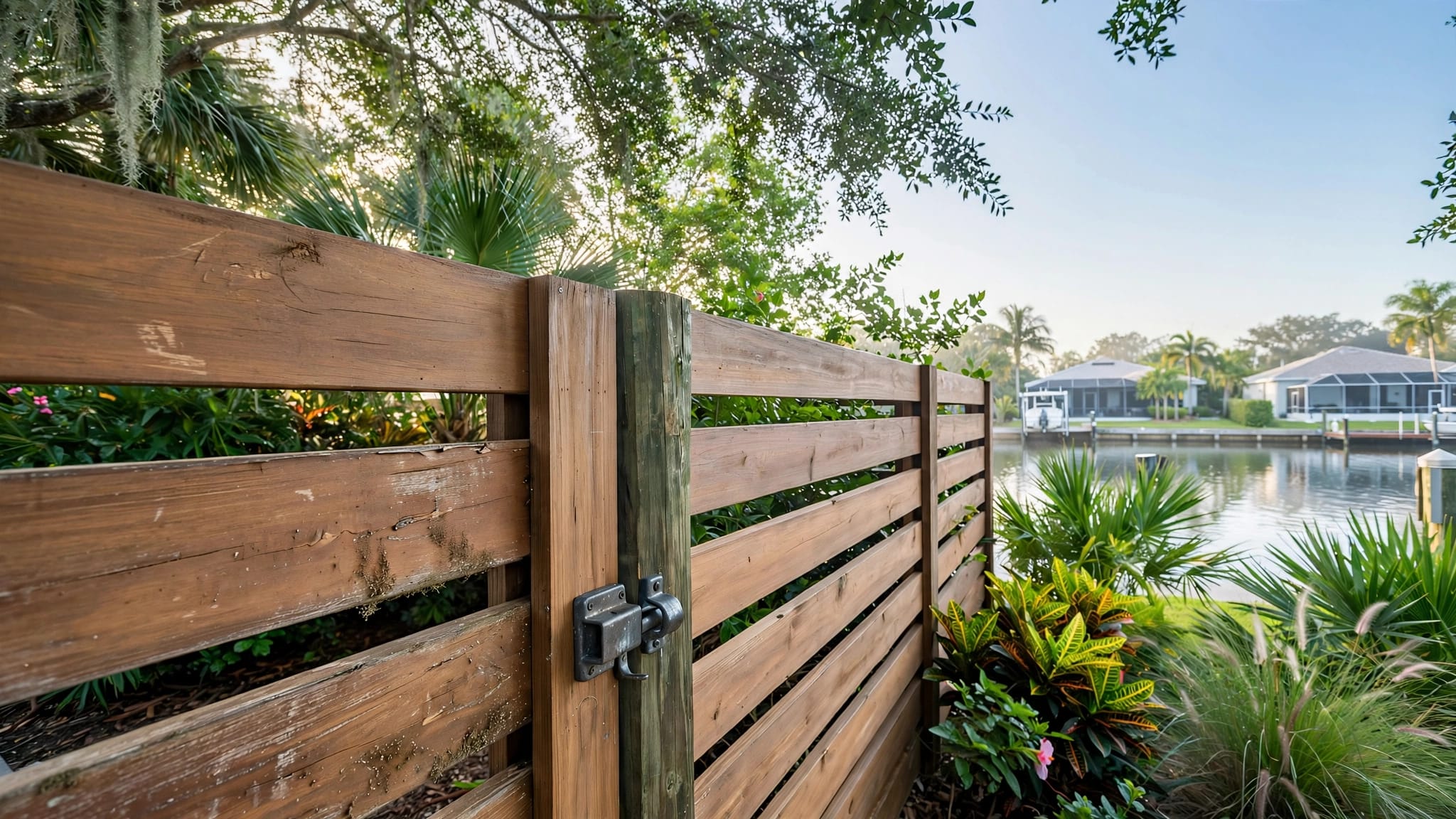
Choose a finish that works from both sides of the property line. White or tan vinyl can create a clean enclosed yard, while bronze or black aluminum often recedes against vegetation. Wood can look natural beside mature landscaping, but Southwest Florida humidity, rain, and insects raise the maintenance commitment.
Choose Materials for Privacy, Security, and Views
The right material depends on what you need the fence to do every day. Privacy, pet containment, pool safety, security, and sightlines don't always point to the same product.
For Estero fence planning , first identify the sections that need screening. You may not need the same fence around every side of the yard.
Vinyl creates a strong privacy screen
Vinyl privacy fencing suits patios, pools, rear seating areas, and close side-yard conditions. It doesn't need painting, and its consistent finish works well in many planned communities.
However, solid panels catch more wind than open fencing. Proper post depth, reinforcement where required, appropriate spacing, and strong gate hardware matter in Southwest Florida storms. Taller isn't always better, especially on an exposed lot.
A partially screened layout can be a practical compromise. Use solid vinyl where neighbors look directly into the patio, then transition to an approved open style along a preserve or water-facing edge. Review vinyl fence height options for privacy and pets before committing to a height.
Aluminum protects views and handles humid conditions
Aluminum fencing works well when you want a defined boundary without turning the yard into a closed box. Its open pickets preserve views of mature vegetation and let wind pass through more freely than a solid-panel design.
For homes with dogs, ask about picket spacing and gate-latch placement. For pool areas, confirm current barrier and gate requirements with the proper local authority rather than relying on a neighbor's installation.
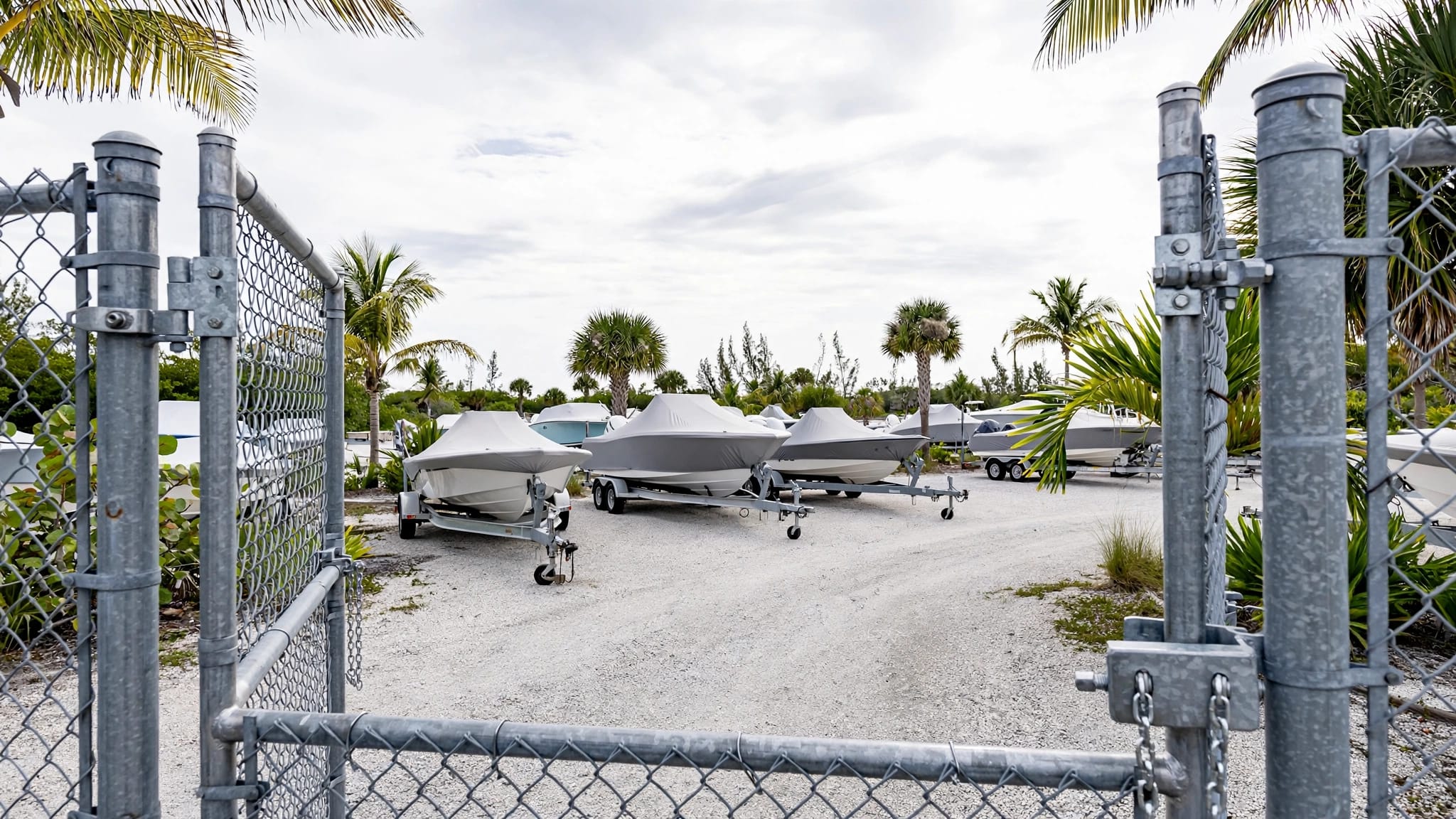
Chain link can be cost-conscious and effective for pet containment, although many HOAs limit it or prohibit it in visible locations. Wood remains an option for a traditional appearance, but it requires regular inspection, cleaning, sealing, and repairs.
Protect Drainage and Build for Florida Weather
A fence should never become a dam across a swale, shallow flow path, or drainage outlet. Estero's heavy seasonal rain can expose drainage problems quickly.
Walk the yard after a strong storm if possible. Look for standing water, washed mulch, low spots, downspout discharge, and the direction water moves toward a lake, preserve, curb, or rear drainage area.
Preserve existing drainage paths
Show swales, drainage structures, retention areas, and water-adjacent features on the site plan. Then discuss how the fence line and bottom clearance will affect water movement.
Avoid filling low areas solely to create a level fence route. Added soil can redirect runoff toward a neighbor or place pressure on a preserve edge. If the yard already drains poorly, address that issue before installing a fence.
Keep gates clear of areas that routinely collect water. A gate that drags through wet turf will sag sooner and frustrate everyone using it.
Plan for wind loads and strong gates
Privacy panels act like sails during high winds. Quality installation includes properly sized posts, suitable foundations, secure rails, and hardware matched to the gate's size and weight.
The Village of Estero states that walls over six feet require signed and sealed plans from a Florida-registered architect or engineer for required wind loads. Fence and wall rules aren't interchangeable, so verify the standards that apply to your exact project.
Choose latches and hinges that resist corrosion. Coastal air, irrigation overspray, and frequent rain take a toll on cheap hardware long before the fence panels wear out.
Set Up a Clean Installation Day
Good preparation prevents most jobsite surprises. It also gives the installer a reliable route that doesn't depend on guesswork.
Before digging begins, call 811 through Florida 811 and wait for utility markings. Markings help identify public utility lines, but ask about private irrigation, landscape lighting, drainage pipes, and service lines that may not be included.
Give your contractor a complete project picture
Share your survey, HOA approval, permit status, preserve information, gate preferences, and known drainage concerns. Point out sprinkler heads, septic components, pool equipment, outdoor kitchens, and low-voltage wiring.
A clear proposal should identify the fence material, height, total footage, gate count, post and hardware details, removal work, and who handles permitting or HOA paperwork. Ask how the crew will address roots, soft ground, utility conflicts, and access limitations.
Use this final pre-installation check:
- Confirm the fence route against the survey and approved drawing.
- Verify easements, preserve limits, and community-owned areas.
- Obtain written HOA approval where required.
- Confirm current local permit and zoning requirements.
- Complete utility locating before post holes are dug.
A Fence That Respects the Property
The best preserve-edge fence begins with an accurate boundary and a plan that respects drainage, easements, approvals, and the character of the surrounding land. Material choice comes after those facts are clear.
Careful Estero fence planning gives you privacy and security without creating an expensive conflict at the back of the yard. A well-placed fence should protect your home while fitting the conditions that make the property worth owning.