October 13, 2026
A marina fence has to do more than mark a property line. It must help protect boats and equipment, direct visitors to the right entrance, and withstand salt air, humidity, heavy rain, and summer storms.
Commercial marina fencing works best when the perimeter, gates, materials, and daily access plan are designed together. The right choices depend on what the site stores, how people move through it, and which areas need an open view or extra privacy.
Key Takeaways
- Match the fence to the marina's theft risks, storage layout, and traffic patterns.
- Galvanized or coated chain link and aluminum are common options for coastal properties.
- Include hinges, latches, posts, fasteners, and gate operators in the corrosion plan.
- Keep emergency access, sightlines, and gate approaches clear.
- Plan for drainage, storm exposure, maintenance, and local requirements before installation.
Plan Commercial Marina Fencing Around Daily Operations
Map what needs protection
A boat storage yard may contain trailers, vessels, fuel or service areas, tools, and customer vehicles. These assets may need different levels of access control. A perimeter fence can define the site, while internal sections can separate public parking from staff work areas or higher-value storage.
Start with the way the property operates. Mark vehicle entrances, pedestrian routes, delivery areas, staff-only zones, and spaces where boats are moved or serviced. Fencing should guide traffic without narrowing turning areas or interfering with routine work.
Account for waterfront conditions
Marinas often have uneven boundaries, seawalls, drainage routes, and openings used to move boats or equipment. Those features affect post placement and gate locations. A fence line that ignores them can obstruct access or complicate maintenance.
For smaller boat and trailer storage settings, fencing for boat and trailer storage offers related coastal considerations. Commercial sites need their own layout, based on the property's operations and exposure.
Choose Materials Built for Coastal Exposure
Compare chain link and aluminum
Galvanized or vinyl-coated chain link is a practical choice for large perimeters, service areas, and storage zones where visibility matters. The open design lets staff see activity across the yard. It can also make it easier to monitor boats without screening the entire property.
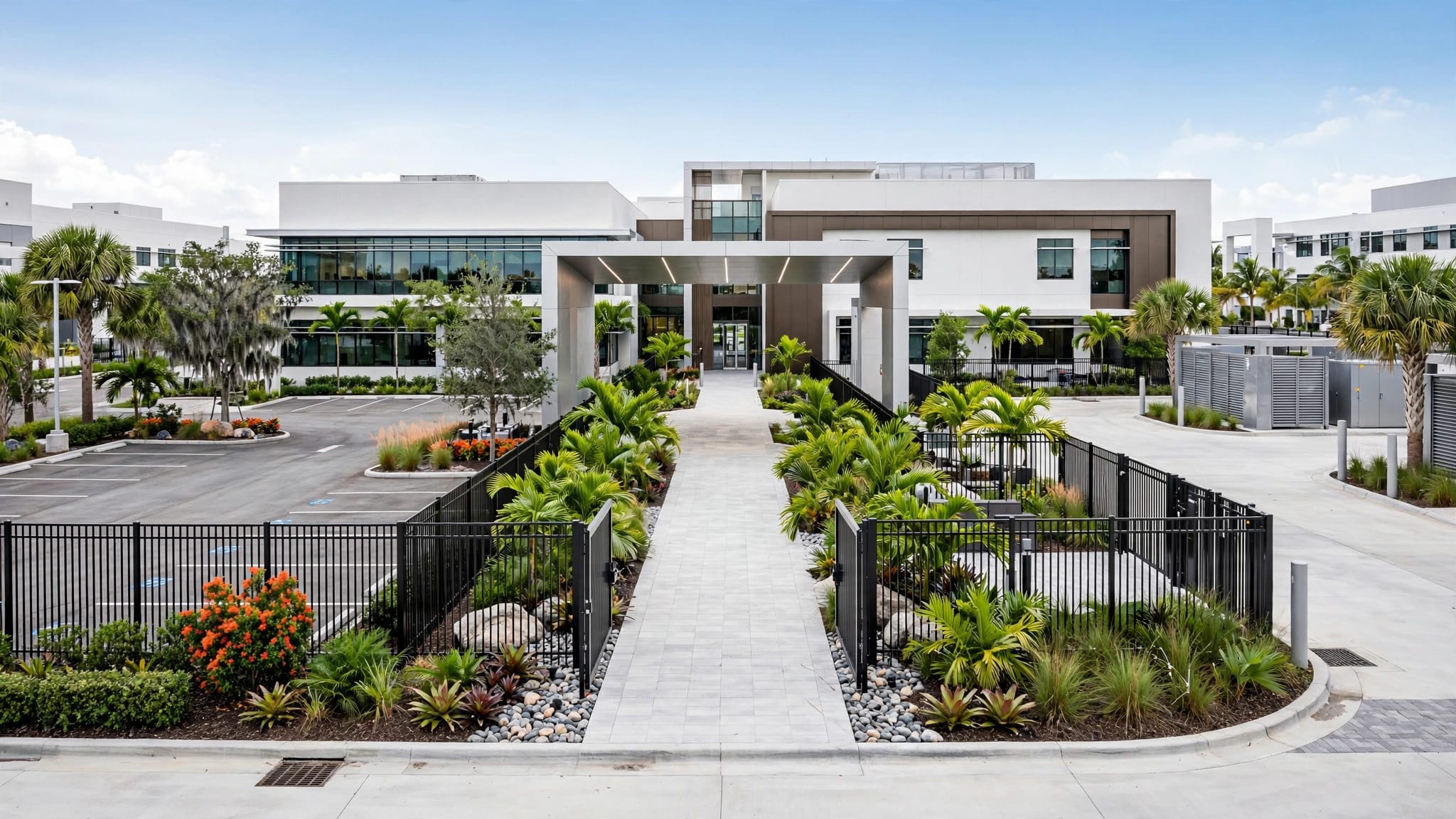
Aluminum offers a finished appearance and handles coastal air well. It may suit customer-facing entrances or areas where appearance and sightlines are priorities. For a closer look at the tradeoffs, see our comparison of coastal fence materials for commercial properties.
Use privacy only where it helps
Vinyl or other solid sections can screen service work, staff areas, or stored items from public view. However, a solid panel catches more wind than an open fence. Its location and support need to suit local exposure and site conditions.
A mixed layout can balance privacy and visibility. Open fencing around boat storage keeps sightlines, while screened sections near offices or sensitive work areas can limit views where needed. Wood can suit a particular look, but moisture, sun, and frequent gate movement can add maintenance demands.
Control Corrosion Across the Whole Installation
Specify compatible materials
Salt air and humidity affect more than fence fabric. Posts, rails, brackets, fasteners, welds, cut ends, hinges, and latches all face exposure. Coatings can be damaged during installation or later repairs, leaving vulnerable spots that deserve attention.
Choose materials and finishes with the site environment in mind. Steel can provide strength, but exposed coatings, welds, and cut edges need protection. Avoid treating the fence panel as the only corrosion decision; hardware and connections are part of the same system.
Inspect gates and connection points
Moving parts often need attention before stationary fence sections. Hinges, rollers, latches, and operators face repeated movement, water, and salt exposure. Mixed metals can also create corrosion concerns where they touch, so hardware selection should suit the fence material and location.
For more on fence durability in sun, salt, and humidity, consider how coastal conditions affect the full installation. A simple inspection routine can catch chipped coatings, loose connections, rust, and alignment problems before they disrupt access.
Build Security Around Access, Not Just the Perimeter
Divide access by role and activity
A fence deters casual entry, but the entry plan determines how people move through the property. Separate customer access from staff or service access when the layout calls for it. A locked vehicle gate, pedestrian entrance, lighting, and regular inspections can support a basic security plan.
Sites holding valuable boats or equipment may need more controlled entry, stronger gate hardware, and cameras. These measures work best when they match the actual risk and staff procedures. Our guide to security fencing for commercial equipment yards covers related perimeter planning for commercial storage.
Preserve useful sightlines
Open fencing helps staff and security cameras monitor activity, and it can make a large yard easier to supervise. Yet views can be blocked by stacked equipment, landscaping, signs, or parked trailers. Place gates and fence sections with those obstructions in mind.
Lighting should support visibility around entrances and active areas. Keep plants and stored items from obscuring the fence line or gate hardware. A security plan that preserves clear views can make it easier to notice an open gate, damage, or unexpected activity.
Design Marina Gates for Frequent, Reliable Use
Match the gate to traffic
A marina entrance may need to accommodate cars, trucks, trailers, or service vehicles. Gate type and opening direction should fit the approach, available space, grade, and traffic flow. Sliding and rolling gates can preserve space where a swing gate would interfere with circulation, but the site must accommodate the track or operating hardware.
Choose the fence and gate as one system. The frame, posts, hinges or rollers, latch, stops, and operator all need to suit the gate's size and weight. A gate that binds or leaves too little clearance can slow daily operations and invite staff to leave it open.
Plan the operator and access controls
An automated gate operator needs a duty rating that accounts for the gate's dimensions and weight, wind area, slope, and daily cycle count. A busy marina may open its gate far more often than a low-traffic storage yard, so usage matters when selecting equipment.
Access controls can include keypads, cards, remotes, or staffed entry, depending on how the property works. Plan how authorized people enter, how deliveries are handled, and how the gate can be opened during a power or equipment problem. Our information on commercial gate access control in Southwest Florida covers gate and operator planning in coastal conditions.
Protect Visibility and Safety Along the Waterfront
Keep critical routes open
Fence placement should not block fire lanes, hydrants, emergency gates, or required access routes. Gate openings need room for vehicles to approach and turn without obstructing other traffic. The same applies to pedestrian paths and areas used to move boats between storage and launch points.
At the water's edge, avoid placing posts or panels where they could interfere with seawall maintenance, drainage, or existing improvements. A fence can improve access control while still leaving service crews a practical route to the areas they need to reach.
Make entry points clear
People need to recognize which gate is for customers, staff, or deliveries. Signs can identify private areas, direct visitors, and warn of specific hazards. Keep signs legible and positioned where they won't block sightlines or create a vehicle clearance issue.
Gate hardware should be easy for authorized users to operate and should not create sharp edges or snag points along active routes. Where a site has separate pedestrian and vehicle entrances, clearly defined paths can reduce confusion and keep people away from moving equipment.
Plan for Storms, Drainage, and Maintenance
Consider wind and water
Southwest Florida fences face intense sun, heavy rain, humidity, salt exposure, and storms. Solid sections can catch more wind than open designs, so their location and support need careful planning. Fence posts and gate supports also depend on the site soil and drainage conditions.
Water can collect around footings or gate tracks and interfere with operation. Keep drainage paths clear, and avoid placing landscaping or stored materials where they can obstruct gate movement. If the fence is near a seawall or a wide automated gate, site-specific design becomes especially important.
Set a practical maintenance routine
Inspect the fence line and gates after major storms. Look for leaning posts, washout, loose fasteners, damaged coatings, debris in tracks, or changes in gate alignment. Routine checks can also include testing locks, operators, access controls, and any emergency release.
The installation quote should describe the full scope, including gates, hardware, removal, and permit-related work where applicable. We provide commercial fencing in Cape Coral, Fort Myers, Estero, and Bonita Springs, and a clear site plan helps align materials and access details with the property's use.
FAQ About Commercial Marina Fencing
Is chain link suitable for a marina?
Galvanized or vinyl-coated chain link can suit storage and service areas where visibility is important. Its fit depends on exposure, security needs, gate traffic, and the selected framework and hardware.
Should a marina use one fence material everywhere?
Not necessarily. Open fencing can work around storage, while screened sections may suit offices or service areas. A mixed layout can address different needs without sacrificing visibility across the whole site.
What matters most when choosing a marina gate?
Start with the opening, vehicle types, traffic volume, available operating space, and daily use. Then match the frame, supports, hardware, and operator to those conditions. The gate should work with the fence and the property's access plan.
Conclusion
A dependable marina fence is a coordinated system, not a panel choice. Coastal materials, corrosion-resistant connections, controlled gates, clear sightlines, and storm-aware placement all affect how well it supports daily operations.
When each part reflects the site's real traffic and storage needs, commercial marina fencing can help protect boats and equipment without making the property harder to use.