May 1, 2026
Fence lines in Cape Coral take a beating. The sun is strong, the soil is sandy, and salt can drift in from wind or irrigation. A plant that looks perfect at the nursery can look tired a month later.
That is why the best Cape Coral fence plants are the ones that fit the site first. They should handle heat, humidity, and dry spells without constant rescue work. If you also want more privacy while your landscape fills in, privacy fence ideas for Cape Coral yards with two-story neighbors can help you think about the fence and the planting line together.
What Cape Coral fence lines need from plants
Good fence-line plants do four jobs well. They handle full sun, grow in poor soil, tolerate salt exposure, and keep their shape with light pruning. In this climate, that matters more than exotic flowers or fast growth.
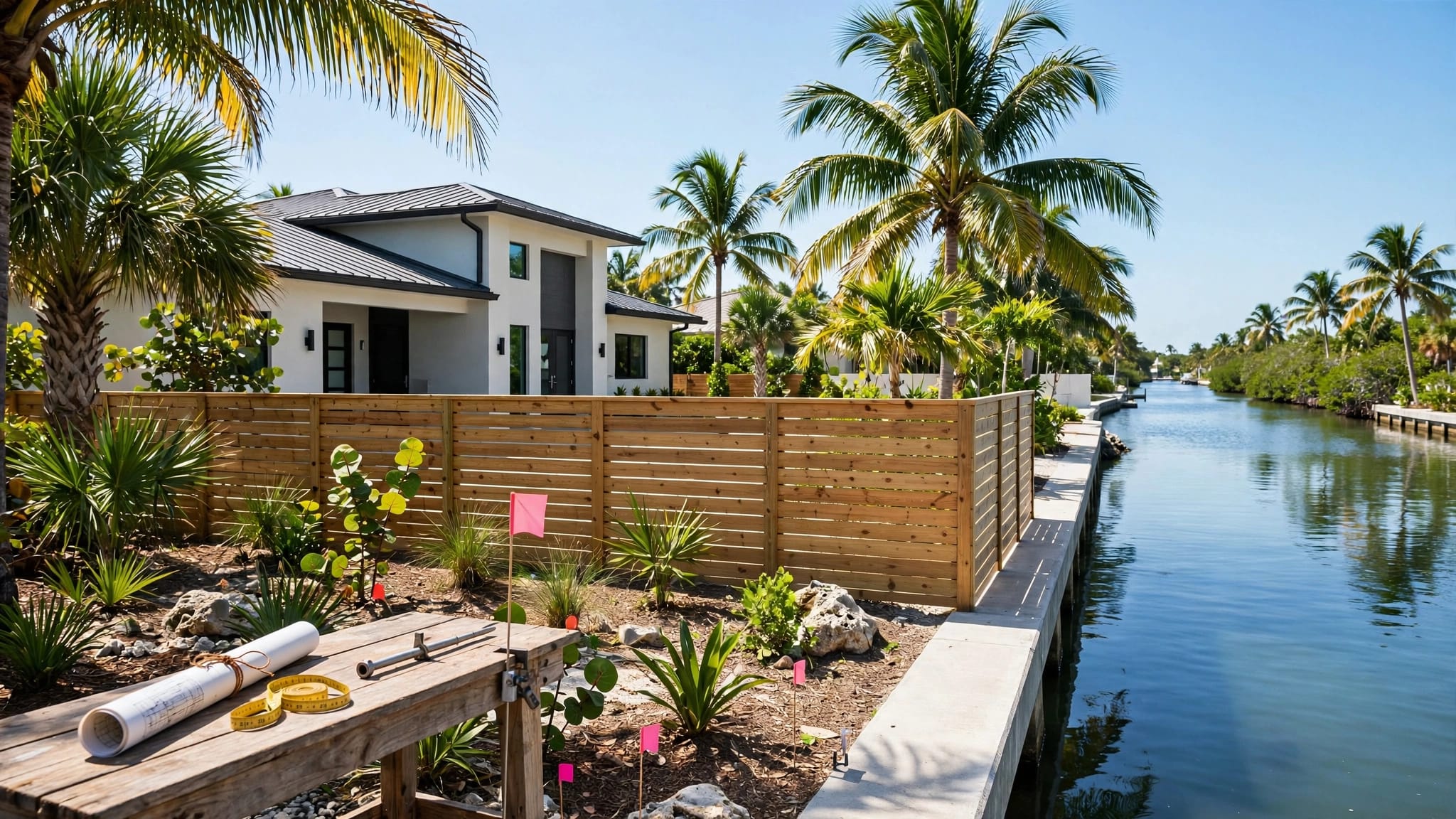
Spacing matters just as much. A shrub that ends up six feet wide should not sit a foot from a fence panel. Give roots room, leave airflow, and keep gates and corners clear. If you are timing a new fence with new landscaping, what to expect on fence install day in Cape Coral is helpful for planning around irrigation lines and planting beds.
Fall and early spring are the best planting windows. Roots settle faster before summer heat arrives, and that gives new plants a better start.
Best plants for Cape Coral fence lines
Here's a quick look at plants that fit different fence-line jobs well.
| Plant | Mature size | Spacing | Best use | Main caution |
|---|---|---|---|---|
| Cocoplum | 3 to 6 ft tall, 6 to 8 ft wide | 3 to 4 ft | Privacy hedge | Slow to fill at first |
| Florida hopbush | 6 to 10 ft tall and wide | 4 to 6 ft | Windy screens | Needs pruning to stay full |
| Wax myrtle | 6 to 10 ft tall and wide | 4 to 5 ft | Tall screening | Roots can spread |
| Seagrape | 6 to 10 ft tall and wide | 5 to 6 ft | Coastal privacy | Leaf and fruit litter |
| Pink muhly grass | 2 to 3 ft tall and wide | 2 to 3 ft | Soft color | Needs airflow |
| Beach sunflower | 1 to 2 ft tall, spreads wide | 1 to 2 ft | Color and pollinators | Spreads fast |
| Coral honeysuckle | Up to 15 ft vine | 2 to 3 ft | Flowering fence cover | Needs regular water |
| Coontie | 2 to 4 ft tall and wide | About 3 ft | Narrow side yards | Toxic if eaten |
A mixed planting usually looks better than one long row of the same plant. Shrubs build the screen, grasses soften the edge, and low growers fill gaps at the base.
Privacy shrubs that stay neat
Cocoplum is one of the safest bets for local yards. It handles sun, salt, and pruning well. Plant it 3 to 4 feet apart for a hedge, or a little wider if you want a looser look. It fills in slowly, but it stays tidy.
Florida hopbush gives you quicker height and a clean shape. It works well where wind moves across the fence. Wax myrtle is another strong screening choice, but give it room. It can spread by roots and crowd nearby hardscaping if you plant it too close.
Seagrape is great when you want a strong coastal screen. Still, it needs space and it drops leaves and fruit. That makes it better away from patios, pool decks, and narrow clean-up zones.
Color and pollinators along the fence
Pink muhly grass is one of the easiest ways to soften a straight fence line. Its pink fall plumes add color without making the area feel heavy. Plant it in groups, about 2 to 3 feet apart, and give it airflow so the crown stays healthy.
Beach sunflower brings bright yellow blooms and a long season of color. It also draws bees and butterflies. Use it where you want a low border or a living filler near the fence. It spreads quickly, so keep an eye on the edge.
Coral honeysuckle works well when you want a vine instead of a shrub. It climbs a fence or trellis and can reach about 15 feet. It blooms best in sun, but it does need regular water. That makes it a better pick for irrigated yards than for dry corners that bake all day.
Narrow side yards and tougher spots
Coontie fits small spaces better than almost anything else on the list. It stays low, handles drought, and gives a clean, structured look along a tight run. It is a good fit where a full hedge would crowd the path.
Railroad vine is useful in open sandy spots, but it is a poor match for a neat, clipped border. It spreads fast, so keep it away from small beds and formal fence lines. Bougainvillea can add bold color, but the thorns are sharp, and the plant needs regular pruning. That makes it less friendly near play areas or narrow walkways.
How to plant fence-line beds without creating problems
Start with the soil you have, not the soil you wish you had. Cape Coral yards drain fast, so a little compost helps, but don't overdo it. A planting hole that holds too much rich soil can trap water where roots do not want it.
Mulch helps a lot. Use 2 to 3 inches, and keep it a few inches away from trunks, stems, and fence posts. That keeps moisture in the bed without creating rot.
Water deeply during the first few months, usually two or three times a week unless rain is steady. After plants settle, most of these choices prefer less frequent watering. Sandy soil loses nutrients fast, so a light application of slow-release fertilizer in spring is enough for many yards.
For spacing, use this simple rule. Small plants can sit 18 to 24 inches apart. Medium shrubs usually need 3 to 5 feet. Larger growers, like seagrape or wax myrtle, often need 5 to 6 feet so they do not crowd the fence or nearby pavers.
Conclusion
The best fence-line plants in Cape Coral are the ones that match the weather, the soil, and the space you have. When you choose for privacy , color , or low upkeep first, the yard looks better and takes less work over time.
Start with the mature size, then give each plant enough room to breathe. In this climate, that small decision matters more than almost anything else along the fence line.