September 7, 2026
A fence can look perfectly placed on a dry afternoon, then create a drainage problem during the first hard summer storm. Fence drainage inlets need room to collect runoff, carry water into the stormwater system, and remain reachable for maintenance.
In Southwest Florida, that small grate, curb opening, or catch basin may protect your yard, street, and neighboring lots from standing water. A smart fence layout keeps it working without giving up the privacy or security you want.
Start by treating every visible drainage feature as part of the fence plan, not an obstacle to build around later.
Why fence drainage inlets need clear space
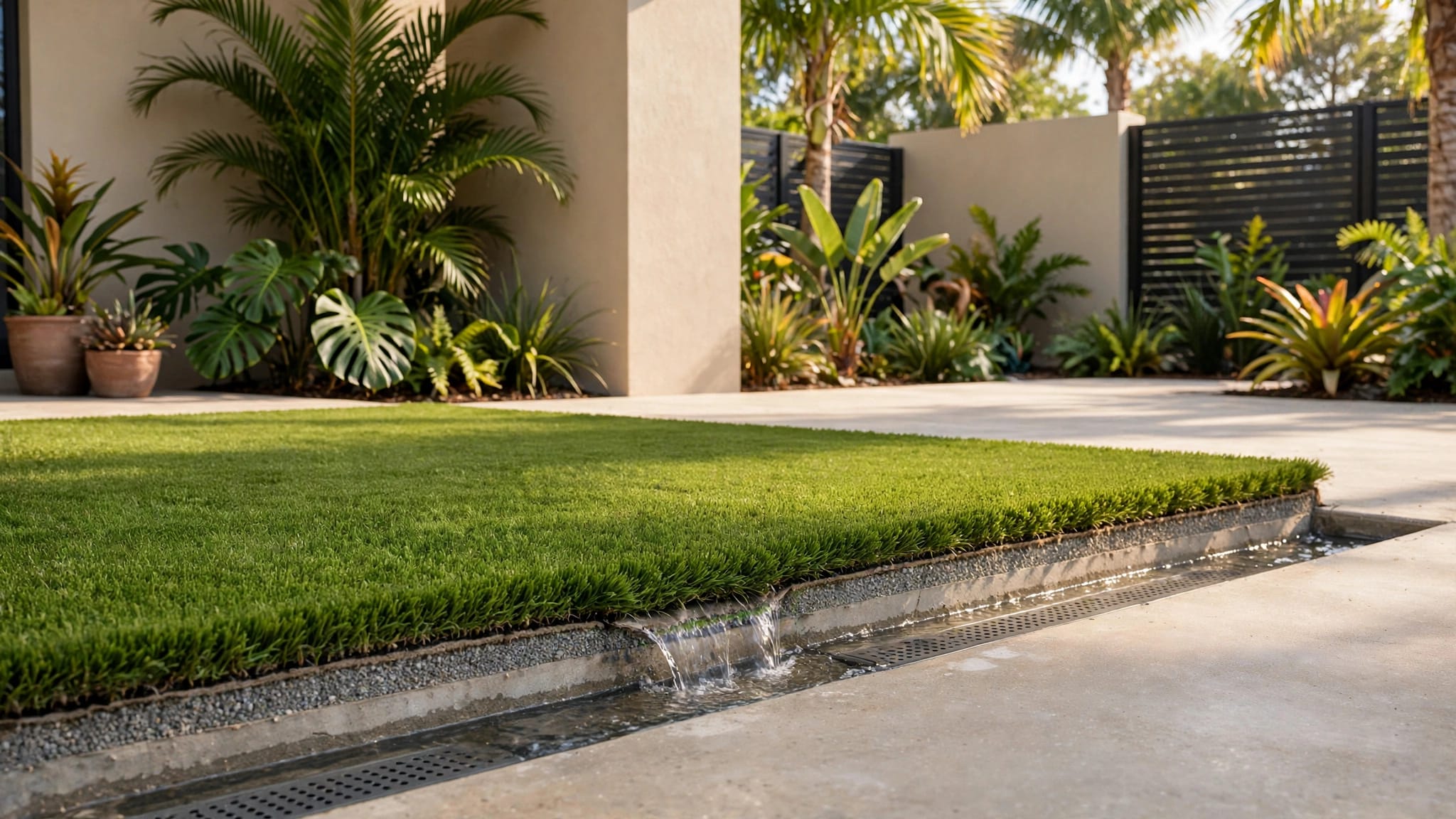
A drainage inlet collects runoff from lawns, driveways, swales, and streets. Water enters through a grate, curb opening, or basin, then moves into underground pipes or a drainage channel. If a fence blocks that route, runoff may back up into the yard or spill toward the home.
Florida's flat terrain and intense rainfall make small placement errors more noticeable. Loose sand can also wash away near a poorly planned fence line, leaving exposed post footings or gaps below panels.
Identify every kind of inlet on the property
Walk the property after a normal rain and again after a heavy downpour. Look for curb inlets at the street, grated yard drains, stormwater catch basins, swales, culverts, ditch crossings, and low spots where water consistently travels.
A round or rectangular lid may sit flush with grass and disappear under leaves. A drain pipe outlet can hide behind shrubs. Don't assume a feature belongs to your irrigation system just because it is inside the lot line.
If water enters it during rain, include it on the site sketch.
A fence can disrupt more than the grate
Blocking the opening is the obvious mistake. However, a solid fence run can also dam shallow sheet flow that needs to cross the yard. Posts can damage a buried storm pipe. A gate placed too close to an inlet can stop a municipal crew from lifting a grate or bringing in equipment.
A dry inlet still needs access. Drainage infrastructure is built for the storm that has not arrived yet.
Keep mulch, decorative rock, turf edging, and landscaping out of the inlet area as well. These materials can shift during a storm and clog the opening.
Start with a survey, easement records, and ownership
Property lines tell only part of the story. A fence can sit on private land while crossing a recorded utility, access, or drainage easement. The easement gives a city, utility company, drainage district, or other holder rights to enter and work in that area.
Review the boundary survey, plat, title documents, and any recorded easements before finalizing a fence route. For older homes, existing fences, landscaping, and fill can make a boundary look different from the recorded line.
Mark easements before choosing gate locations
Use the survey to trace every easement across the lot. Side and rear strips are common, but some properties have drainage areas near swales, canals, lot corners, or road frontage.
A fence may be allowed in an easement under local rules, but permission often comes with conditions. The easement holder may require access gates, removable panels, or removal of the fence at the owner's expense when work is needed.
For a closer look at documents and on-site checks, review these Cape Coral property line surveys for fences.
Confirm who controls the drainage feature
A drainage inlet may belong to a municipality, county, utility provider, homeowners association, or drainage district. It may also be a private feature that handles runoff for one lot or several homes.
Call the local public works, stormwater, or permitting office with the property address and ask who owns the feature. If a drainage district controls the system, ask whether it has separate access or construction rules.
Don't rely on a neighbor's past project or an old verbal answer. Ownership and rules can vary even between nearby streets.
Verify local rules before you build
Fence requirements differ across Cape Coral, Fort Myers, Estero, Bonita Springs, unincorporated Lee County, and individual communities. Your HOA may also limit materials, heights, colors, gate styles, and fence locations beyond the local code.
Before ordering materials, confirm permit needs, required drawings, easement restrictions, and inspection steps with the jurisdiction that controls your parcel. Check whether the address is within city limits or unincorporated Lee County.
Cape Coral easement rules deserve extra attention
Cape Coral's current residential fence guidance warns that additional restrictions may apply where underground drainage facilities sit in a public easement. The city may also deny or condition a fence that conflicts with existing or proposed utilities or drainage work.
Its fence application states that an owner may need to remove a permitted fence at their own expense when public utility installation or maintenance requires it. That possibility affects the smartest design choice near inlets and pipes.
Use a current Cape Coral fence permit checklist to prepare a clear drawing that shows the fence line, gates, property boundaries, and every easement.
Do not use a one-size-fits-all setback
There is no universal Florida distance that works for every fence and drainage inlet. A clearance that a city accepts on one property may be too close on another because of pipe depth, easement width, access equipment, or drainage design.
Ask the local reviewer or drainage owner for the current requirement for your address. Get the answer in writing when possible, then show it to your fence contractor before installation begins.
Map the fence line around water flow
A practical layout follows the natural route that water already takes. On many Southwest Florida properties, the best solution is to route the fence around the drainage area rather than cutting straight across it.
Mark proposed corners, gates, inlet lids, pipe paths, swales, downspout outlets, and low areas with paint or flags. Then compare that sketch with the survey and permit plan.
Keep access clear with gates or removable panels
When a fence must cross a usable easement area, a full-height gate or removable panel can preserve access. The opening should be large enough for the type of maintenance the drainage owner may need to perform, subject to its approval.
Choose hardware that a homeowner can operate without taking apart the fence. A removable section that requires cutting rails or digging out posts won't help when crews need prompt access after a storm.
Place gate swings away from inlet lids, drain grates, and predictable flow paths. Also leave a direct walking route from the street or side yard to the drainage feature.
Respect swales as working drainage areas
A swale is not extra lawn space. It is a shallow channel that holds and directs stormwater. Raising its grade, filling it with soil, or placing a fence where it traps flow can cause flooding and erosion.
Cape Coral homeowners should review guidance on installing a fence near a Cape Coral swale before treating the low strip near the street as part of the buildable yard.
Avoid placing solid skirting, buried boards, or compacted fill across a swale without written approval. Water needs a route through the site during heavy rain.
Call 811 before any post holes are dug
A survey and permit do not show the exact position of every buried utility. Florida property owners should contact Sunshine 811 before excavating for fence posts, gates, footings, or drainage improvements.
Wait for the utility responses and review the markings on site. Common color codes include red for electric, orange for communications, yellow for gas, blue for potable water, green for sewer or drain lines, and purple for reclaimed water.
Utility marks are not building approval
811 markings identify the approximate location of participating underground utilities. They do not approve your fence line, confirm an easement is buildable, or remove the utility owner's right of access.
If marks fall near a proposed post, stop and contact the utility owner. A minor layout adjustment can avoid a damaged line, a service outage, and an expensive repair.
Private lines may not appear in the locate request
Private irrigation lines, landscape lighting, pool equipment wiring, septic components, and power runs to sheds may not be marked through 811. Homeowners are often responsible for finding these installations.
Review old plans and look for valve boxes, equipment pads, conduit, and previous repairs. When the route is uncertain, hire a qualified private utility locator or adjust the fence plan away from the suspected area.
Choose fence materials and details that suit drainage
The fence style matters after the route is approved. Open aluminum or chain-link sections often work well near drainage-sensitive areas because they allow visibility and air movement. Their suitability still depends on the local rule, easement holder, and fence design.
Solid vinyl privacy panels can fit many backyards, but they need careful placement where surface water crosses the lot. A solid lower edge can redirect runoff if it sits in a swale or low channel.
Match the fence style to the location
Use the least restrictive design that still meets the property's needs. An open section near a drainage inlet can transition into privacy fencing closer to a patio, pool, or living area.
Powder-coated aluminum is a low-maintenance option for open boundaries and drainage-adjacent areas. For more ideas about durable materials, compare aluminum fence installation options for Southwest Florida properties.
Avoid adding privacy slats, screens, planters, or stored equipment near a drainage access gate unless the approving authority allows them. What begins as a clean fence detail can become an obstruction during maintenance.
Protect the grade around posts
Fence crews should not solve a low spot by dumping soil against an inlet or filling a swale. Grading must continue to direct water away from the home and toward its intended drainage route.
After installation, inspect the ground around every post. Repair loose sand and shallow washouts early. Keep irrigation spray from constantly soaking fence bases, since repeated overspray can weaken soils and stain materials.
Put drainage details on the final site plan
A useful fence plan gives the permitting office and installer the same picture. It should show the proposed fence line, property corners, easements, drainage inlets, swales, gates, utility markings, and any removable sections.
Photograph the area before work starts. Include wide views and close-ups of inlet lids, curb openings, grade changes, and visible pipe ends. Those photos can help settle questions if a drain becomes blocked later.
Before the final payment, walk the property after rain or use a hose only where it is safe to observe surface flow. Water should reach the intended inlet without pooling against the fence or crossing into a neighbor's yard.
Keep copies of the permit, approved plan, survey, utility ticket, HOA approval, and drainage owner's instructions. They will be useful for future repairs, property sales, and storm cleanup.
A Fence Plan That Leaves Water a Way Through
The right fence line protects your home without interfering with the drainage system that protects the neighborhood. Clear inlets, accessible gates, accurate utility locates, and a documented plan prevent the most common placement mistakes.
For fence drainage inlets , the safest choice is always site-specific. Verify current city, county, HOA, utility, and drainage district requirements before a post goes into the ground, then build a fence that leaves water and maintenance crews a clear path.