October 22, 2026
Pet waste odors on artificial turf are easier to control when you remove waste promptly, rinse the area, and clear away debris. If a smell keeps returning, a turf-safe enzymatic cleaner may help with leftover organic residue, while poor drainage may need attention.
Florida's heat, humidity, and frequent rain make a simple cleanup routine important. Rain can rinse the surface, but it won't remove every deposit or solve pooling beneath the turf. A few consistent steps can keep your pet area fresher without harsh chemicals or unsafe residue.
Key Takeaways
- Pick up solid waste as soon as possible, then rinse the spot and nearby turf.
- Clear leaves and other organic debris before they get packed into the fibers.
- Choose an enzymatic cleaner labeled for artificial turf and pet areas, and follow its directions.
- Keep pets off the treated area as directed on the product label.
- If odor persists or water pools, look beyond the surface. Drainage or trapped residue may be part of the problem.
What Causes Artificial Turf Pet Odor?
Urine can drain through artificial turf when the backing and prepared base allow water to pass. However, drainage doesn't remove every trace of urine or organic matter from the surface. Residue left in the fibers or infill can contribute to a lingering smell.
Urine and surface residue
A quick rinse helps keep urine from building up in one spot. If a dog repeatedly uses the same area, that patch may need more frequent attention than the rest of the yard.
Odor that remains after rinsing can point to residue caught among the blades or in the infill. A suitable enzymatic cleaner can help address organic material, but it won't fix a drainage problem beneath the turf.
Leaves, debris, and Florida weather
Leaves, grass clippings, and other organic debris can collect on the turf alongside pet waste. In Southwest Florida, heavy rain may move debris across a yard or leave it gathered in low spots. Remove that material instead of relying on rain to wash it away.
Warm, humid conditions also make it sensible to clean promptly and keep the surface clear. Regular rinsing and debris removal are basic parts of maintaining artificial turf in Florida.
Remove Pet Waste Before It Settles
Prompt cleanup is the first step toward limiting odor. Solid waste left on the surface can smear into the fibers, especially if someone steps on it or rain moves it around.
Scoop carefully and clean the spot
Use a waste bag or scoop to lift solid waste without grinding it into the turf. Remove any visible residue, then rinse the affected area and the surrounding fibers. Cleaning a slightly wider area helps address residue that may have spread beyond the visible mark.
For a dog that uses one preferred spot, look there during routine yard checks. Households with several dogs may need to clean more often because waste and urine can accumulate faster.
Clear organic material as well
Pick up leaves, small branches, and other debris during the same cleanup. Organic matter can hold moisture and add its own smell, so removing it helps keep pet odors from blending with yard debris.
A soft brush can help lift loose material from the turf. Avoid scraping aggressively, which can disturb the surface. Regular debris removal is especially useful after storms, when leaves and other yard material may collect on the lawn.
Rinse Thoroughly, Then Let the Turf Drain
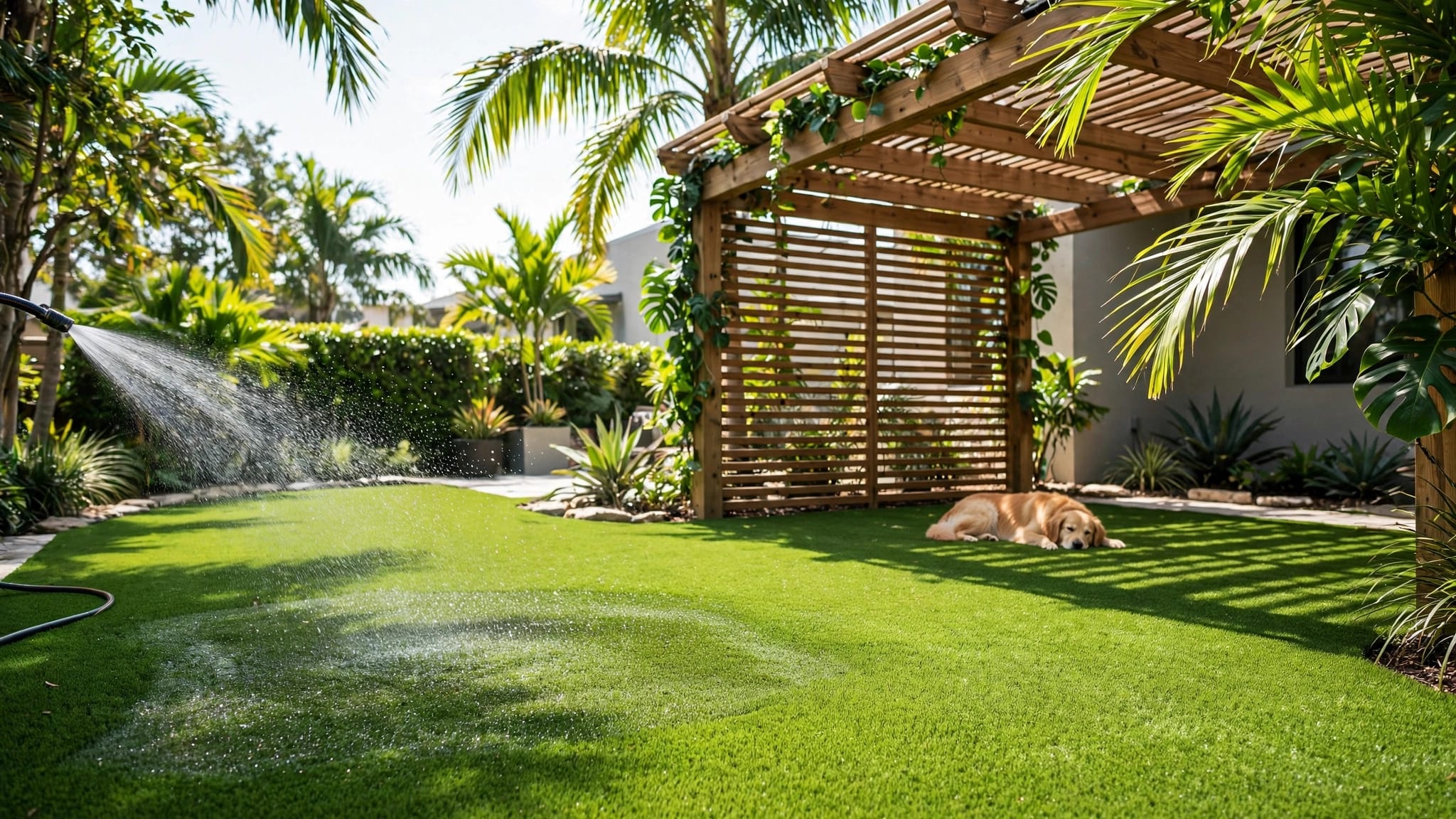
A rinse helps carry urine and loose residue through the turf's drainage system. Use enough water to flush the affected spot and its immediate surroundings, rather than wetting only the exact point where your dog urinated.
Make rinsing part of the routine
Rinse after removing waste, particularly in a frequently used area. A quick rinse can prevent urine from building up in one place. If several pets use the yard, check common spots more often and rinse when needed.
Florida's frequent rain can help wash the surface, but it isn't a substitute for cleanup. Rain won't pick up solid waste or clear leaves, and it may not flush a heavily used patch thoroughly.
Watch what happens after rain
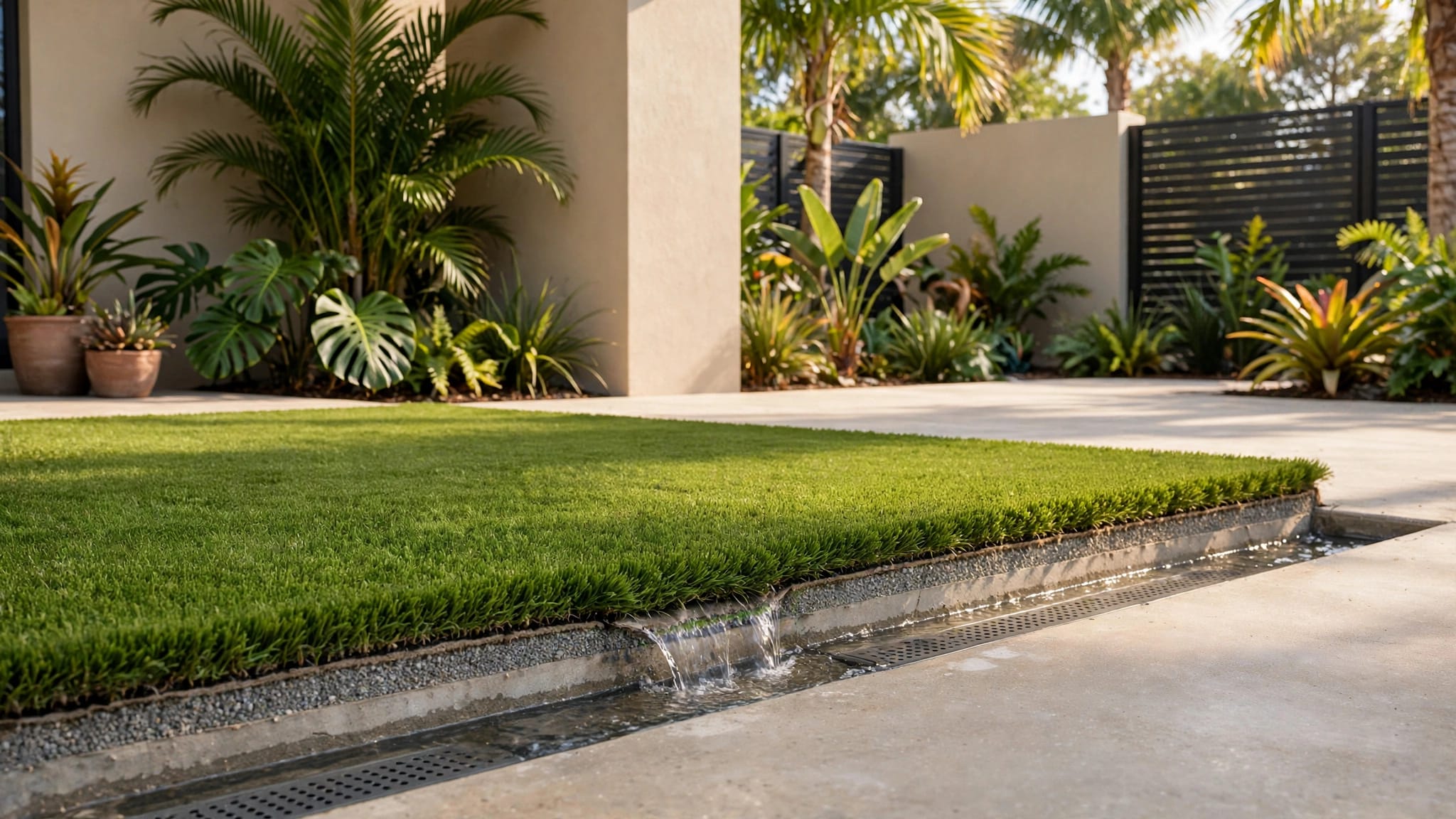
After a downpour, remove debris and look for standing water. A brief wet surface is expected after rain, but persistent puddles can point to a drainage or grading issue. Odor may continue if water and residue remain trapped rather than moving through the turf system.
If water consistently collects in one area, repeated rinsing may not solve the underlying cause. Check whether debris is blocking the surface and consider whether the base or yard grade is affecting drainage.
Use a Turf-Safe Enzymatic Cleaner
When rinsing doesn't remove the odor, use an enzymatic cleaner labeled for artificial turf. These products are intended to break down organic residues, including those associated with pet waste. Choose one that also gives clear directions for use around pets.
Follow the product label
Apply the cleaner as directed, including its instructions for coverage, rinsing, and drying. Don't mix it with other products or increase the concentration. More product doesn't necessarily mean better cleaning, and leftover cleaner may irritate paws or leave residue.
Keep pets away from the treated spot for the time stated on the label. If the directions require rinsing or drying before pets return, follow that guidance. Store the product where animals and children can't reach it.
Treat only as much as needed
Start with the areas where odor is noticeable, then assess the result after using the product according to its directions. If the smell returns quickly, look for repeated urine deposits, embedded debris, or water that isn't draining properly.
For a new pet yard, surface materials matter too. Infill affects how the turf handles odor and daily use, so it belongs in the planning conversation alongside drainage and maintenance. Our page on artificial turf and fencing for pet yards covers considerations for Southwest Florida yards.
Keep Drainage and Infill in Mind
Cleaning can remove surface residue, but it can't correct a base that holds water. A turf system needs a prepared base and drainage suited to the yard's existing conditions. In a Southwest Florida property with frequent rain, pooling deserves attention.
Look for recurring low spots
Notice whether the same area stays wet or smells after the rest of the turf has drained. Remove visible debris first, then observe whether water clears. Persistent pooling may point to an issue below the surface or with the way water moves through the yard.
When planning a new installation, discuss the site's drainage pattern and pet use. Our artificial turf design and installation service is part of the outdoor work we provide in Cape Coral and nearby communities.
Remember that infill is part of the system
Infill affects how turf supports the fibers and handles odor. There isn't one choice that fits every pet yard, so consider the dogs' habits and the site's exposure to sun, rain, and regular rinsing. No infill type removes the need to pick up waste and clean the surface.
If odors recur in spite of routine care, the problem may involve the turf system rather than a missed rinse. A persistent smell paired with pooling is a good reason to have the drainage and installation assessed.
Avoid Harsh Products and Risky Cleanup
Strong household cleaners, abrasive tools, or unapproved chemicals can damage turf or leave residue where pets walk and lie down. Stick with a product made for artificial turf, and use it according to the label.
Don't mask the smell
Scented products may cover an odor without removing the waste residue behind it. Avoid treating the yard with a product that isn't labeled for synthetic turf or pet areas. A lingering fragrance isn't proof that the surface is clean.
Also, don't mix cleaners. Combining products can create unsafe exposure for people and pets, and it may affect the turf. If you're unsure whether a product is suitable, choose one with clear artificial-turf and pet-use directions instead.
Keep pets away during treatment
Move pets away while you scoop, rinse, or apply cleaner. Return them only when the product label says the surface is ready. This reduces contact with waste and cleaning residue, especially for dogs that sniff or lick the turf.
Keep rinsing and treatment controlled so cleaner doesn't collect in one spot or run into nearby planting areas. Follow the product directions rather than improvising a stronger solution.
Frequently Asked Questions
Can Florida rain remove pet urine odor from turf?
Rain may rinse some residue, but it doesn't pick up solid waste or clear debris. Rinse the area yourself after waste removal, and watch for pooling after heavy rain.
How often should I clean artificial turf used by dogs?
Remove solid waste promptly and rinse spots where dogs urinate. The schedule depends on how often the yard is used. Homes with multiple dogs may need to clean more often.
What should I do if the odor returns after using an enzymatic cleaner?
Check for repeated urine deposits, leaves or other debris in the fibers, and areas where water pools. A cleaner can address residue on the turf, but recurring odor may involve drainage beneath it.
Can pets go back on the turf right after cleaning?
Follow the cleaner's label. Keep pets off the treated area for any required waiting, rinsing, or drying period.
Keep Pet Turf Clean With a Simple Routine
In Florida, a fresh artificial turf pet area depends on more than rainfall. Pick up waste promptly, rinse common spots, remove debris, and use an enzymatic cleaner made for turf when residue remains.
If the same area keeps smelling or holding water, focus on drainage as well as cleaning. Regular maintenance handles surface mess; a well-draining turf system helps water move through the yard.