September 8, 2026
A fence can hide an outdoor air-conditioning unit, but a tight enclosure can make that unit work harder in Southwest Florida heat. A well-planned AC condenser fence protects equipment without blocking the air it needs to reject heat.
The goal is a screen, not a boxed-in cabinet. Your condenser's manufacturer installation manual and local requirements control the exact clearances, so start with those documents before choosing a fence style or marking post locations.
A few measurements taken early can prevent costly changes after installation.
Start With AC Condenser Fence Clearance
Every condenser has its own airflow pattern, service panels, and installation requirements. Measure from the outside edge of the condenser cabinet, not the concrete pad, because the cabinet is where airflow begins and ends.
Read the unit's installation manual first
Do not use one general clearance number for every system. Trane's residential guidance, for example, calls for an unrestricted area above the unit and clear access at the control box. Other brands and models list different side and top clearances.
Carrier-style instructions often call for open space around coil sides and more clearance above the fan discharge. Daikin also cautions against cramped corner locations because they restrict air circulation.
Use the condenser's model number to find its manual. Then mark the required side, top, and service clearances on a simple site sketch. The manual and local code requirements control the final layout.
Preserve the technician's work area
Airflow clearance and service access are separate needs. A technician must reach the disconnect, refrigerant lines, electrical compartment, and removable panels without climbing over a fence or squeezing through shrubs.
Leave enough room for a gate or removable panel on the service side. Many HVAC instructions call for about 30 inches of access in front of service panels, but your unit's manual takes priority.
A screen that looks good but blocks the service panel can turn routine maintenance into a fence-removal job.
Keep the fence away from the disconnect box and don't block the path from the gate to the unit. That space also helps during hurricane cleanup, when leaves and branches may gather near the condenser.
Choose an AC Condenser Fence That Lets Air Move
A solid privacy panel placed close to the coil can pull hot discharge air back toward the unit. That recirculation raises operating strain and can reduce cooling performance during the hottest part of the day.
The fence should shield the equipment from view while leaving open paths for intake air and vertical discharge.
Favor open or louvered screen sections
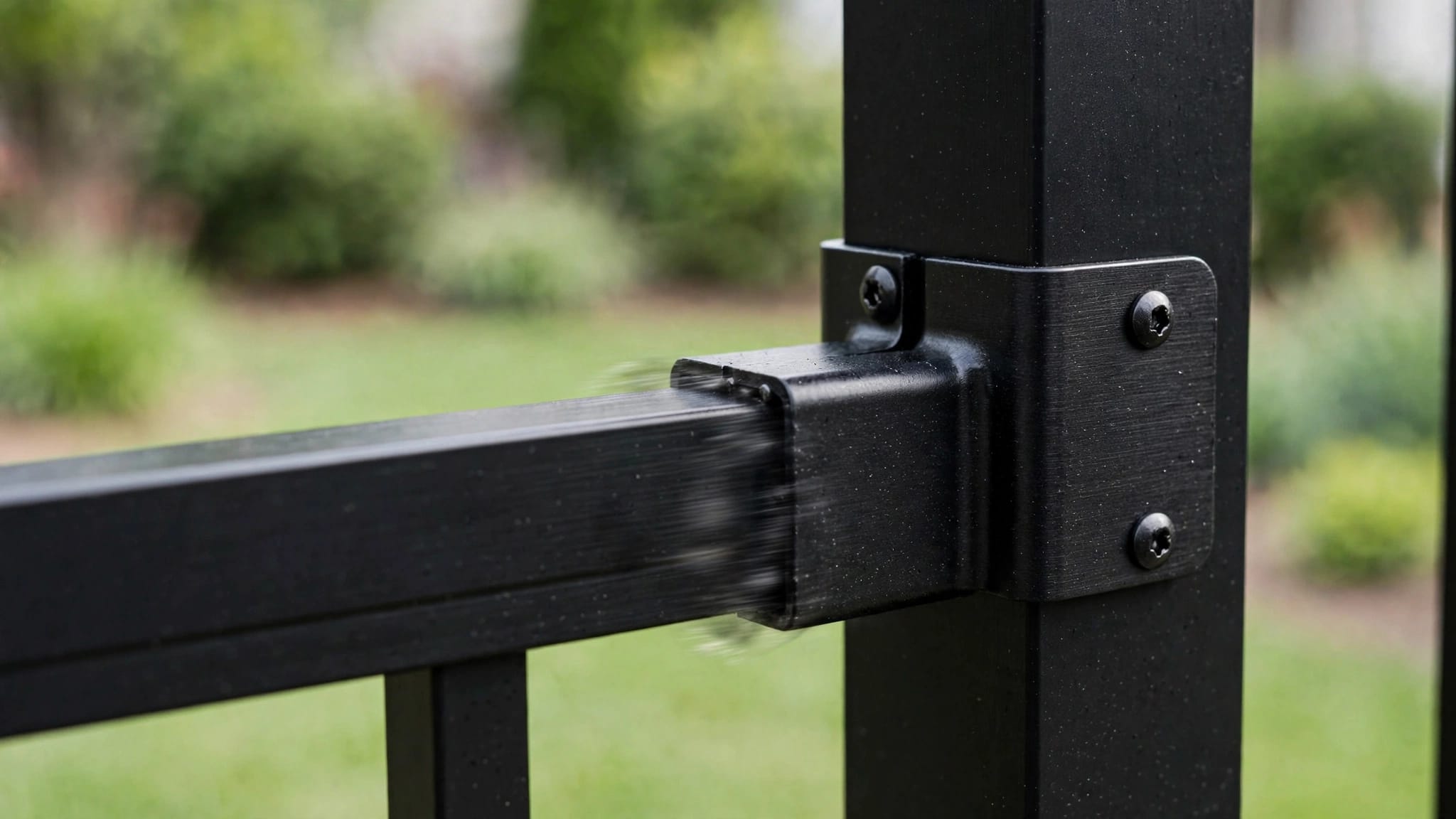
Aluminum pickets, spaced slats, and purpose-built louvers are often better choices than a four-sided solid enclosure. They create a visual break without forming a hot pocket around the unit.
For homes near canals or the Gulf, rust-resistant aluminum fence options also avoid the rot concerns that come with wood screens in humid conditions. Powder-coated aluminum allows air movement and is easy to rinse after storms.
Vinyl can work when privacy matters, but solid vinyl catches more wind and needs more careful spacing. A short L-shaped screen often conceals the condenser from the patio or street while leaving other sides open.
Avoid adding a roof, shelf, planter, or dense vines above the unit. The top fan needs an unrestricted vertical path to discharge hot air.
Plan for Florida Weather, Water, and Corrosion
Southwest Florida weather changes the fence plan. High humidity, summer downpours, salty air, sandy soil, and hurricane winds all affect the screen and the condenser behind it.
First, look at roof runoff. Water pouring from a roof edge onto the unit can damage components and wash soil away from nearby posts. Redirect runoff where needed, but don't bury drain lines or change a swale without understanding the property's drainage plan.
Keep salt, sprinklers, and debris from collecting
A fence set too close can trap wet leaves, grass clippings, and salt residue against the coil. That buildup limits airflow and encourages corrosion. Leave room to rinse the condenser cabinet and clear debris around the pad.
Adjust irrigation heads so they don't spray the fence or outdoor unit every day. Constant overspray can stain vinyl, weaken wood finishes, and speed corrosion on metal hardware.
Hurricane exposure also matters. Solid panels behave like sails in strong wind, especially on open lots and canal-front properties. Open fencing or louvered sections reduce wind pressure, while sound posts, footings, and corrosion-resistant fasteners help the screen stay secure.
Check the fence after major storms. Remove branches before restarting the system, and call an HVAC professional if the cabinet, electrical disconnect, or refrigerant lines show damage.
Check Boundaries, Utilities, and Approval Rules
A small condenser screen may still cross a property line, utility easement, setback, or HOA rule. Never assume the space beside your home belongs entirely to you or is free of buried lines.
Call 811 before any post holes are dug. Mark the condenser, electrical disconnect, refrigerant lines, irrigation pipes, drainage routes, pool equipment, and visible utility boxes on your sketch. Utility markings don't replace careful digging near known lines.
Confirm the property survey and identify easements before setting the fence line. An easement may require access later, which can make a gate or removable panel the smarter choice.
Municipal permit requirements vary between Cape Coral, Fort Myers, Lee County, Estero, and Bonita Springs. HOA architectural rules can also control fence height, material, color, and placement. Get approvals before materials arrive.
A Quick Planning Checklist for Homeowners
Bring this information to your HVAC company and fence contractor:
- Find the condenser model number and its manufacturer's installation manual.
- Mark required airflow zones, top clearance, service panels, and the disconnect box.
- Measure from the condenser cabinet, not only from the equipment pad.
- Choose an open, louvered, or limited-return design that avoids hot-air recirculation.
- Plan a gate or removable section for technician access and storm cleanup.
- Locate underground utilities before digging, then check irrigation and drainage routes.
- Verify property lines, easements, local permits, and HOA approval requirements.
- Consider wind exposure, coastal corrosion, roof runoff, and sprinkler overspray.
Homeowners should not move a condenser, open electrical equipment, alter refrigerant lines, or dig near marked utilities without qualified help. A fence installer can build the screen, but an HVAC professional should confirm that the final AC condenser fence placement protects the unit's required clearances.
Final Placement Matters More Than Concealment
A Florida condenser screen works best when it leaves the equipment open to air, accessible for service, and protected from everyday yard damage. The most attractive fence design still needs to respect the manufacturer's measurements and the realities of wind, water, and corrosion.
Give the unit room to breathe now, and your fence will look intentional instead of becoming an obstacle at the next service call.