September 9, 2026
A gate that looks wide enough can still feel tight when a golf cart approaches at an angle. Posts, hinges, landscaping, and a narrow side yard all reduce the room you can use.
The right golf cart gate width starts with the cart itself, then accounts for the usable route through the property. Measure the clear opening, review the site, and confirm local rules before posts go into the ground.
Key Takeaways for Cart Access
Cape Coral does not publish a minimum gate width designed only for golf carts or utility carts. Instead, the city focuses on fence height, placement, easements, and permit review.
For a full-size personal golf cart, a clear opening in the 5 to 8 foot side-yard range is often the practical starting point. The final dimension depends on your cart's actual width, the turn into the gate, and what else will pass through it.
A 42- or 48-inch walk gate can work for people, bicycles, and narrow equipment. However, it is usually too tight for a typical four-passenger golf cart.
Measure the clear space between the finished posts when the gate is fully open, not the gate panel's advertised width.
Golf Cart Gate Width Starts With the Clear Opening
A gate's nominal size and its clear opening are different measurements. A "5-foot gate" may not leave a full 60 inches between posts after hinges, latch hardware, and frame details take up space.
Measure the Cart at Its Widest Point
Measure the widest fixed point on the exact cart you own or plan to buy. Include mirrors, fenders, tool racks, or accessories that stay attached during use.
For context, the Club Car Onward 4 Passenger is 48.75 inches wide with standard suspension and 49.5 inches wide when lifted. The ICON i20X is listed at 47.24 inches wide. Those figures show why a nominal 48-inch gate should not be assumed to fit a full-size golf cart.
The cart also needs room to approach without scraping fence posts. A straight route may work with less space than a turn around a house corner, air-conditioning unit, or planting bed.
Check the Entire Route, Not Only the Gate
The narrowest point may be farther down the side yard. Measure between the home and proposed fence line, around pool equipment, across pavers, and at any change in grade.
A cart that clears the gate but cannot make the turn beyond it creates a daily frustration. Marking the path with cones or stakes before installation helps expose tight turns and swing conflicts.
For an estimate, include clear-opening measurements and photos of the access route in a Cape Coral fence quote checklist.
Practical Golf Cart Gate Width Options
A useful gate width depends on whether the opening handles only a cart or also needs to move mowers, furniture, maintenance equipment, and yard debris.
When a Single Cart Gate Makes Sense
A clear opening of 5 feet can work for many standard golf carts when the approach is straight and the cart has no wide attachments. This size also suits homes with limited fence runs or narrow side yards.
Moving up to 6 feet gives the driver more room to correct the approach. It also makes the opening more useful for riding mowers and bulky deliveries. A wider opening may require stronger posts and more substantial hardware because the gate leaf carries more weight.
Although 42- and 48-inch clear openings are common for walk gates, they fit best when access is limited to people, wheelbarrows, bicycles, or compact yard tools.
When a Double Gate Is the Better Fit
Double gates are often the better choice for a 6- to 8-foot clear opening. Two leaves reduce the weight each hinge set carries, while allowing you to open one side for everyday foot traffic.
Plan enough clear yard space for both leaves to swing. Gates should not strike vehicles, walls, plantings, sidewalks, or each other. In Cape Coral's wet season, also check that the swing area will not sit in standing water or cross a drainage swale.
If your opening may later need to handle an RV, trailer, or work vehicle, review wide gates for RV access before choosing a smaller cart-only layout.
Gate Style, Hardware, and Site Conditions Matter
Width alone does not determine whether a gate will work well. The layout, ground surface, wind exposure, and hardware all affect daily use.
Swing Gates Need a Clear Arc
Swing gates suit many backyard and side-yard cart routes. However, they need a level area for the leaves to open without dragging across pavers, turf, or soil.
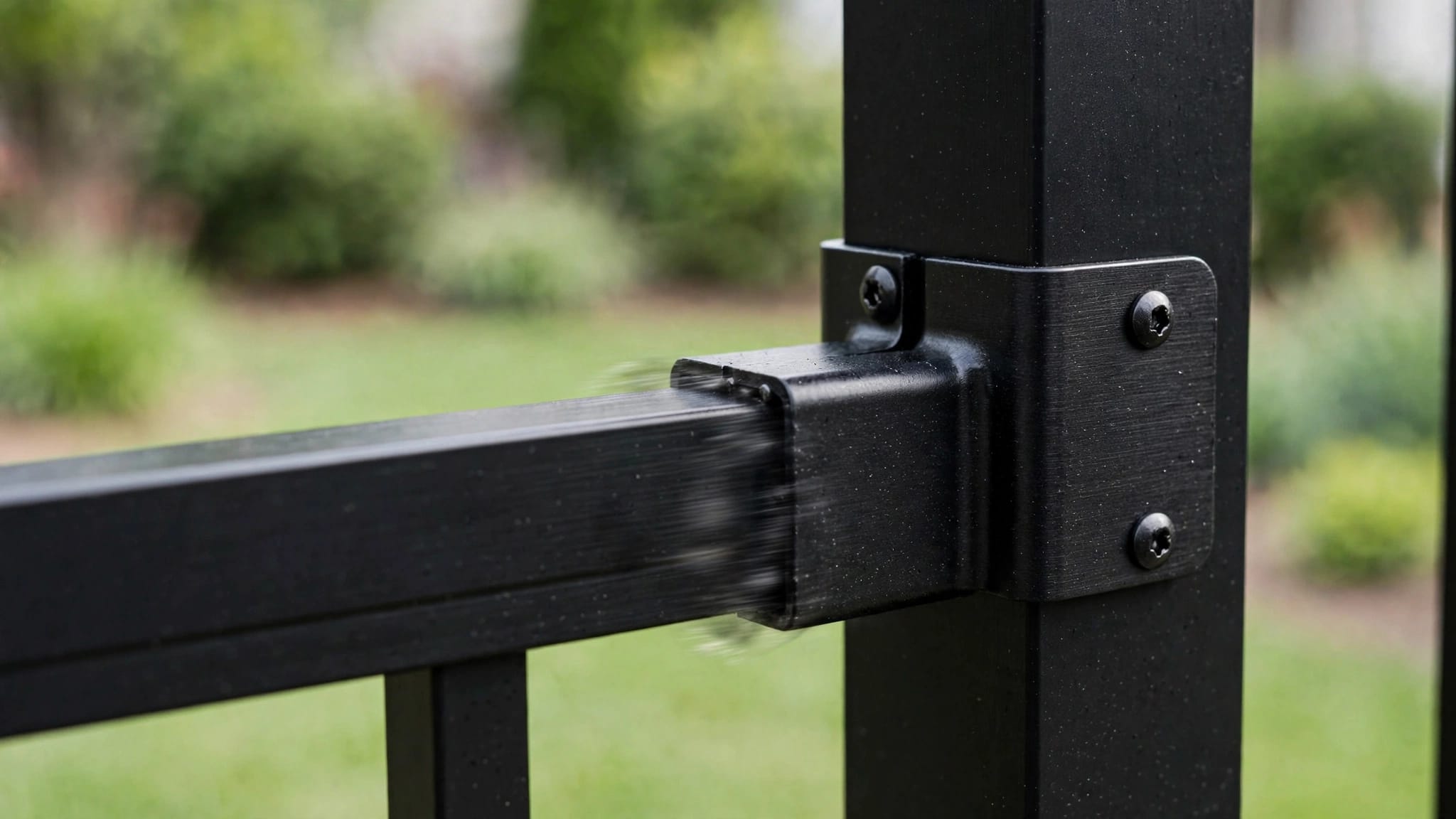
Heavy vinyl privacy gates and wide wood gates need reinforced posts, dependable hinges, and a latch that stays aligned. Salt air, moisture, and frequent use can shorten the life of light-duty hardware.
A hold-open latch can keep a gate from blowing shut while you drive through. It should not let the leaf swing into a street, sidewalk, neighbor's property, or parked vehicle.
Sliding Gates Save Space on Tight Lots
A sliding gate can avoid the swing arc that causes trouble in a tight side yard. It needs enough fence line beside the opening for the gate to travel, plus a stable, level path.
Drainage also matters. Sandy soil, runoff, and swales can shift the ground below a rolling gate. Compare sliding and swing driveway gates when your cart entrance has limited room for a gate leaf.
Cape Coral Rules to Confirm Before Installation
Current Cape Coral requirements and property-specific restrictions should be verified before installation. The City's residential fence regulations, updated June 18, 2026, generally limit residential fences to 6 feet, while some residential boundaries next to commercial property may allow 8 feet.
Review Placement, Easements, and Your Survey
City materials address fence location relative to property lines, easements, and canal right-of-way. They also restrict fences forward of the nearest side of the principal structure in many situations. Corner lots and canal properties need added attention because visibility and access rules can affect the layout.
Use your survey instead of an old fence to set the gate location. Call 811 before digging, then identify utility and drainage areas that could limit post placement or require future access.
Get HOA Approval and Permit Details in Writing
An HOA may set stricter requirements for gate height, color, materials, style, and location. City approval does not replace architectural review, so get the community's requirements in writing before ordering materials.
Cape Coral's permit process may require plans showing the fence line, gates, widths, property lines, and easements. Powered gates can add separate review needs, so check Cape Coral gate permit requirements before selecting an operator.
FAQ
Is a 48-inch gate wide enough for a golf cart?
Usually, no. Many full-size golf carts measure roughly 47 to 50 inches wide before accounting for practical room to enter, steer, and clear the posts. A 48-inch clear opening may suit narrow equipment, but it leaves little margin for a standard golf cart.
What golf cart gate width works in a tight side yard?
Start with the cart's measured width and map the full route. A 5-foot clear opening can work with a straight approach, while 6 feet often feels more forgiving. If the cart must turn sharply, a larger opening or a different gate location may be needed.
A Gate That Fits the Way You Use Your Yard
The best golf cart gate width is the clear opening that fits your actual cart and the full approach to the yard. A few inches can determine whether each trip feels easy or requires repeated corrections.
Measure carefully, plan for the gate's movement, and verify Cape Coral and HOA requirements for your exact property. A well-placed opening gives you practical access without creating a future fence problem.