March 16, 2026
A Cape Coral fence quote can swing a lot when key details are missing. One contractor assumes two gates, another assumes one. Someone else prices for flat ground, then arrives to find a swale, roots, and tight access along the side of the house.
The fix is simple: give every contractor the same clear info. When you send consistent photos, measurements, and site notes, you'll get quotes you can compare without guesswork.
If you're also trying to budget early, this local breakdown of Cape Coral fence installation costs helps you understand what typically moves the price.
Start with the essentials contractors need (before the checklists)
Fence quoting is a bit like ordering blinds. If the window size is off by an inch, the whole plan changes. The same thing happens with fencing: layout, footage, gates, and site conditions drive labor and materials.
Before you take photos or measure, gather three basics:
First, confirm where the fence can go. If your corners or line feel "fuzzy," pause and check your survey. A great starting point is how to use property line surveys for fences in Cape Coral. It helps you spot easements, right-of-way surprises, and old fence drift.
Next, think about approvals. Many fence projects need permitting, and some neighborhoods need HOA approval too. Keep it general, and confirm your exact requirements with the City and your HOA. For a homeowner-friendly overview, see this Cape Coral fence permit guide.
Finally, decide your target fence type and height (even if it's "either vinyl or aluminum"). Contractors can quote options faster when they know what you're comparing.
The goal isn't perfection. It's consistent information so every quote is based on the same assumptions.
Photo checklist for a fast, accurate fence quote (angles that matter)
Take photos in daylight, and step back as far as you can. A few wide shots beat 20 close-ups that don't show context.
Use this photo checklist and send the full set to each contractor:
- Street view of the property : Stand across the street, capture the full front, driveway, and both corners if you can.
- Front corners (both sides) : Each corner gets (1) a wide shot showing the house and yard, plus (1) close-up showing obstacles like sprinklers, landscaping, or utility boxes.
- Left side run, looking toward the back : Stand near the front corner, aim down the side yard so access width is obvious.
- Right side run, looking toward the back : Same angle as the left side.
- Rear line, wide panorama : From one back corner to the other, showing the whole rear boundary area.
- Back corners (both) : Wide shot showing the corner area, then a close-up showing grade changes, roots, or pavers.
- Any slope or swale : Take one photo looking across the slope (shows height changes) and one looking down the slope (shows length and grade).
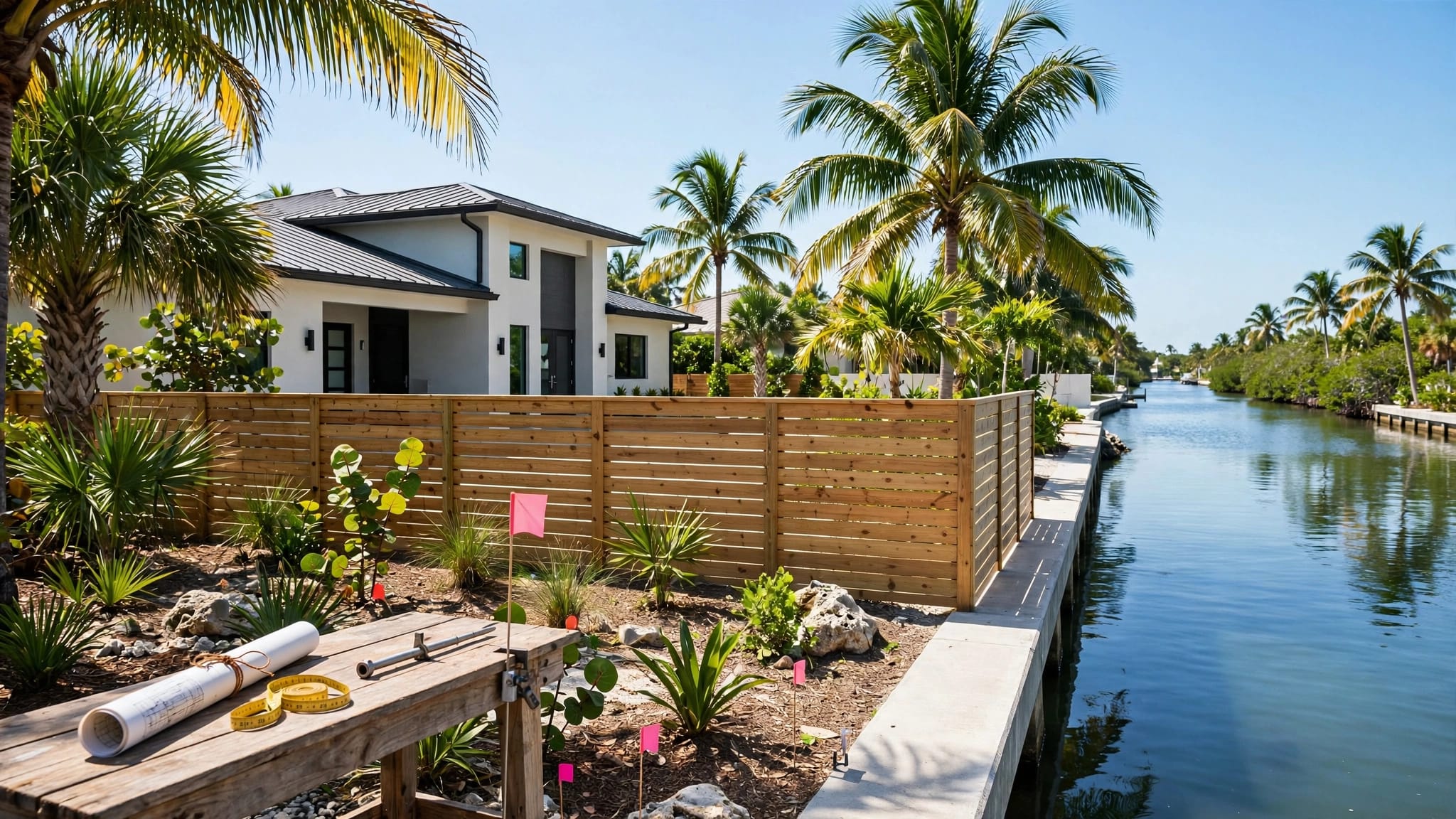
- Canal or water-side conditions (if applicable) : Wide shot showing the fence zone and the water-side edge, plus a close-up of seawall caps or tie-backs if they're visible.
- Pool area if the fence relates to it : Show the pool deck edge, screen enclosure, and where gates might land.
- Gate locations, from both sides : Stand where the gate will be, shoot outward and inward so swing space is clear.
- Obstructions along the run : AC units, hose bibs, downspouts, outdoor showers, generators, propane tanks, septic or drain features (photograph each).
- Existing fence (if removing) : One photo per side showing condition, plus close-ups of posts set in concrete and any sections attached to structures.
A quick tip: include one photo with a person standing near the fence line. It gives scale fast.
Measurements to record (with units and simple DIY methods)
You don't need surveyor-level measurements for a quote, but you do need clean, repeatable numbers. Use a 25-foot or 100-foot tape. A measuring wheel also works well on long runs.
Record these measurements in feet and inches :
- Total linear footage per run : Measure each straight segment separately (left side, right side, rear, plus any returns).
- Gate openings (clear width) : Measure the opening you want, not the old gate size. Note each as: "Walk gate 4 ft" or "Drive gate 12 ft."
- Gate swing space : Measure the flat area available on the swing side (in feet), especially near screen doors, pool equipment, or pavers.
- Fence height preference : Write the target height in feet (for example, 4 ft, 5 ft, 6 ft). If unsure, list two options.
- Corner-to-corner diagonals (optional but helpful) : If the backyard is close to a rectangle, measure two diagonals. Big differences can hint the space isn't square.
- Distance from fence line to key features : Measure how close the fence must pass to items like a seawall edge, pool deck, AC pad, or a big tree (in feet).
- Access width to the backyard : Measure the narrowest pass-through area on each side of the house (in inches). This can affect labor and equipment choices.
To keep everything organized, use a simple table like this:
| Fence run label | Start point | End point | Length (ft/in) | Height (ft) | Notes (slope, obstacles) |
|---|---|---|---|---|---|
| Left side | Front left corner | Back left corner | |||
| Right side | Front right corner | Back right corner | |||
| Rear | Back left corner | Back right corner | |||
| Gate A | Width: | Swing: in/out, hinge side |
After you fill it out once, you can reuse the same format for every quote request.
Site notes that change pricing and scheduling (and how to package everything)
Two fences with the same linear footage can price differently because the site "fights back." Write short notes that tell that story.
Include these site notes (plain language is fine):
- Old fence removal : Is there an existing fence, and do you want it hauled away?
- Ground conditions : Sandy and flat, heavy roots, rock fill, frequent standing water, or soft areas after rain.
- Access limits : Narrow side yard, locked gates, tight turns, or cars that can't move on install day.
- Landscaping conflicts : Hedges on the line, palms near corners, irrigation heads in the path, garden edging, or decorative rock.
- Utilities and fixtures : Visible cable boxes, meters, cleanouts, lighting, or anything you don't want disturbed (still call 811 before digging).
- Canal-side exposure : Note if one side faces a canal, gets sprinkler spray, or stays damp.
- Pets and household timing : Dogs that must be contained, kids' nap windows, or preferred install days.
- Neighbor coordination : Shared lines, neighbor fence ties, or access needed through the neighbor side.
- HOA and permitting status : "HOA approval needed, not started," or "HOA submitted," plus whether you want the contractor to help. If you're in an HOA, this guide to what gets approved fast and how to prep your packet can save weeks.
Now package it so contractors can quote quickly:
- File naming
: Use a folder like
Fence Quote - 1234 Example St - Cape Coral - 2026-03-16.- Photos:
01-FrontStreet.jpg,02-FrontLeftCorner.jpg,03-LeftSideToBack.jpg,04-RearPanorama.jpg,05-GateLocationA-Inside.jpg - Measurements:
Measurements-1234ExampleSt.pdf(or a screenshot export)
- Photos:
- One-paragraph site description (paste into email)
:
"Requesting a Cape Coral fence quote for a 6-foot privacy fence along left, rear, and right property lines with one 4-foot walk gate near the pool and a 10-foot double gate on the right side. Backyard is mostly flat with a shallow swale near the rear. Right side access is 42 inches wide at the narrowest point, left side is open. One old chain-link fence section needs removal on the rear line. HOA approval is required and will be submitted, permitting will be confirmed with local authorities."
When your email reads like a clear plan, contractors spend time quoting , not chasing missing details.
Conclusion
Accurate quotes come from the same ingredients every time: clear photos, clean measurements, and honest site notes. Once you package that info, you'll get a Cape Coral fence quote that's easier to trust, compare, and schedule. If any boundary, permit, or HOA detail feels uncertain, confirm it early, because moving a fence later costs far more than planning it right up front.