March 17, 2026
Backyard privacy in Cape Coral can feel like a balancing act. You want coverage from neighbors and renters next door, but you also want a yard that still catches the breeze. A solid stockade fence can turn a humid afternoon into a sauna.
That's where a shadowbox wood fence shines. It gives privacy from most angles while letting air move through. It also looks finished on both sides, which matters when you share a property line.
This guide walks through smart planning, build details that hold up in salt air, and the finishing steps that keep wood looking good through storm season.
Why a shadowbox fence fits Cape Coral yards (privacy without "stale air")
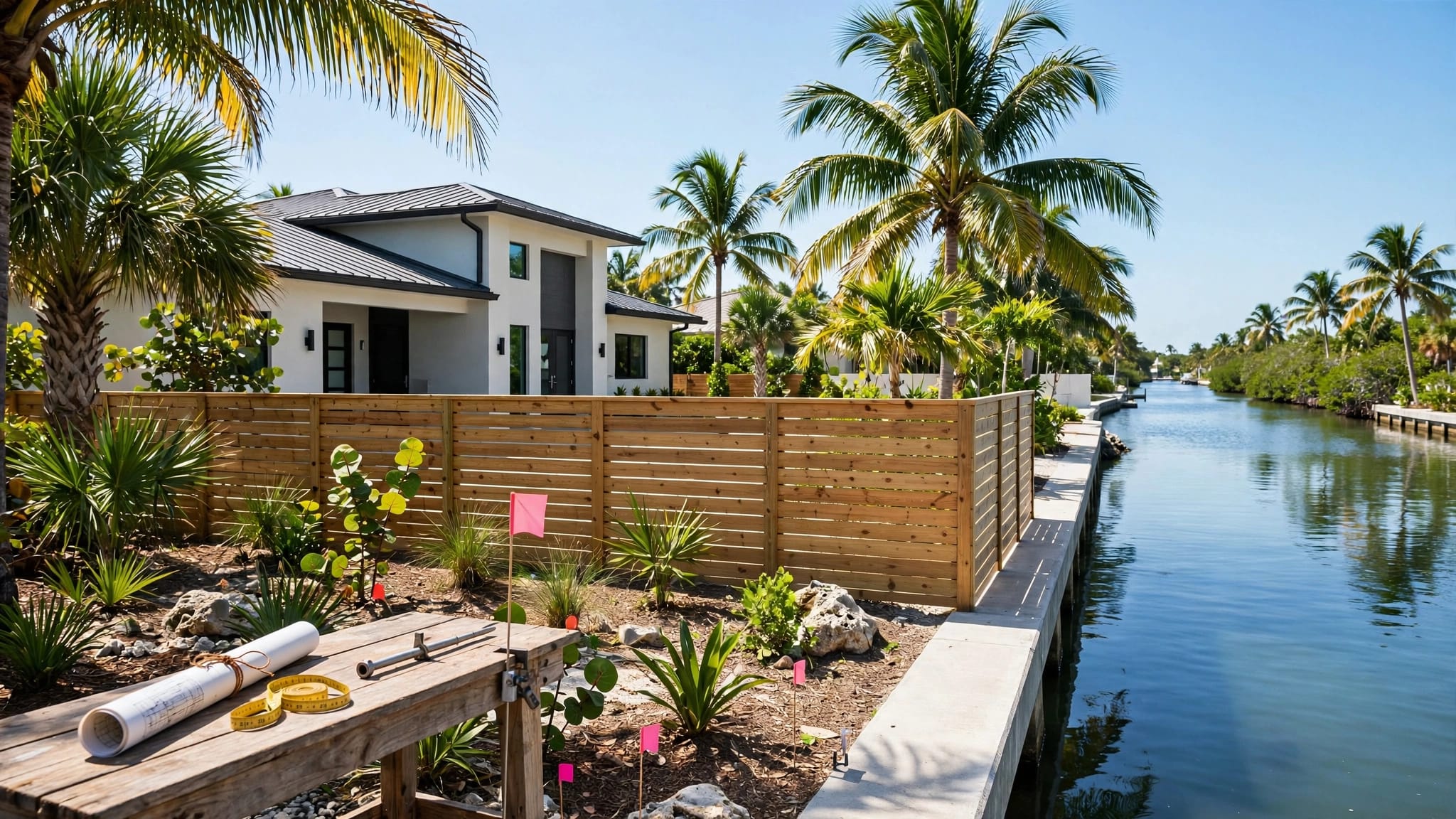
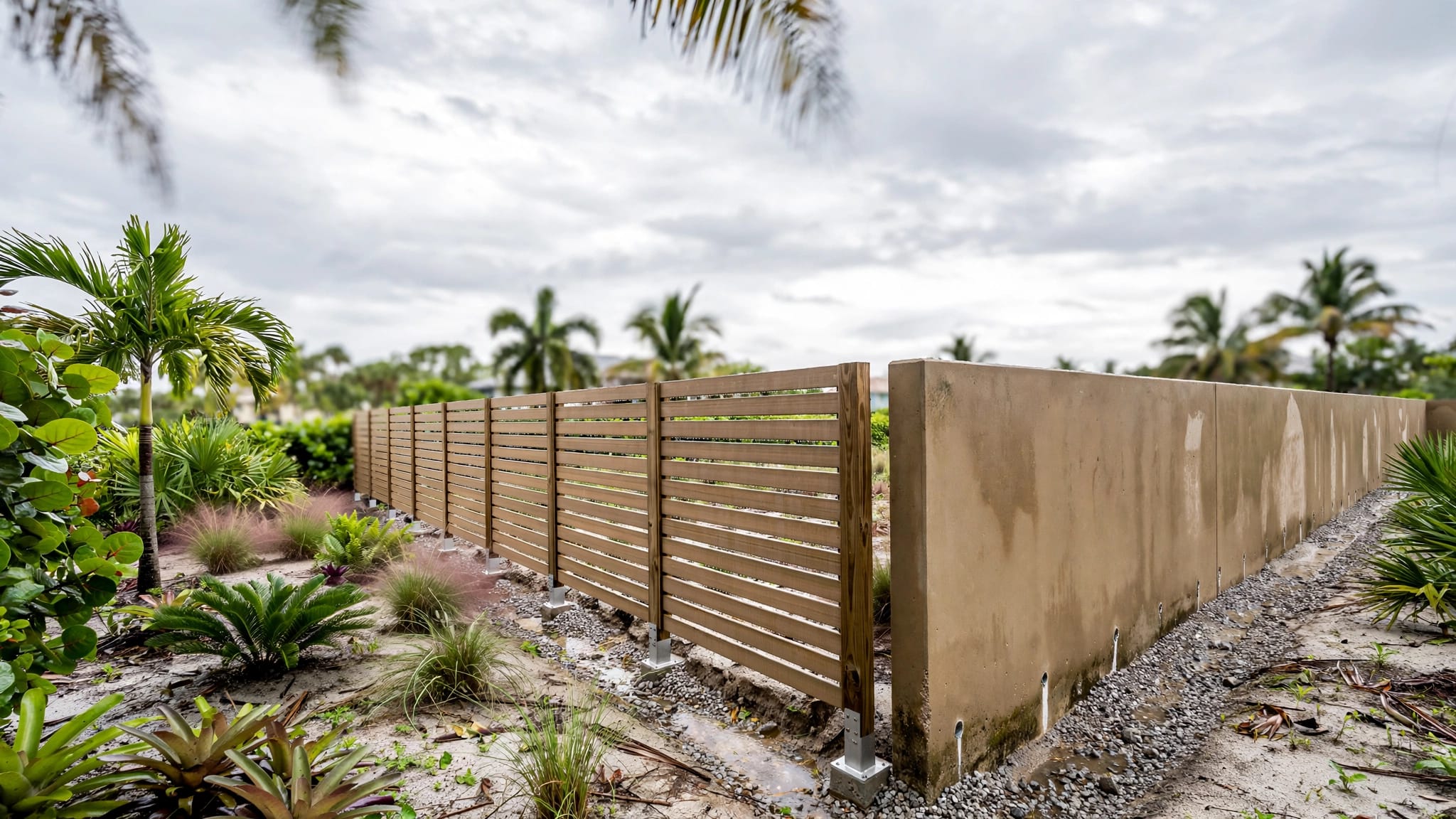
A shadowbox fence uses alternating pickets on each side of the rails. From straight on, it reads as a privacy fence. From an angle, small gaps let light and wind pass through. Think of it like window blinds for your yard, you get coverage, but you don't block every bit of airflow.
That airflow matters here because Cape Coral's humidity and frequent rain can keep wood damp. When air can move, boards dry faster after storms and sprinklers. Faster drying helps reduce swelling, warping, and the mildew that loves shaded corners.
A few other reasons locals pick this style:
- Good-neighbor look: Both sides look intentional, so you're not giving your neighbor the "ugly side."
- Better wind behavior than solid panels: Shadowbox fences still catch wind, but they don't act like one giant sail.
- Flexible privacy: You can tighten or loosen the pattern based on how much screening you need.
If you're still deciding between styles, it helps to compare materials and layouts on one page. Start with these Cape Coral wood fencing options so you can picture what fits your property and budget.
A simple way to choose: if you want privacy but hate the "boxed-in" feel, shadowbox is usually the sweet spot.
Planning your layout: permits, HOA rules, and a build plan that prevents rework
In Cape Coral, fences are not a "build it and hope" project. The city typically requires a fence permit, and many neighborhoods add HOA or deed restrictions on top. Rules also change, so confirm current requirements before buying lumber.
As of March 2026, Cape Coral permitting commonly asks for a site plan that shows fence location, lengths, and gates. Many applications also require a Burrowing Owl or Gopher Tortoise affidavit for wildlife protection. Review timelines vary, but approvals often take a couple of weeks. Height limits and front-yard limits can also differ by zoning and lot type.
Quick disclaimer: Always verify the latest fence permit requirements and setbacks with the City of Cape Coral, and confirm HOA rules in writing for your specific community. Don't rely on a neighbor's memory.
Step-by-step planning (do this before you mark a single hole)
- Find the real property line. Use your survey, not the old fence. If you can't locate pins, consider a surveyor.
- Call 811 and mark utilities. Posts and augers don't care where lines run.
- Check city rules and apply for the permit. Include gate locations, corner lot notes, and any canal or easement concerns.
- Read your HOA fence section. Focus on height, color finish, and whether wood is allowed.
- Choose height and "tightness." Most owners want 6 feet in back and sides, with a more open look up front if allowed.
- Plan gate sizes early. A 4-foot walk gate feels normal, a double gate needs extra bracing and stronger posts.
Pick wood that won't quit in humidity and termites
In Southwest Florida, posts and rails take the beating. Many builds use pressure-treated pine for structure because it resists rot and termites better than untreated lumber. Pickets can be pressure-treated or a naturally durable species, depending on your budget and the look you want.
For a deeper breakdown of wood choices in our climate, read best wood for Cape Coral fences. It'll help you avoid buying the wrong boards for a canal-side yard.
Shadowbox build details that matter: post spacing, picket overlap, fasteners, and finishing
A shadowbox fence looks simple, but small layout choices decide whether it stays straight after the first wet summer.
Posts and spacing (strength comes from what you don't see)
Most residential shadowbox builds use 6 to 8-foot post spacing . Tighter spacing increases strength, especially on windy lots or long straight runs. Also, set posts deep enough for your fence height and soil conditions. In sandy Cape Coral soil, a deeper, well-packed set with concrete helps resist leaning.
Keep wood off the ground. Leave the bottom of pickets about 2 inches above grade so sprinklers and puddles don't soak the end grain.
Rails and picket layout (privacy plus airflow)
A common setup uses two rails for a 6-foot fence, and three rails for taller builds. For pickets, many homeowners choose 1x6 boards (actual width varies). Here's the practical way to dial in the shadowbox pattern without guesswork:
- Install pickets on the first side with a consistent gap (often 1.5 to 2.5 inches , depending on your privacy goal).
- On the opposite side, center each picket over the gaps.
- Aim for about 3/4-inch to 1-inch overlap on each edge, then adjust after a quick mock-up.
Because picket widths vary by mill and moisture, build a 2-bay sample section on the ground first. It saves hours later.
Fasteners and hardware (salt air is the silent destroyer)
Coastal air speeds up corrosion, especially near canals. Standard screws can rust, stain the wood, and fail early. Use fasteners rated for exterior and pressure-treated lumber.
Good choices in this area include:
- Hot-dipped galvanized ring-shank nails for pickets
- Exterior structural screws for rails and framing
- Stainless steel hinges and latch hardware if your yard is close to salt water
Gates deserve extra attention. Use a metal gate frame or strong diagonal bracing, and step up to thicker posts at gate locations.
Seal or stain (your fence needs a raincoat)
Florida sun and rain will rough up bare wood fast. After the wood dries (pressure-treated boards often need time), apply a quality exterior stain or sealer. Penetrating products tend to age more evenly than thick film finishes.
Plan on a simple maintenance rhythm:
- Wash off mildew and dirt as needed.
- Recoat when water stops beading on the surface, often every few years depending on sun exposure.
DIY vs pro cost ranges in Cape Coral
Prices shift with lumber, hardware, and site conditions. Still, these ranges help you budget before you request quotes.
| Cost category (March 2026 planning range) | Typical DIY range (per linear foot) | Typical pro-installed range (per linear foot) |
|---|---|---|
| Shadowbox wood fence (materials, basic hardware) | $12 to $25 | $28 to $55 |
| Gates (adds per gate, varies by size and hardware) | $150 to $450 | $300 to $900 |
Most homeowners choose pro installation when they need permits handled, have tough soil conditions, or want cleaner gate performance.
Quick decision checklist (fast, but honest)
- You want airflow: Shadowbox is a strong pick, especially for humid backyards.
- You need total privacy: Consider board-on-board or a tighter shadowbox pattern.
- Your lot gets strong wind: Use tighter post spacing, stronger gate posts, and corrosion-resistant hardware.
- Termites are a concern: Don't skimp on treated structural lumber and clearance from soil.
- You're in an HOA: Get approval in writing before ordering materials.
Conclusion
A shadowbox wood fence can make a Cape Coral yard feel private without trapping heat and damp air. The wins come from smart planning, strong posts, corrosion-resistant hardware, and a finish that blocks sun and water. If you'd rather spend weekends enjoying the patio instead of resetting leaning posts, get a clear plan (and permit details) first, then build it like storm season is watching.