May 23, 2026
Side-yard parking looks simple until the RV reaches the gate. Then a few inches matter, and the wrong swing direction can turn every arrival into a slow squeeze.
That is why Cape Coral RV gates need more thought than a standard backyard gate. The opening has to fit the vehicle, match the way you turn in, and hold up to salt air, heavy rain, and daily use.
For homeowners in Southwest Florida, the best setup is the one that works without fuss. Start with the access path, then build the gate around it.
Why side-yard RV access needs a different gate
A side yard is rarely a straight shot. More often, you are working around a driveway edge, a fence line, a house wall, and maybe a tree or utility box. That means the gate has to do more than open and close.
You need enough clear space for mirrors, awnings, and any tow vehicle that comes with the RV. You also need room to line up without scraping posts or forcing a sharp turn. A gate that looks wide enough on paper can still feel tight if the approach angle is off.
Before any fence work begins, measure the widest point of the RV with mirrors out. Then check the turn into the side yard, the space near the house, and anything that might block a smooth entrance. If the lot is tight, gate size requirements for side yard parking can help you think through the opening before the fence is built.
A few inches of planning can save a lot of daily frustration later.
Gate widths and layouts that make parking easier
The gate style should match the path the RV takes, not just the fence line. In a wide side yard, a double-swing gate can work well. In a tighter space, a sliding option may make parking easier because it does not eat up swing room.
Here is a quick comparison of common choices:
| Gate style | Best for | Main tradeoff |
|---|---|---|
| Double-swing gate | Open side yards and easy drive-in access | Needs room for the leaves to swing |
| Sliding gate | Narrow yards and tighter approach angles | Needs clear fence space beside the opening |
| Cantilever gate | Uneven ground or spots where a track would catch debris | Needs stronger framing and more budget |
For many Cape Coral side yards, a 10- to 12-foot clear opening is easier to live with than a narrow single leaf. Still, the right width depends on the rig, the driveway, and how often you park there. The goal is a clean entry, not a gate that only works when you line up perfectly.
The same idea shows up in wide gate ideas for side yard storage, because one opening often needs to work for more than one vehicle. When the access point does double duty, the layout matters as much as the fence itself.
Materials that handle salt, sun, and daily use
Cape Coral weather is hard on weak materials. Salt air attacks cheap hardware. Sun fades finishes. Heavy rain finds every loose joint.
That is why material choice matters so much for RV gates. The frame, the panels, and the hardware all need to pull their weight.
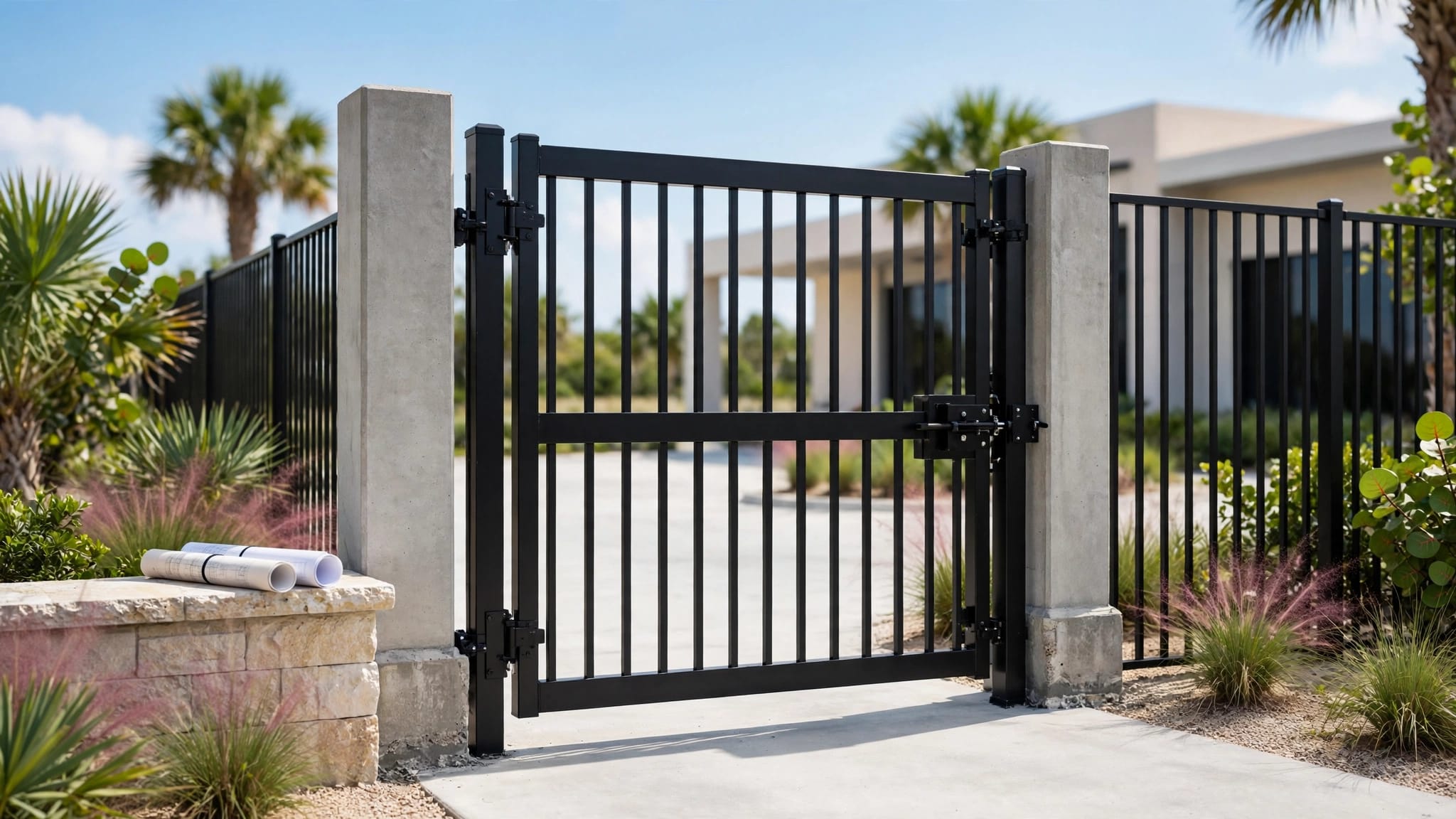
- Aluminum is a strong choice when you want a lighter gate with solid rust resistance.
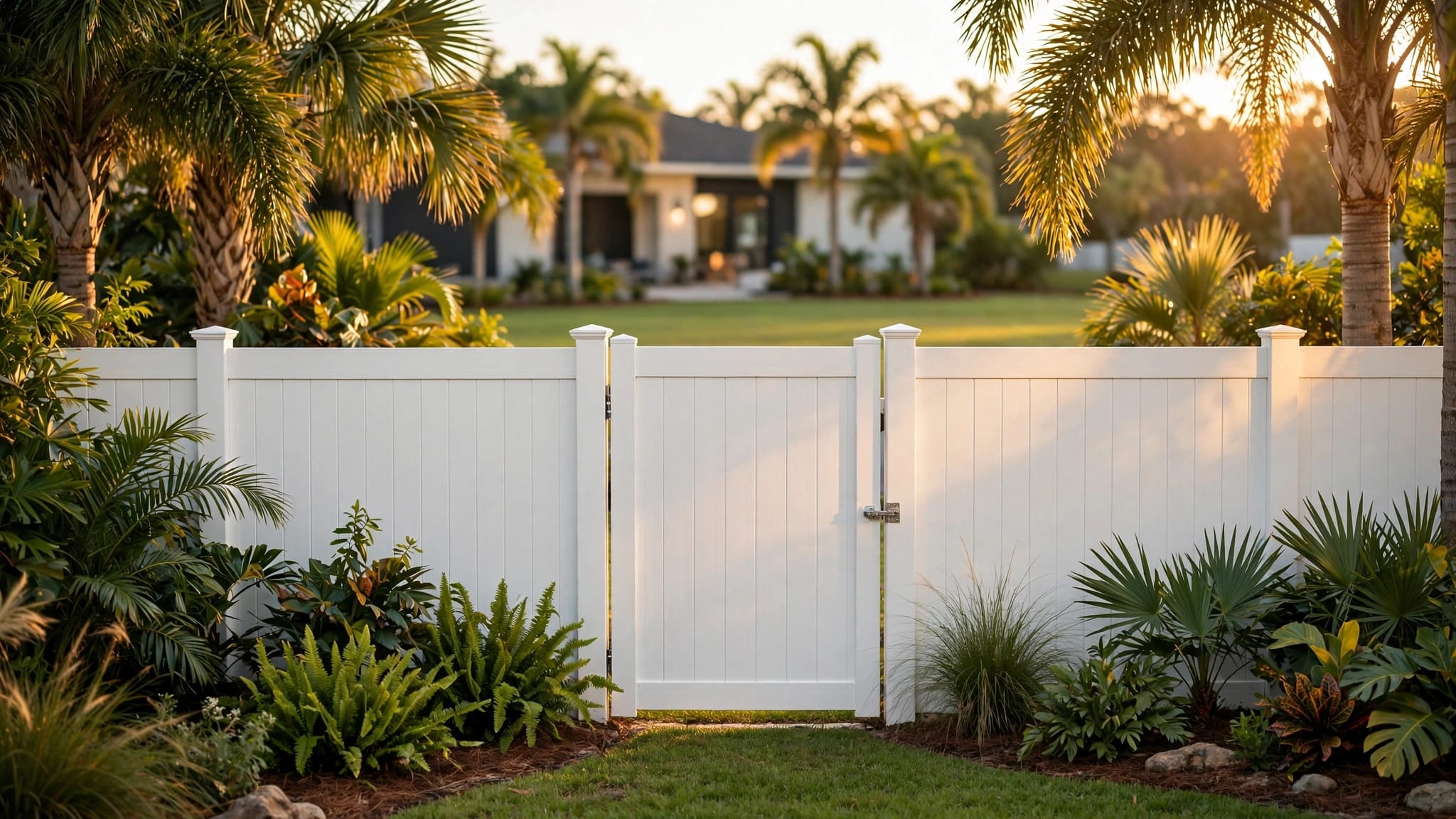
- Vinyl works well for privacy, but large openings need proper support behind the panels.
- Wood gives a warm, classic look, yet it needs more upkeep in sun and moisture.
- Chain link is practical for utility access, especially when privacy comes from slats or nearby screening.
Hardware matters just as much as the gate material. Hinges, latches, and fasteners should resist corrosion and stay aligned after repeated use. A heavy gate on weak hardware will sag, no matter how good it looks on day one.
If the gate will open and close often, lighter construction can be a real advantage. Less weight puts less strain on posts and hinges, which helps the gate stay square longer.
Privacy and security without boxing in the yard
An RV parked in the side yard can feel exposed. It can also make the whole property look busier than it needs to. The right gate design solves both problems.
A solid or semi-solid gate can block direct views from the street or a neighbor's yard. At the same time, louvered sections or carefully placed openings can keep air moving. That helps the yard feel less closed in, especially along a narrow side run.
Security starts with the basics. A sturdy latch, a dependable lock, and a frame that does not flex are more useful than a fancy look. If the gate is hard to shut or hard to lock, people stop using it the way they should.
Small choices can improve the finish too. For example, a privacy fence on the visible side of the yard can hide the RV, while a more open section near the back keeps the space from feeling boxed in. That balance works well in Cape Coral, where many side yards are visible from several angles.
Storm-ready construction starts at the posts
A gate that works in calm weather still has to survive summer storms. That is where the posts, footings, and frame design really matter. If the structure is weak at the start, the gate will show it later.
Posts should be set with enough strength to keep the opening square. The frame should resist racking. The latch should stay lined up even after heavy rain or ground shift. Drainage matters too, because standing water can shorten the life of the hardware and the finish.
A gate that sags after the first wet season was built for looks, not use.
Storm-ready planning also means checking the local details before work starts. Confirm setbacks, easements, permit needs, and HOA rules with the right local office or association. Those items can affect gate placement, opening size, and the final layout.
In Southwest Florida, a good gate is not only about access. It is also about how the structure behaves when weather turns rough.
Working with a local fence contractor on the final layout
The best Cape Coral RV gate starts with a site visit. A local contractor can look at the slope, the turning space, the fence line, and the way the RV enters the yard. That kind of review catches problems that a tape measure alone can miss.
It also helps to talk through how you use the space. Do you park the RV every week, or only a few times a year? Do you need room for mirrors, a tow vehicle, or side clearance for storage bins and tools? Those details shape the opening and the hardware choice.
A good install also blends the gate with the rest of the yard. If you already have privacy fencing, the gate should match the look and the function. If your space is more open, the gate can still add structure without making access harder.
The cleanest results usually come from simple planning and solid materials. When those two things line up, the gate works the way you want it to, day after day.
Conclusion
The right Cape Coral RV gate does more than close off a side yard. It makes parking easier, protects the property, and stands up to local weather without becoming a burden.
When width, layout, materials, privacy, and storm strength all work together, the gate feels like part of the property, not an obstacle. That is the kind of fit that matters every time the RV comes home.